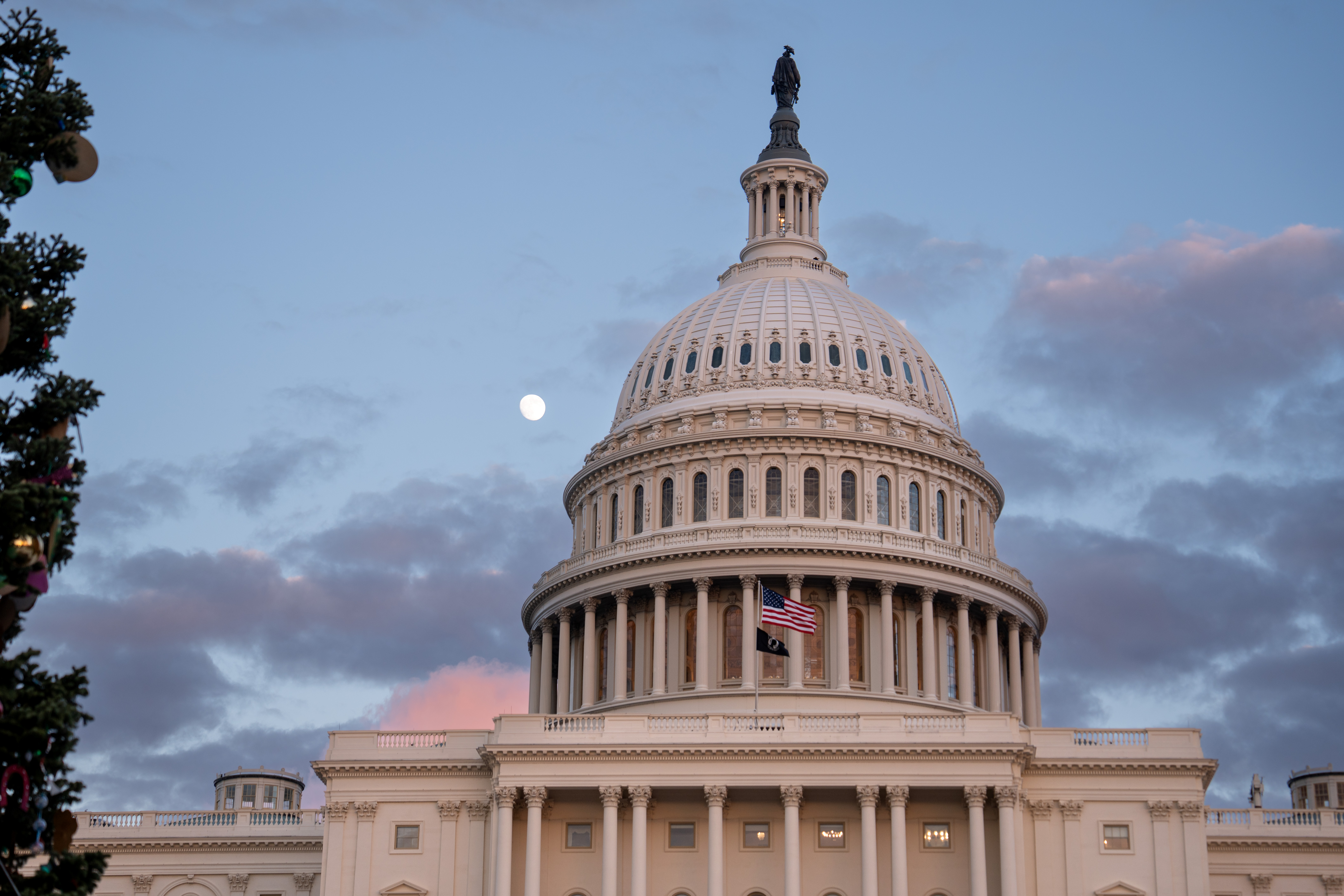

The House passed a compromise version of the National Defense Authorization Act (NDAA) on Dec. 10.
On Dec. 10, the House voted 312–112 to approve the NDAA bill, which authorizes $901 billion in military and national security programs. Eighteen Republicans and 94 Democrats voted against the package.
The NDAA bill was offered as a compromise between previous versions of the legislation brought by the House and the Senate. The previous House version of the NDAA aligned with a $893 billion budget request from President Donald Trump, while the Senate sought authorization for $925 billion worth of national security programs.
With the Dec. 10 House vote, the bill now goes to the Senate for consideration.
While the NDAA provides authorization for military, nuclear, and national security programs and functions, the actual funding for such programs is contained in a separate appropriations bill.
Some Republicans had signaled opposition to the latest NDAA language ahead of the final vote. Earlier on Dec. 10, a procedural vote to advance the NDAA and other bills to a final floor vote appeared on track to fail, before a handful of Republican holdouts agreed to change their votes.
Some Republicans had criticized the latest NDAA language ahead of the final vote. Earlier on Dec. 10, a procedural vote to advance the NDAA and other bills to a final floor vote appeared on track to fail.
Rep. Marjorie Taylor Greene (R-Ga.) had previously signaled opposition to portions of the NDAA that support continuing foreign aid for allies and partners around the world.
On Dec. 10, Greene announced that she had cut a deal with House Republican leadership to help advance the NDAA to a final House vote, in exchange for a vote on a bill she had sponsored, called the “Protect Children’s Innocence Act.” Her bill would make it a Class C federal felony for individuals to perform or facilitate chemical castrations on minors, or surgical procedures to change a minor’s body to correspond to sex characteristics other than the minor’s biological sex.
“I made a deal and changed my NO vote on the rule to a Yes in exchange for a floor vote next week on my bill that is one of President Trump’s key campaign promises and executive orders,” she wrote in a post on X.
Greene ultimately voted against the final passage of the NDAA.
Republicans in the House Armed Services Committee, earlier this week, had touted the compromise NDAA for supporting programs Trump has sought, such as the “Golden Dome” missile defense initiative, and codifying several of his executive orders and policy requests into law.
House Democrats celebrated some wins in the bill, including provisions curtailing potential U.S. force withdrawals from Europe.
Rep. Adam Smith (D-Wash.), ranking Democrat member of the House Armed Services Committee, also celebrated the inclusion of an oversight provision conditioning some of War Secretary Pete Hegseth’s travel budget on the Pentagon turning over unedited footage from U.S. strikes on suspected drug boats. The recent strikes have been the subject of growing scrutiny, primarily from congressional Democrats.
Smith said Democrats were able to strip out other partisan riders and mitigate what he described as “numerous attacks on LGBTQ+ individuals and [diversity, equity, and inclusion] efforts” within the military.
Reacting to Smith’s proclaimed list of Democratic wins, Rep. Greg Steube (R-Fla.), in a Dec. 9 X post, wrote, “Sounds like a whole bunch of reasons to vote No on the NDAA.”
Steube also ultimately voted against the final passage of the NDAA.
In floor remarks ahead of the final Dec. 10 vote, Rep. John Garamendi (D-Calif.) objected to the recent deployments of National Guard troops in cities around the United States, the use of military resources to support immigration enforcement efforts, and to Trump’s use of military force against Iran earlier this year without congressional authorization.
“I'd like to vote for this bill, but I can’t. I just can’t,” Geramendi said. “It’s time for all of us to take a moment and say, ‘Wait a minute. We’re the Congress of the United States.’ This bill, while it does many things, does not assert congressional authority as it should.”
Rep. Sarah Jacobs (D-Calif.) also expressed frustration at the removal of a provision supporting health care coverage for in vitro fertilization for military personnel.
“This is one of the reasons why I will vote no on the final NDAA,” Jacobs said in remarks on the House floor.