The top Republican on the House China committee is urging Columbia University to end its ties and those of its student groups with an organization he says advances the interests of the Chinese Communist Party (CCP).
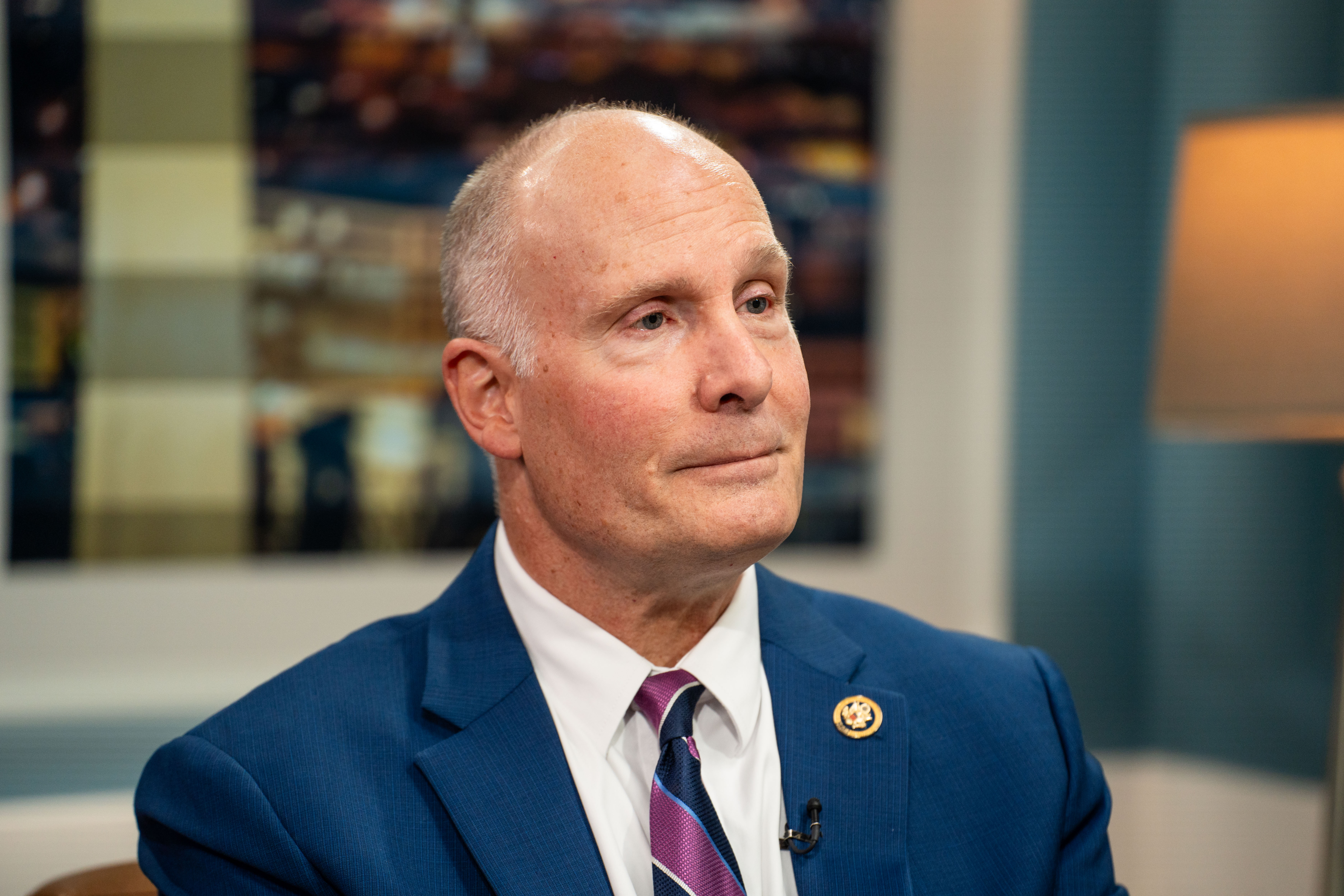
The House Select Committee on the CCP announced on Nov. 6 that its chairman, Rep. John Moolenaar (R-Mich.), had sent a letter to acting Columbia University President Claire Shipman, raising concerns about the school’s partnership with the China-United States Exchange Foundation (CUSEF), a Hong Kong-based nonprofit.
“CUSEF is an instrument of the CCP’s approach to political warfare, including influence operations intended to shape Americans’ views toward the People’s Republic of China (PRC) government,” Moolenaar wrote in his letter, citing the findings of his committee and U.S. intelligence officials.
More specifically, Chinese entities such as CUSEF operate “under the auspices” of Beijing’s United Front Work Department to “suppress speech and activity” deemed taboo by the CCP, Moolenaar added, including topics related to China’s human rights violations against Uyghurs, Tibetans, and Falun Gong practitioners.
China’s United Front Work Department coordinates thousands of overseas groups to engage in “united front work” operations, which include influence activities, suppressing dissident movements, intelligence gathering, and facilitating the transfer of technology to China. In 2023, the House committee issued a memo warning Americans that the CCP views its “united front work” as a “magic weapon” with “no direct analogue” in the United States.
The founder of CUSEF, Tung Chee-hwa, served on the Chinese People’s Political Consultative Conference (CPPCC), a political advisory body, from 2005 to 2023. According to the letter, CPPCC is “a key United Front forum designed to advance CCP objectives in and beyond the PRC through overt and covert political mobilization.”
Given CUSEF’s ties to the CCP, Moolenaar found it concerning that Columbia University is offering an exchange trip cosponsored by the organization in January next year, which covers participants’ transportation, board, and lodging expenses. The trip, he added, is being promoted under the name “China Trek” by Greater China Initiative (GCI), a student organization affiliated with Columbia University’s Weatherhead East Asian Institute.
Columbia University posted on its website a blog by a student from its School of International and Public Affairs who visited China in January as part of a joint program between CUSEF and GCI. The itinerary included a visit to the state-run newspaper China Daily and a meeting with Lu Kang, vice minister of the International Department of the Chinese Communist Party’s Central Committee, which is headed by Chinese leader Xi Jinping.
Moolenaar said the fact that the exchange program was organized by a student group “raises serious questions about the university’s policies on student group recognition, and particularly its regulations on foreign funding for recognized student organizations.”
“Columbia should not recognize or promote student groups that accept foreign funding or form partnerships with a foreign agent known to be engaging in malign influence operations,” Moolenaar wrote.
CUSEF has courted universities across the United States, but not all of them have accepted its funding, Moolenaar wrote, naming the University of Texas–Austin as one of the institutions that have made the “exemplary decision” to reject it.
The University of Texas–Austin rejected CUSEF’s funding for its China center in 2018 after Sen. Ted Cruz (R-Texas) warned that the partnership could help spread Chinese propaganda. Cruz said in a social media post at the time that the China center “recognized the risk partnering with the Communist Party of China poses to academic freedom & the robust exchange of ideas that are essential to the American university.”
Citing academic integrity, Moolenaar called on Columbia University to “immediately terminate any ties that the university or its student groups have with CUSEF.”
Additionally, Columbia should undertake a thorough evaluation of the foreign funding sources and partnerships of student organizations in the future, he added.
“At a minimum, such a vetting process should exclude accepting funding and partnerships with organizations like CUSEF that exist to promote the CCP’s narratives and interests—which have proven antithetical to academic freedom and free exchange of ideas—and to help the CCP identify foreigners who the party could exploit,” Moolenaar concluded.
Columbia University didn’t respond to an inquiry from The Epoch Times.