The United States found its artistic soul in painting, poetry, and literature long before it found its voice in classical music. The American establishment of the classical music tradition is closely connected to a group of composers and musicians known as the Second New England School of music nicknamed the Boston Six.
One of the group’s better-known composers is Horatio Parker (1863–1919). His life reflects the American music Renaissance.
Following the Civil War, these composers lived during a period of comparative peace from the late 1860s to the 1910s that allowed music to flourish.
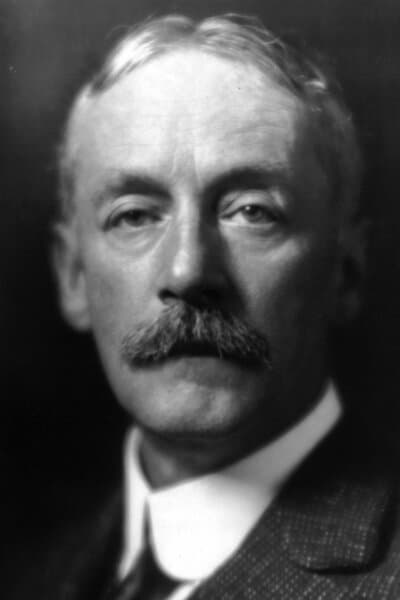
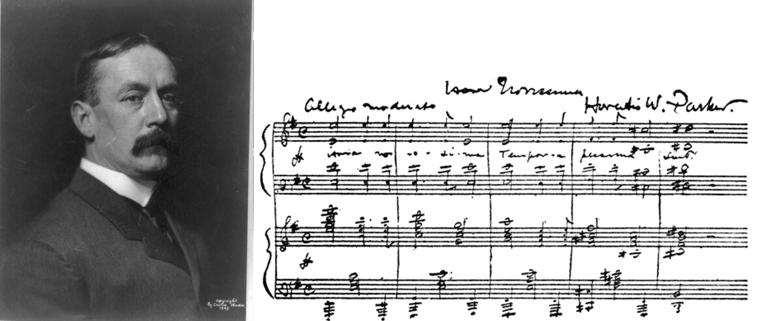
Horatio W. Parker, 1916. (Public Domain)
Awakening to Music
Parker was born in Auburndale, Massachusetts, on Sept. 15, 1863. Parker attended Williams Grade School in Auburndale but was an unremarkable student, which is ironic considering his later role in academia.
Although he had a “positive dislike” of music during his early childhood, that changed in October 1877, when he was 14. His mother later recalled the incident as follows:
“Horatio suddenly began to take an interest in music, to ask all sorts of questions about it, and to spend literally whole days at the piano, beginning at daylight, and stopping only when his father sent him to bed, perhaps at 11 p.m. From this time onwards he had but one object. Sports and recreation were left out of his life, and the necessary education was with great difficulty imparted in the intervals of ... music study.”
His mother was Horatio’s first music teacher, teaching him piano, music theory, and organ. She even had a set of organ pedals installed in their home so he could learn that instrument.
Two years later, he got his first professional music job as organist at St. Paul’s Episcopal Church in nearby Dedham, Massachusetts. He later admitted that his technique at the time wasn’t very good, but it was a start.
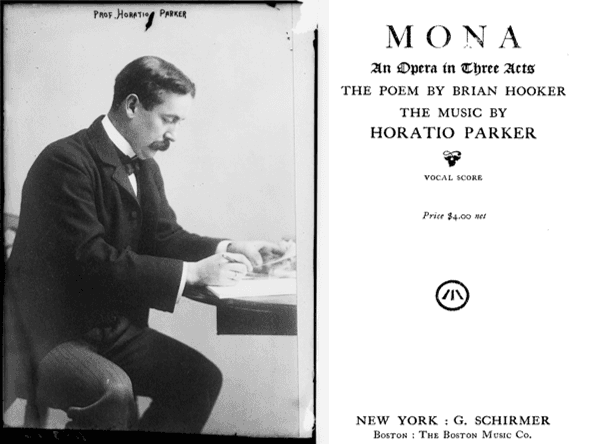
(Left) George W. Porter at work on a composition. (Right) Title page of piano score of "Mona." (Public Domain)
Realizing he needed a stronger foundation in music, he began studying in Boston. He learned piano with John Orth, music theory with Stephen A. Emery, and composition with George Whitefield Chadwick, another member of the Boston Six.
Composer Abroad
Parker began composing within a year of discovering music. Eager and prolific, he set 50 nursery rhymes from Kate Greenaway’s “Under the Window” to music and composed 68 variations on a familiar theme.
His serious composing, however, truly began when he sought training abroad. Like most serious young American musicians of his day, Parker traveled to Germany for advanced musical studies. At Chadwick’s recommendation, Parker’s parents sent him to Munich in 1882.
There, he studied at the Royal Conservatory of Music (Hochschule für Musik) with Josef Rheinberger, a renowned organist and composer who also taught Chadwick. Rheinberger not only refined Parker’s skills on the organ but also encouraged the young man’s development as a composer. Under Rheinberger’s tutelage, Parker wrote his first cantata and his first (and only) symphony.
Church Musician
After graduating, Parker returned to the United States in 1885. During the late 1880s and the early 1890s, he firmly established his career as a prominent church musician and educator. In the New York area, he served as organist at the Cathedral of the Incarnation in Garden City, where he was also a music professor at the Cathedral School of St. Paul, before taking posts as organist and choirmaster at St. Andrew’s Church in Harlem and organist at the Church of the Holy Trinity in Manhattan. He eventually moved to Boston, where he became the organist at Trinity Church.
Meanwhile, he was establishing himself as a composer of church music. Today, Parker is best known for his sacred choral and organ music, which includes hymns, cantatas, and oratorios.
His best-remembered work is his 1893 oratorio “Hora novissima,” which features a setting of 12th-century texts written by Benedictine monk Bernard de Morlaix, “De contemptu mundi.” After premiering in New York City, the piece gained widespread acclaim across the United States and England, establishing Parker as a premier American composer of his era.
Secular Composer
Although best known for his sacred works, Parker also wrote a variety of secular compositions, including several orchestral overtures and songs, an organ concerto, and a scherzo.
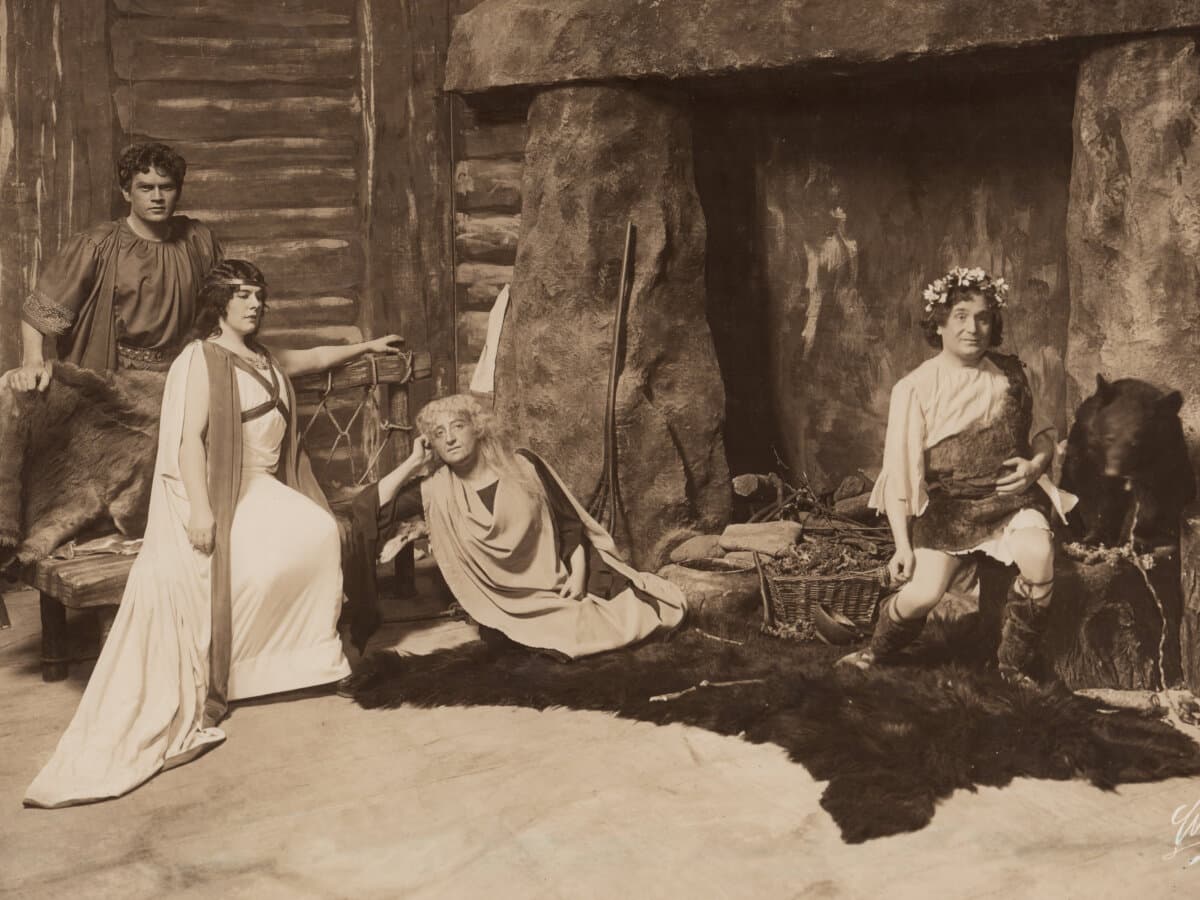
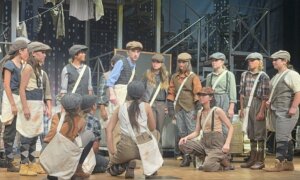
Scene from Horatio Parker's opera, "Mona, "1912. (Public Domain)
His chamber and keyboard output featured a string quartet, a piano trio, a suite for violin and piano, and numerous sketches, piano pieces, and organ compositions.
Parker composed two operas over the course of his career, both collaborating with librettist Brian Hooker. His first opera, “Mona,” was completed in 1911 and won the Metropolitan Opera’s prestigious composition contest, earning Parker a $10,000 prize. The Met staged the work the following year for a run of four performances.
In 1914, the duo partnered again for Parker’s second opera, “Fairyland.” This piece won a competition sponsored by the National Federation of Women’s Music Clubs and subsequently received its premiere in Los Angeles.”
Yale Professor
In 1894, riding on the success of his “Hora novissima,” Parker was awarded an honorary master’s degree from Yale University and became its Battell professor of music theory. In 1904, he became the school’s first dean of music, a position he held until his death in 1919.
Under his direction, Yale’s music department grew into one of the finest training schools for classical composers. At Yale, Parker’s students included future composers Quincy Porter, Roger Sessions, and Charles Ives.
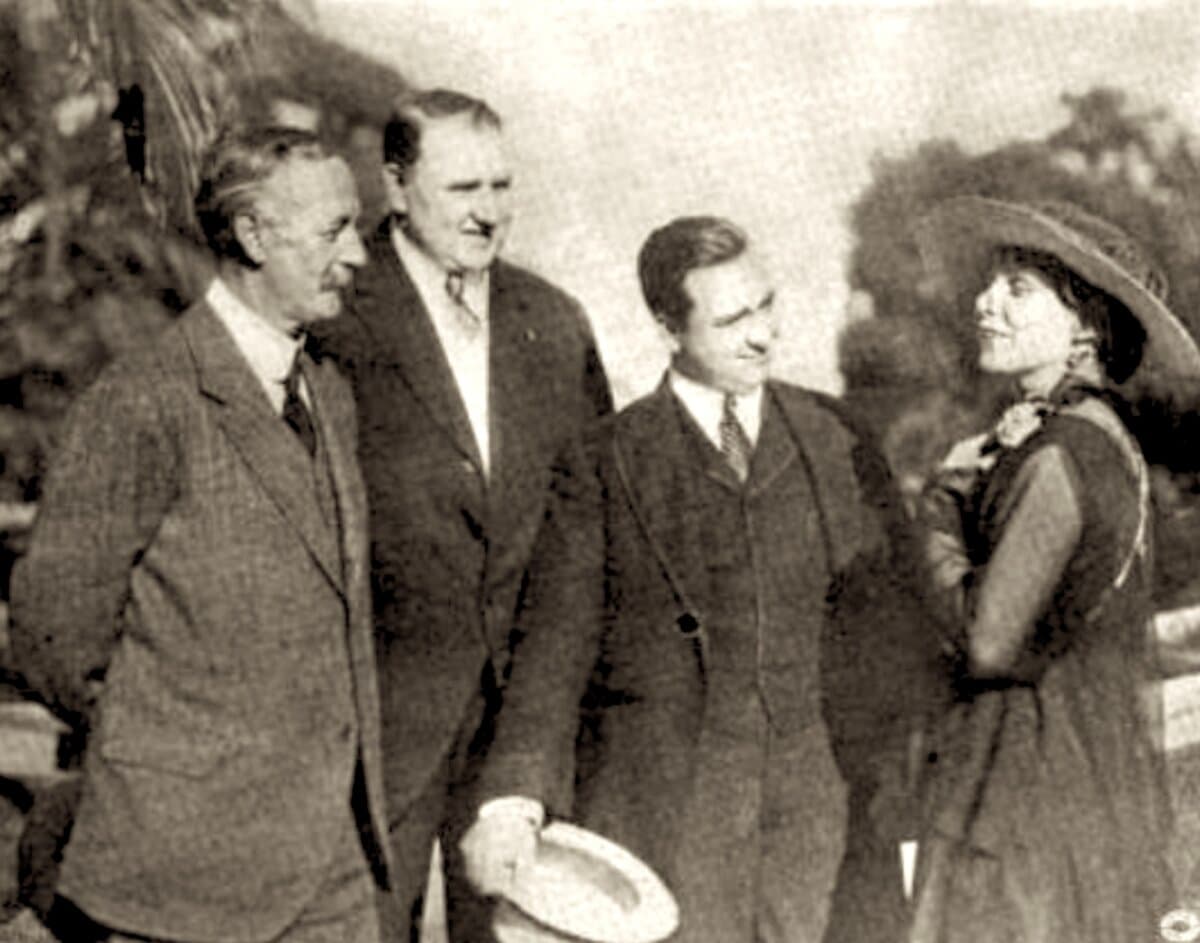
A 1915 photo of the creator and cast of Horatio Parker's "Fairyland": (L–R) Horatio Parker, composer; William Wade Hinshaw, baritone; Ralph Errolle, tenor; Marcella Craft, soprano. (Public Domain)
Although his legacy would be eclipsed by the next generation of American composers, Parker’s contributions to the American world of classical music can’t be underestimated. He was considered the finest American composer of his day.
His accolades extended internationally. The performance of his oratorio “Hora novissima” at the “Three Choirs” festival in Worcester, England, in 1899 was groundbreaking. Such an honor had never before been paid to an American composition, and he subsequently received an honorary doctorate from Cambridge University in 1902.
In recent years, the contributions of the Boston Six have sometimes been dismissed because of the perceived conventionality of their compositions. However, a welcome revival is underway. These talented creators are being appreciated for the beauty, innovation, and distinct Yankee quality of their music.
For the brilliance, caliber, and Americanism of his music, Horatio Parker deserves to be remembered as one of our nation’s finest composers.
What arts and culture topics would you like us to cover? Please email ideas or feedback to features@epochtimes.nyc.