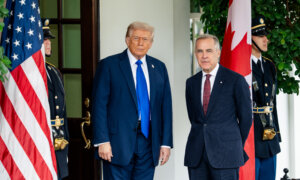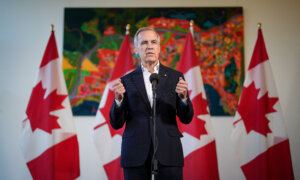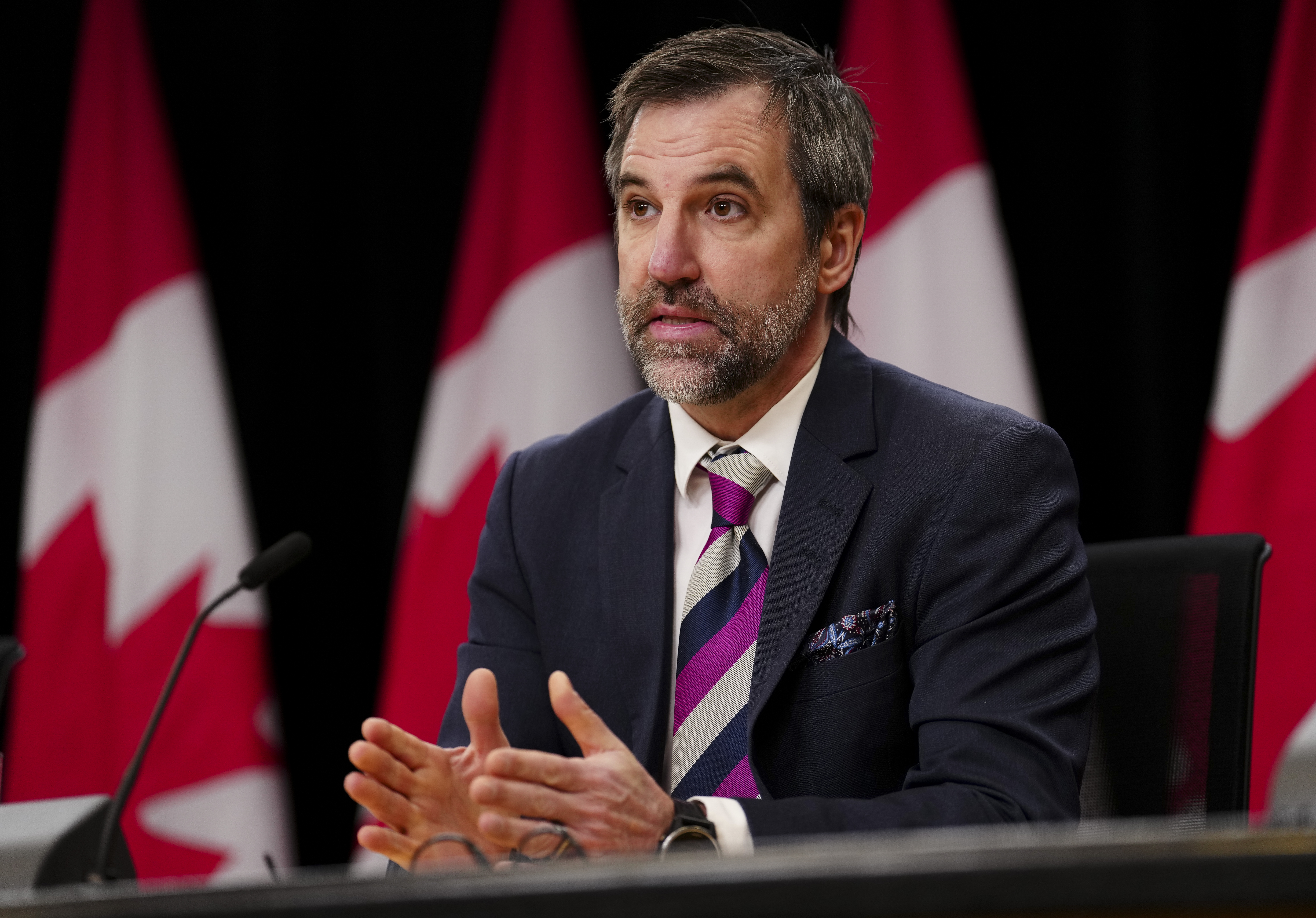

Culture Minister Steven Guilbeault is resigning from cabinet over Prime Minister Mark Carney’s deal with Alberta Premier Danielle Smith to advance a proposed Alberta–B.C. pipeline and overhaul energy policies. The Quebec MP says he will remain in the Liberal caucus.
“This afternoon, it is with great sadness that I submitted my resignation to the Prime Minister as Minister of Canadian Identity and Culture and Minister responsible for Official Languages, Minister of Nature and Parks Canada, as well as his Lieutenant in Quebec,” Guilbeault said in a statement on Nov. 27.
“When I entered politics, it was because I had a deep conviction that I could make a difference in fighting climate change and protecting our environment. My commitment to leaving a better world for the future of our children and our planet remains unchanged.”
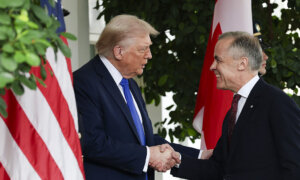
Earlier in the day, Carney and Smith signed a memorandum of understanding (MOU) that would allow the building of an oil pipeline from Alberta to B.C. if a private proponent steps up, and make changes to the tanker ban off the West Coast to allow export to Asian markets. The MOU makes the proposed pipeline conditional on the development of the Pathways Alliance carbon capture project, the increase of the industrial carbon tax in the province, and a commitment to reduce methane emissions by 75 percent from 2014 levels by 2035.
The agreement also makes other major changes to the federal government’s energy policies that Guilbeault had brought in when he was minister of environment and climate change under former Prime Minister Justin Trudeau. One of these changes is removing the emissions cap for the oil and gas sector, which Alberta says acts as a de facto limit on production. Another change is exempting Alberta from the Clean Electricity Regulations, which requires electrical grids to have net-zero emissions. Alberta, which highly depends on natural gas for energy generation, has been strongly opposed to this policy.
Guilbeault cited these changes, along with revisions to other key net-zero policies he introduced as environment minister, as the reasons for his resignation from cabinet. He added that he opposes the Carney government’s earlier moves to remove the consumer carbon tax and delay the electric-vehicle sales mandate.
“Finally, over the past few months, several elements of the climate action plan I worked on as Minister of the Environment have been, or are about to be, dismantled: the consumer carbon pricing, the Zero Emission Vehicle standard, the oil and gas sector emissions cap, the framework to eliminate fossil fuel subsidies, and the Clean Electricity Regulations,” Guilbeault said. “In my view, these measures remain essential to our climate action plan.”
Guilbeault said he specifically opposes the MOU because there was no consultation with indigenous communities on the West Coast of B.C. and with the B.C. government, and added that he is concerned about the environmental impacts of an Alberta-B.C. oil pipeline.
The Liberal MP said that he understands that the changes in Canada’s relationship with the United States have led to “profound disruptions affecting the global order,” and that Carney is trying to keep the country united. But he said issues related to the environment are the highest priority for him.
“Despite this difficult economic context, I remain one of those for whom environmental issues must remain front and center. That is why I strongly oppose the Memorandum of understanding between the federal government and the government of Alberta,” Guilbeault said.
Carney said on social media that he’s grateful for Guilbeault’s “counsel and contributions,” and that he’s glad he will remain a Liberal MP.
“Whether in civil society or in Cabinet, Steven Guilbeault’s leadership to advance sustainability has consistently shaped a more hopeful horizon for future generations,” Carney said. “While we may have differing views at times on how exactly we make essential progress, I am glad Steven will continue to offer his important perspectives as a Member of Parliament in our Liberal caucus.”
Carney added that a climate strategy based solely on “regulations and prohibitions” won’t be able to gain alignment among different parties and won’t be effective.
“Canada’s new government is committed to a building a sustainable economy through ambitious investments undertaken in a process of cooperative federalism and in full partnership with Indigenous peoples,” he said.
‘Sufficient for the Government of Canada’
Earlier in the day, Carney was asked by reporters if the conditions he has set out in the MOU for Alberta to reduce emissions are enough to keep Guilbeault, a longtime climate-change activist, in his cabinet. Carney said as the prime minister, his job is to make decisions in the interest of the country.
“It’s sufficient for the government of Canada. I’m the prime minister, one has to take decisions in the interests of Alberta, of Canada, and we need to have results, real reduction in greenhouse gas emissions, and this requires investments in Alberta and B.C.,” he said in French.
Carney said the agreement with Alberta will require engagement with indigenous communities in both B.C. and Alberta, and will also need the involvement of the B.C. government. B.C. Premier David Eby is strongly opposed to lifting the tanker ban on the West Coast.
Guilbeault had publicly signalled a different stance from the prime minister’s on pipelines early in Carney’s tenure. While Carney said he was open to new pipeline construction, Guilbeault—who was no longer in the environment portfolio at the time—said on May 14 that existing pipelines should be used to their maximum capacity before discussing new ones. He later declined to publicly comment further on pipelines, noting that his new role is in culture and overseeing Parks Canada.
During his time as environment minister under the Trudeau government, Guilbeault frequently clashed with Alberta over net-zero policies, with Premier Smith repeatedly calling on Trudeau to replace him in that role.
Guilbeault was first elected to the House of Commons as a Liberal MP in 2019. He said he will remain in the Liberal caucus as the MP for Laurier—Sainte-Marie.
Green Party Leader Elizabeth May called on Guilbeault to join her party.
“Steven Guilbeault has given up on Mark Carney. Don’t give up on democracy, don’t give up on climate action. Join us, now’s the time,” May said on Nov. 27.
Liberal MP Ali Ehsassi, who said Guilbeaul is an energetic and passionate colleague, called his resignation from cabinet “very regrettable.”
“I know that this prime minister takes the environment very seriously, as does the responsible minister,” Ehsassi said.
Guilbeault is the co-founder of Équiterre, Quebec’s largest environmental group. In 2001, he was arrested and charged with public mischief after climbing the CN Tower in Toronto and unfurling a banner accusing Canada and the United States of being “climate killers.” He lists the stunt as one of his key acts of environmental activism in his official government biography, along with climbing a tree behind his home to protect it from real-estate development when he was 5 years old.
The Canadian Press contributed to this report.