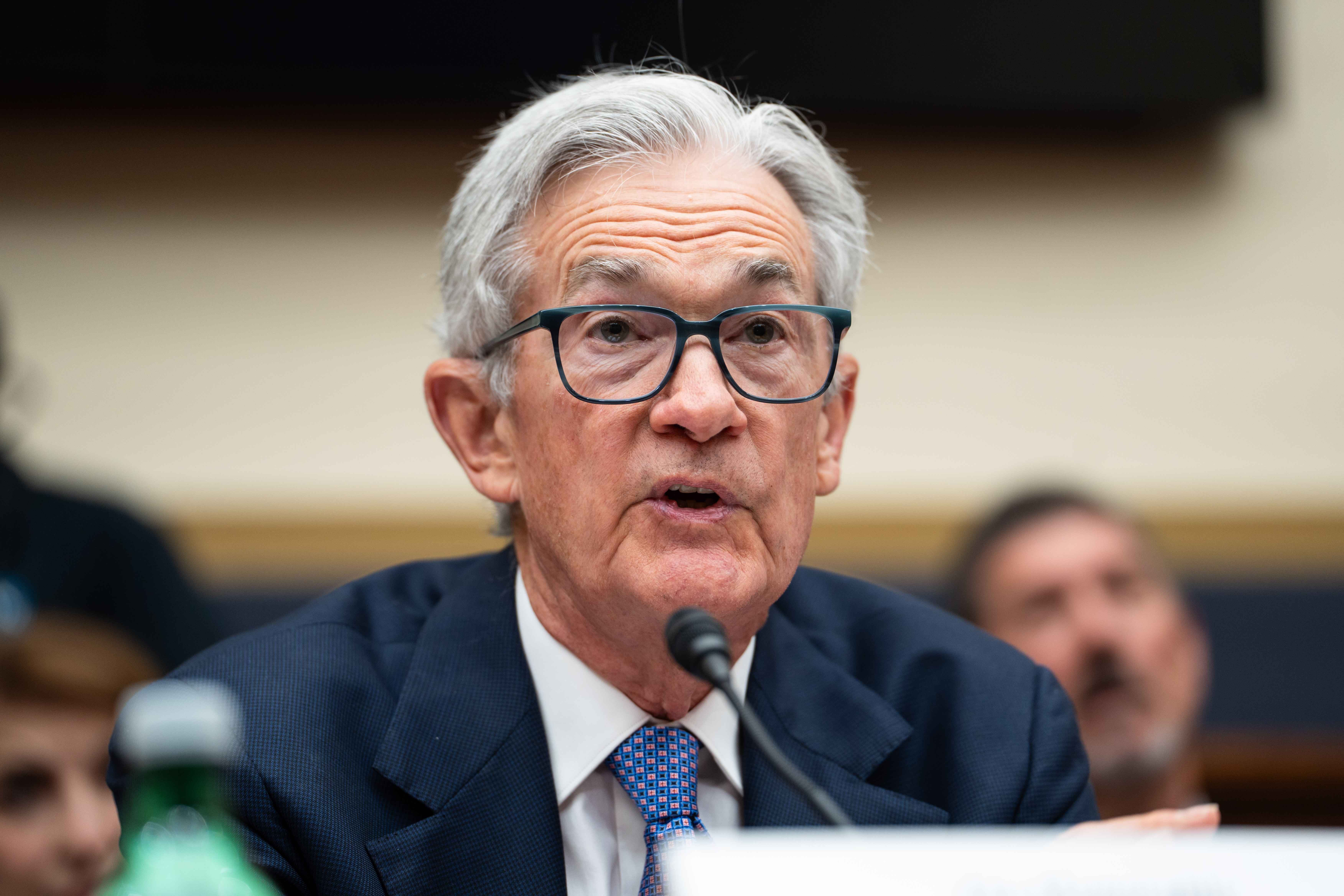

Federal Reserve officials agree that interest rate cuts will occur, but there is disagreement on how aggressively the central bank will act this year, according to the latest released minutes.
At the June 17–18 policy meeting, the Fed left interest rates unchanged for the fourth consecutive meeting. The benchmark federal funds rate—which influences business, consumer, and government borrowing costs—was left at a target range of 4.25 percent to 4.5 percent.
“Most participants assessed that some reduction in the target range for the federal funds rate this year would likely be appropriate,” the meeting summary of the Open Market Committee (FOMC) said.
Officials now anticipate that tariff-driven inflation could be “temporary or modest,” and medium- and long-term inflation expectations remained well anchored.
“A couple of participants noted that, if the data evolve in line with their expectations, they would be open to considering a reduction in the target range for the policy rate as soon as at the next meeting,” the document said.
However, some officials stated that one appropriate path might involve no rate cuts in 2025, pointing to recent elevated inflation readings and robust economic conditions.
“Participants agreed that although uncertainty about inflation and the economic outlook had decreased, it remained appropriate to take a careful approach in adjusting monetary policy,” the minutes stated.
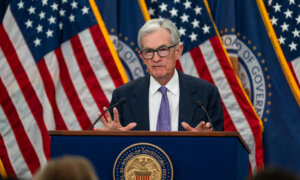
Reiterating Fed Chair Jerome Powell’s concerns, some officials voiced worries about striking a balance between higher inflation and weaker employment. Under this scenario, policymakers would need to determine which side of the dual mandate—price stability and maximum employment—is further from the central bank’s objectives.
Recent inflation numbers show that tariffs have not triggered renewed price pressures. This past week’s employment numbers—the U.S. economy added a better-than-expected 147,000 new jobs and the unemployment rate dipped to 4.1 percent—indicated that the labor market remained in a solid position.
Investors expect the Fed to keep rates steady in July, and CME FedWatch Tool data indicate that the central bank will likely restart the rate-cutting cycle in September.
The Summary of Economic Projections, updated at the June meeting, suggests that monetary authorities expect two quarter-point rate cuts by the year’s end.
Fed Governor Christopher Waller and Fed Vice Chair Michelle Bowman have expressed support for lowering interest rates as early as July. Others, such as Fed Governors Lisa Cook and Adriana Kugler, support being patient until there are more tariff-related economic data.
As for the broader economy, staff economists expect higher real GDP growth in 2025 than initially predicted, according to the minutes. They also anticipate inflation to be lower than the prior forecast.
Market Reaction
U.S. stocks remained in positive territory following the release of the FOMC minutes, with leading benchmark index averages up as much as 0.7 percent.
Market watchers say that Wall Street is already pricing in rate cuts, particularly as more Fed officials endorse easing monetary policy.
“Recent public comments from Fed representatives turned dovish and have varied from what Jerome Powell has been stating publicly,” Jay Woods, the chief global strategist at Freedom Capital Markets, said in a note emailed to The Epoch Times.
“The ‘data-dependent’ Fed continues to get hard data that shows an economy stabilizing with unchanging inflation and unemployment data.”
That said, even if the upcoming consumer price index report surprises with a lower-than-expected number, it will unlikely persuade the Fed to pivot, Stephen Kates, a financial analyst at Bankrate, said.
“The relevance of this report for the Federal Reserve’s interest rate policy is practically nonexistent in the short term,” Kates said in a statement to The Epoch Times.
“No downside surprise is likely to be great enough to make the committee pivot to a July cut based on the Federal Reserve’s own comments and the recent labor market reports.”
Yields on U.S. Treasury securities were mixed, with the 10-year benchmark down by about 8 basis points to below 4.35 percent.
Call for ‘Regime Change’
In addition to Fed Chair Jerome Powell, the entire U.S. central bank has come under fire from the current administration and economic observers.
Former Fed Governor Kevin Warsh, who is considered a heavyweight contender to succeed Powell next year, says the institution needs a “regime change.”
“Now, regime change means new sets of policies, new ways of thinking about economic growth, a new understanding of what really drives inflation,” Warsh said in an interview with Fox Business Network host Larry Kudlow on July 8.
“It also means new personnel.”
In June, in a Truth Social post, President Donald Trump said that Powell and the entire board “should be ashamed of themselves” for not lowering interest rates.
“The Board just sits there and watches, so they are equally to blame. We should be paying 1 percent interest, or better!” he stated.
Treasury Secretary Scott Bessent told CNBC’s “Squawk Box” on July 7 that the issues at the central bank extend beyond Powell.
“As I reiterate to people all the time, it’s not just the Fed chair. It’s a committee,” Bessent said.
While the focus is on who will replace Powell as head of the Federal Reserve in May 2026, the White House is also keeping an eye on an open board seat in January.
As for Powell’s successor, the betting website Polymarket suggests National Economic Council Director Kevin Hassett has become the favorite, with 26 percent odds. He is followed by Bessent (20 percent), Warsh (17 percent), and Fed Governor Christopher Waller (5 percent).
Additionally, there is a 33 percent chance that Trump will not announce the successor by Dec. 31, Polymarket said.