
ExxonMobil is exploring a return to Venezuela almost two decades after its assets were seized and nationalized, CEO Darren Woods said on Jan. 9.
“It’s absolutely critical in the short term that we get a technical team in place to assess the current state of the industry and the assets, understand what will be involved to help the people of Venezuela get production back on the market,” Woods said.
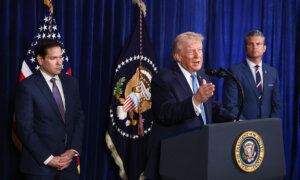
Woods, who made the comments during a meeting at the White House with U.S. President Donald Trump, said the South American country is currently uninvestable, and would require appropriate security guarantees before recentering the market.
“We’ve had our assets seized there twice. And so, you can imagine to reenter a third time would require some pretty significant changes from what we’ve historically seen here and what is currently the state,” Woods said.
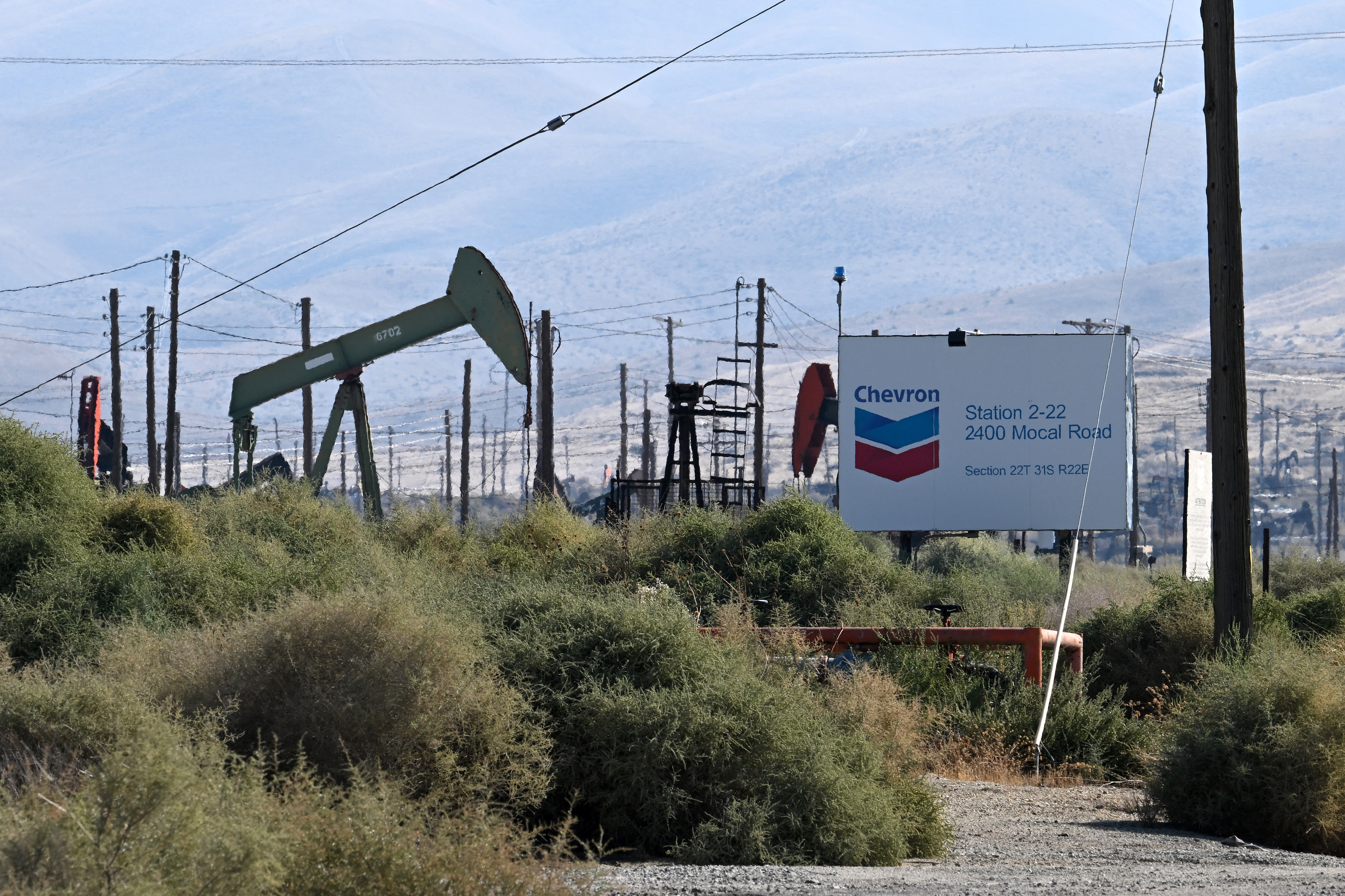
Meanwhile, Chevron, the only major U.S. oil company that stayed in Venezuela after nationalizations two decades ago, intends to immediately increase its production.
“We are also able to increase our production within our own disciplined investment schemes by about 50 percent just in the next 18 to 24 months,” Chevron Vice Chairman Mark Nelson said at the White House.
Trump hosted executives from 17 major energy firms Friday to detail billions in investments after the U.S. military’s ouster of Venezuelan leader Nicolás Maduro last weekend in an effort to rebuild the Latin American nation’s dilapidated oil sector.
Trump said U.S. firms will spend at least $100 billion to rebuild Venezuela’s oil infrastructure, which could increase global supplies and lower prices for American consumers.
“The American people, energy companies, and the Venezuelan people will all greatly benefit from these new, unprecedented investments in Venezuela’s oil infrastructure thanks to President Trump,” White House spokeswoman Taylor Rogers said.
Chevron has continued joint ventures with state-owned PDVSA in spite of sanctions, receiving exemptions under both the Trump and Biden administrations.
Chevron has particular expertise in heavy crude oil, which is Venezuela’s primary resource, giving it an edge in growing output from present-day levels of approximately 700,000 barrels per day. Chevron stock increased 6 percent following Maduro’s capture.
ExxonMobil, which departed Venezuela in 2007 after nationalization without compensation, is investigating reentry options despite unresolved claims for billions in owed assets.
“The tension is between the compelling geological resource and the obvious business opportunity, and the considerable above-ground risk, uncertainty and unpaid claims,” said Geoffrey Pyatt, former assistant secretary of state for energy resources for the Biden administration.
Shares of ExxonMobil rose 3 percent after Maduro’s capture. Venezuela holds 300 billion barrels of reserves—the world’s largest.
“Investors will want to see long-lasting stability and good fiscal terms to protect against the risk of asset nationalization, which we’ve seen from Venezuela in the past,” said David Byrns, portfolio manager at Chevron and ExxonMobil shareholder for American Century Investments.
Matthew Sallee, head of investments at Tortoise Capital, shared concerns regarding Venezuela’s crumbling oil infrastructure.
“If Chevron says we’re going to dedicate multi-billion dollars a year to Venezuela, we would probably sell,” he said.
The White House meeting included Chevron, ExxonMobil, ConocoPhillips, Spain’s Repsol, and trading firms Vitol and Trafigura.
The administration’s three-step plan—stabilization, recovery with U.S. company access, and transition—targets the control of oil revenues indefinitely for Venezuelan and American benefits. Venezuela’s interim leader Delcy Rodriguez has implied she is open to international commercial energy deals. Questions abound regarding how that transition will be overseen.
It could cost between $180 billion and $200 billion in capital to rebuild Venezuela’s oil sector, and returns would not be expected for years, according to a Jan 5 report by Morningstar, a financial research company. Past expropriations left U.S. firms owed $60 billion, including $8.5 billion to ConocoPhillips, which courts upheld in 2025.
Trump says operations could resume in less than 18 months, employing mostly Venezuelan workers with U.S. security guarantees. Vice President JD Vance has said sales must serve U.S. interests.
Reuters contributed to this report.