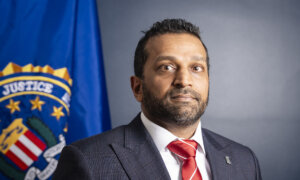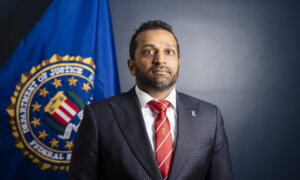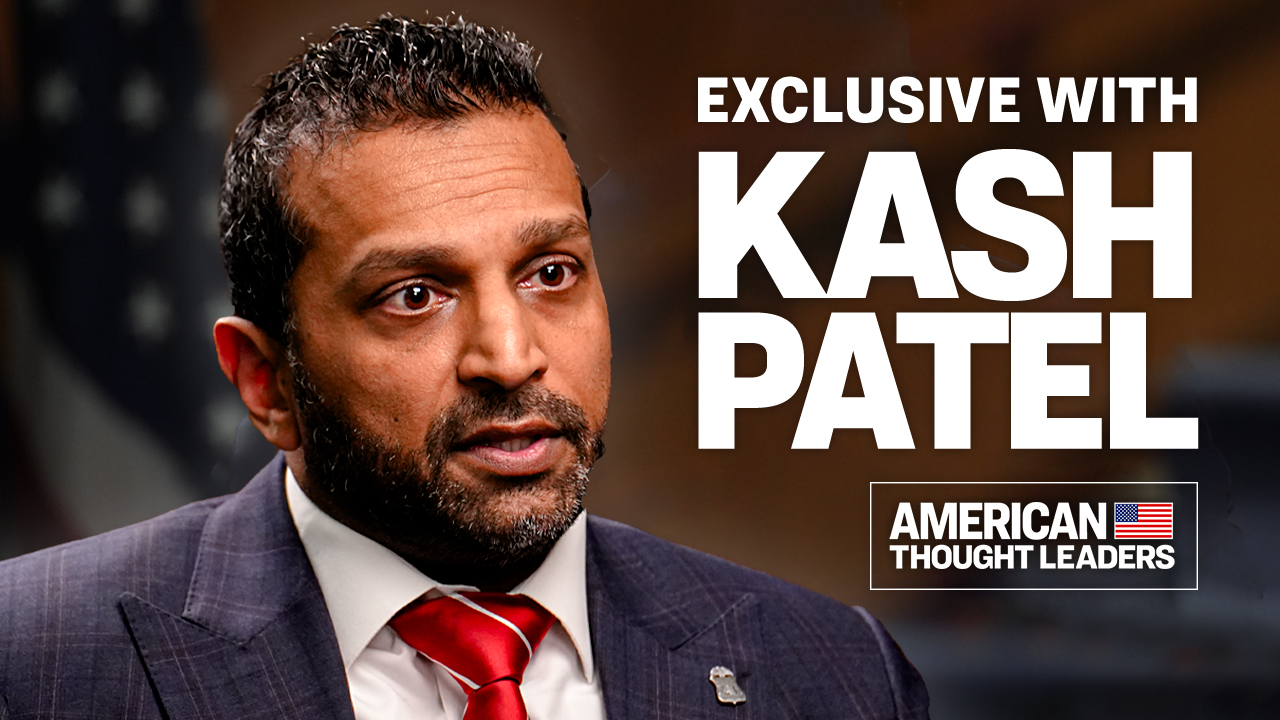

[RUSH TRANSCRIPT BELOW] In this exclusive interview with FBI Director Kash Patel, we dive into the agency’s crackdown on crime and foreign espionage, his trip to China, the “burn bags,” and recent criticisms.
What exactly is the “764 network,” and how is the FBI working to target these actors? Why did President Donald Trump label Antifa a domestic terror organization, and how does this alter the playing field?
Does the FBI director’s recent visit to China signify a pivot in the agency’s priorities? Given Beijing’s record of broken promises, can we really expect the regime to honor its side of the fentanyl deal?
The criminal case against former FBI Director James Comey was dismissed—what’s next? What are the FBI “burn bags,” and what was really discovered in those Trump investigation documents?
Patel also reacts to recent headlines and controversies regarding his use of an FBI aircraft, the security detail for his partner, Alexis Wilkins, and rumors that Trump planned to replace him as FBI director.
Views expressed in this video are opinions of the host and the guest, and do not necessarily reflect the views of The Epoch Times.
RUSH TRANSCRIPT
Jan Jekielek:
Director Patel, such a pleasure to have you on American Thought Leaders.
Director Patel:
Jan, thanks so much for coming to FBI headquarters and being in the Bonaparte room.
Mr. Jekielek:
Incredible to be here. I understand you were in the Oval Office speaking with the President when you were both made aware of an article alleging that the President intends to fire you. I’m just wondering if you could explain what happened in the room at that time.
Director Patel:
It was pretty comical because the president and I were both discussing law enforcement operations across the country with our team, the Attorney General, and other members of the department. And we were made aware that there was reporting that I was being terminated.And the president laughed and he said, what are they talking about? Kash is doing a great job. In fact, he goes, Kash, do you want to take a photo in front of the Declaration of Independence and tell them how good of a job you’re doing? I said, sure thing, Mr. President.
Obviously, everyone works at the pleasure of the president. I think we are executing the president’s mission wildly successfully in a historic fashion. And I think when the media gets together with anonymous sources, like they always do, and it gets louder and louder and louder, that just means our mission is the most effective it’s ever been. And that’s the only thing I care about.
Mr. Jekielek:
Something else hot off the presses. The criminal case against Director Comey was recently dismissed. What is your reaction to that?
Director Patel:
Well, because it’s pending in terms of appellate status and what we are going to do for the next steps, the judicial process can make whatever determination it wants. But we, the FBI, and our partners at the DOJ have numerous options to proceed, and we’re executing on all those options. So we’re not done.
Mr. Jekielek:
Any details?
Director Patel:
I would say stay tuned for right after Thanksgiving, and you'll see multiple responses, in my opinion.
Mr. Jekielek:
So you’ve initiated some cultural changes in the FBI. That’s something that many people have talked about. Some people like it, some people don’t. What would you say is the most significant?
Director Patel:
In my opinion, I felt that the FBI’s workforce of about 36,000 to 37,000 people was too concentrated in what we call the national capital region, the area around Washington, D.C. Of that massive workforce, we had over 11,000, almost 12,000 people in the Washington, D.C. area. And a lot of our crime was happening in the rest of the country. So we made a big priority to crush violent crime and defend the homeland. Those are our priorities, one and one. And to do it in the field with a smaller headquarters component.
So what we did was we put a thousand more agents in the field. Nearly every single state and every field office got a plus-up of actual agents to go hit the streets, do the work that the President assigned us to do in terms of priorities: defending the homeland, crushing violent crime. And that cultural change has been well received by the field. And that’s the only audience I care about. I don’t care about what the media thinks and how they falsely report that we are debilitating our functions as an FBI. As you and I will shortly get into, if this was not the right decision, we would not be having the historic results we are having for the American people.
Mr. Jekielek:
What would be the biggest historical results?
Director Patel:
The single fact that this FBI has done this year: we have arrested 30,000 individuals, the FBI alone. Of the 30,000, 25,000 of them have been violent offenders. The best metric is to compare that number year to date to last year. We are over double the amount of arrests of violent offenders this calendar year alone, and we still have December to go. That should show you two things. One, there was an explosion in violent crime across this country because of the failures of the prior administration. And the prior leadership at this FBI failed to attack that problem set.
And we came in and we put the cultural shift back out into the field, letting good cops be cops. They are the ones making the arrests and doing the work in the field with the smaller headquarters component. And the results speak for themselves. And if you go across the cities in this country, they are the safest they’ve ever been. But we still have a lot of work to do.
Mr. Jekielek:
Well, so tell me a little bit about how this has actually impacted people on the ground. What has happened with crime?
Director Patel:
From an FBI perspective, the agents are rejuvenated to go out there and redo their mission. We empowered SACs, our special agents in charge in the field, to be our field marshals. You know your area best; you know Charlotte best, you know Las Vegas best, you know Montana best. Go out there and hit the streets and work with us back at headquarters to make sure you’re resourced for the specific mission sets that you have, including law enforcement issues on tribal lands, which we have been a big plus-up on. And so I think the cultural change has been massive, and the results speak for themselves. And we’re going to keep pushing as hard as we can.
Mr. Jekielek:
So, and there’s been no resistance, I mean, the rank and file or…
Director Patel:
Well, I think when you make a change of this type, it’s a tectonic sea change. You’re changing decades of infused Washington, D.C. politicized institutional operations. And there is always going to be a D.C. knee-jerk reaction to that. I addressed how when the fake news is loudest, we’re over our target. There’s another way to tell. When the internal mechanisms and components of the Washington, D.C. outfit are pointing their knives at you, we also know we’re doing a great job.
Because when I go out and talk to governors and senators and congressmen, chiefs of police, and sheriffs, they’re the ones telling us that this FBI is partnering with them in ways that have never been done before, prioritizing interagency cooperation, state, and local law enforcement. And that’s leading to these massive takedowns and seizures we are having across the narcotics front, espionage front, counterterrorism front, and so much more. These numbers shouldn’t just be glossed over. And you guys have done a fabulous job of actually reporting on the substance behind the numbers. And that’s just due to one thing—the men and women out in the field doing the work.
Mr. Jekielek:
I understand you’re getting close to releasing some numbers around the murder rate. Could you give us some ideas?
Director Patel:
Yes, I’m happy to announce finally that one of the big targets we had for this year, obviously, was to reduce the murder rate across America. And this FBI is going to be releasing the murder rate numbers in December, which is the lowest it has been in modern history by double digits. We are down 25 percent from coast to coast on murders. If this FBI wasn’t doing its job, and if this FBI, as the fake news would have you believe, was weaponized and politicized, then how could we possibly attain that number and also the other metrics that we’ve been discussing here today?
Mr. Jekielek:
So I understand you’ve also been targeting the 764 network. This is, for those that might not be aware, a violent, nihilistic international online group that grooms and, I mean, exploits minors and children and so forth. What have you been doing to try to stop this group?
Director Patel:
So this should be headline news every day because the protection of our children is one of our biggest priorities here. And the 764 network started in Texas. That’s why it’s called the 764 network. It was the area code of where it originated. And the original founder of that network is doing 80 years in federal prison and rightly so.
But we made a huge push this year to protect our children against these online predators. And this is the worst of the worst. These individuals are actors throughout America and throughout the world who don’t really have a connection to each other in terms of group focus and group mission set. But individually, they subscribe to this ideology that they can prey on our children online.
And they go and just to look at the cases we’ve shown you in North Carolina, D.C., Jersey, and one other state recently, they were preying on kids from 8 to 15-years-old, convincing these children to send them nude and sexually explicit pictures, which amounts to what we call child sexual pornography, which is a federal offense. What’s worse is they were sharing and exchanging information about animal crushing, about torturing animals.
What’s worse than that is these individuals, these perpetrators, these criminals, were convincing children to mutilate themselves. And in some cases, unfortunately, more than one, these children ended up committing suicide because they were threatened by the perpetrator that we will go public if you tell anyone. And so I said, we are not having this at the FBI.
So we made it a mission to set priority to collaborative work against the 764 network. And I’m proud to announce today, Jan, that the number of arrests that the FBI has against the 764 network this year alone is up 490 percent from the same time last year. That’s how hard we’re going after this disgusting group of individuals, these criminals, and we’re not going to stop until we safeguard the online community. And it’s a big project, and I’m really appreciative. This is the most in-depth discussion I’ve literally had with anyone in the media on it.
Mr. Jekielek:
There’s also been this issue of children that came across the border. The border czar, Tom Homan, said that they’ve recovered, or I figured out where 30,000 of the 300,000 are.I understand the FBI has been involved in these efforts. What can you tell us about recovery?
Director Patel:
Yes, our partners at DHS and Kristi Noem and Tom Homan have been fantastic in sealing the border for the president and the American people and helping children find their families. What we, the FBI, have done is also historic. We, just the FBI alone, have helped recover, identify, and find 6,000 missing children. 6,000 missing children. That is up 25 percent from the same time last year.
We do these year-to-date comparisons because those are the metrics that measure and matter to the American people. And again, if this mission was failing, then how have we found the most children ever in the history of the FBI than ever before? Because this FBI cares about going after and protecting children and finding children and reuniting them with their families. And we’re going to continue to do that great work.
Mr. Jekielek:
So the president has labeled Antifa as a domestic terror organization. Now, what is the impact of that? I don’t know if it’s an official designation or how you describe it, different from an international terror organization. What is the impact of that on your work dealing with Antifa and related organizations?
Director Patel:
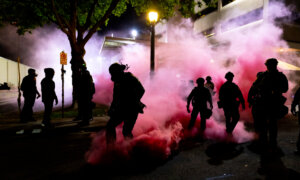
It’s an absolutely brilliant move by President Trump because it allows us to use the toolset that we utilize for, say, foreign terrorist organizations. We are allowed to use that here in the United States of America to use added intelligence capabilities, to added operational capabilities in terms of mapping out the networks and seeing how they connect and using the banking sector and the financial sector and our partners at Treasury, most importantly, because these groups, Antifa specifically, are responsible for, as you know, the Prairieland attack, for which we’ve arrested, I think, two dozen individuals and charged them with material support to terrorism. And rightly so.
They shot a federal agent in the neck and attacked a detention facility. We know what Antifa has done in Portland. Those investigations and prosecutions are ongoing. So we’re treating them as the terrorist organization that they are and mapping out the money. And you know this from me, I’ve always said, follow the money. So with our partners in Treasury, we are following the money and mapping out this entire network and treating them as a terrorist organization under the authorities the president has given us. And I think in the turn of the new year, you’re going to see some very righteous prosecutions and investigations being publicized.
Mr. Jekielek:
So let’s head over to Asia. You actually went to Asia. You went to China, notably, but you also visited other partners. That seems unusual. Does this signal a change in focus for the FBI, for you?
Director Patel:
So I know we’re going to talk about it, but the fentanyl campaign that I’ve launched since becoming director is a global campaign doesn’t just rest with China. We’ve worked brilliantly with our partners in India to stop the transshipments there. We went to Japan on this trip for the same reason. We also reached new partnerships with our counterparts in the Japanese law enforcement community and intel communities to allow us to extradite back for the first time in five years, literally just last week, criminals that the American public and our Department of Justice and the FBI need prosecuted here.
So we are working to expand our relationships. I believe our relationships with the FBI are the best they’ve ever been. And that’s not me just saying it. You can’t get a criminal back from the Japanese government if you don’t have a great relationship with them. And that was part of the reason why we went out there. Same thing in Korea. And ultimately, we ended up in Beijing.
Mr. Jekielek:
You said you met with your counterpart at the Ministry of Public Security [MPS] in Beijing. What was that like?
Director Patel:
It was a bit of a surreal experience. I’ve never been to China. And President Trump, thankfully, had these powerful engagements with President Xi. And what I can speak to is the FBI’s mission under that conversation, which is to attack the fentanyl crisis, which is killing tens of thousands, hundreds of thousands of Americans these last few years. And we’re not going to agree on everything. And this is what I told my counterpart when I sat down with him. We’re not going to be 100 percent on everything. But where we can agree, our respective presidents said, we should agree.
And where the FBI’s mission and the MPS mission overlap is shutting down the fentanyl precursors that the drug trafficking organizations are using down in Mexico to kill Americans. And we reached that agreement immediately. You know, it wasn’t me just showing up there. This was a six-month campaign where I engaged my Chinese counterparts over the phone and video teleconference and through a law enforcement attaché office. Kudos to Ambassador Perdue in China for helping us with this successful mission and being a great partner in the State Department and the White House and national security.
This is a whole-of-government approach. And we were successfully able to shut off all 13 precursors that make fentanyl and regulate fully seven additional chemicals that alter fentanyl to make it the lethal, addictive drug that it is. And that pipeline being shut off is forcing drug traffickers to scramble, which we’re seeing, for alternatives. And here’s the good news. They know and we know there aren’t any. That’s why we came up with this list.
Mr. Jekielek:
Interesting. So you’re actually seeing right now drug traffickers scrambling. Can you expand on that a little bit?
Director Patel:
So generally, without getting into the classified nature of the material where we have access to, we can see reflections from what the drug trafficking organizations say down in Mexico and Colombia and Venezuela and elsewhere are doing, the guys that are making the fentanyl. We know where they are. We know who they are. We know how they do it. And when we surveil and monitor and investigate these folks, we see that they are complaining about not having the necessary ingredients and mechanics to make fentanyl.
That is an immediate impact that they haven’t complained about in years. And I just want to remind folks that during the first administration, the Trump administration, remember the problem was the production of fentanyl in mainland China, which President Trump successfully shut off and the Chinese government adhered to that component. This is step two in the second administration, shutting off the precursors, because we literally cut the snake off at the head.
Mr. Jekielek:
So at The Epoch Times, we’ve had about 25 years of reporting on how the Chinese Communist Party has not lived up to its promises, whether written or verbal. How can you be so sure that this agreement will be honored by the other side?
Director Patel:
I think there’s a couple of factors in play. One, President Trump and President Xi have struck up a relationship that is continuous, ongoing communications to work with each other on a multitude of issues to include tariffs, which is not my wheelhouse, but it’s all interrelated, right? The fentanyl tariffs, it’s no surprise, were issued by President Trump because too many Americans were being killed. And they worked out an agreement where they said, our agencies are going to have to come to the table and continuously show the results with us. And that was part of my agreement with my counterpart at the MPS.
We are going to continue to work together. This wasn’t a one-off. If I have to go back, I‘ll go back. But we’re going to show the world jointly that we’ve adhered to this agreement. And if there isn’t, or they violate that agreement on this particular issue, they know the consequences from the president are going to be severe in terms of tariffs and other matters. And so it is a collaborative effort with sanctions also being applied by our partners in Treasury and OFAC [Office of Foreign Assets Control] designations. We’ve taken a whole-of-government approach to ensure that they’re going to adhere to this. And if they don’t, we’ll be the first ones to call it out.
Mr. Jekielek:
It sounds like, would it be fair to characterize it that the U.S. government is using many forms of leverage to ensure compliance on the Chinese side?
Director Patel:
Well, that’s, I think, the brilliant approach by President Trump in this administration. The FBI can’t do it alone. The DOJ can’t do it alone. The Treasury can’t do it alone. But when we take our collective authorities and put them in one pot and focus it on, say, fentanyl like we did here, then we can leverage not just the financial systems, the banking systems, the designation systems, the narcotics designation systems, but also allow law enforcement to work behind that to say, we are the decision point.
If you guys violate this, I’m going to go call Scott Bessent at Treasury. I’m going to go call Pete Hegseth. I’m going to call my other interagency heads and say, hey, we had an agreement. The president wanted us to have this agreement and you guys are in violation. And it will not be a good result, I believe, for the Chinese government when it comes to tariffs and others.
Mr. Jekielek:
So the previous FBI director is on record as having said that the Bureau was opening a new China-related counterintelligence case every 10 hours. I’m curious how that may have changed.
Director Patel:
Sure. So I’m glad we’re talking about espionage work. It’s one of the most important things, most important parts of the national security mission, which is the priority of the FBI next to crushing violent crime. And this FBI, year to date, you can open all the cases you want, okay? We can go out there and open up hundreds and hundreds of cases. But if you don’t actually have a conclusion to the FBI case, which is a disruption or an arrest, then what’s the point of opening the case? Just saying we’re opening cases is political public fodder.
Here’s the difference. This FBI alone, against the CCP, the DPRK [Democratic People’s Republic of Korea], Iran, and Russia, collectively arrested 40 percent more espionage actors against America year to date this year alone from last year. That’s the difference. We are actually disrupting them. We’re kicking them out of our networks. We’re bringing them to trial and we’re putting them in prison. That is a very powerful public display of force with our partners at the Department of Justice.
And the Attorney General has been an excellent partner on all of this fentanyl, counter-espionage, crushing violent crime, because we cannot do our work without public prosecutions to reveal this information. And all of these matters on all of these espionage cases we’ve taken to court are very public. And I encourage the media and the folks watching to do a deep dive on those. We post every single takedown.
Mr. Jekielek:
There’s also this issue, what’s typically dubbed transnational repression. In the past, basically this was viewed by law enforcement, including sometimes the FBI, as some sort of dispute in Chinatown, for example, where people are, and there was a realization that there’s a state actor exerting pressure against dissidents, for example. I’m wondering how that approach has changed, perhaps, in this FBI, or if it has.
Director Patel:
Same approach. For us, that differs from the prior. Opening up cases is step one of 10. Closing cases, bringing prosecutions and disruptions is how we powerfully, publicly shut them down. And we’re doing the same thing on the transnational repression front, be it from the CCP, be it from the Iranian regime, be it from the Russian regime. And what we’re seeing is these adverse actors across the counter-espionage, transnational repression platform come in and partner with people in the United States government’s positions of authority in the military, in the intelligence community, in think tanks. And we are taking those people down by arresting them and putting them on public display.
Just this year, we’ve arrested scores of people in public trust partnering with the Chinese government, selling them white papers, doing the same thing with Russia, doing the same thing with Iran. And we at the FBI are safeguarding American interests here, not just across those sectors, but also in the agricultural sector where we have stopped and ceased. Just this week, actually, we stopped the entrance of E. coli into the United States of America by a Chinese national. We did a similar operation in Michigan when they tried to bring in fungus and also alter our agricultural seeds through our Chinese researcher at the University of Michigan. Those are actual results that are making a difference vs. just opening cases.
Mr. Jekielek:
Makes me wonder how much we’re not hearing about what’s going on behind the scenes.
Director Patel:
Well, I think, yes, there’s some work we can’t talk about. But I think the one thing that no one can say about this FBI is how much we put out publicly. We are literally putting out more information than ever before on every single case and arrest and takedown we do between media and social media and other interviews. We are amplifying it through the great leadership at the White House and the Department of Justice. But we’re also not just stopping there.
We are working with our partners in Congress at a rate that’s never been before seen. And that’s a unique approach that I haven’t talked about publicly. The FBI normally does investigations in private. We are crafting a way to do our investigations in private while informing the public with as much information as we can. What do I mean?
James Comey, in his three to four years as director, gave Congress 3,000 pages of material for congressional oversight. Chris Wray, in his seven-odd years as director, gave Congress 13,000 pages of material for congressional oversight. In my nine months, we’ve provided Congress 40,000 pages of materials. And we’re going to keep going. And we’re going to keep going and we’re going to keep lifting redactions.
But my balance is to make sure the public is as informed as they can be, unlike my predecessors did, but also run investigations and prosecutions and securing those and at the end having them meet to have a full public disclosure. Now that just takes a little bit of time and I know there’s frustrations with why can’t you just release everything all at once? But as we’ve been talking about, my success is the end point, the disruption, the arrest, the prosecution, and the takedown, and the ultimate accountability in the public arena.
Mr. Jekielek:
I want to give you the opportunity to set the record straight on a couple of things that have been in the media a lot. And one of them is, you know, the allegation is there was too much of an effort in terms of the security detail, like an overprotection of your partner, Alexis Wilkins. What do you think about this reporting and these allegations?
Director Patel:
Well, first of all, thank you for letting me address that. I think it’s disgusting that an agency head has to even address the fact that their partner’s life is continuously being threatened. We treat my partner like any agency head treats their partner, with the authorities that are in place already following all the rules and regulations. And when any individual across any agency head and their respective spouse or partner has a threat to their life, we come in hard. And unfortunately, there are multiple threats against Alexis’s life that have caused us to properly secure her safety. And that is done independently by career FBI agents.
I don’t have any part in that. They make those decisions. They are the ones doing the security backgrounds and security analysis. And the people on social media using it to generate clicks and trash are jeopardizing the safety of her and other great Americans. And we are going to protect them every step of the way. We are not doing anything any agency has not done before us.
Mr. Jekielek:
The second question that has been out there quite a bit is that perhaps you might be using the FBI jet too often for personal reasons in the context of having criticized the previous FBI director about this exact thing. What are your thoughts on that?
Director Patel:
Simple. We put out the flight information for the American public. No other director did. We put it all out. I’m using the plane less than my prior two predecessors, the FBI plane. And just to footstomp this, I don’t have the option of flying commercial. I’m not allowed to. That is not a choice that is given to me. The U.S. government has said the FBI director, not just me, any of them, cannot use commercial air. On top of that, Jan, the prior directors utilized airfields such as Reagan National Airport to the tune of $4,000 to $7,000 additional taxpayer dollars just for the matter of convenience.
I am the first FBI director to mandate the use of government airfields. And had Chris Wray and Comey done the same thing, they would have saved the American taxpayer $4 million. So I’m the only one instituting economic and financial reform around that, and also using it sparingly, the FBI jet when I need to. But yes, am I going to continue to have a personal life just like every other agency head? Absolutely. We make a great sacrifice to be in these positions, and we are allowed to have some form of personal life.
Mr. Jekielek:
So you and I first encountered each other in the context of the Russia collusion investigation, now what’s dubbed, well, first it was dubbed Spygate. Now I believe Russiagate is the term. I know you’ve spoken about what you can talk about, what you can’t talk about, but can you give us some indication of, is there any progress or any resolution going to be seen around this issue, which has been ongoing for, I don’t know, almost a decade?
Director Patel:
Absolutely. You’re going to see it. And again, it’s one of those things that we, as we’ve been talking about, we’re working with our congressional partners to give them what we can give them. The reason the American public knows about the corruption and scandal and unlawful activities during Russiagate is because of the work I started at House Intel. And we’ve now seen the introduction through the James Comey case about the burn bags and everything else. We’ve also seen, thanks to the FBI’s disclosure to Congress, the thing known as Arctic Frost and the surveillance of senators and members of the House of Representatives and other law enforcement officials and government officials, including myself. It’s been made public that those investigations are ongoing. So that’s where I have to leave it.
But we are not done with either of those things. We are going to have full accountability and we are going to have full transparency for the American public. It is the single largest weaponization of law enforcement against America and specifically targeting a political party because the institutional elite in Washington, D.C. didn’t like them and didn’t want them to win. President Trump was the number one victim, and the rest of us were just as equally victimized. The American public deserves to have not only accountability but reform to make sure that never happens again.
Mr. Jekielek:
It sounds like you’re including Arctic Frost revelations in this, what you’re discussing here. Is that right?
Director Patel:
Well, we’ve made that public to Congress. We’ve said this is ongoing, so we can say that here.
Mr. Jekielek:
Just one thing about the burn bags really quickly. This room 9582, how is it that people didn’t know it existed, or how was it found? Can you give us any sense of this at all?
Director Patel:
I'll just say this generally. When the United States government and agency heads want things to disappear and want things to be buried and hidden, they know how to do it. But what they didn’t count on was President Trump winning, him electing leadership across the United States government to say, go find out how they corrupted and weaponized law enforcement. And that’s what we did. That’s what we’re doing. That’s how we found it. And we’re going to continue to expose it. You’re going to see everything we found in that room, in one way or another, be it through investigation, public trial, or disclosure to Congress.
Mr. Jekielek:
Director Patel, as we finish up, why come to The Epoch Times for this interview? Why not pick another media outlet, perhaps legacy media?
Director Patel:
Because the reality is that most of the media continues to report information falsely. The Epoch Times, since before I even knew you guys, has continuously reported credibly using facts and calling balls and strikes and not being political. So I’m always willing to sit down with an organization that reports the information and the facts and doesn’t politicize or shade it and can criticize me if it’s based on facts. I will gladly accept it. And that’s what I hope and continue that The Epoch Times will do for the FBI and me while we’re here.
Mr. Jekielek:
Keep you accountable.
Director Patel:
Yes, absolutely. We have to have a media that actually keeps us accountable, not one that’s interested in generating clicks and putting up trash on social media.
Mr. Jekielek:
Director Kash Patel, it’s such a pleasure to have you on the show.
Director Patel:
Thanks so much, Jan. I really appreciate it.
This interview has been partially edited for clarity and brevity.