Bill Pan contributed to this report.
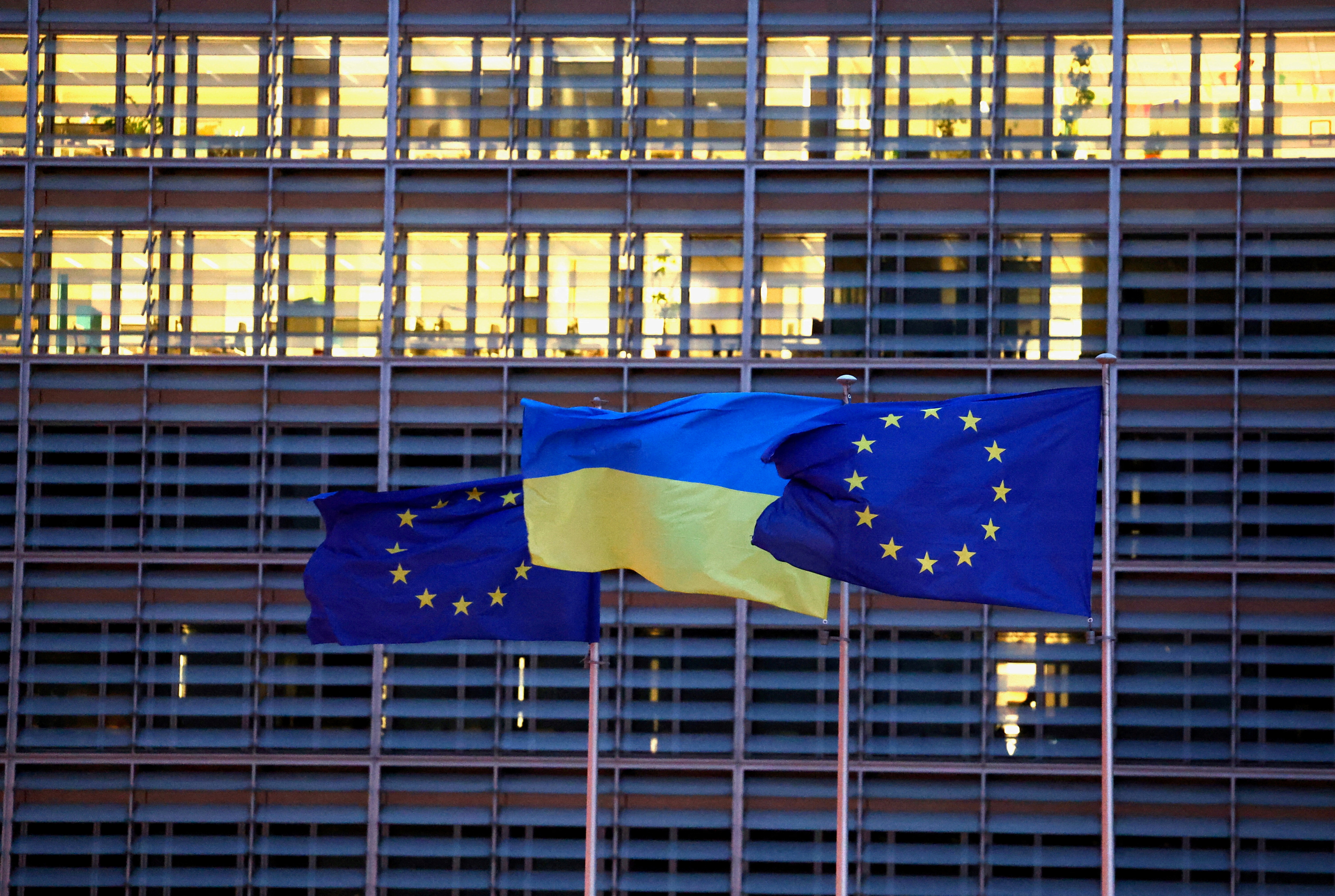
The European Union and Ukraine agreed on an action plan to tackle corruption and strengthen democratic institutions in the country in an effort to smooth its path to membership, the European Commission announced on Dec. 11.
The plan consists of 10 points and comes in the wake of one of the worst corruption scandals to hit Ukraine in years. The agreement was reached during an informal meeting of EU ministers and Ukrainian representatives in Lviv, Ukraine.
EU Enlargement Commissioner Marta Kos said the steps “all focus on strengthening the rule of law, fighting corruption, and building strong, accountable democratic institutions in Ukraine,” according to a report in the Kyiv Independent.
Kyiv has committed to prioritizing these goals in the next year, by “expanding the jurisdiction” of Ukraine’s two anti-corruption bodies, the National Anti-Corruption Bureau (NABU) and the Specialized Anti-Corruption Prosecutor’s Office (SAPO), Kos added.
Also included are reforms to the judiciary, the prosecutor’s offices, and the State Bureau of Investigation, as well as measures to strengthen internal systems that prevent high-level corruption.
“We recall that EU enlargement is a geostrategic investment in a strong, stable and united Europe grounded in shared values, and that Ukraine can become an asset to an enlarged and more resilient European Union,” Kos and Ukrainian Deputy Prime Minister for European and Euro-Atlantic Integration Taras Kachka said in a joint statement released on Dec. 11.
“In this context, Ukraine’s accession to the European Union will enhance the security of the entire continent and serve as a key element of broader security guarantees for Ukraine in the future.”
“Ukraine’s European path remains grounded in a shared commitment to integrity, democratic institutions, and the rule of law,” the statement added.
“Even in the face of extraordinary challenges stemming from Russia’s war of aggression, Ukraine continues to show determination and resilience in advancing reforms that strengthen transparency, accountability, and public trust. These efforts are essential to its EU accession process and reflect the country’s commitment to meet the obligations of membership.”
The news comes on the heels of a huge corruption scandal in Ukraine, which saw Ukrainian President Volodymyr Zelenskyy’s former business partner Timur Mindich charged over alleged involvement with a money-laundering scheme involving state-owned energy company Energoatom, along with six others
Kachka acknowledged that “Ukraine is going through painful structural reforms and the most recent situation also could eventually cast a shadow on the adherence of Ukraine to anti-corruption reforms.”
He also announced in a Facebook post on Dec. 11 the immediate termination of Energoatom’s supervisory council, calling it the “first step of establishing order in the company and eliminating corruption practices.”
“The new board of supervisors should be more effective—restart leadership, implement proper internal control, and help law enforcement investigate any facts of possible corruption,” he added.
According to Ukraine’s National Anti-Corruption Bureau, Energoatom’s contractors have been forced to pay kickbacks and bribes to the scheme’s ring leaders in exchange for maintaining their status as suppliers and avoiding product and service blockages.
Investigators alleged that roughly 100 million Ukrainian hryvnia, or about $2.3 million, was funneled through this system.
On Nov. 13, Zelenskyy signed a decree imposing sanctions on Mindich and businessman Oleksandr Tsukerman.
The bureau alleged that Mindich was the primary organizer of the scheme, while Tsukerman allegedly ran the “back office” that laundered the illicit proceeds. Mindich is a co-owner of Kvartal 95 Studio, the production company behind Zelenskyy’s hit TV series “Servant of the People.”
The bureau also released audio recordings in which members of the group, speaking in code and using encrypted terminology, allegedly discussed bribes and kickback arrangements connected to Energoatom.
The scandal implicated several prominent figures in the Zelenskyy administration, including former Deputy Prime Minister Oleksiy Chernyshov, Energy Minister Svitlana Hrynchuk, Justice Minister Herman Halushchenko, and former Defense Minister and current National Security and Defense Council Secretary Rustem Umerov.
On Nov. 12, both Halushchenko and Hrynchuk submitted their resignations, a day after Zelenskyy demanded that they step down and called corruption in the energy sector “absolutely abnormal” during wartime.
The case sparked public outrage as millions of Ukrainians face rolling blackouts and heating shortages in the winter due to Russia’s relentless bombardment of Ukraine’s energy sites.
Along with its corruption issues, Ukraine also faces a block on EU entry from Hungary, which has said it opposes Kyiv’s membership.
“Europe keeps sending money to Ukraine with no real oversight, and now a corruption scandal reveals vast sums evaporating into thin air. Yet some claim this is an argument for EU membership. Absurd,” Hungarian Prime Minister Viktor Orban said last month.
“Hungary’s position is crystal clear: if a country cannot even meet the basic standards, it is not ready for the EU.”