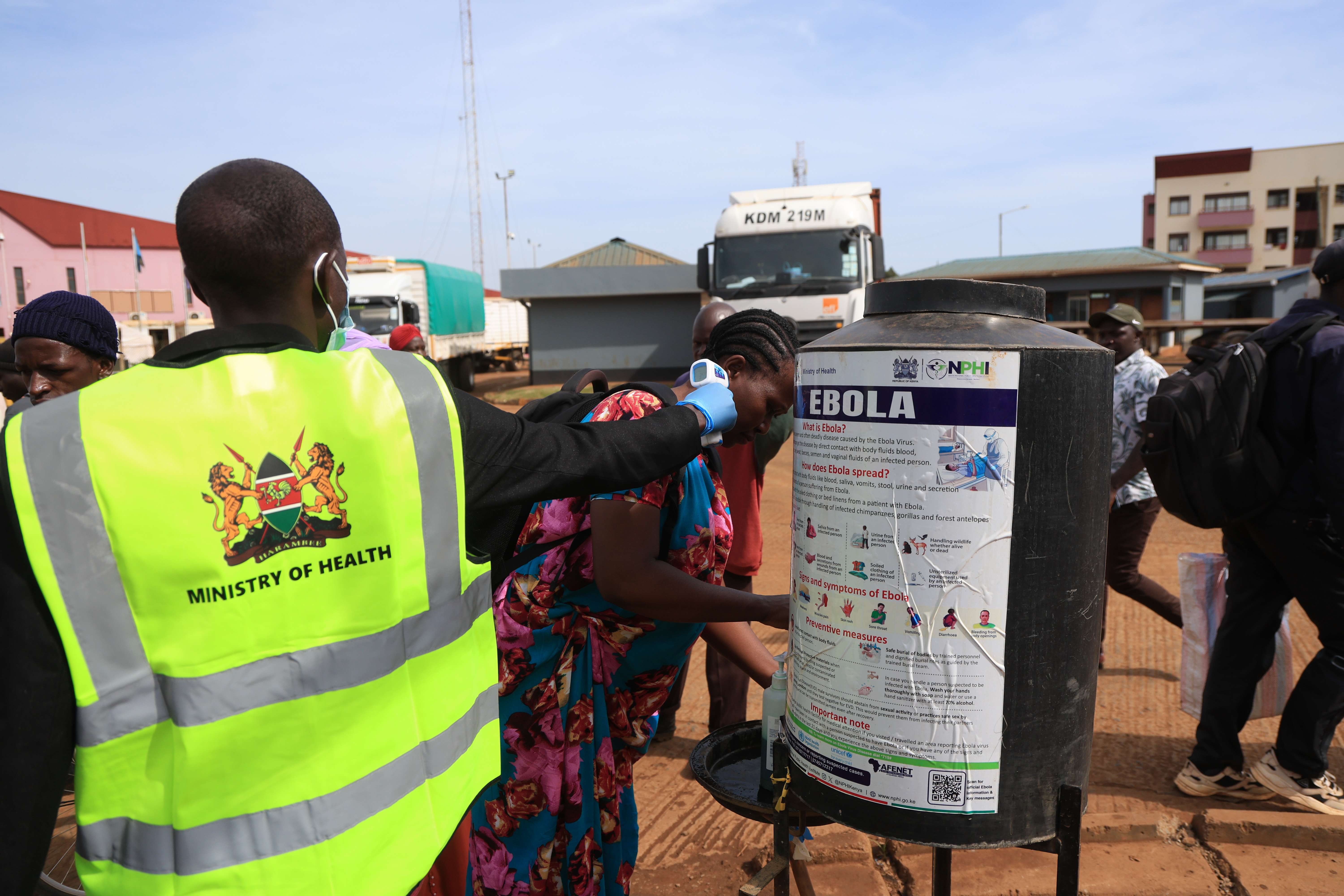

Eight Ebola cases have now been confirmed in Kenya, in an outbreak tied to the thousands of cases in another African country.
From Friday through Sunday, Kenya’s Ministry of Health confirmed six cases of Ebola.
Officials said all the new cases are believed or confirmed to have been exposed to the first patient, who lived in Congo for years and recently traveled to Kenya.
The first patient died, and all others have so far survived.
Because of their confirmed or suspected exposure, the six new patients were in quarantine when tests confirmed they had Ebola.
Kenya’s director-general for health, Patrick Amoth, told Citizen TV on Sunday that the latest detected case was a 49-year-old man who developed fever, headache, and muscle pain.
The man cleans rooms at a Nairobi hospital where the first patient was isolated, which is likely where he was exposed, Amoth said.
Ebola is a disease caused by Ebola viruses. It spreads through contact with bodily fluids from infected people or contaminated objects.
The possibility of community transmission is very remote, the health official said, because Ebola is only transmitted by symptomatic individuals and the people who became sick were not in contact with others by the time symptoms developed.
Authorities in Kenya have been encouraging people to seek medical care if they experience symptoms that can indicate Ebola infection, and have stressed that they have not imposed any restrictions on travel, trade, or public gatherings.
Congo Outbreak Spreads
In Congo, where one of the largest Ebola outbreaks in world history is ongoing, officials said on Sunday that cases have been detected in a province bordering the Central African Republic.
Two cases, including one death, have been recorded in Nord-Ubangi province, Congo’s Health Ministry said. The ministry said both patients were men in their 20s living in the Wapinda health zone, which borders Bas-Uele province, where Ebola cases have been reported previously.
Authorities have recorded at least 9,400 cases, including more than 4,500 deaths, in the outbreak declared in mid-May, making it the deadliest in Congo’s history.
The Central African Republic has not recorded any confirmed cases.
The outbreak previously spread to Uganda, which borders Congo. Officials there in July declared the country Ebola-free after discharging the last patient, and no cases have been confirmed since.
Ituri province in eastern Congo remains the disease’s epicenter, accounting for almost three-quarters of confirmed cases, according to the government’s most recent data, which shows 66 health zones have been affected since the start of the outbreak.
Congo’s state-news agency ACP reported Sunday that authorities in North Kivu province will introduce a one-week ban from Monday on people entering the province from Ituri in an effort to slow the spread of the virus.
Other measures will include banning more than two people on a motorcycle or four people in a car, as well as suspending big public gatherings such as mass sports activities, nightclubs, and political demonstrations.
The Associated Press contributed to this report.