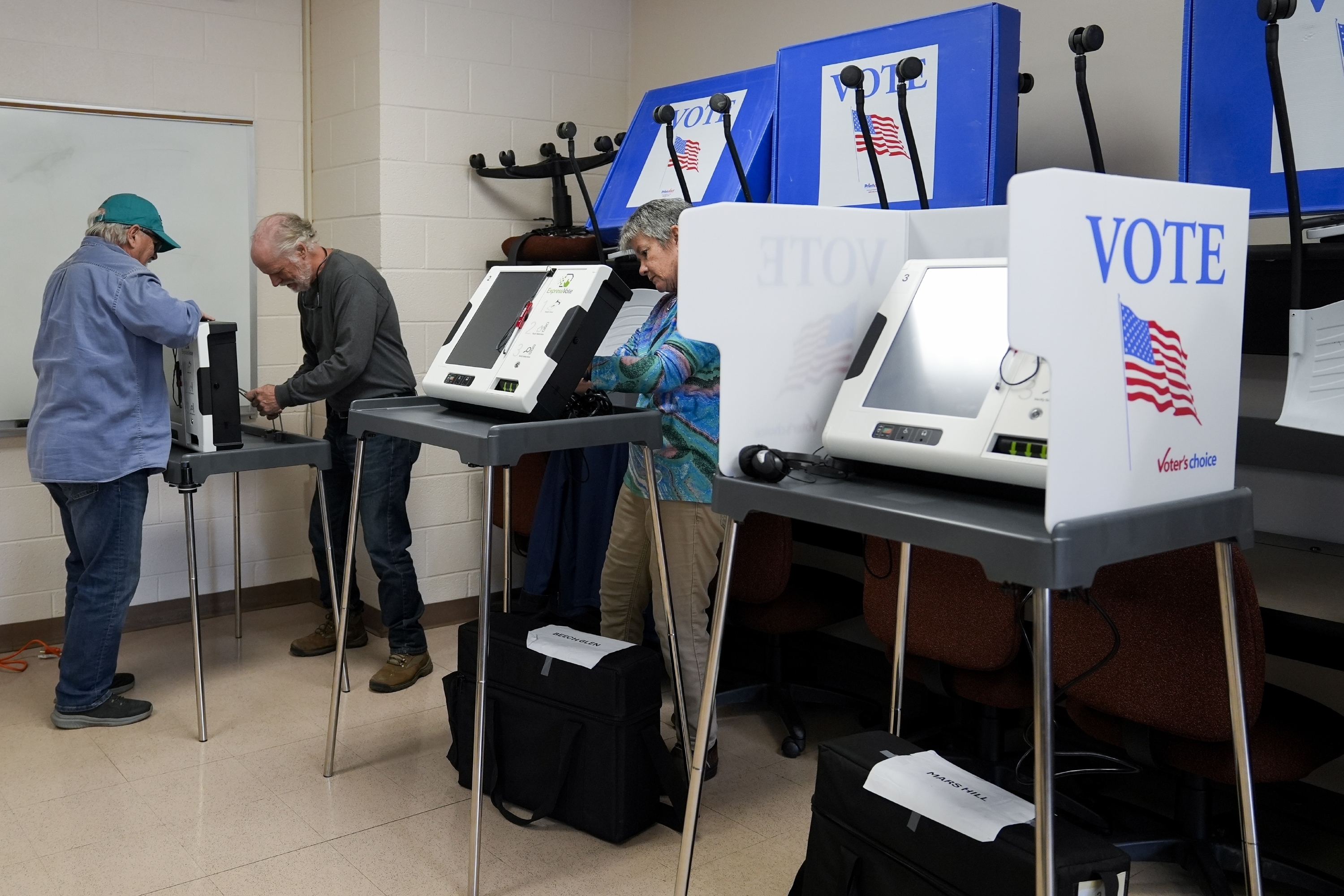

Early voting in North Carolina begins Feb. 12, marking the start of the state’s 2026 midterm elections.
At the top of the ballot, the U.S. Senate race is largely set. Former Gov. Roy Cooper, a Democrat, is expected to face former Republican National Committee Chairman Michael Whatley in November.
Down-ballot races are also drawing attention, particularly with new congressional lines in place. Republicans hope the redrawn map will help them pick up an additional seat. The legislature adopted the new districts in October; under state law, Gov. Josh Stein, a Democrat, did not have the authority to approve or veto the map.
Of North Carolina’s 14 congressional districts, a few are expected to be competitive.
1st Congressional District
In the 1st Congressional District, Rep. Don Davis (D-N.C.) is seeking reelection in a district reshaped by redistricting. Davis won his second term in 2024 by fewer than 2 percentage points, making him one of 13 House Democrats nationwide elected in districts also carried by President Donald Trump that year, according to the Center for Politics at the University of Virginia.
Davis has criticized the new map, calling it “beyond the pale.”
While Davis is running unopposed in the Democratic primary, five Republicans are competing for the nomination.
Army veteran and former Trump administration official Laurie Buckhout is seeking a rematch after narrowly losing to Davis in 2024. Her platform emphasizes border security, support for working families, Second Amendment protections, backing the military and veterans, and leadership on artificial intelligence.
State Sen. Bobby Hanig, also an Army veteran, is another contender. Hanig chairs the Senate Appropriations Committee on General Government and Information Technology and the State and Local Government Committee, and serves as vice chair of the Joint Legislative Committee on Local Government. He also sits on several other committees, including Agriculture, Energy and Environment, and Education. While he has not released a detailed platform, his campaign highlights fiscal responsibility, economic growth, public safety, and efficient government.
Former sheriff Asa Buck is also running. A past president of the North Carolina Sheriffs’ Association and one of the longest-serving sheriffs in the state, Buck is campaigning on limited government, lower taxes, and individual freedom.
Lenoir County Commissioner Eric Rouse is on the ballot as well, running on support for Trump’s agenda, border security, and opposition to what he describes as “wokeness.”
Attorney and small-business owner Ashley-Nicole Russell rounds out the field. Her platform includes lowering prices and inflation, balancing the federal budget, cutting spending, implementing term limits, securing the border, defending the Second Amendment, banning transgender medical procedures for minors, and prohibiting males identifying as transgender from competing in girls’ sports.
11th Congressional District
In the 11th Congressional District, five Democrats are vying for the chance to challenge incumbent Rep. Chuck Edwards (R-N.C.). While Edwards comfortably won reelection in 2024, Democrats are looking to flip his seat.
The Democrat field includes farmer Jamie Ager, educator and advocate Zelda Briarwood, physician Richard Hudspeth, cancer researcher and professor Paul Maddox, and civil engineer Lee Whipple.
Ager’s campaign focuses on recovery efforts following Hurricane Helene, lowering costs, improving health care affordability, immigration reform, and public safety. An internal Democrat poll shared with Newsweek shows him beating Edwards by 1 percentage point.
Briarwood’s platform calls for increased funding for rural health care, Medicaid expansion, restrictions on private equity ownership of residential housing, and legislation to provide free community college.
Hudspeth is campaigning on rebuilding after Hurricane Helene, making health care more affordable, and supporting veterans.
Maddox has not released a formal platform, but his campaign says he would work to lower costs, expand access to affordable health care, and make government more responsive to the people it serves.
Finally, Whipple is also running on hurricane recovery efforts.