On Thursday, top officials at the Department of Justice (DOJ) and the FBI announced that they had arrested a suspect in the case of pipe bombs planted in Washington, D.C., on the evening of Jan. 5, 2021.
The explosive devices were found around the major party headquarters the following day, on Jan. 6, when the Capitol breach was taking place nearby.
The arrest of a suspect, Brian Cole Jr., represents the biggest sign of progress yet in the case in years. According to officials, it was solved without the discovery of any new evidence, through rigorous investigation into old evidence and leads.
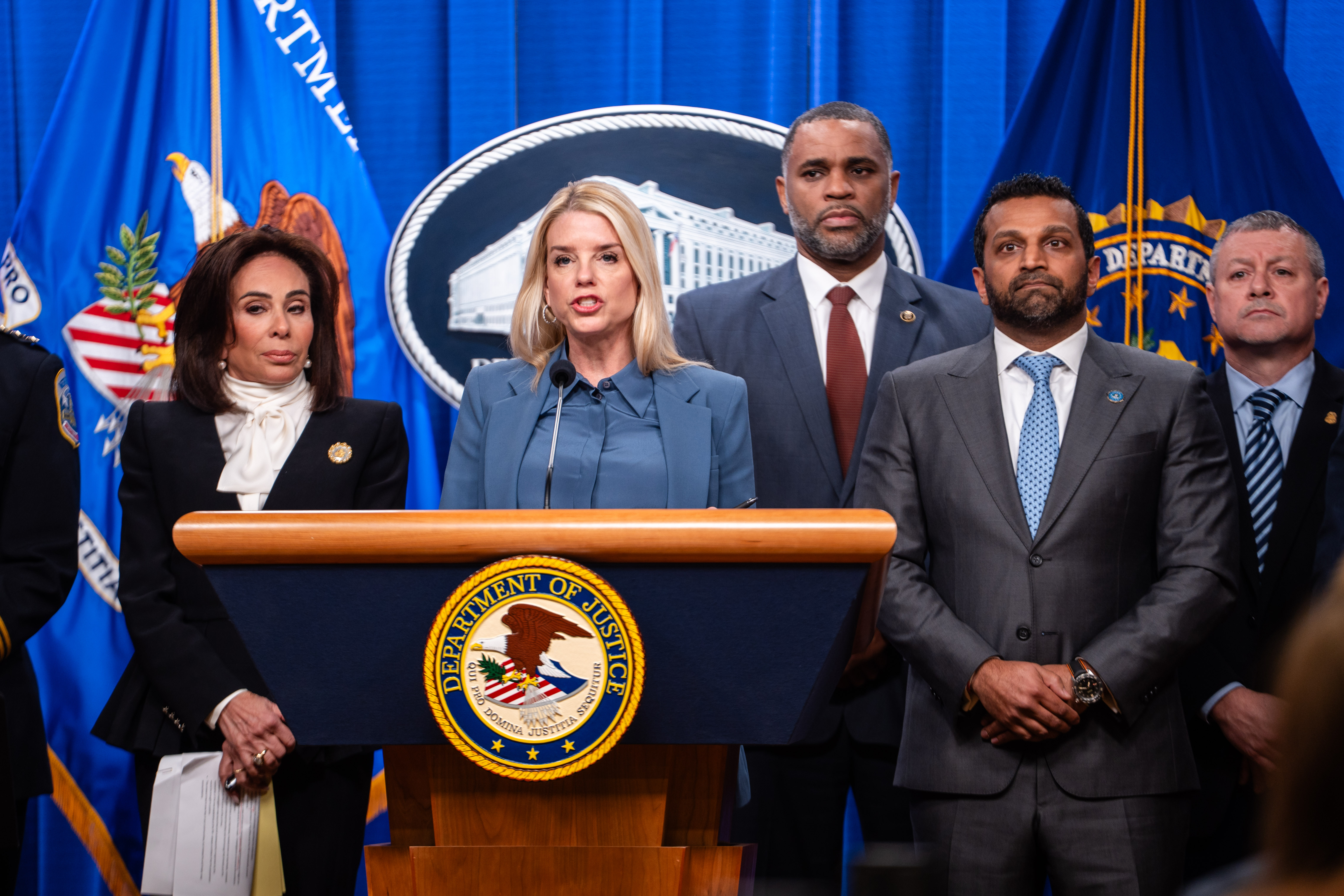
“Today’s arrest was the result of good, diligent police work and collaboration on a case that languished for four years under the prior administration,” Attorney General Pam Bondi said at a Washington press conference on Dec. 4. “The American people are safer thanks to this morning’s successful operation.”
Cole was charged federally with transporting explosive devices across state lines and attempted destruction with explosive material.
Here are the biggest things to know about the incident—and the suspect.
What Happened?
The Dec. 4 announcement dates back nearly five years, to the evening before the events of Jan. 6, 2021.
On Jan. 5, security footage captured an individual wearing a gray hoodie and a face mask carrying a bag through a residential neighborhood on South Capitol Street in Washington around 7:40 p.m. local time.
At 7:52 p.m., footage showed the individual sitting on a bench outside the Democratic National Committee (DNC) headquarters. In the footage, the individual zipped up a bag, stood, and began to walk away.
Later the next day, law enforcement discovered a pipe bomb in a nearby bush.
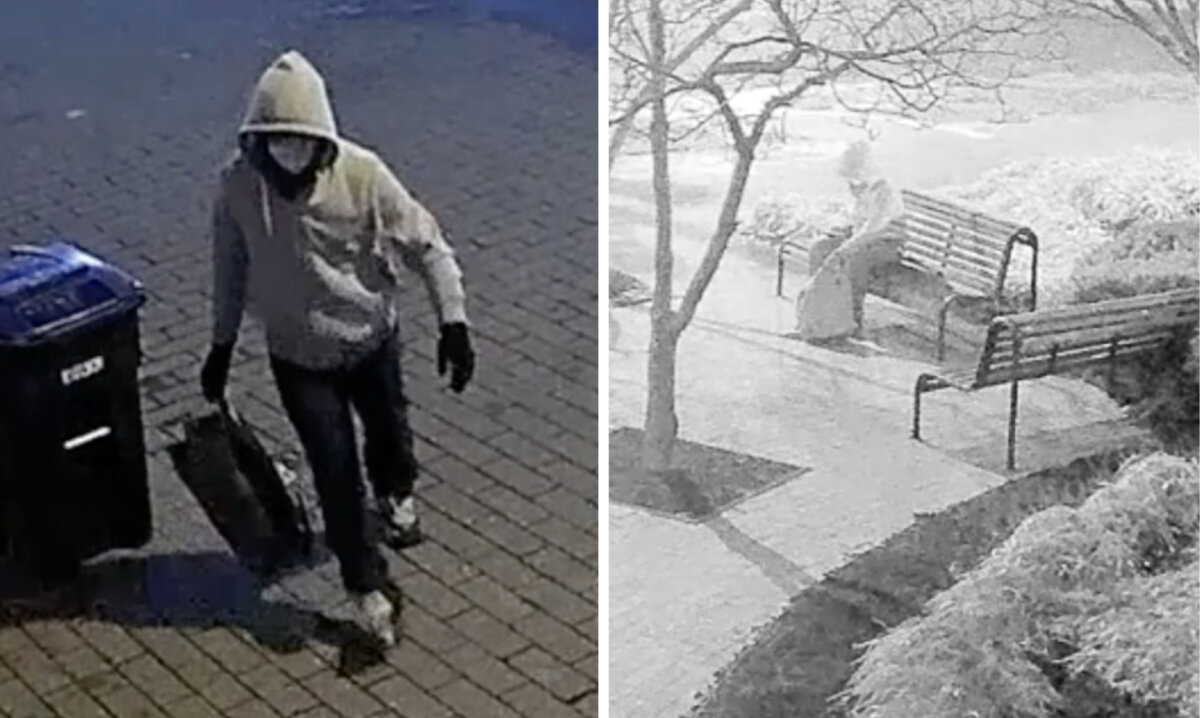
- (Left) The Jan. 6 pipe-bomb suspect walks between the Democratic and Republican headquarters, where the FBI says pipe bombs were planted on Jan. 5, 2021. (Right) The suspect sits on a bench outside the Democratic National Committee. (FBI/Graphic by The Epoch Times)
At 8:14 p.m., the suspect was seen in an alley near the Republican National Committee (RNC) headquarters. Law enforcement also discovered an explosive device in this area.
Both bombs were placed just blocks from the U.S. Capitol.
Neither bomb ultimately detonated, and law enforcement officers found them the following day as Congress’s session in the U.S. Capitol to certify the results of the 2020 presidential election was in progress.
The FBI has stated that the bombs could have detonated.
“Fortunately, these bombs did not explode, although they certainly could have,” Darren Cox, assistant director in charge of the FBI Washington Field Office, said on Dec. 4.
Case Went Cold
Despite thousands of hours of security footage and some leads, the bombs were discovered well after they were set.
Between his identity-concealing attire and low-profile behavior, the suspect evaded suspicion at the time of the crime.
Ultimately, no arrest was made for five years.
The FBI initially offered a reward of $100,000. In 2023, that amount was increased to $500,000.
Still, no progress had been made, and no new leads had been uncovered by the time President Donald Trump returned to the White House.
No New Evidence: DOJ
After Trump took office, Bondi and FBI Director Kash Patel began to take another look at the case.
FBI Deputy Director Dan Bongino wrote on X in the spring that after he and Patel were sworn in, they decided to allocate additional resources to certain cases, including the pipe bomb investigation.
“Today’s arrest happened because the Trump administration has made this case a priority,” Bondi said at a briefing in Washington.
Going against the norm for cold cases, Bondi said they made progress without any new piece of evidence.
“There was no new tip, there was no new witness, just good, diligent police work and prosecutorial work,” she said.
‘Three Million Lines of Information’
Patel said at the briefing that a new team of investigators and experts had rigorously sifted through existing evidence and generated new leads that ultimately resulted in Cole’s arrest.
The FBI director said “three million lines of information” were pored over as part of the renewed investigation.
U.S. Attorney for the District of Columbia Jeanine Pirro said the investigation included going through 233,000 sales of the type of black endcaps used to build the bombs and finding a common link with purchases of pipe, wires, and other materials.
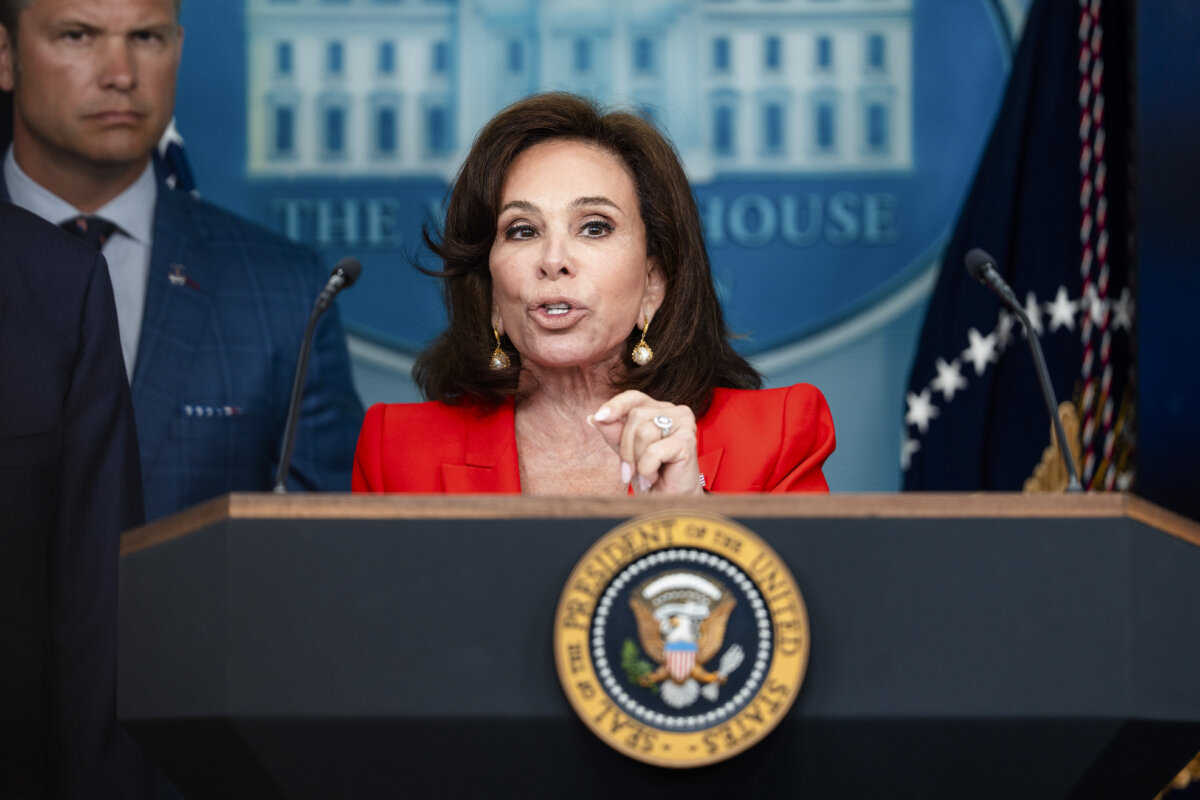
- U.S. Attorney for the District of Columbia Jeanine Pirro speaks during a press briefing at the White House on Aug. 11, 2025. (Madalina Kilroy/The Epoch Times)
Through these investigations, law enforcement learned that Cole purchased items such as pipes and kitchen timers in 2019 and 2020 at stores including Home Depot and Walmart.
These items were later allegedly used to manufacture the explosive devices, according to records obtained by investigators and described in an affidavit filed in federal court in support of the charges.
Suspect Brian Cole Jr.
The suspect was identified through these investigations as Brian Cole Jr., who lived just miles from the Capitol in the Northern Virginia city of Woodbridge.
He’s facing two federal charges.
The first is a felony violation of 18 U.S. Code Section 844(d) prohibitions on transporting explosives across state lines with the intention to harm or kill.
Because the explosive didn’t detonate, Cole faces a maximum sentence of 10 years in prison for this charge.
The second charge is a felony violation of 18 U.S. Code Section 844(i) prohibitions on using an explosive device to destroy or damage—or with the intention to destroy or damage—any building understood to be involved in interstate commerce. As national parties, the DNC and RNC headquarters meet this criterion.
If convicted, Cole faces a minimum sentence of five years and a maximum of 20 years on this count.
In the criminal complaint, the DOJ said that Cole is 30, about 5 feet 6, and wears glasses.
According to the complaint, Cole has been identified as the suspect through confirmation that he purchased materials used in the pipe bombs, cellphone records showing he was in the same area on Jan. 5, 2021, and other discoveries.
Zachary Stieber and Savannah Hulsey Pointer contributed to this report.