
By Patti Nickell
Tribune News Service
FREDERICKSBURG, Texas—On my first night in Fredericksburg, I’m headed to one of my favorite dining spots, Hill & Vine Restaurant.
While I am salivating at the thought of its Southern staples stamped with the flavors of the Texas Hill Country (think black-eyed pea hummus, chile-citrus brined pork chops, and sweet cornbread), it’s the prospect of their wine list that has me really excited.
Hill & Vine’s owners are passionate about Texas wines, and on my first visit a few years ago, I became enthralled with a bold, rich Tempranillo marrying the flavors of red fruit with the smokiness of tobacco. On this occasion, two glasses of this Texas Tempranillo confirmed my belief that it is as good as any I have had in Spain’s Rioja Region.

Hill & Vine Restaurant offers the best of Texas food and wine. (Hill & Vine/TNS)
Fredericksburg, a small community halfway between Austin and San Antonio, is on Highway 290, better known in these parts as “the Wine Road.”
It has become the epicenter of Texas’s burgeoning wine industry, with 75 of the more than 100 wineries along the route located in the town and its surrounding countryside.
Famous vineyards such as Signor, Grape Creek, and the Texas Wine Collective attract some 1 million visitors annually. However, if you are looking for one of the region’s newest additions, head for Prochnow Vineyard at Crabapple Creek.
Enjoy a tasting on the expansive back porch, where you can sample their sangiovese rosé or cabernet sauvignon. If you’re lucky, owners Ross and Valerie Prochnow will join you and talk about how they are continuing the legacy begun by Ross’s father, World War II flying ace Col. Marvin Prochnow.
A German Settlement
As significant as the wine industry is, it is but one factor in the enduring charm of Fredericksburg, which was settled by a group of German immigrants in 1847. Their leader, Baron Otfried Hans von Meusebach, was successful in his negotiations with the Penataka branch of the Comanche Indians, a group not usually known for negotiating with anyone.
Von Meusebach persuaded the tribe with his offer to share the land peacefully. His monetary gift of $3,000 doubtlessly didn’t hurt either. The treaty between the German immigrants and the Comanches was one of the few in American history that was never broken.
A bronze sculpture, “Lasting Friendship,” showing von Meusebach and Comanche chief Santanna sharing a peace pipe, is located in the town’s Marktplatz.
It’s not surprising that the rich farmland proved so desirable to the German settlers, who found they could grow almost anything in the fertile soil watered by the nearby Pedernales and Guadalupe Rivers.
Land of Abundance
Today’s visitors get a sense of this abundance at places such as Wildseed Farms and Fischer & Wieser’s Das Peach House.
Wildseed is the nation’s largest working wildflower farm (of course it is; it’s Texas, y’all) with more than 200 acres devoted to Texas wildflowers.

Wildseed Farms is the largest wildflower farm in the United States. (Wildseed Farms/TNS)
In peak season (spring through autumn), the farm looks like a multicolored carpet spread across the landscape. To better appreciate the beauty of Texas favorites such as bluebonnets, Indian paintbrush, poppies, black-eyed Susans, and coneflowers, take a stroll on the half-mile walking trail through the gardens, butterfly garden, and vineyards.
Yes, they do make wine, and you can enjoy a tasting here or opt for a cold beer in their Brewbonnet Biergarten.
Das Peach Haus is a rustic farmhouse overlooking a serene pond and surrounded by a grove of pine trees that suits the casual vibe of the Texas Hill Country.

Das Peach Haus, a Hill Country staple for nearly a century. (Das Peach Haus/TNS)
However, the modest structure belies the eclectic nature of the business it houses, Fischer & Wieser Specialty Foods, Inc., a Hill Country staple since 1928.
Yes, there is a peach orchard, the fruits of which you can taste in their award-winning jams and jellies, but also light bites and bakery items, cooking classes and wine tastings, dinner under the pines and, on occasion, live music.
Their most recent addition is the Dietz Distillery, from which comes their Five Judges Gin, a London-style gin whose Lone Star spin honors the quintet of judges who have called the property home over the past century.
Downtown Fredericksburg
Plan to spend a day just wandering the compact downtown (either on foot or on the trolley tour) to see the surprising number of specialty shops and boutiques, museums, architectural gems, restaurants, and bars for a town its size.
If you are a history or World War II buff, you won’t want to miss the Smithsonian-affiliated National Museum of the Pacific War, located here to honor a local boy, Chester W. Nimitz, who became commander-in-chief of Allied Forces in the Pacific Theater.
If you are interested in architecture, you’ll love the famous Sunday Houses, built by German settlers as weekend residences when they came to town for supplies and church services, and unique to the Hill Country. Some of the original houses are available for overnight stays, while others, such as The Gathering, where I stayed, are reproductions of the originals (although those originals didn’t boast the private courtyard hot tub and fire pit that my accommodation did).

One of the original Sunday Houses built by the Germans in the 19th century. (Trish Rawls/TNS)
Foodies won’t be disappointed either, as Fredericksburg has a surprisingly robust dining scene. If it’s authentic German you crave, Otto’s is the place to go for both schnitzel and sauerkraut and German and Austrian wines.
If you just can’t leave Texas without brisket and all the trimmings, there’s the smokehouse at the Albert Hotel, and for the health-conscious who still love a good meal, book a table at the Hill Country Herb Garden. Order a glass of Texas wine or a craft cocktail, and while your meal is being prepared, take a stroll through the property’s beautiful botanical garden.
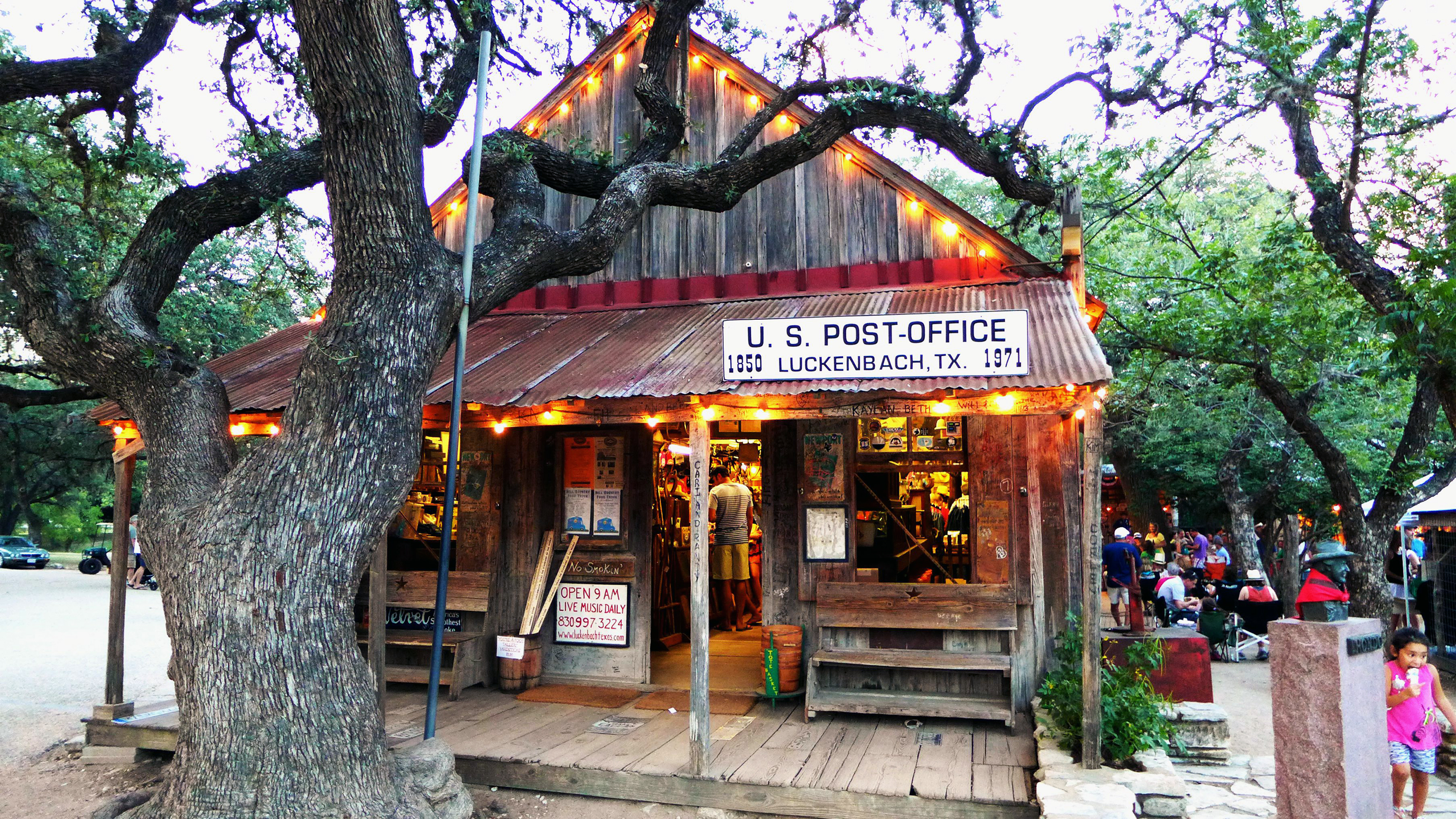
For country music lovers, while you’re in the area, make like Waylon, Willie, and the Boys and take the short drive to Luckenbach, Texas.
Founded in the mid-19th century, it had a revival a century later when local legend “Hondo” Crouch purchased the “blink and you'll miss it” town to preserve it as a shrine to country music.
In addition to Waylon and Willie with their iconic song, Jerry Jeff Walker recorded his album “Viva Terlingua” here.
Today, Luckenbach’s population may be in single digits (three at latest count), but visitors from around the globe flock here to have a picture taken in front of the 1886 post office that doubles as a general store and bar (don’t forget to show your appreciation by dropping a bill in the armadillo tip jar), and to see the dance hall and listen to country music performers pick and sing during daily jams.
With all of its attractions, Fredericksburg’s greatest charm may lie in the potent combination of German spirit and Texas heart.
Copyright 2025 Tribune Content Agency, LLC.
Dear Readers: We would love to hear from you. What topics would you like to read about? Please send your feedback and tips to features@epochtimes.nyc.