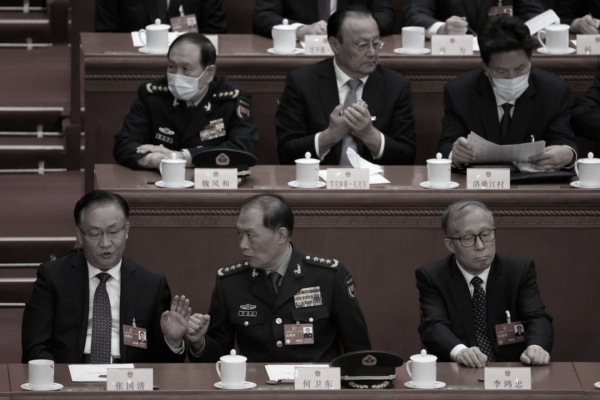

A senior Chinese official with extensive ties to the country’s defense sector has recently made several high-profile public appearances. Insiders suggest he could be playing a crucial part in Beijing’s military and strategic relationships with Iran.
Zhang Guoqing—a vice premier and member of the Chinese Communist Party’s (CCP’s) second-highest leadership panel, the Politburo—has attended multiple domestic and international events since early March, including a trip to France as Chinese leader Xi Jinping’s special envoy to the second Nuclear Energy Summit.
The recent surge in public appearances by Zhang—who previously spent much of his career in China’s state-run arms industry—has raised questions among analysts and insiders about his role amid heightened tensions in the Middle East.
Defense Industry Background
Before entering top political leadership, Zhang spent decades within China’s military-industrial complex, including senior roles in China North Industries Corporation, widely known as Norinco. The conglomerate is one of the country’s primary exporters of military equipment and defense technology.
Due to his background, some observers have described Zhang as a “defense-industry vice premier” who represents the interests and influence of the military-industrial complex within the CCP’s senior leadership.
Three insiders within the CCP told The Epoch Times that Zhang has been assigned by Xi to help coordinate military-industrial supply chains connected to Iran following the U.S.–Israeli strikes.
The insiders spoke to The Epoch Times on condition of anonymity due to fear of reprisal.
An insider familiar with China’s defense industries told the publication that Iranian officials had repeatedly sought support from Beijing after the war started.
According to the insider, the requests involved military equipment such as drones, unmanned vessels, and smart naval mines, which Iran could assemble domestically.
“Zhang has deep roots in the defense industry and has become a key coordinator in China’s conventional arms export network and parts of the military technology system,” the insider said.
“He is no longer just a technical bureaucrat. In many ways, he represents the interests of the defense sector within the senior leadership.”
Some observers believe Zhang’s rise reflects Beijing’s increasing emphasis on arms exports as part of its global strategy.
According to the insider, Xi appointed Zhang to oversee industrial and security portfolios, partly to support the expansion of China’s military-industrial influence abroad.
“Selling weapons to countries across Asia, Africa, and Latin America not only generates economic benefits but also creates political influence and allows China to better understand developments in those regions,” the insider said.
Another source within the CCP told The Epoch Times that the level of Chinese involvement in foreign weapons sales often depends on the type of equipment exported.
Small arms and riot-control gear generally do not require Chinese personnel on site, the source said. However, complex systems—such as missiles or large launch platforms—typically require technicians to provide training, technical support, or operational assistance.
“If Iran were to acquire such heavy systems, Chinese personnel would almost certainly need to be present,” the source said.
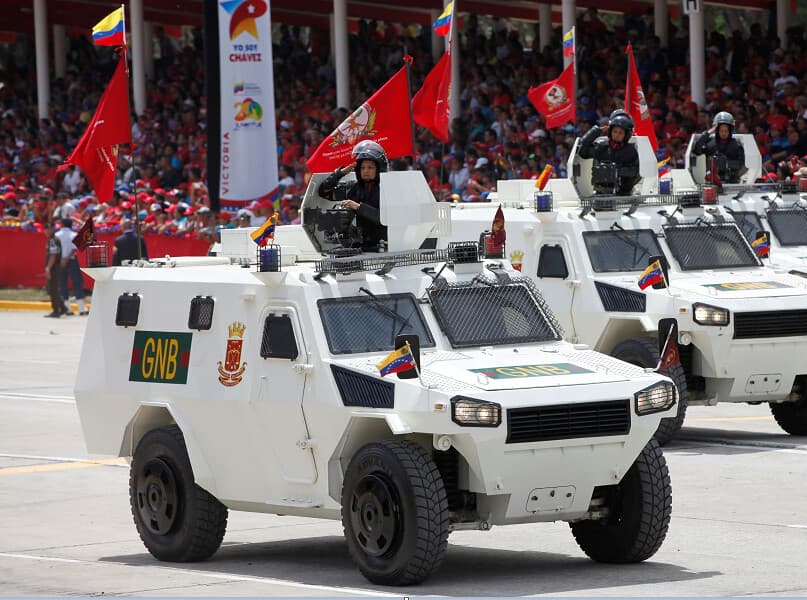
A China-made Norinco VN4 armoured personnel carrier in Caracas, Venezuela, on March 5, 2014. (Cancillería del Ecuador/Flickr/<a href="https://creativecommons.org/licenses/by-sa/2.0/deed.en">cc by-sa 2.0</a>)
China–Iran Military Ties
Some analysts suggest that the ongoing war in Iran could also give China a chance to indirectly observe U.S. military capabilities.
A China-based scholar familiar with the CCP’s political structure told The Epoch Times that Zhang’s career path—from leading a major state arms conglomerate to joining the Politburo and becoming a vice premier—reflects the enduring influence of the defense industry within the regime’s strategic policymaking.
“Zhang’s entry into the top leadership is not just the rise of a technocrat,” the scholar said. “It also shows the ongoing influence of the military-industrial complex within China’s political structure.”
According to the scholar, the Iran war may offer Beijing valuable real-world data about U.S. weapons systems and battlefield tactics.
Zhang’s personal connections to Iran date back decades.
Earlier in his career at Norinco, he spent extended periods working in Tehran, beginning at a representative office and gradually building relationships within the country’s political and economic networks, according to the scholar.
“Zhang is regarded within the Chinese leadership as someone who understands Iran very well,” the scholar said. “Many decisions related to Iran allegedly go through him, and Xi seems to trust him.”
Chinese state media Xinhua reported in 2004 that when Zhang was president of Norinco, he signed an $836 million contract for the construction of Tehran Metro Line 4—one of the largest overseas engineering contracts undertaken by a Chinese company at the time.
Beyond defense cooperation, Chinese technology companies could have also played a role in building Iran’s communications and surveillance infrastructure.
A technician from a China-based tech company told The Epoch Times that firms from Guangdong, Beijing, and Jiangsu had been involved in Iranian telecommunications and monitoring systems since at least 2016.
Such cooperation integrates infrastructure, defense technology, and digital systems, the technician said, creating a multilayered partnership between the two countries.
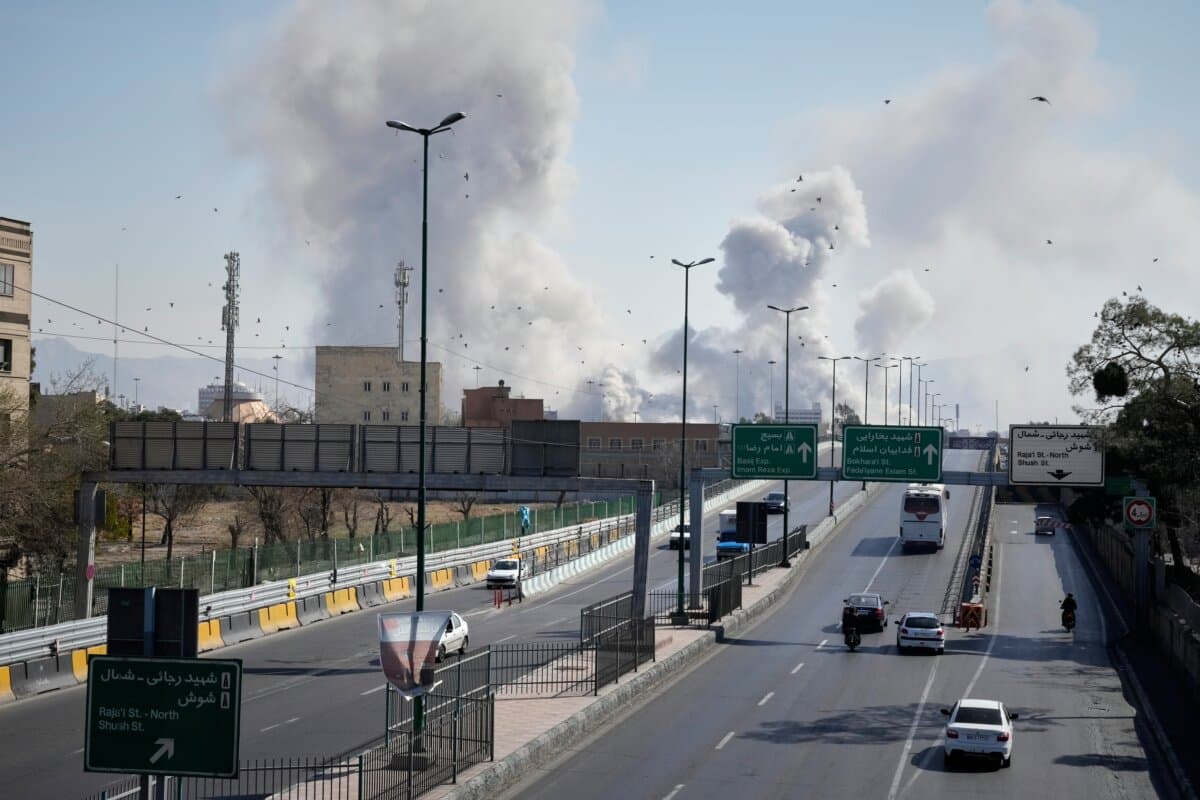
Plumes of smoke rise after U.S.–Israeli strikes in Tehran, Iran, on March 5, 2026. (Vahid Salemi/AP Photo)
Chinese companies have assisted Iran in developing domestic surveillance capabilities, including camera hardware and big-data analytics, the technician said. Some of these technologies have also been used to monitor activities in the Persian Gulf, such as movements related to U.S. forces.
Nevertheless, Chinese radar and defense systems have so far failed to stop U.S.–Israeli military operations in Iran, highlighting the limitations of Tehran’s current defenses despite its increasing technological cooperation with Beijing.
Wu Fei contributed to this report.