
News Analysis
China’s state-owned steel giant Ansteel Group has removed 104 experts from its bid-evaluation panel, citing “long-term failure to perform duties or improper performance of duties,” according to a recent company announcement.
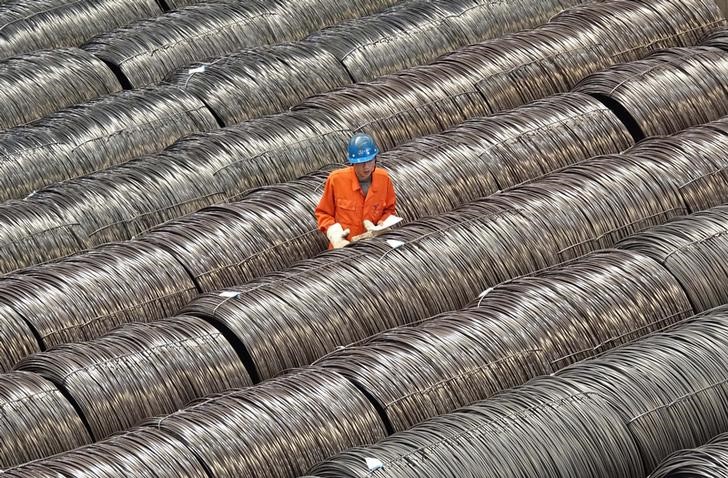
Ansteel, headquartered in northeastern Liaoning Province, is one of China’s largest steel producers and a key state-owned enterprise (SOE) under the Chinese regime’s supervision. As a major supplier to China’s industrial and infrastructure sectors, the company oversees substantial procurement, construction, and equipment-purchasing projects.
According to a June 4 notice published on Ansteel’s Smart Tendering and Bidding Platform, the company removed 104 members from its expert database in an effort to strengthen management of bid-evaluation specialists and improve compliance with internal rules.
The individuals were not regular employees or technical staff. Rather, they were members of Ansteel’s bid-evaluation expert pool, whose responsibilities include reviewing procurement contracts, engineering projects, equipment purchases, supplier selection, and technical-service tenders.
The announcement quickly drew attention on Chinese social media, where many users questioned whether expert databases and advisory panels within SOEs have become vehicles for patronage and hidden privilege. Commenters criticized bloated administrative structures, “ghost payroll” arrangements, and growing disparities in pay, benefits, and status between frontline workers and well-connected insiders.
Insiders and analysts who spoke to the Chinese edition of The Epoch Times said it is common for positions within China’s SOEs to be awarded to individuals with political or personal connections rather than to those with professional qualifications. They said that removing 104 underperforming experts is unlikely to address deeper problems stemming from opaque management structures, weak accountability, and entrenched patronage networks.
Former Exec Describes Lucrative Expert Status
A former Ansteel executive surnamed Zhang, who requested anonymity due to fears of retaliation by Chinese authorities, told the Chinese edition of The Epoch Times that membership in the company’s expert database has long been regarded as a highly desirable position.
According to Zhang, experts in the field may be involved in evaluations related to equipment procurement, construction projects, technical services, and supplier selection, which can lead to significant financial rewards.
“That’s a lucrative position,” Zhang said. “You don’t necessarily have to show up every day, but once your name is in the database, you may receive evaluation fees, consulting fees, and opportunities to access suppliers and project resources whenever projects come up.”
Zhang said company leadership was aware that some experts rarely participated in evaluations but remained in the system because of their backgrounds and connections.
“Many of these people had powerful sponsors or vested interests behind them,” he said. “The fact that Ansteel removed 104 people at once suggests the company can no longer afford to keep paying individuals who were not performing—or were underperforming—their duties.”
Expert Panels as Gatekeepers of Resources
Li Yu, a China-based researcher who also uses a pseudonym for fear of the regime’s reprisals, said the case reflects broader structural problems across China’s state-owned sector.
“Central SOEs ... have long operated within a system that lacks meaningful oversight,” Li told the Chinese edition of The Epoch Times. “They are connected to political power, hold market monopolies or advantages, and are rarely held accountable for violations. ”
According to Li, expert databases, review panels, and advisory committees are often presented as professional institutions, but they can evolve into insider-controlled networks.
“It would not be surprising if a significant number of people entered these expert pools through personal connections,“ he said. ”Whether they genuinely met the qualifications is often unclear.”
He noted that this problem is widespread within China’s SOEs.
“On the surface, these are professional resources,” Li said. “In practice, they can easily become resources controlled by a particular circle. Once people are accepted, they maintain their qualifications and positions for years. They participate when benefits are available, but when responsibilities are neglected, accountability is often absent.”
Li described China’s SOE system as “more like a black hole,” noting that privileges and benefits often remain concentrated among connected groups despite mounting financial pressures facing many state-owned enterprises.
Analysts Question Whether Problems Are Being Addressed
Cheng Guobang, a U.S.-based scholar of Chinese affairs who used a pseudonym due to concerns about repercussions for relatives and associates in China, said the underlying problem extends beyond inefficiency.
“The issue is that power, resources, status, and benefits within state-owned enterprises are deeply intertwined with the political system,” Cheng said.
In his view, the removal of more than 100 experts should not be interpreted as evidence of meaningful institutional reform.
“Removing these so-called experts does not mean the mechanism itself is being dismantled,” he said. “It may simply indicate that the system has reached a point where it needs to protect itself. Before long, many of these individuals could reappear in similar positions elsewhere within the state-owned sector.”
Considering how deeply rooted the problem is in China’s SOEs, Cheng believes that personnel changes alone are unlikely to alter the underlying incentives that have enabled patronage networks to persist.
Limited Transparency Surrounding Dismissals
Despite the attention generated by the announcement, Ansteel has disclosed few details about the dismissals.
The company has not explained the specific performance failures involved, identified the projects affected, disclosed whether the experts received compensation while inactive, or indicated whether any disciplinary or legal action will be pursued.
The limited information has fueled continued speculation online and raised questions about transparency within China’s state-owned enterprise system.
Li said the episode reflects longstanding structural problems within China’s state-owned sector.
He revealed that China’s SOEs have become a paradise for those with connections to influential figures, allowing them to enjoy substantial financial rewards without corresponding merit or performance. In his view, personnel reshuffles alone are unlikely to address the root problem of a lack of transparency, which enables such corruption to persist. Consequently, similar abuses will likely continue to emerge.
Hu Ying contributed to this report.