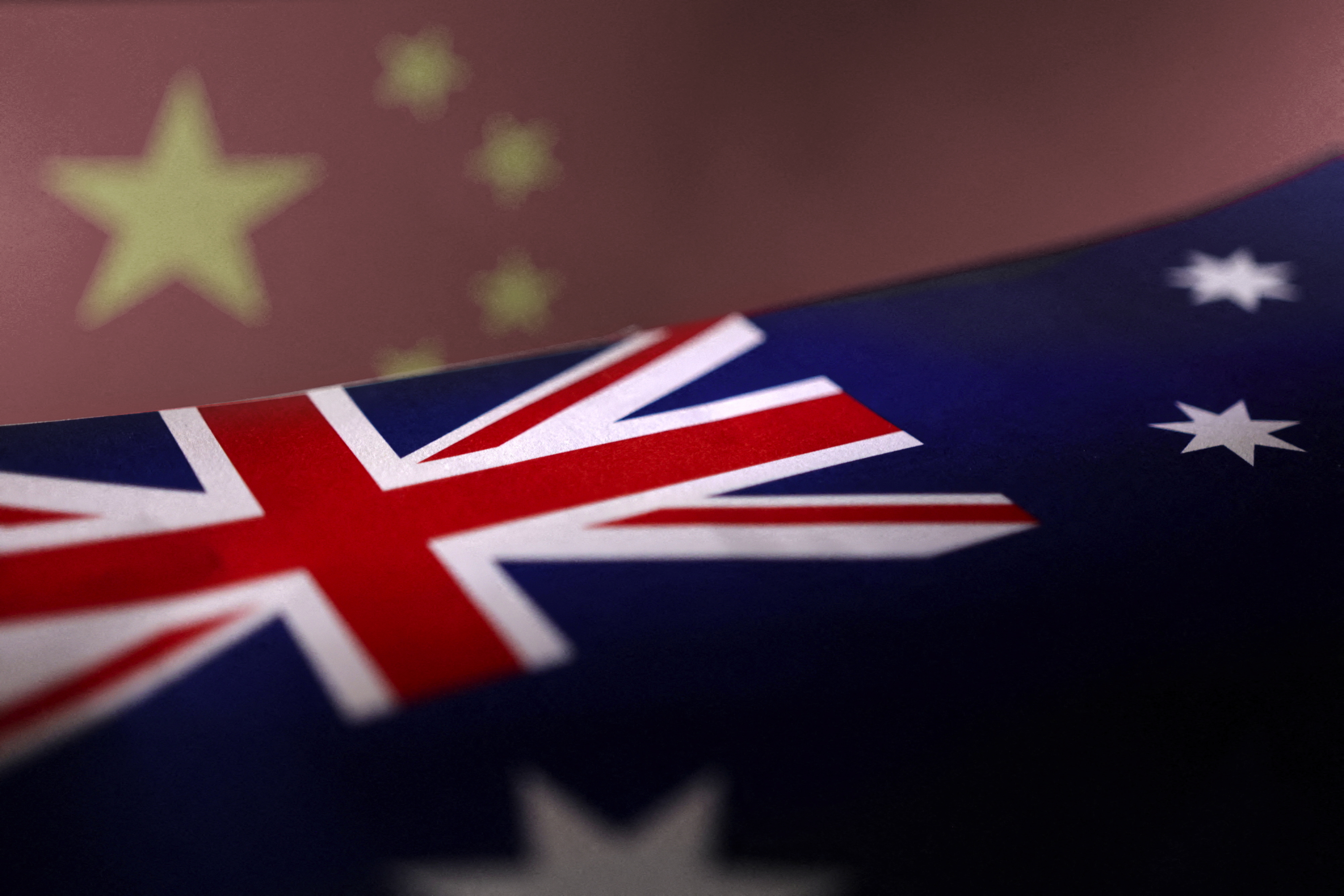

Pacific Blue, a renewable energy company backed by Chinese state-owned firm State Power Investment Corporation (SPIC), is one of a number of entities slated to receive federal government financial support as part of the Capacity Investment Scheme (CIS), aimed at supporting Australia’s transition to renewables.
SPIC is one of China’s five major power generation companies, and has links to the Belt and Road Initiative—the Chinese Communist Party’s global infrastructure and investment strategy.
Pacific Blue plans to construct a 60-megawatt battery storage system at Clements Gap in South Australia. The facility will store energy from nearby wind and solar farms to supply up to 150,000 homes during peak demand.
The project is eligible for taxpayer-funded backing through the CIS program, which aims to mitigate the financial risk to companies developing renewables projects on Australian soil.
Pacific Blue runs a number of renewables initiatives in Australia, including wind, solar, and hydro projects.
Development manager Simon Maan said the government funding would help drive further investment.
“Government initiatives like the Capacity Investment Scheme have a measurable impact in helping companies like Pacific Blue to deliver projects that contribute to a more reliable, affordable and low-emissions energy system and help empower Australia’s clean energy future,” he said.
The company says it has been “at the forefront” of Australia’s renewables sector for 30 years.
Companies from several other countries, such as Qatar, the United Arab Emirates, Malaysia, Spain, Denmark, Japan, the Philippines, and France, have also been building renewable energy projects in Australia using funds from the CIS.
Criticism of Foreign Involvement
One Nation Senator Malcolm Roberts has criticised both the government’s renewables plans and the Chinese Communist Party’s involvement in Australia’s power generation.
“PM Albanese called communist China a friend,” he said on X.
“Let’s be clear, China produces Australia’s yearly carbon dioxide output every 12 days and is building more coal-fired power stations—98 gigawatts last year alone, one-and-a-half times Australia’s entire electricity market.
“Yet Australians are being forced to sacrifice our living standards, pay skyrocketing power bills, and lose manufacturing jobs on the altar of net zero.”
Roberts says China has not been held to account by the Australian government.
“Net zero is not about facts or fairness—it’s about control,” he said.
“The government says the world is moving, but the truth is China is moving in the opposite direction, using our coal while we shut ours down.”