The sudden death of a prominent Chinese education influencer has sparked widespread grief and renewed focus on the pressures facing young people in an increasingly competitive job market in China.
Zhang Xuefeng, a 41-year-old online educator with tens of millions of followers on Chinese social media, died on March 24 in Suzhou, China, after suffering cardiac arrest, according to a statement from his company. Chinese state media Xinhua reported that he collapsed after exercising and was pronounced dead despite emergency treatment.
Days later, thousands of mourners gathered before dawn at a funeral home in Suzhou, forming lines that stretched for miles in a rare spontaneous public turnout, Chinese online news outlet Sina reported on March 28. Despite organizers’ requests to keep the ceremony low-profile and free of livestreaming, crowds continued to arrive, causing traffic congestion across the area.
A Voice for an Anxious Generation
Zhang rose to prominence by offering blunt, pragmatic advice on education and career planning, particularly around China’s highly competitive college entrance and postgraduate exams. For many students and families, his guidance provided a roadmap through a system where the stakes are high and second chances are limited.
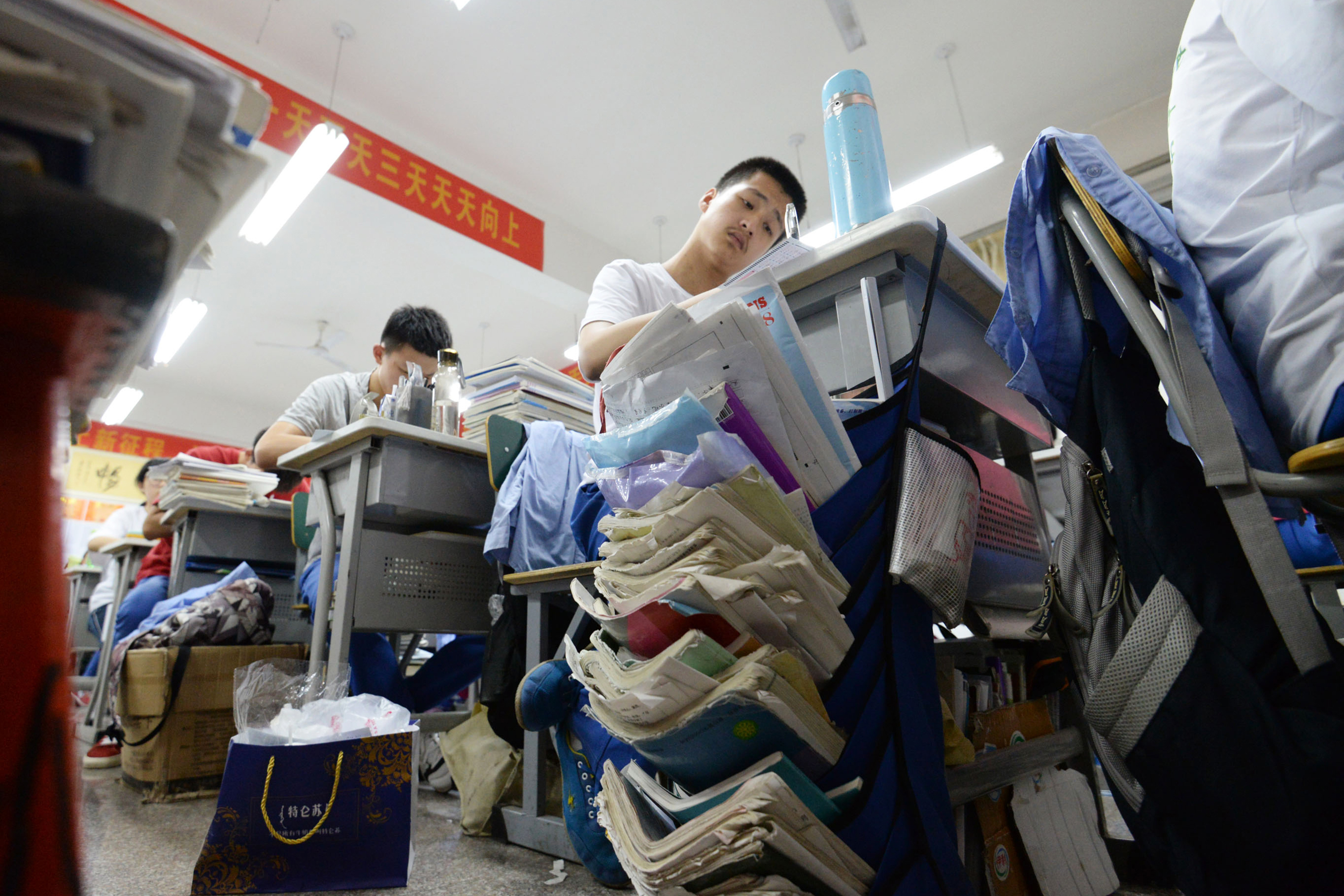
In recent years, as youth unemployment has remained persistently high and job prospects for college graduates have dimmed, postgraduate study has increasingly been seen as a necessary step rather than an option. Within this context, Zhang’s advice—often focused on maximizing employability and minimizing risk—gained widespread appeal.
That reliance on advanced degrees, analysts say, reflects a broader reality in China’s competitive job market. For many young Chinese, a bachelor’s degree alone is no longer sufficient to secure a stable job. Graduate school has become a default route for those seeking to improve their prospects.
“Zhang Xuefeng’s success came from tapping into ordinary people’s anxiety about an uncertain future,” Sheng Xue, a Canada-based writer and Chinese pro-democracy activist, told The Epoch Times. “He rose to fame by teaching others how to avoid ‘involution.’ In doing so, he stripped education of nearly all its idealistic elements and turned it into a stark tool for survival.”
Zhang’s death has prompted widespread discussion about not only health risks and overwork, but also the social environment that shaped his career—and the audience he served.
Zhang himself built a career advising students on how to navigate—and ideally avoid—the worst effects of that system.
China current affairs commentator Jiang Feng said on his YouTube channel that Zhang’s message resonated with the Chinese public because many people can relate to the experience of overworking in a highly competitive society.
“Many people’s first reaction was to ask themselves the question: Am I also overworking?”Jiang said.
Jiang pointed to a culture that equates extreme workloads with discipline and success, often overlooking the physical toll they take. “Sleeping four hours a night—is that ambition, or a warning sign?” he said.
Education as Survival Strategy
Zhang’s popularity also reflects a shift in how education is perceived in China. Once associated with personal development and intellectual growth, it is now increasingly viewed as a strategic investment—one that must deliver measurable returns in the job market.
His approach was emblematic of that shift. He frequently advised students to choose majors based on employment prospects rather than personal interest, but some of his opinions, such as discouraging students from pursuing certain liberal arts fields, also sparked controversy.
Still, his advice resonated with many from less privileged backgrounds.
“Zhang Xuefeng got a massive following because he provided a simple, direct, and certain answer, which resonates with the public’s concern for an increasingly uncertain future,” Canada-based China current affairs commentator Wen Zhao said on his YouTube show.
In an environment where opportunities are scarce and the cost of missteps is high, students and families have become more risk-averse, placing greater emphasis on calculated decisions, he said. This has contributed to a cycle in which competition intensifies, and anxiety deepens, he said.
Li Jing and Luo Ya contributed to this report.