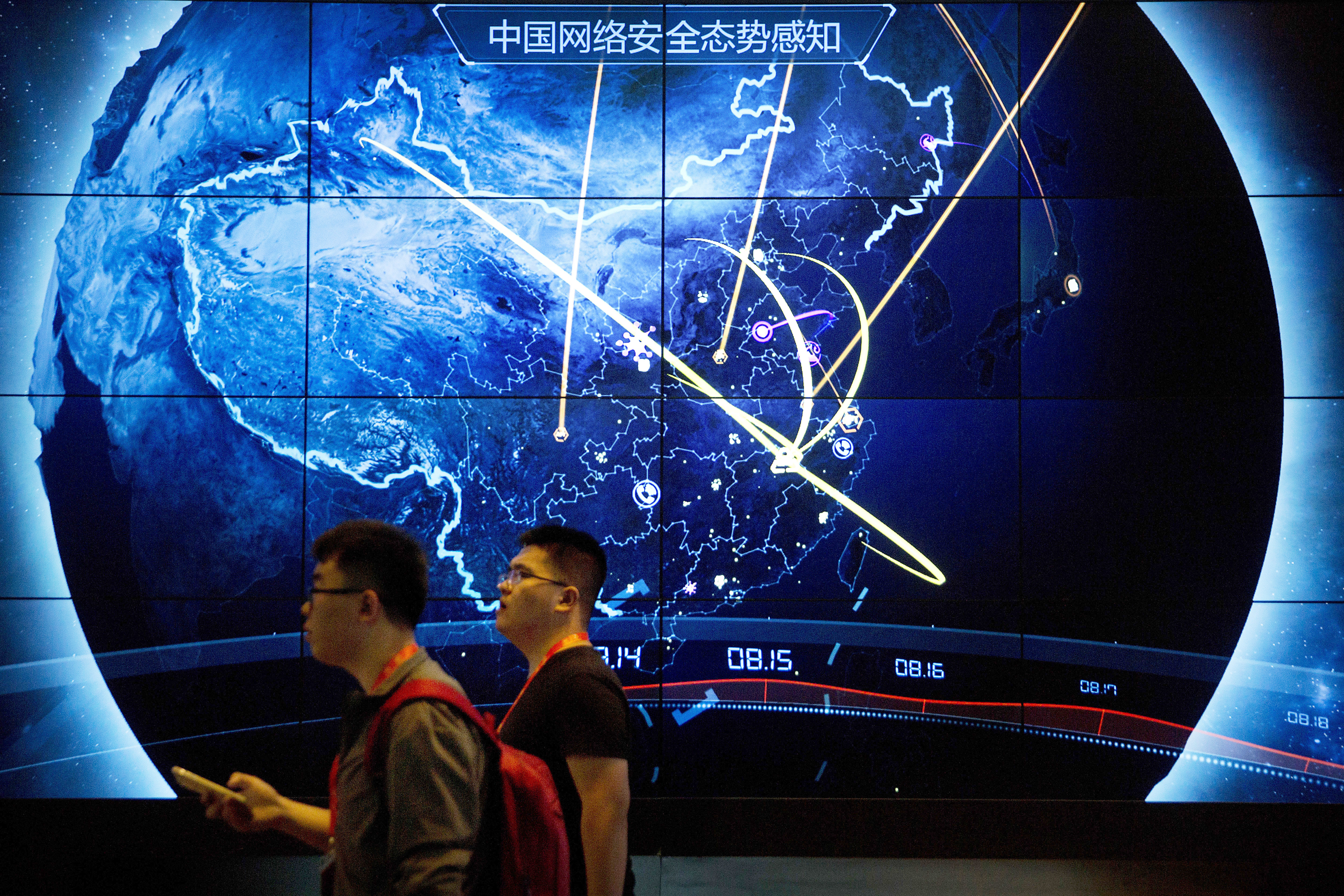

China’s Ministry of State Security (MSS) has warned that foreign intelligence agencies may be exploiting online pop-up ads—such as “click to claim rewards” promotions—to collect data, profile users, and conduct what it calls ideological infiltration.
The warning, published on June 21 by state broadcaster China Central Television, said the regime’s security agencies had identified potential risks embedded in online ads, claiming that foreign intelligence agencies were using advertising channels to gather intelligence and identify targets inside China.
According to the MSS, regulators have ordered some internet platform operators to stop delivering ad traffic linked to “unknown foreign connections,” as part of a broader effort to tighten oversight of China’s online environment.
Security Framing Expands to Online Ads
In its statement, the MSS described two primary risk scenarios.
The first involves “personalized ad delivery,” in which users who click pop-ups may unknowingly transmit personal data—such as interests, behavioral patterns, and location information—to advertising firms. Those firms then refine targeting models to push more tailored content.
The MSS alleged that foreign intelligence agencies could collaborate with certain advertising firms to combine ad interaction data, social media information, and high-precision geolocation tracking to build detailed profiles of individuals.
The second scenario concerns content distribution networks used in online ads. The MSS said such systems could, in theory, be exploited to embed links to “anti-China websites” within pop-up ads and bypass the regime’s regulatory filters.
While the statement did not provide specific cases or evidence, it presented the issue as part of an evolving cybersecurity and anti-espionage challenge.
The announcement comes amid a growing number of state-issued warnings on espionage and national security risks.
Since the beginning of the year, the Chinese regime has published more than 20 articles or advisories focused on anti-espionage and national security. Many of these have been widely republished by state media outlets.
The topics span a wide range of everyday digital and physical scenarios, including public servants handling sensitive data, military installations, flight and port imagery, browser plugins, phishing emails, video conferencing tools, app permissions, second-hand storage devices, home routers, and now pop-up advertisements.
Cybersecurity-focused warnings have been among the most frequent categories, appearing at least nine times in official messaging this year.
Industry participants and a legal scholar told The Epoch Times the framing reflects a broader political effort to shape public perception of external threats. They spoke on condition of anonymity out of fear of reprisal.
A China-based online content creator told the publication that many of the technical features described in the MSS statement—such as behavioral tracking, interest profiling, and location-based targeting—are standard practices in the global digital advertising industry.
“Pop-up ads have always existed,” he said. “The real issue for users is accidental clicks, forced redirects, and difficulty closing them. These problems involve platforms, advertisers, and app developers. Now they are being reframed as foreign espionage, which is difficult to understand.”
The MSS statement also urged users to report suspicious ads via China’s national security hotline, online portals, or its official social media account if they contain content deemed to “distort facts or attack and defame the [Communist] Party and government.”
That language has drawn criticism from one Chinese legal scholar. He told The Epoch Times that including political criticism in a reporting framework raises concerns about overreach.
“Pop-up ads do need regulation,” the scholar said.
“But when regulation expands into political content, the question becomes who defines what counts as defaming [the government]? In the past, even profile images resembling political leaders have been restricted. Some online criticisms have also been labeled as attacks on the government. This creates a chilling effect.”
China has already implemented regulations governing pop-up advertising, requiring clear labeling as “advertisement,” visible close buttons, and one-click exit functionality.
It has also introduced broader rules on online advertising and data security in recent years, aimed at tightening control over how personal information is collected and used.
The latest MSS messaging, however, reflects a further expansion of national security framing into everyday digital experiences, linking routine online ads to foreign espionage risks.
Zhou Yu contributed to this report.