LOS ANGELES—For one last weekend, visitors to the Getty Center in Los Angeles can feel like they are actually inside three ancient temples caves along the Silk Road near Dunhaung in Western China, without actually going there.
In a tent on the plaza are three replicas from the Caves of the Thousand Buddhas, a collection of 492 caves dug by hand into cliffs at the edge of the Gobi Desert during a thousand-year period from the 4th to the 14th centuries.
The handmade replicas were created from some of the same materials as the original cave art in Dunhuang and are very valuable and delicate, just like the originals.
“Visually they’re very rich, iconographically they’re very extraordinary,” said Neville Agnew, senior principal project specialist at Getty Conservation Institute.
Ancient legend tells of a monk named Yuezun who in 366 C.E. had a vision of a thousand radiant Buddhas standing along the cliffs’ face. He was inspired to start excavating the caves, which now contain far beyond a thousand paintings and sculptures of Buddhas.
Dunhuang became an important historic, spiritual, and cultural site and was also the first trading town reached by foreign merchants entering China along the Silk Road. However, the caves eventually fell into disuse, and the site was forgotten for centuries until a Daoist monk discovered its historic treasures in the year 1900.
News
China’s Rich, Ancient Culture on Display at Getty Cave Temples Exhibit
Comments
Link successfully copied
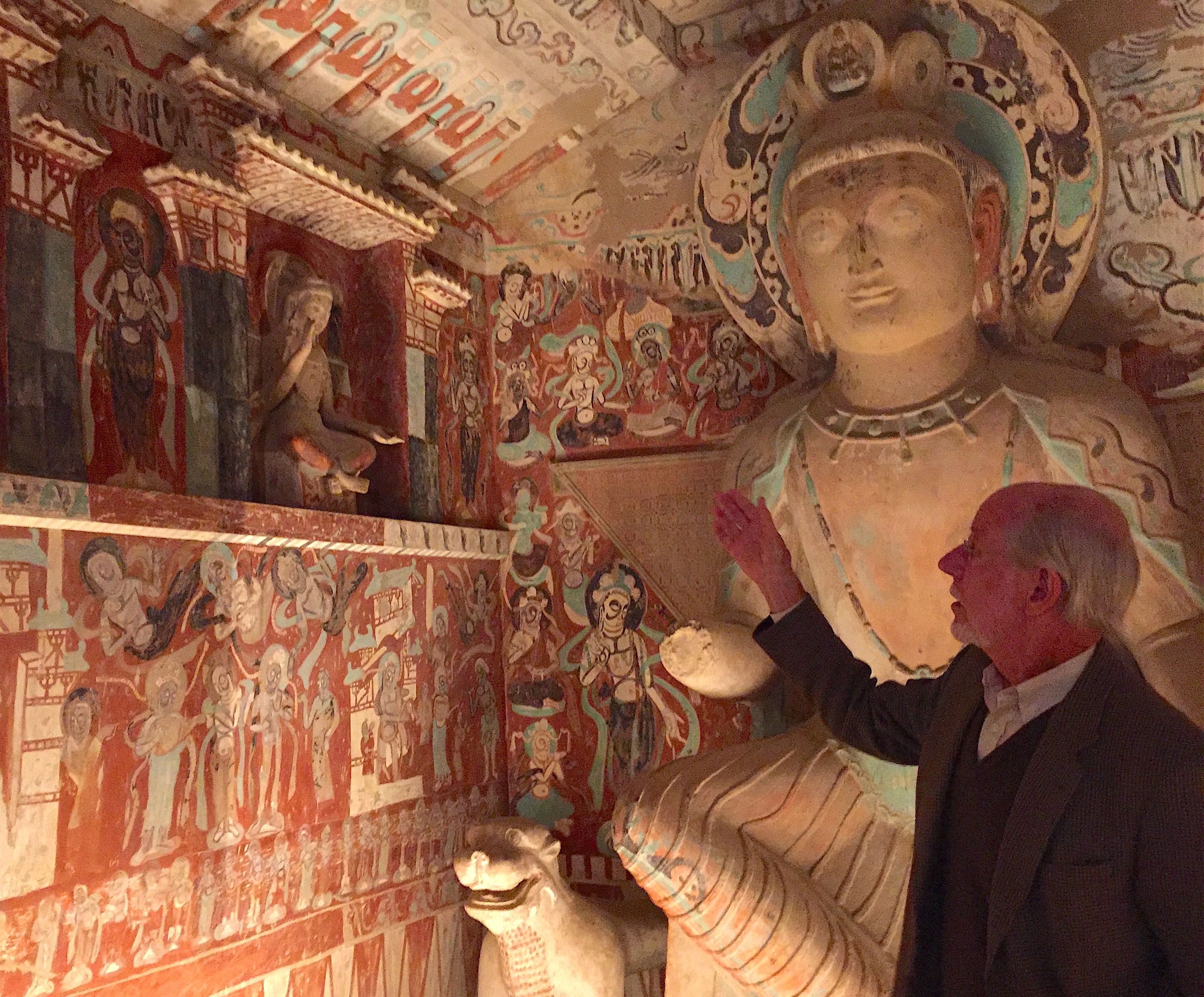
Neville Agnew, a senior principal project specialist at the Getty Conservation Institute, describes the meaning of wall paintings in a replica of a cave from Dunhuang, China at the Getty Center museum in Los Angeles, Calif. on June 1, 2016. (Sarah Le/Epoch Times)

By Sarah Le
8/31/2016Updated: 8/31/2016
Share This Article:
Sarah Le is an editor for The Epoch Times in Southern California. She lives with her husband and two children in Los Angeles.
More from Sarah Le



Trending





ADVERTISEMENT