
During the Lunar New Year, Chinese state media filled TV screens with celebratory images of lanterns and fireworks, portraying the regime’s stability and prosperity. But people on the streets in central China told a different story.
In Henan Province, one man who returned home for the holiday described something he had never seen before—silence.
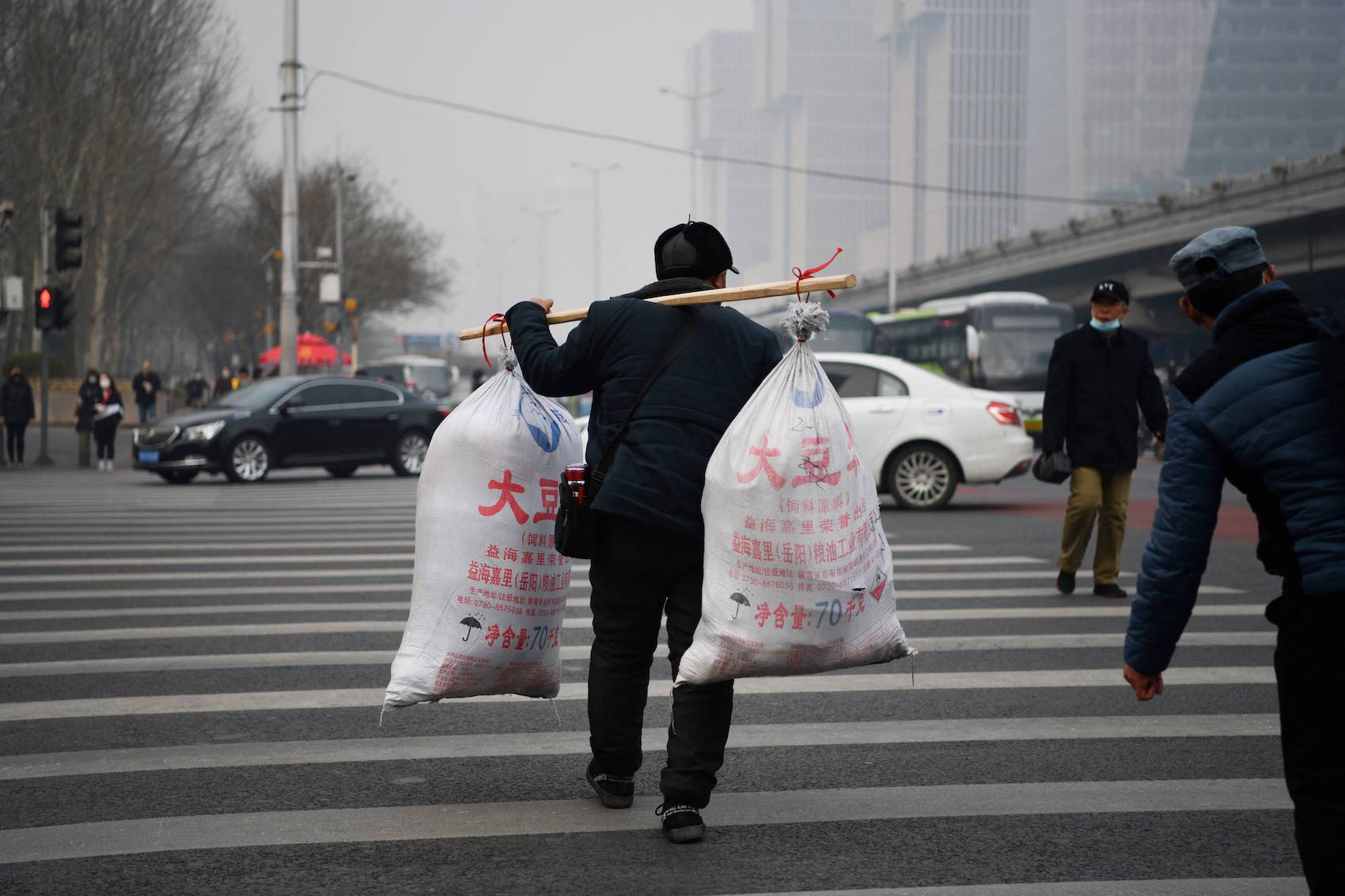
“There’s no New Year vibe at all,” said Xiaoming, a worker who spoke to The Epoch Times using a pseudonym for safety reasons. “You don’t see people on the streets. In past years, the young and the old would all be outside, visiting relatives, greeting neighbors. Kids would be setting off firecrackers in groups. This year, it’s empty and quiet.”
Across China, as the traditional lunar calendar turns to the Year of the Fire Horse on Feb. 17, many ordinary Chinese people say the mood is anything but festive. Behind the regime’s official messaging about stability and recovery lies a deepening sense of economic strain and social uncertainty.
For Xiaoming, the past year can be summed up in two words: “struggle” and “confusion.”
A Holiday Without Celebration
Xiaoming’s hometown is in Yuzhou, a city in Henan Province. He works in the provincial capital of Zhengzhou but returned home several days before the holiday.
He said he has seen similar scenes in the rest of the country. In his view, the reason for the silence and lack of a holiday atmosphere is simple: People have less money and less hope.
“Our standard of living deteriorated compared to previous years,” Xiaoming said. “People make money and come home [for the holidays], but if you didn’t earn anything this year, you don’t want to go back and visit relatives since the New Year is about giving gifts and hosting dinners.”
His explanation mirrors broader economic strains across China. China’s economic downturn has hit the working class hard. More Chinese workers are owed payments this year, leading to wage-related protests. Youth unemployment has been persistently high, although official figures have shifted methodologies amid scrutiny. Property markets remain weak, and consumer confidence has struggled to recover.
Xiaoming said many people in his rural area traditionally worked in interior home renovation—a trade closely tied to the housing market. Now, with fewer people buying homes and many construction projects stalled, work has dried up.
“Many building sites have basically stopped,” he said. “[There are] lots of unfinished apartment blocks.”
Even those with steady jobs are struggling, he added. Workers earning 3,000 to 5,000 yuan a month (roughly $400–$700) often find that it barely covers rising living costs.
“Many people work all year but still have no money [left] due to the cost of living,” he said.
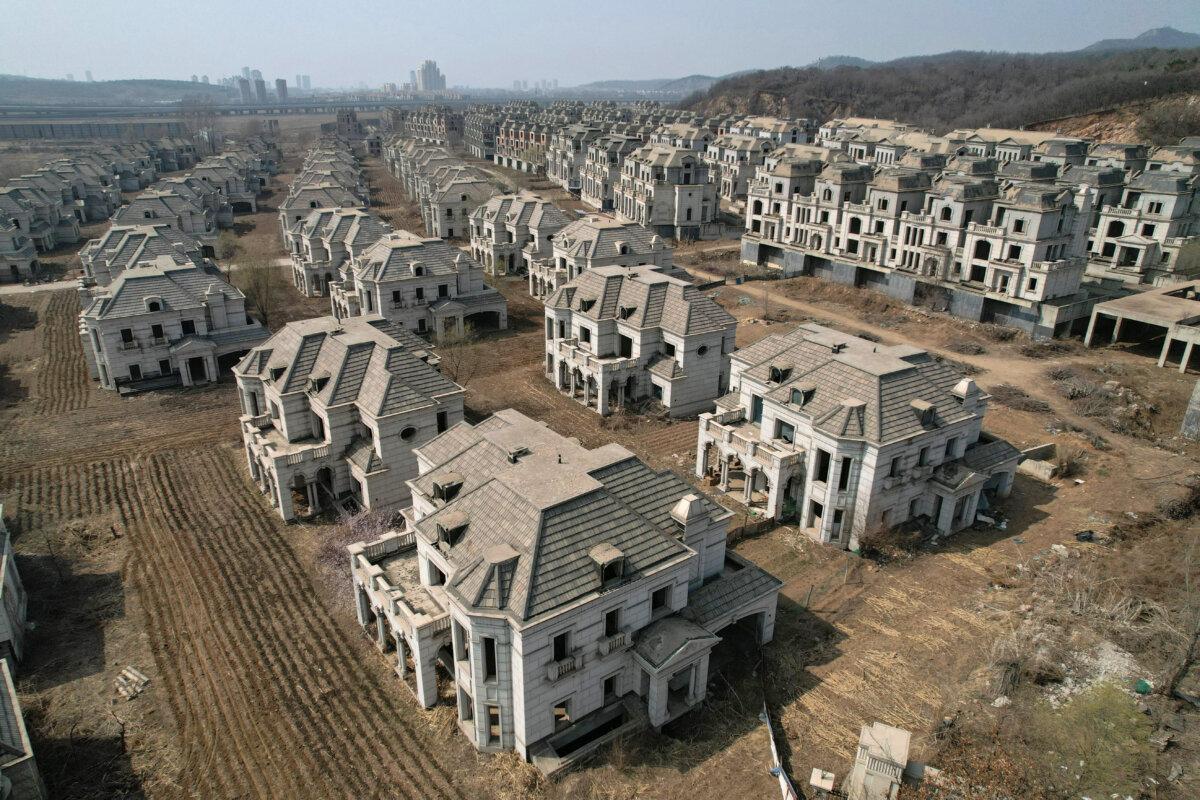
Deserted villas in a suburb of Shenyang, Liaoning Province, China, on March 31, 2023. (Jade Gao/AFP via Getty Images)
Suppressing Online Speech
Recently, videos that circulated on Chinese social media showed unemployed people sleeping on the streets in major cities. On Feb. 12, China’s internet regulator announced a month-long campaign targeting what it described as content that “maliciously incites negative emotions.”
China observers have said such campaigns are often aimed at suppressing displays of economic hardship and social discontent.
For Xiaoming, the emotional trajectory feels clear.
“2025 was a struggle,” he said. “Everyone was just struggling to survive. And 2026? It’s confusion. Young people don’t even know what to go out and do anymore. There are very few who still have clear goals. You can’t see hope, because there are so few opportunities.”
He contrasted today’s mood with the entrepreneurial energy of earlier years, when starting a business felt possible.
“Now whatever you invest in, you lose,” he said.
The uncertainty has also driven some toward illegal activity. Xiaoming said telecom fraud has also become more common domestically, including in his home village, where more than a dozen people were arrested.
Frustration With Corruption
Beyond economic frustration, Xiaoming spoke openly about what he sees as entrenched corruption in the political system of the Chinese Communist Party.
He described conversations during his trip home in which people discussed the informal payments and connections needed to join the CCP. Membership is often seen as a pathway to career advancement.
“[They talk about] who to give gifts to, what to give,” he said. “Ordinary people don’t believe in that system anymore.”
According to Xiaoming, cynicism runs deep.
“If you walk into a restaurant and sit down, you’ll hear people talking about it,” he said. “They’re criticizing officials—from the highest leaders to the lowest village cadres.”
He described a widespread belief that anti-corruption campaigns amount to “officials investigating other officials,” rather than systemic reform.
Although open protest remains rare under the CCP’s tight surveillance system, he said the dissatisfaction is palpable.
“Everyone feels like something big is going to happen,” he said. “But no one can say what.”
Social Control
The CCP’s governance model has grown increasingly reliant on digital monitoring systems that track Chinese people’s movements and activities.
“[They know] what you’re saying and even when you leave your house,” Xiaoming said.
He also pointed to what he sees as a broader cultural shift that discourages civic intervention. He said people are now reluctant to step in when witnessing injustice, fearing legal or financial consequences if a confrontation escalates.
“As long as it’s not their own problem, people stay silent,” he said. “They just try to get by.”
Yet he said he believes public tolerance has limits.
“Chinese people can endure a lot,” he said. “But it’s like a spring. It’s being pressed down further and further. When it reaches the bottom, it will rebound.”
As fireworks flickered across state television screens, Xiaoming said the quiet streets back home told him more about the country’s mood than any official broadcast.
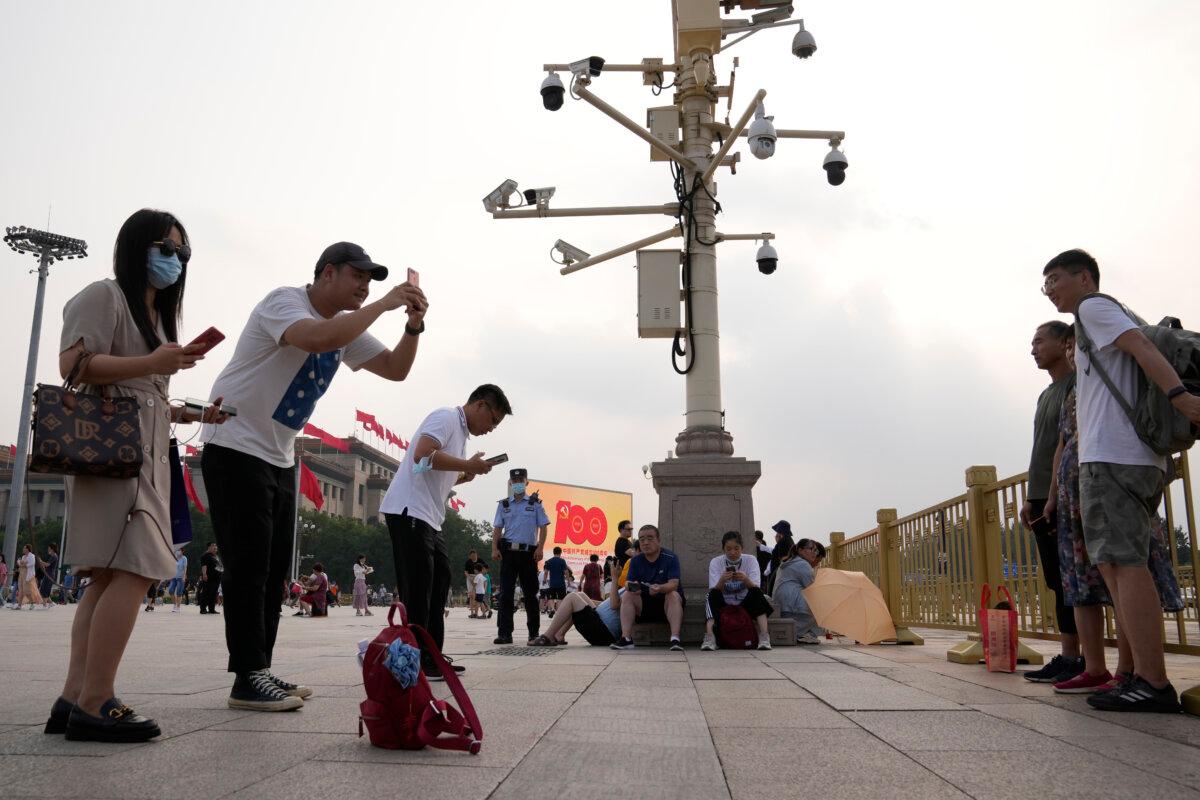
A policeman stands watch next to surveillance cameras as people take photos on Tiananmen Square in Beijing on July 15, 2021. (Ng Han Guan/AP Photo)
Tang Bing and Gu Xiaohua contributed to this report.