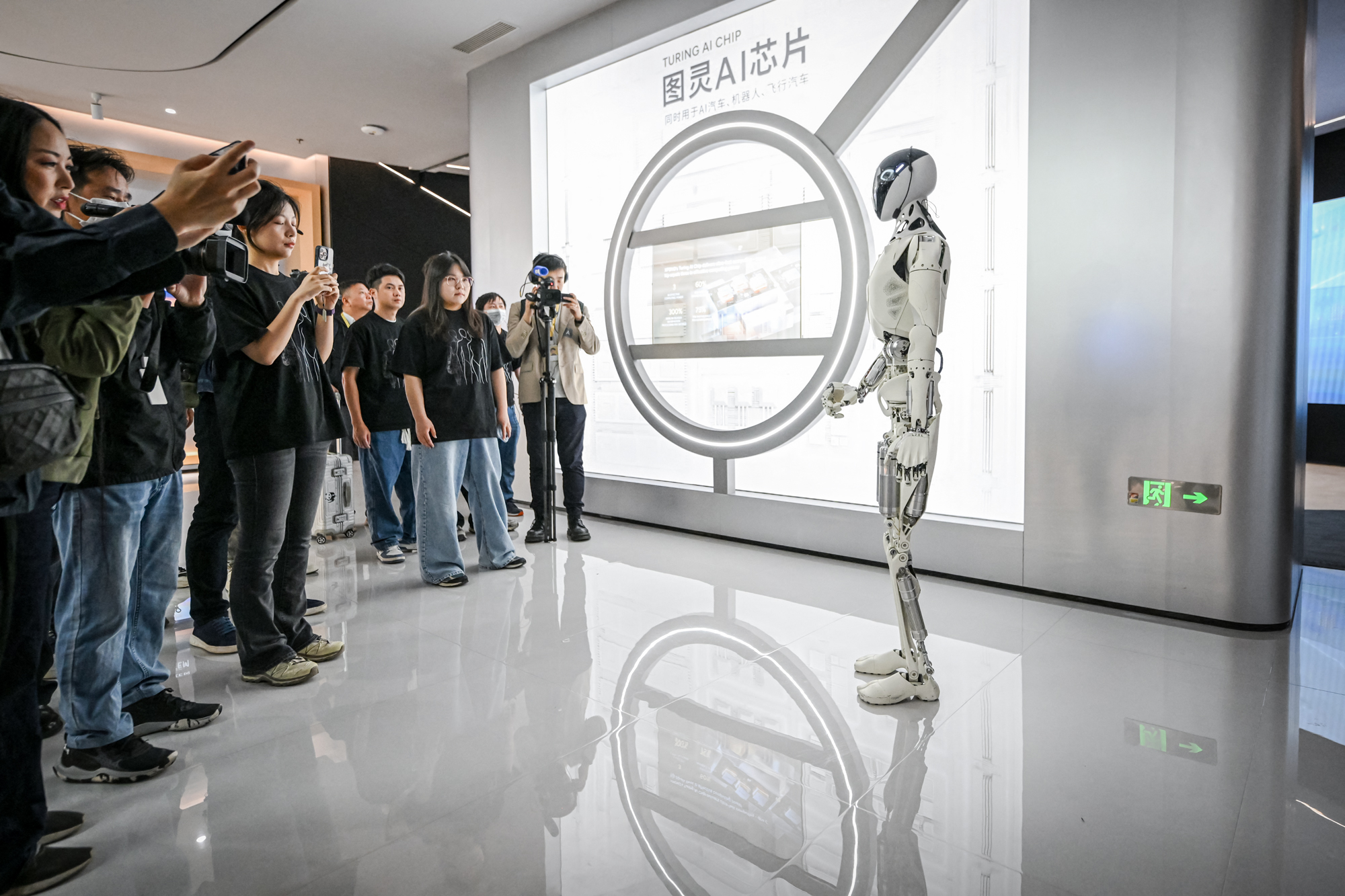

Chinese state TV’s 2026 Lunar New Year Gala opened Feb. 16 with a futuristic flourish: humanoid robots somersaulted, danced, and struck martial arts poses under bright lights during the Year of the Horse celebration. To many viewers, the message was unmistakable. China’s humanoid robots had arrived, and might even be outpacing global competitors.
State media and officials quickly amplified that narrative. A spokesperson for China’s foreign ministry, Lin Jian, said in a post on X that Chinese humanoid robots had once again stunned audiences after debuting the previous year. Domestic headlines hailed another technological triumph.
Away from the spectacle, industry observers and experts offered a different assessment, saying that what audiences saw was not autonomous intelligence conquering the future but carefully scripted demonstrations, refined through months of rehearsal.
Zhang Tianliang, a current affairs commentator and contributor to NTD, a sister media outlet of The Epoch Times, said on his Chinese-language podcast that a nationally televised program such as the Lunar New Year Gala is subject to strict review by the regime’s propaganda authorities.
The coordinated appearance of multiple robotics firms was unlikely to be a spontaneous artistic choice, but rather reflected high-level political signaling, suggesting that the robotics industry is being positioned as a strategic priority for future state support, he said.
Stage Built for Perfection
The four Chinese companies featured in this year’s gala—Unitree Robotics, Noetix, Galbot, and MagicLab—represent a new wave of Chinese humanoid startups racing to commercialize embodied AI, according to Chinese state media outlet Xinhua News Agency. Embodied AI refers to AI systems that can physically interact with the world through technology such as robots.
Although the humanoid robots’ performances included backflips, coordinated dance routines, and martial arts, the feats took place in what engineers call a highly structured environment, consisting of flat floors, fixed lighting, pre-programmed choreography, and human operators offstage.
Chinese media The Beijing News reported that some teams rehearsed for three months, running hundreds of software iterations and millions—even hundreds of millions—of simulations before appearing on stage for just a few minutes.
Frank Tian Xie, a business professor at the University of South Carolina Aiken, told The Epoch Times that some of the robots were operated via human remote control rather than by fully autonomous artificial intelligence.
“As a result, such demonstrations are more promotional in nature and may not accurately reflect the underlying technical capabilities,” he said.
Chinese media Beijing Daily reported that one company reconstructed a 1:1 replica of the gala stage inside an empty factory, marking the floor with one-square-meter grids to ensure that a robot’s backflip landed precisely within its assigned box. Engineers updated motion strategies more than 300 times to eliminate deviation, according to Chinese web portal 163.com. In other words, what viewers saw was the robot’s best take, not its everyday performance.
In December 2024, a Unitree Robotics H1 humanoid robot fell and appeared to convulse at a trade show in Nanjing, according to Chinese media reports. Behind it, a large screen displayed promotional footage of the same robot leaping and climbing stairs.
In April 2025, a Unitree G1, the same model later showcased at the 2026 gala, fell during a robot half-marathon event, according to China’s Sina news portal. In another race, a Unitree H1 collided with a human operator during a remote-control handoff, according to Chinese finance outlet Yicai.
Footage circulating online showed that each robot was shadowed by a backstage operator carrying a controller, prompting online critics to compare the devices to high-end puppets rather than independent machines.
Commercialization Problem
The technical challenges extend beyond balance and choreography.
Unlike large language models trained on internet-scale text, robots must gather real-world interaction data to learn manipulation, navigation, and coordination. That data remains scarce and expensive.
At the World Economic Forum in Davos this January, Turing Award winner Yann André LeCun said no company has yet made humanoid robots truly practical. Robots today, he said, possess less common sense than a cat.
He pointed out that while robots can be trained to perform highly specific, narrowly defined tasks, doing so requires collecting vast amounts of data, which is an expensive and time-consuming process, and the resulting systems are typically capable of handling only a limited range of functions.
Tech billionaire Elon Musk has also tempered expectations about embodied AI. Speaking in Davos, he said Tesla’s Optimus humanoid robot currently performs only simple factory tasks, though he expects more complex industrial applications later this year.
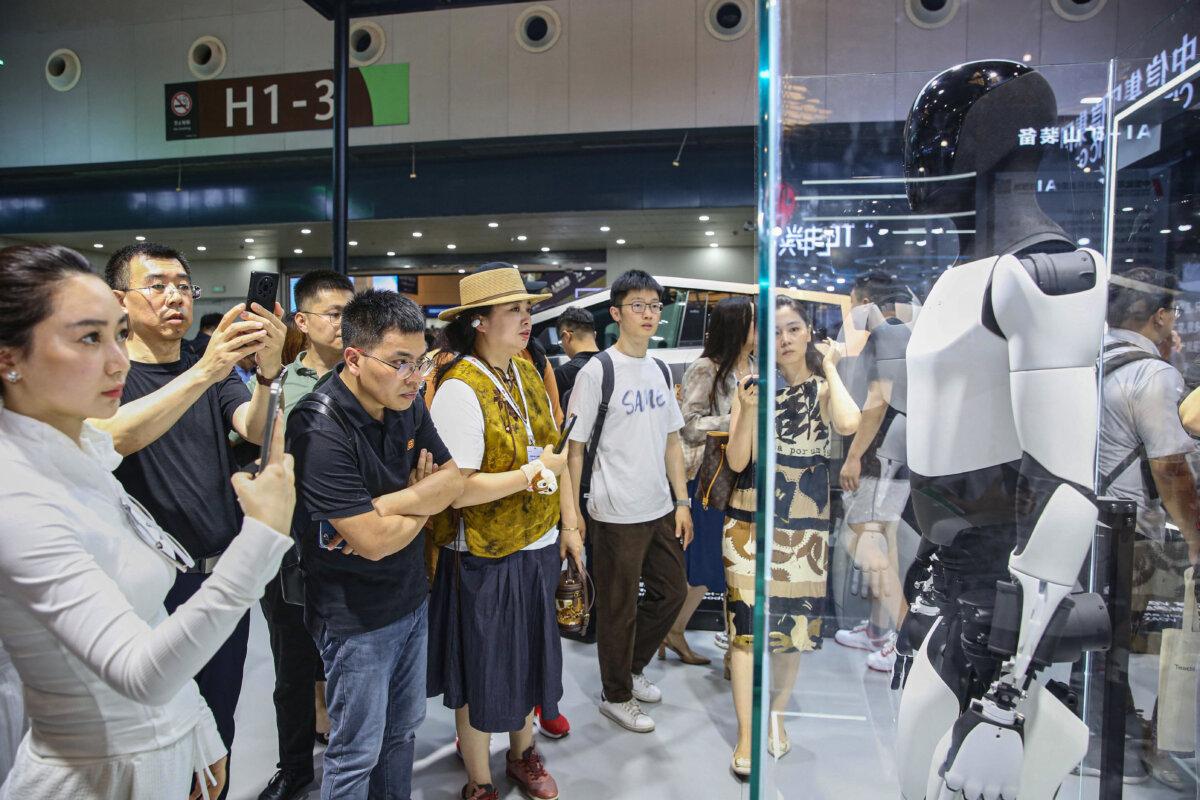
Visitors look at Tesla's humanoid robot Optimus in Shanghai, China, on July 5, 2024. (STR/AFP via Getty Images)
In China, UBTECH Robotics is the country’s only publicly listed humanoid robotics firm. It has partnerships with major manufacturers and aims to scale production. Its Walker S2 robots currently perform limited tasks such as box stacking and quality inspection, according to Chinese financial outlet Yicai. Switching functions often requires human intervention.
China’s own state-controlled media reports suggest the Lunar New Year Gala appearance was about more than celebration.
Each participating company paid up to 100 million yuan (about $14 million) for the partnership, effectively purchasing national exposure.
Chinese tech news outlet TMT Post said that for startups chasing IPOs or new financing rounds, the gala provides validation of technical stability, proof of large-scale coordination, and invaluable branding, according to a Sina-hosted article.
China accounted for more than half of global industrial robot installations in 2024, most of which involved traditional robotic arms, not humanoids, the International Federation of Robotics said in its World Robotics 2025 report.
Song Tang contributed to this report.