
TAIPEI, Taiwan—Beijing is seeking to influence Taiwan’s local elections later this year through newly announced incentives, Taiwan’s top intelligence official has said, a day after the island’s main opposition leader concluded her six-day trip to China.
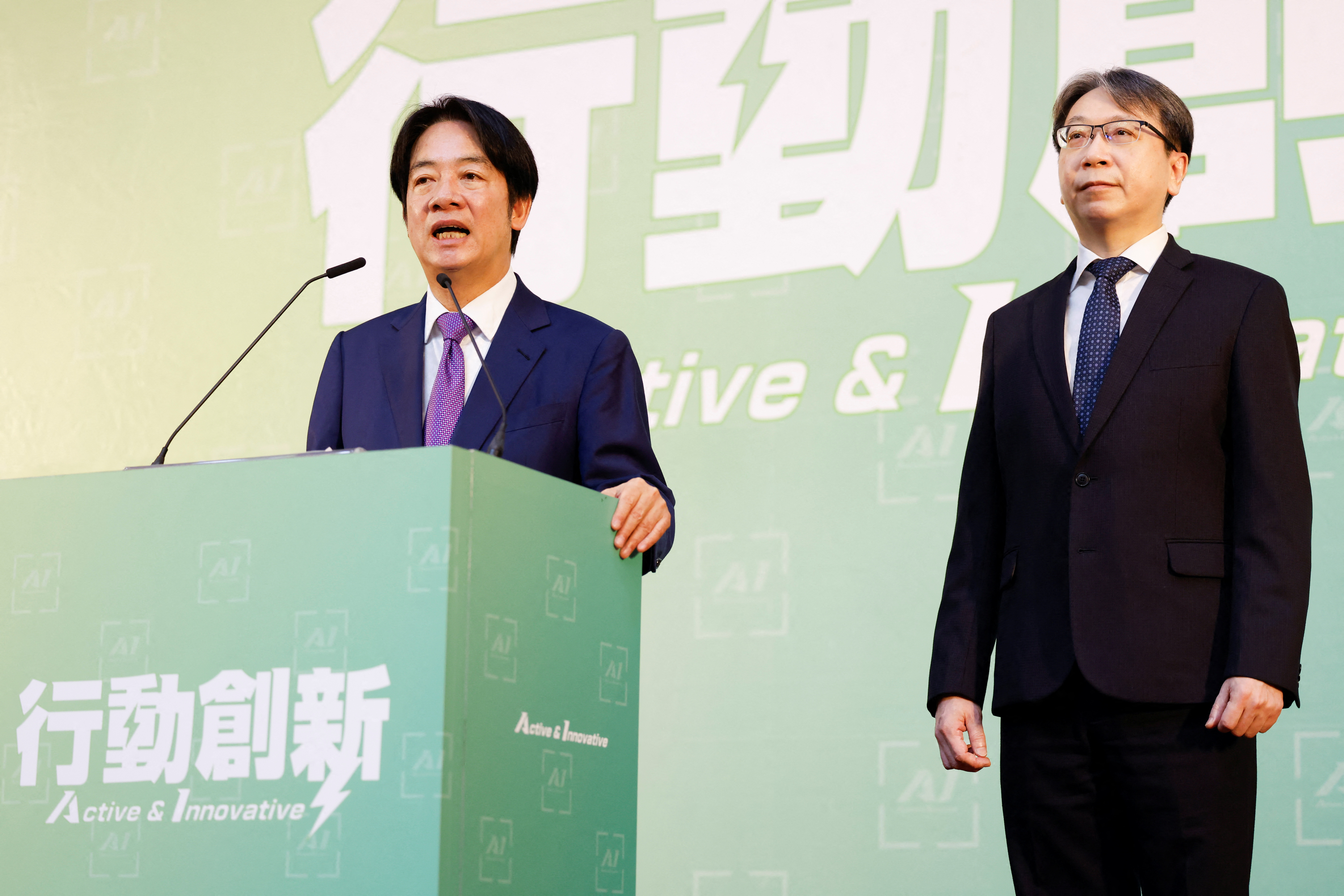
Tsai Ming-yen, director-general of the Taiwanese National Security Bureau, made the comments at parliament on April 13 while answering reporters’ questions about China’s 10 new incentive measures for Taiwan announced on April 12. Cheng Li-wen, chairwoman of Taiwan’s largest opposition party, the Kuomintang (KMT), had traveled to China at the invitation of Chinese leader Xi Jinping.
The 10 measures, announced by the Chinese Communist Party’s Taiwan Work Office to facilitate cross-strait exchanges, include facilitating the export of Taiwan’s agricultural and fishery products to China, the full resumption of flights between the two sides, allowing individuals from Shanghai and China’s Fujian Province to visit Taiwan, and exploring the establishment of a regular communication mechanism between the Chinese Communist Party (CCP) and the KMT, according to Chinese state-run media outlet Xinhua.
Tsai said these so-called goodwill measures from China were repeatedly rolled out ahead of Taiwanese elections, targeting specific cities and counties, as well as certain companies, industries, and individuals.
“This has already become a tool used by the CCP to interfere in Taiwan’s elections,” Tsai said, according to a translation.
Tsai said the measures are intended to make Taiwan more dependent on the Chinese market.
Taiwan is scheduled to hold major local elections in November 2025, when voters will choose city mayors, county chiefs, and city and county councilors. The elections are considered a barometer of the 2028 presidential and legislative elections.
In the lead-up to Taiwan’s presidential election in early 2024, Taiwan accused Beijing of using a series of trade measures in an effort to sway Taiwanese voters, including the review of tariff concessions on agricultural and fishery products, as well as machinery, auto parts, and textiles.
The CCP has traditionally favored KMT politicians because of their friendly view of the communist neighbor. In contrast, the regime views the ruling Democratic Progressive Party (DPP) as separatists and has refused to deal with the administrations of Tsai Ing-wen, and, now, President Lai Ching-te.
China’s 10 new measures have been welcomed by the KMT but criticized by the DPP.
Chang Jung-kung, KMT’s vice chairperson, said in a statement on April 12 that the measures would serve as an important driving force for “peaceful development of cross-strait relations.”
Chang also called the measures a “gift” from China in response to Cheng’s efforts to promote cross-strait peace and development.
Karen Kuo, spokesperson for the Taiwanese Presidential Office, told reporters on April 13 that China has a track record of using cross-strait exchanges as a “tool,” adjusting or suspending them as needed for political reasons.
“These practices have caused a certain degree of harm to our industrial structure, as well as to our farmers and fishermen,” Kuo said, according to a translation.
The Taiwanese Mainland Affairs Council, a government agency that handles China affairs, called China’s economic carrots “sugar-coated poison packaged as ‘gift bundles,’” as Beijing has a history of “weaponizing” cross-strait exchanges, sometimes for the purpose of “economic coercion” when the timing for doing so is favorable, according to a translation of a statement by the council.
Cheng’s trip to China was highlighted by her meeting with Xi on April 10, which marked the first meeting between Xi and a KMT leader since 2016.
Regarding Cheng’s China trip, Tsai said the CCP aimed to use party-level exchanges to project that it has control over whether there is “peace” or “war” across the Taiwan Strait and to exclude external intervention in cross-strait affairs.
“It also sought to leverage [KMT’s] alignment with Beijing’s position to strengthen Beijing’s bargaining power on Taiwan-related issues in the upcoming Trump–Xi meeting,” Tsai said, according to a translation.
U.S. President Donald Trump is scheduled to meet Xi during a two-day trip to China in May, marking the second bilateral meeting between the two leaders in Trump’s second term.
Reuters contributed to this report.