
China has begun requiring importers to put up cash deposits of as much as 99.2 percent on Japanese dichlorosilane (DCS), a chemical used to make semiconductors.
The measure, which was taken in connection with an anti-dumping investigation, took effect on Sept. 8. Tokyo-based Denal Silane faces an 80.8 percent deposit rate, while Shin-Etsu Chemical and other Japanese suppliers face a rate of 99.2 percent.
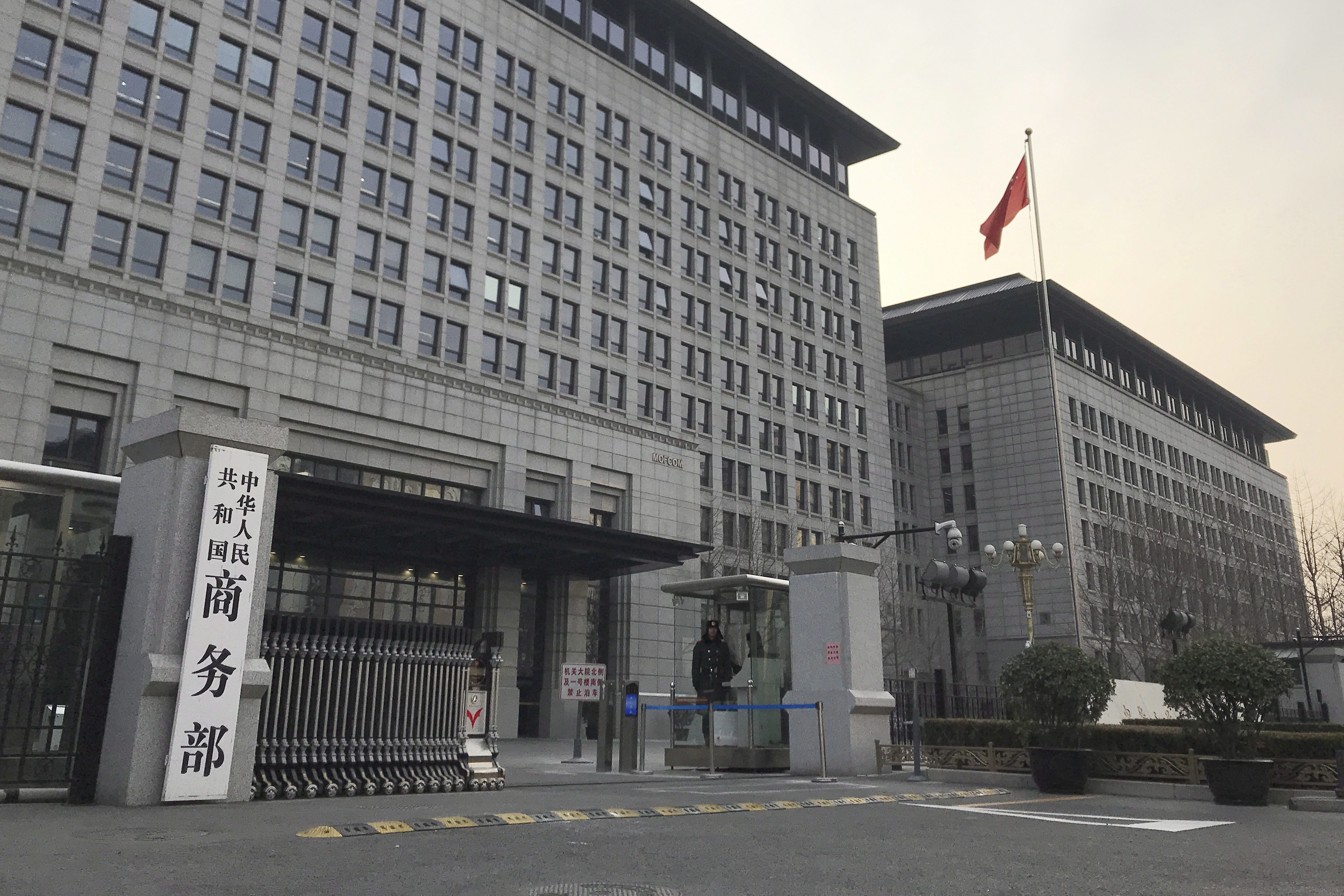
The Chinese Commerce Ministry said it imposed the provisional measure after preliminarily finding that Japanese suppliers had dumped DCS in China by selling it below cost or below home-market prices and harmed domestic producers.
Chinese importers must provide the cash to customs based on the value of the shipment.
Japanese suppliers still accounted for 59.5 percent of China’s DCS market in the first half of 2025, according to official ministry figures, even though Chinese-made material generally sold for less.
DCS is used during semiconductor manufacturing to deposit thin films used in logic, memory, analog, and other chips.
Japanese Suppliers Retain Majority Share
The public version of the anti-dumping petition, which was filed by Tangshan Sunfar Electronic Materials, lists their estimated average price of Japanese DCS sold in China at about $48 per kilogram in 2022, $35 in 2023, and $31 in 2024.
The filing says Chinese-made DCS sold below those prices throughout the period. The gap was about $10 to $18 per kilogram in 2022, $4 to $8 in 2023, and $3 to $8 in 2024.
The dollar figures are converted from yuan using annual average exchange rates published by the Federal Reserve.
Japanese suppliers held 79.6 percent of China’s market in 2022, 69.6 percent in 2023, and 65.6 percent in 2024, according to China’s Commerce Ministry’s preliminary determination. Their share fell to 59.5 percent in the first half of 2025.
Sunfar said domestic suppliers kept their prices below the price of Japanese material because Japanese products benefited from established purchasing patterns and brand recognition.
Japanese suppliers argued during the investigation that product quality, reliability, and customer qualification also affected purchasing decisions.
Shin-Etsu told The Epoch Times it was investigating the case and declined to comment further. Denal Silane did not respond to questions about the petition’s historical price and market-share figures and what factors accounted for the pricing difference.
Chinese Production Expands
China’s domestic DCS output increased sharply during the period covered by Sunfar’s petition.
According to the Chinese Commerce Ministry’s preliminary determination, Chinese production rose from about 18.6 metric tons in 2022 to 97.6 metric tons in 2023 and 140.2 metric tons in 2024.
In a 2023 investor briefing, Sunfar said that sales of its electronic-grade DCS and electronic-grade trichlorosilane were gradually increasing in volume and that its electronic-gas products had achieved “a certain degree of import substitution.”
Sunfar has an annual electronic-grade DCS capacity of 500 metric tons. Its 2025 anti-dumping petition says increased domestic supply and improvements in product quality and service have enabled Chinese-made DCS to replace imported products.
Other Chinese producers are adding capacity. Jinhong Gas in Jiangsu Province has disclosed an annual 200-metric-ton DCS project in its 2022 annual report.
Zhejiang Yage Xin’an Electronic New Materials has 1,000 metric tons per year of designed high-purity DCS capacity. Xin’an told investors in January that construction was substantially complete and the project had entered trial production.
Do-Fluoride said in January that its Zhejiang Zhongning Silicon subsidiary’s planned annual 5,000-metric-ton high-purity silane-series project includes 1,000 metric tons per year of DCS capacity.
Push to Replace Imports
Chinese government industrial plans have called for expanding domestic semiconductor materials and electronic specialty gases.
A Fujian provincial industrial plan issued in August calls for developing electronic specialty gases and accelerating the localization of semiconductor materials.
In its anti-dumping petition, Sunfar said its DCS operation remained loss-making even as production and sales increased. The company argued that continued pressure from Japanese imports would harm the development of China’s domestic DCS industry and asked the Commerce Ministry to impose trade measures.
The Commerce Ministry said some downstream companies purchased both Japanese and Chinese DCS and cited those purchases in its analysis of whether the products were comparable for the trade case.
Mike Corbett, managing partner at Linx Consulting, a semiconductor-materials consulting firm, told The Epoch Times that purchasing DCS from Japanese and Chinese suppliers does not necessarily mean the products can be directly substituted.
Whether a fab can switch depends on the application and the process node, Corbett said. Older-node processes may allow more direct substitution, while newer nodes can be more sensitive to changes in materials.
Process qualification is also a substantial barrier, he said, because manufacturers must consider not only the film deposited using DCS but also the effects that can emerge during subsequent manufacturing steps.
“Yield is also a major consideration, especially at fabs running at high utilization rates,” Corbett said.
He also said purity and consistency are important for maintaining repeatable processes across tens of thousands of wafers.
Switching suppliers requires requalification for the particular application, device, and process node, Corbett said. The process can take from several months to a year and can be costly.
Corbett said Chinese authorities have in the past supported some of the costs involved in qualifying domestic alternatives.
China–Japan Tensions
The trade action comes as relations between Beijing and Tokyo remain strained over Taiwan.
Japanese Prime Minister Sanae Takaichi said in Parliament in November 2025 that Chinese military action around Taiwan could create circumstances in which Japan could exercise collective self-defense.
Relations deteriorated after the remarks. Chinese authorities advised citizens against travel to Japan in November. In January and February, Beijing also introduced export-control measures targeting Japan, including restrictions involving dual-use goods and critical minerals.
The Japanese Ministry of Economy, Trade and Industry said in June that licensing delays and prolonged customs inspections were affecting Japanese companies, including shipments of rare earths and other critical minerals. Tokyo repeatedly protested the measures and called for their withdrawal.
On Aug. 27, a cross-party Japanese parliamentary delegation traveled to Beijing for a party-to-party exchange in an effort to improve strained relations.
Delegation leader Shinichi Isa said the following day that Lu Kang, deputy chief of the Chinese Communist Party’s International Department, told the group that Beijing would not change its current approach toward Japan unless Tokyo changed its position regarding Taiwan. Isa said he had raised the issues of dual-use export restrictions and the safety of Japanese nationals during the meeting.
The Chinese Commerce Ministry has not publicly linked the DCS investigation to the dispute over Taiwan. It opened the case on Jan. 7 after Sunfar filed its petition on Dec. 8, 2025.
The Sept. 7 notice gives interested parties 10 days to submit written comments. The 80.8 percent to 99.2 percent cash-deposit requirement remains provisional while the case continues.