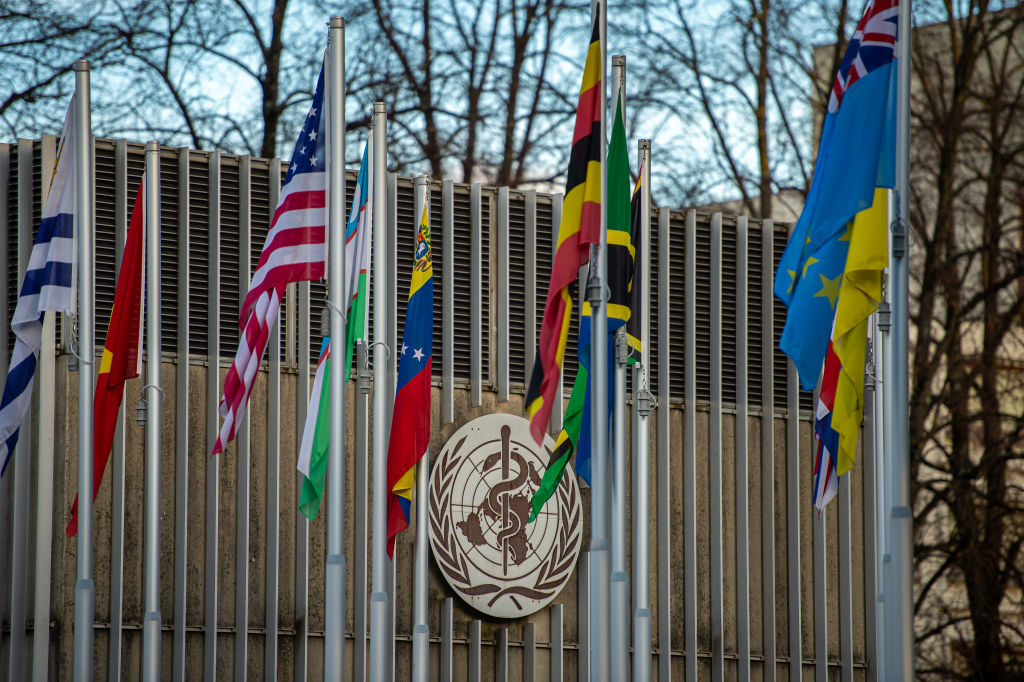
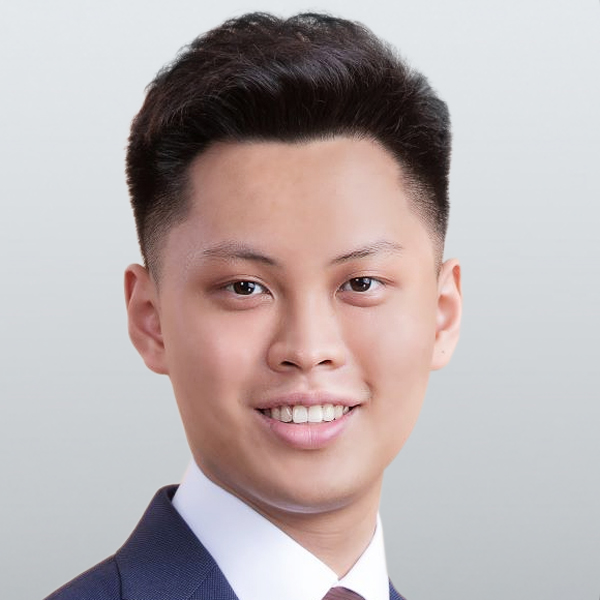
China confirmed on Oct. 8 that it is nominating Song Li, a senior Chinese Communist Party health official, to lead the World Health Organization (WHO), a late entry into the race after the United States quit the agency.
Chinese Foreign Ministry spokeswoman Mao Ning said the move shows China’s “firm support for multilateralism and the WHO.”
The agency is cutting thousands of jobs after losing its largest donor, the United States. The Trump administration has accused it of bias toward China during the COVID-19 pandemic.
Song heads the Department of Women and Child Health at China’s National Health Commission. She earned a doctorate at Peking University, studied global health as a visiting scholar at Harvard, and sits on a WHO advisory group on maternal and newborn health, according to her WHO biography.
In 2023, she lost a race to lead the WHO’s Western Pacific office. Global health veteran Mukesh Kapila, a Health Policy Watch columnist and board member, questioned at the time whether Beijing would let her act independently.
“Chinese incumbents in international organizations often remain under obligation to their own authorities, and can even be summoned home if they displease their masters,” he wrote for the outlet, pointing to Meng Hongwei, the Chinese head of Interpol who disappeared on a trip home in 2018 and was later jailed.
If elected, Song would be the second Chinese national to run the WHO. The first, Margaret Chan, joined the standing committee of the regime’s top political advisory body in March 2018, less than a year after stepping down as WHO director-general in June 2017.
Song joins six declared candidates from Saudi Arabia, Belgium, Qatar, Botswana, Indonesia, and Spain. The WHO’s 34-member Executive Board, which China joined in May, will pick three finalists in February, and member states will elect the winner in May 2027.
Pandemic Record
In January 2020, WHO officials publicly called China’s commitment to transparency “very impressive, and beyond words.” In private, they complained that Beijing was not sharing enough data, according to recordings of internal meetings obtained by The Associated Press.
China sat on the virus’s genetic map for more than a week after three government labs had decoded it. Gauden Galea, the WHO’s top official in China, said in one meeting that the agency was getting information “15 minutes before it appears on CCTV,” the Chinese state broadcaster. The WHO had been kept in the dark, but praised Beijing anyway in hopes of getting more.
The WHO said in June 2025 that China still had not shared hundreds of genetic sequences from early COVID-19 patients, details on animals sold at Wuhan markets, or information on work and biosafety at Wuhan’s laboratories.
Kieran Bligh, a former WHO staffer and Health Policy Watch fellow, told Health Policy Watch that a Chinese win would likely bury the question of the virus’s origins for good.
Filling the Void
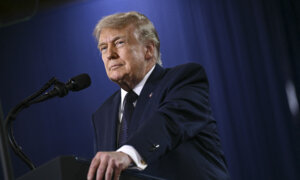
U.S. President Donald Trump ordered the U.S. withdrawal from the WHO in January 2025, citing the WHO’s “inability to demonstrate independence from the inappropriate political influence of WHO member states.” His order noted that China, despite its 1.4 billion people, “contributes nearly 90 percent less to the WHO.”
Beijing has since stepped in. With Washington gone, China has become the largest payer of the agency’s mandatory dues. Its annual bill is set to rise from about $87.6 million in 2025 to $137.8 million in 2026, reflecting a 20 percent increase that member states approved in May 2025, according to WHO calculations. At a WHO pledging event during that month’s World Health Assembly, China’s contribution to the agency’s fundraising drive was listed only as “to be confirmed.”
Taiwan Shut Out
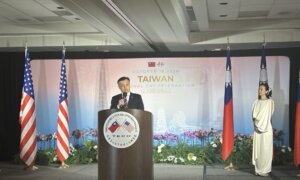
Beijing has also used its sway at the WHO to keep Taiwan out. The self-ruled island attended the World Health Assembly as an observer from 2009 to 2016, but the regime has blocked it every year since 2017, after then-President Tsai Ing-wen refused to accept Beijing’s “one China” position.
In May, member states again rejected a proposal to invite Taiwan after China said it would block the move, keeping the island out for a 10th straight year. Palau, one of Taiwan’s backers, warned that shutting out the island weakens global disease surveillance.
“In the aftermath of COVID-19, I do not think there is a global appetite for a Chinese candidate for WHO Director-General,” Lawrence Gostin, a professor of global health law at Georgetown University, told Health Policy Watch. “A Chinese candidate would heighten geopolitical tensions, putting the WHO in a difficult and vulnerable position.”