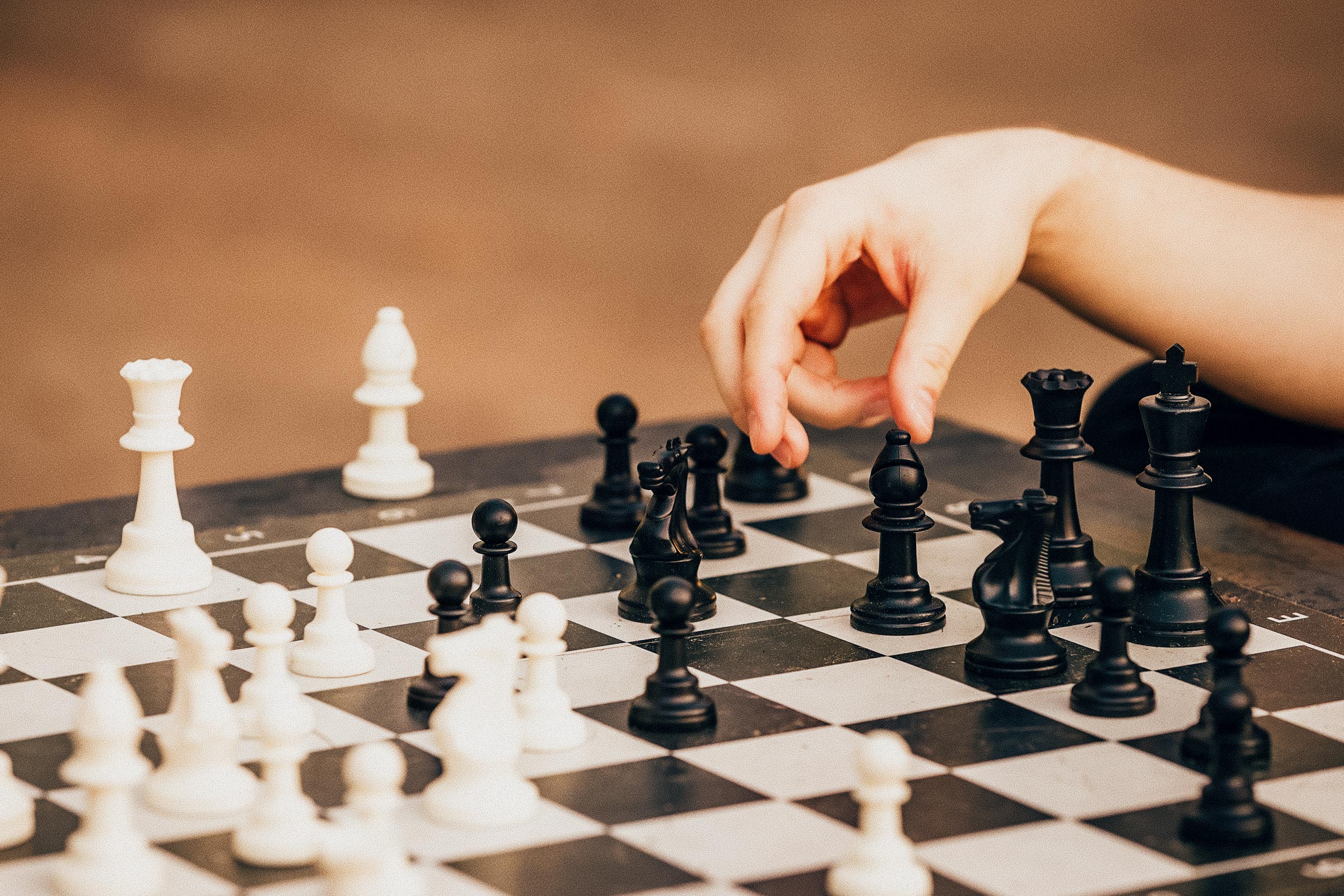

Chess is more than a game; it challenges your brain.
Research shows that people who play chess regularly can see improvements in memory and cognitive function. Playing chess may even help prevent dementia.
How Chess Improves Brain Health
Chess is never boring, as it requires planning and thinking ahead to anticipate the opponent’s moves.
“Its complexity means there’s always something new to learn and ways to improve, which is great for keeping your brain sharp,” Lissett Gonzalez-Burgos, who holds a doctorate in psychology and is a researcher on the effects of chess on cognition, told The Epoch Times.
According to a study Gonzalez-Burgos conducted, adults who play chess show improvements in cognitive function, specifically in executive function, attention, processing speed, and visual-spatial skills—the ability to visualize and manipulate objects in the mind. During normal aging, some of these functions tend to decline, particularly executive functions, which are especially relevant for maintaining autonomy in daily life.
Playing chess involves many parts of the brain.
As players get better at chess, they make more use of the brain’s frontal and temporal lobes, as well as the anterior cingulate cortex, which is part of the limbic system.
In a 2019 review, Spanish researchers wrote, “The pathological features of [Alzheimer’s disease] are most profound in the limbic system and temporal, frontal, and association neocortices, and basal forebrain areas involved in learning, memory, emotion, judgment, abstraction, language, and executive functions.
“Chess stands out as an activity gathering all these features.”
A study published in The New England Journal of Medicine found that people older than 75 who kept their minds active with board games such as chess were much less likely to develop dementia or Alzheimer’s disease. In a 2023 study published in JAMA Network Open, involving more than 10,000 older people, researchers found that those who played chess and engaged in other mentally stimulating activities had a lower risk of developing dementia over 10 years.
“It’s all about cognitive reserve—the brain’s ability to resist the effects of both normal and pathological aging,” Gonzalez-Burgos said.
In addition, playing chess involves two or more people, which also helps build new friendships and strengthen relationships with family and friends.
Because of these effects, chess training has potential as a preventive treatment for dementia, according to a review article by William Bart, professor of educational psychology at the University of Minnesota.
Getting Started
If you have never played chess before, one way to ease in is by starting with a simple board and pieces at home or by playing casually with a friend or family member. You might begin with shorter games or simplified rules to build confidence before moving on to full matches.
“It’s important to adjust the level of difficulty to match your own abilities,” Dr. José Carlos Millán Calenti, a specialist in geriatrics and gerontology who has conducted extensive research on aging and cognitive function, told The Epoch Times. This helps avoid frustration, loss of motivation, and eventually giving up on the practice.
“Although it may feel difficult initially, over time you’ll find it enjoyable—and even better, your cognitive performance will improve,” Calenti said.
Joining a local chess club or senior community group can make the experience more enjoyable and social.
Finally, be patient with yourself. Progress may be gradual at first, but the challenge is part of the benefit.
Chess Alternatives
Although chess can be highly beneficial, it is important to choose games that you genuinely enjoy.
“Enjoyment is key to staying consistent over time,” Candida Lozano-Rodriguez, a chess researcher who holds a doctorate in psychology, told The Epoch Times.
If chess is not appealing to you, look for other games that challenge strategy, memory, vocabulary, or calculation.
Traditional board games can help keep your mind sharp, even for older people who have—or may be at risk of—dementia. Different kinds of games work your brain in different ways. Some challenge your strategy, some test your memory or vocabulary, and others focus on matching or pattern skills.
If the goal is to train cognitive functions, it is best to alternate between different types of games, according to Lozano-Rodriguez.
“Any game that uses your thinking skills can train those same skills and support cognitive health,” she said.