

WASHINGTON—When Robert Moffit learned about the Chinese regime’s forced organ harvesting industry, detailed in the recent book “Killed to Order,” he was reminded of the horrors of human experimentation that came to light during the Nuremberg Trials.
“Well, very frankly, like most human beings on this planet, I never thought that anything like this would be surfaced again,” Moffit, senior research fellow of health and welfare policy at The Heritage Foundation and a former Reagan administration official, told The Epoch Times.
“But when I read this book, I was shocked, and I can understand why people don’t believe it, because it’s so terrible.
“Millions of Americans know nothing about this. It’s a real horror story, and it’s got to be brought to light. That’s the only way that we’re going to get some change.”
As author and Epoch Times senior editor Jan Jekliek explains in “Killed to Order,” the Chinese Communist Party (CCP) began pursuing unethical medical experimentation and organ transplantation in the 1980s.
But in about 2000, China saw a steady increase in the number of organ transplants, despite extremely low rates of participation in the country’s voluntary donation system.
It was in 2005 that Jekielek heard about a heart patient who had gone to China to get a transplant after only two weeks—something not possible under an ethical transplantation system, as the hospital would have to guarantee when the donor would die.
“So two things we knew right away: Number one, that that ‘catastrophic accident’ was being arranged by someone—someone was being killed for the organ,” Jekielek said in a Q&A session with Moffit at The Heritage Foundation on April 7.
“And the second [was], how are you getting this two-week wait time, which is basically impossible, right? In a given time, how rare it is to find that appropriate match, which sometimes still gets rejected.”
As independent investigators have concluded, the CCP was using prisoners of conscience as a living organ bank. Thousands of Falun Gong practitioners who had been imprisoned for refusing to give up their faith were blood-tested without explanation during their detention.
Falun Gong, also known as Falun Dafa, is a spiritual practice centered around the three principles of truthfulness, compassion, and tolerance. It gained widespread popularity after being introduced to the public in the early 1990s, and grew to have 70 million to 100 million practitioners by the end of the decade, according to official state estimates.
On July 20, 1999, the CCP launched a violent persecution campaign against the practitioners, beginning with mass arrests. Many practitioners who refused to renounce Falun Gong were subjected to torture, brainwashing, and forced labor.
This detained population also gave the CCP a chance to exponentially expand its forced organ harvesting practice, as explained in Jekielek’s book.
International Complicity Meets Growing Awareness
Experts in a panel discussion following the Q&A said that the issue has been met with ignorance and silence for too long, given American corporate interests in China and the involvement of elite U.S. institutions in training Chinese transplant surgeons. But the tide is turning, they said.
In the 2000s, as the numbers of imprisoned Falun Gong practitioners grew, Chinese hospitals were competing with each other to be able to say they performed the most heart or liver transplants annually, panelist Ethan Gutmann said, and these growing numbers to some extent were called into question by the international community.
Beijing said the organs were coming from death row prisoners, a claim that was met with criticism. In 2015, as China was on the verge of losing access to international medical forums and journals, the regime said it was ending the practice of taking organs from prisoners.
However, the transplant numbers kept growing.
“Then something started to break,” said Gutmann, an author and investigator who is also the cofounder of The International Coalition to End Transplant Abuse in China.
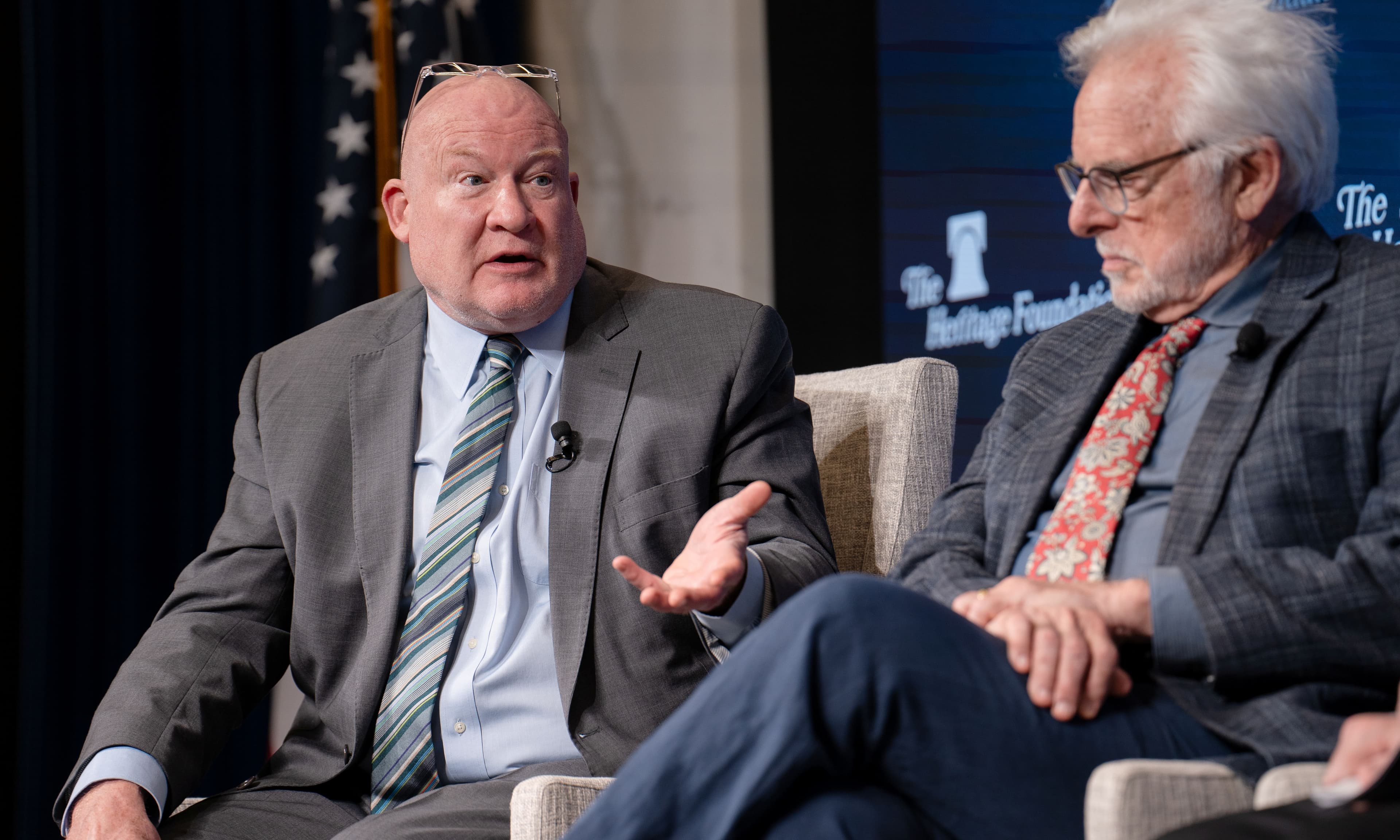
Author and investigative journalist Ethan Gutmann (L) discusses the Chinese communist regime's system of forced organ harvesting at a Heritage Foundation event in Washington on April 7, 2026. (Irene Luo/The Epoch Times)
In 2016, Reps. Chris Smith (R-N.J.) and Dana Rohrabacher (R-Calif.) held a hearing where the heads of The Transplantation Society and United Network of Organ Sharing said they had no way of verifying that China was no longer taking organs from prisoners.
“It was an amazing hearing,” Gutmann said. “The other thing that started happening was this massive construction of the camps in Xinjiang, and that was accompanied by these massive health checks of every single Uyghur, as long as they were over the age of 12.”
As detailed in Gutmann’s new book, the captive population in the Xinjiang region was suddenly given blood and DNA testing that the average Chinese citizen never received, and 28-year-olds were disappearing at an almost fixed rate.
In “The Xinjiang Procedure,” Gutmann presents fresh evidence that the CCP has expanded its organ harvesting systemically to Uyghurs.
For many years, major medical organizations were silent on the issue or took Beijing’s claims at face value, Gutmann said. But in 2022, one such organization made the decision to ban Chinese papers on organ transplantation.
“The International Society for Heart and Lung Transplantation did a 180 on this whole issue,” Gutmann said. “The point is that they stuck with it, because they say there’s no evidence that ... China’s reformed in any way.
“It means that Chinese transplant surgeons can’t come to their conferences, they can’t write for their journals and so forth. That’s a huge deal in China. That is a massive loss of face.
“What’s going on right now is we have an opening, a tremendous opening, because the old excuse ... both in the world of the press and within politics was, ‘Well, the doctors aren’t really signed on to this.’
“Well, now you can say it’s a split. ... There’s a real schism between the heart and lung transplant surgeons and the transplantation society. ... That’s an opening that could be filled by Congressman [Smith]’s bill.”

Rep. Chris Smith (R-N.J.) (C) discusses the Chinese communist regime's system of forced organ harvesting, at a Heritage Foundation event in Washington on April 7, 2026. (Irene Luo/The Epoch Times)
Legislation Against Forced Organ Harvesting
Smith, who also spoke on the panel, has been a vocal human rights advocate in Congress for more than three decades, and has held more than 100 hearings on the CCP’s human rights abuses.
Last year, he introduced legislation that would sanction perpetrators of forced organ harvesting. It was the second time the House passed such legislation with no movement on the Senate side.
“I’ve asked, and I appealed again to the Senate leadership, [to] bring it up under a [unanimous consent],” Smith said, noting that he has a meeting on April 15 with the head of the Senate Foreign Affairs Committee, Sen. Jim Risch (R-Idaho).
“I believe it will pass. And it’s taken me about a year to get the meeting, asking him, ‘Please put the bill up, or at least ... don’t block it.”
When the bill was introduced in the Senate this year, it had bipartisan sponsorship for the first time. The bill, sponsored by Sens. Ted Cruz (R-Texas) and Jeff Merkley (D-Ore.), would block perpetrators from entering the United States or conducting U.S.-based transactions. The individuals would also lose any current U.S. visa and immigration benefits they have.
“I think having two books coming out and ... raising the issue in a very, very profound way will be transformational,” Smith told The Epoch Times. “It brings a lot of fresh research and accuracy to just how horrible and how pervasive it is.
“Knowledge is power,” he said. “When you really make yourself aware, then you can act, and you can act prudently in trying to combat, in this case, an insidious evil.”
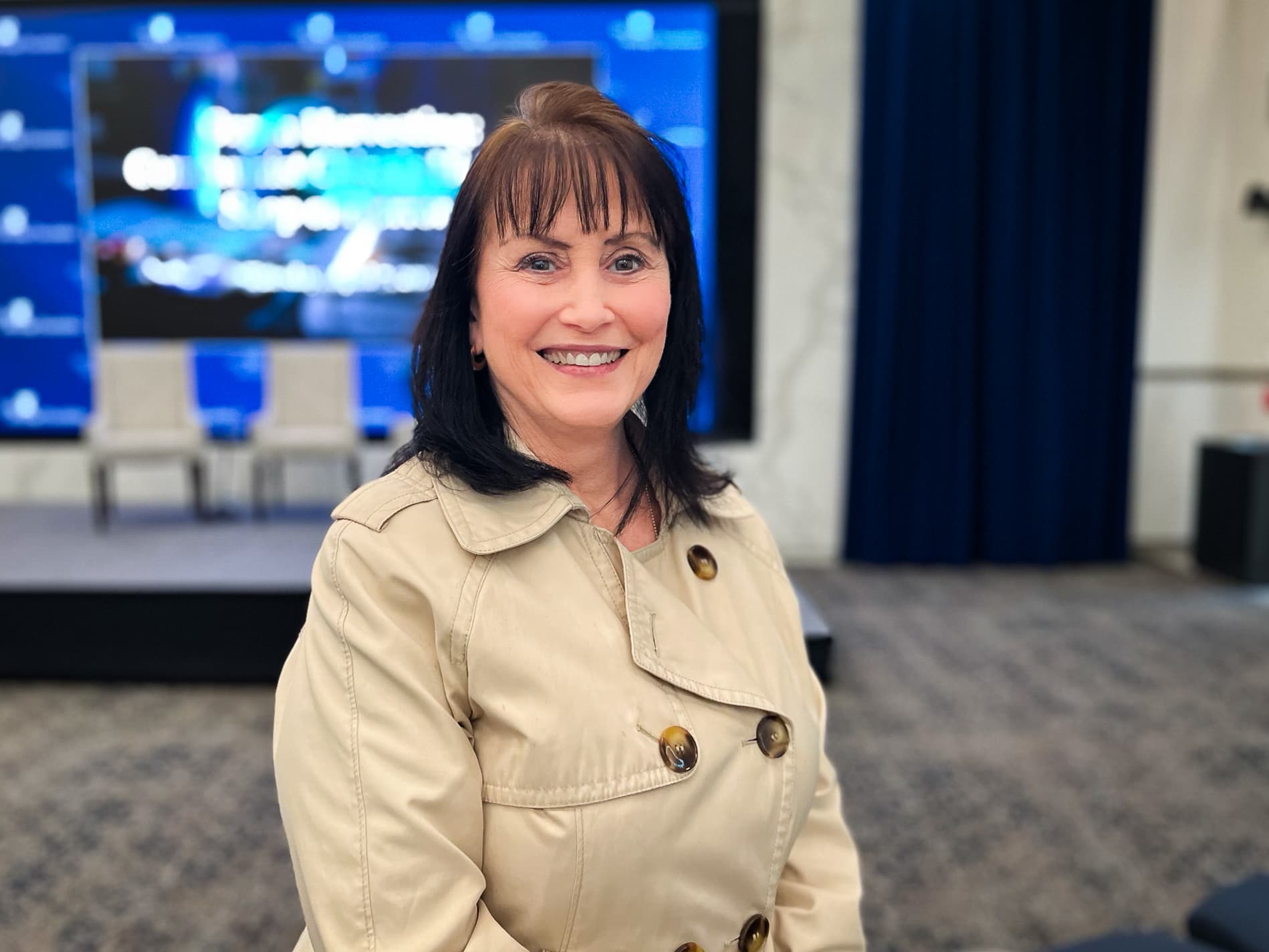
Terry Gilberg, talk show host and producer, at the event "Organ Harvesting: Communist China’s Hideous Shop of Horrors," hosted by the Heritage Foundation in Washington on April 7, 2026. (Eva Fu/The Epoch Times)
Those in the audience learning about the CCP’s forced organ harvesting for the first time shared the panelists’ sentiments, wanting the United States to condemn and criminalize the practice.
Radio host Terry Gilberg said she had not been aware of forced organ harvesting in China.
“It’s the issue that we need to know about,” Gilberg told The Epoch Times. “This has got to stop, but it’s a question of getting the message out to all Americans, especially in the hospitals, especially with the doctors, with the nurses, with the families that are begging, begging for some kind of organ.”
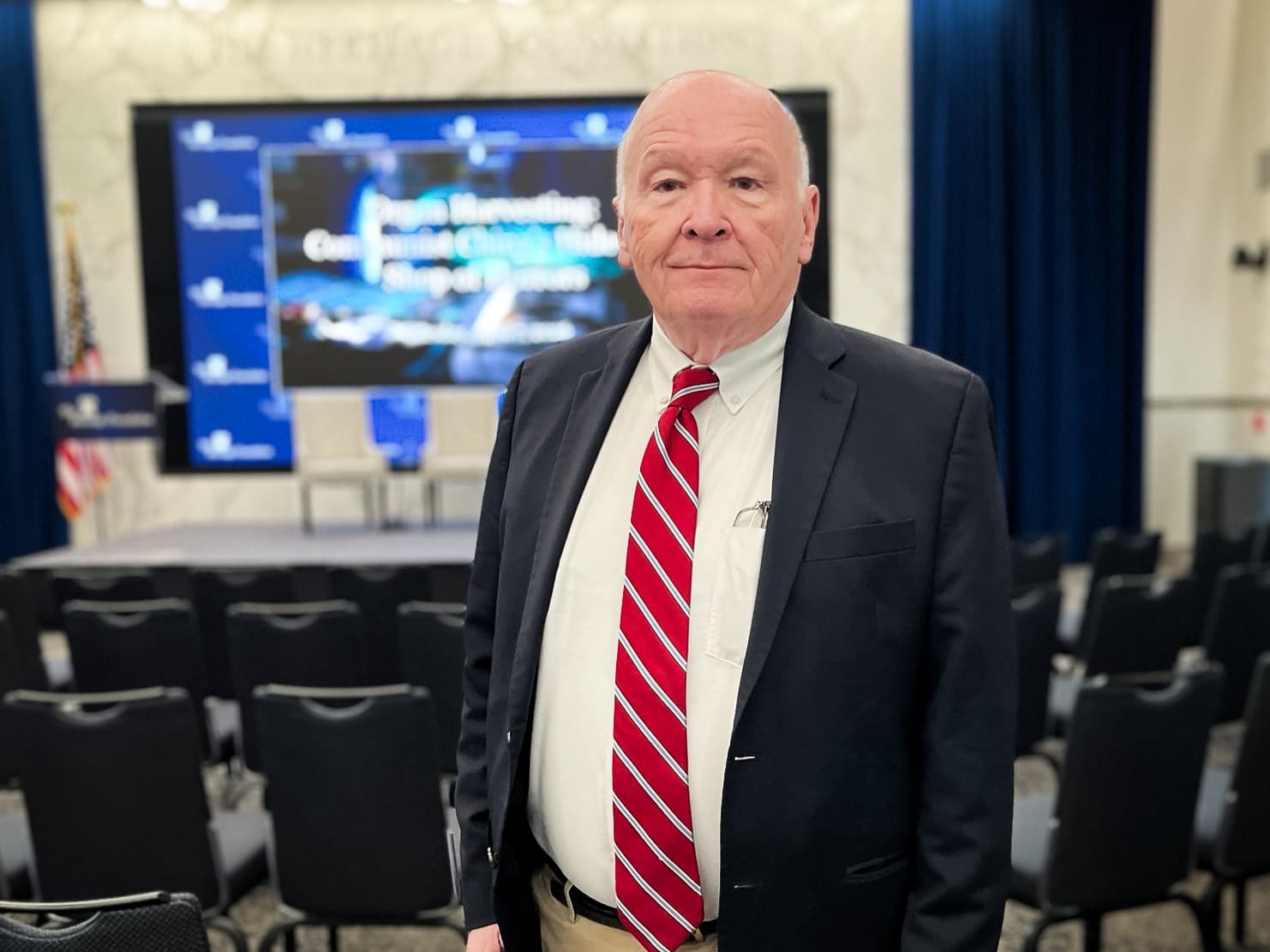
Chuck Donovan, copresident of the Science Alliance for Life and Technology, at the event "Organ Harvesting: Communist China’s Hideous Shop of Horrors," hosted by the Heritage Foundation in Washington on April 7, 2026. (Eva Fu/The Epoch Times)
Chuck Donovan, copresident of the Science Alliance for Life and Technology, said this was a new issue he would be writing about and contacting policymakers over.
“I’ve had 50-some years working on issues in Washington,” he told The Epoch Times. “There are so often reasons of state or some big thing in the background that determines ... a policy like this, which should be easy, but somehow is difficult to address, because it’s tangled up in other issues between nations.
“To me, the biggest issue is, how bold is the United States willing to be in moral leadership? To me, it’s not as bold as it should be. I'd like to see that change. It’s very important. It’s huge.”
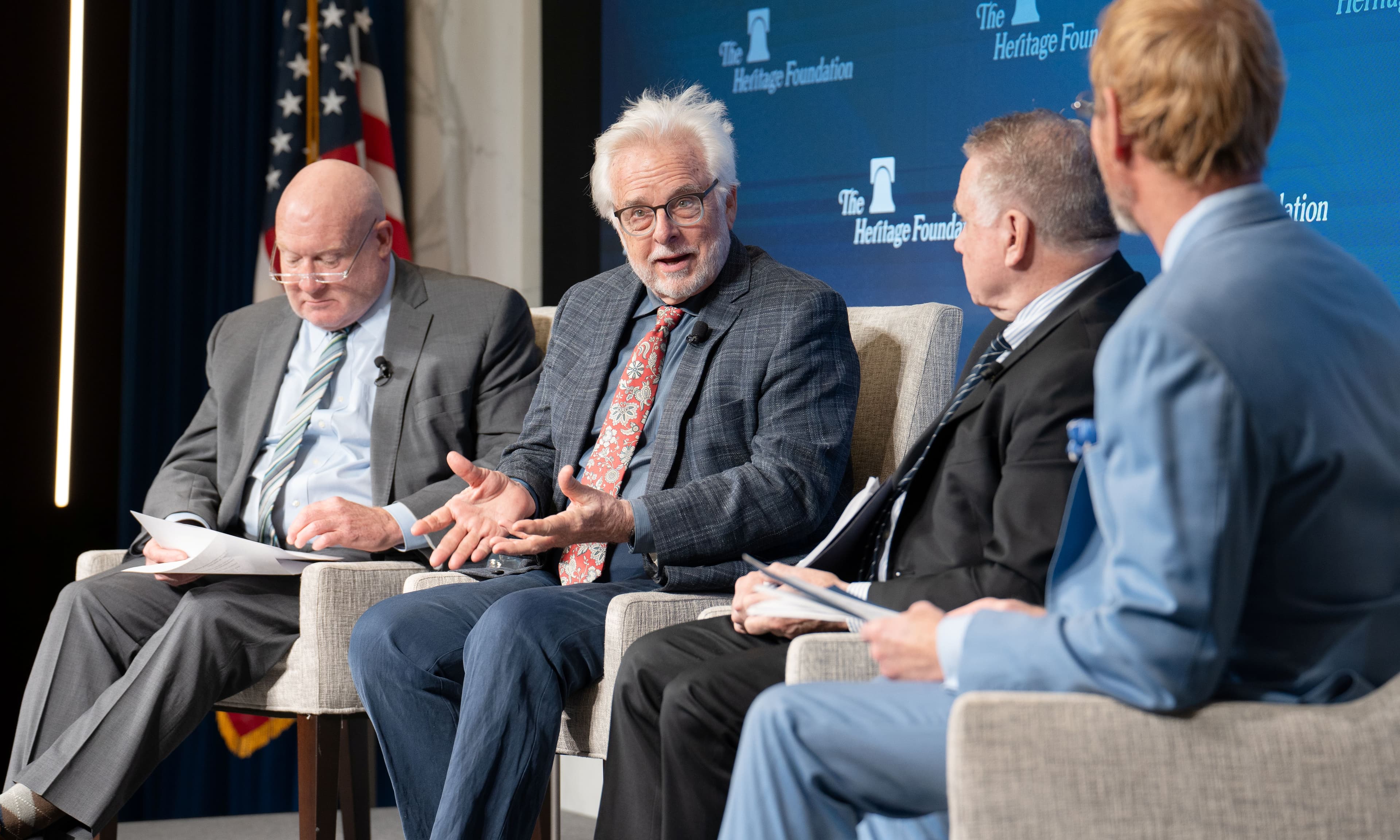
Wesley Smith (C) discusses the Chinese communist regime's system of forced organ harvesting, at a Heritage Foundation event in Washington on April 7, 2026. (Irene Luo/The Epoch Times)
Panelist Wesley Smith, chair and senior fellow at the Discovery Institute’s Center on Human Exceptionalism, said the CCP’s practices must be denounced, or else they will encourage a mindset that spreads.
“This is a virus, OK?” he said, referencing a case in which a woman who committed medically assisted suicide was put into a coma to prolong the period during which her organs could be extracted. He said he worries that cases such as this could disincentivize suicide prevention.
“It’s always been a virus that will go to country after country. It’s obviously spreading into our ideas about assisted suicide.
“So if we can stop it in China, if we can at least stop the normalization, I think that would be the first step.
“China is the place where ethics go to die in terms of medical research. We need to curtail that kind of collaboration, which they yearn for because they want respect.
“We need to, as long as this is going on, and as long as they’re willing to tolerate it within their society and benefit from it, we need to treat China ... as a pariah nation.”