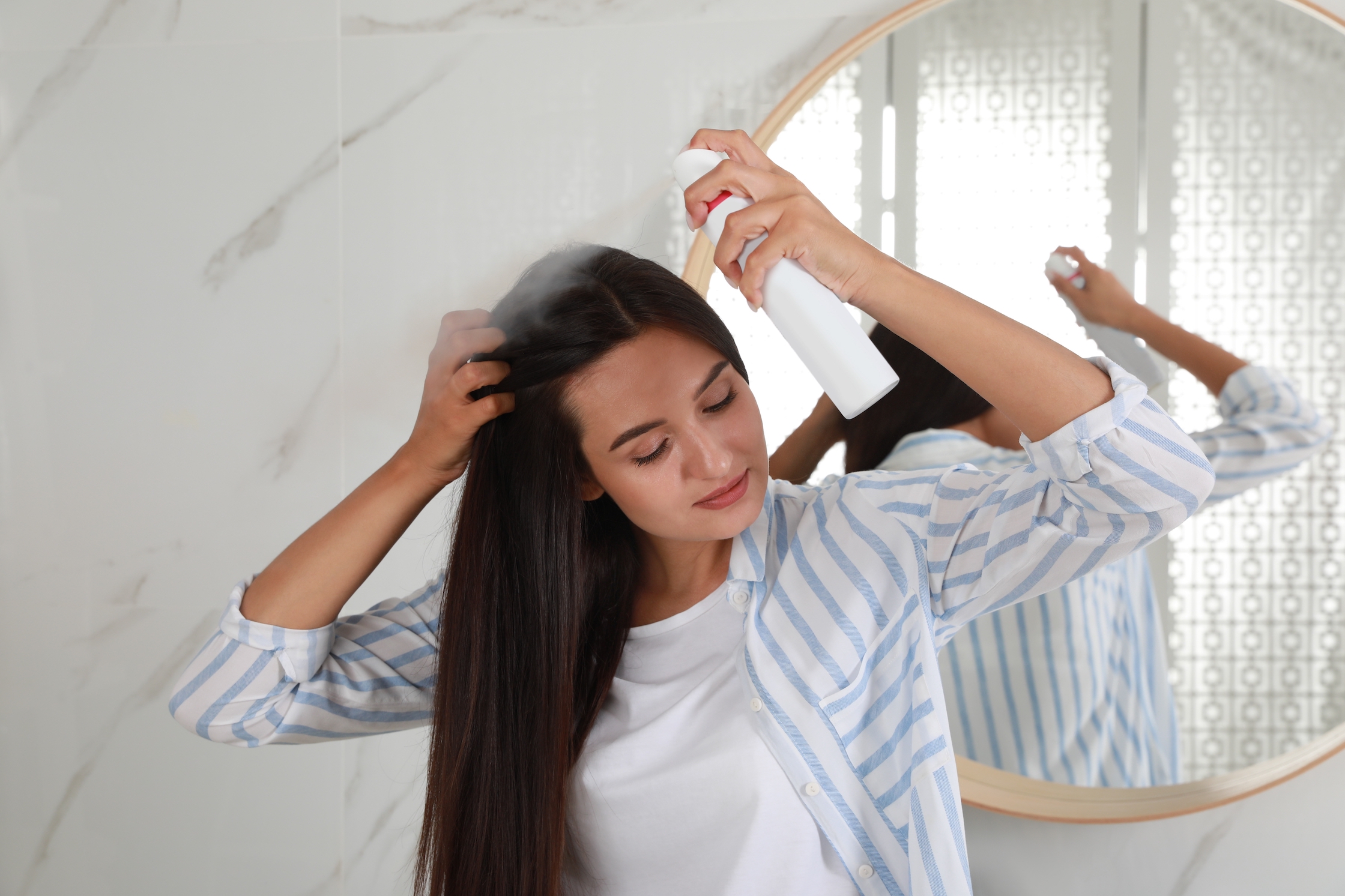

Two commonly used categories of hair products have come under scrutiny after research linked one to cancer and lab testing found the other contaminated with a cancer-causing ingredient.
These add to a growing list of common cosmetic products that have been linked to cancer, following other well-publicized cases such as that of talcum powder. The use of baby or talcum powder by women in the perineal area is now linked to ovarian cancer. A few years ago, a St. Louis jury found that asbestos-tainted talcum powder contributed to the development of ovarian cancer.
Johnson & Johnson appealed the decision twice but was left to pay a $2.1 billion settlement.
The Lanier Law Firm, which handled the suit, noted that the Missouri Court of Appeals found “evidence that Defendants discussed the presence of asbestos in their talc in internal memoranda for several decades; avoided adopting more accurate measures for detecting asbestos and influenced the industry to do the same; attempted to discredit those scientists publishing studies unfavorable to their Products; and did not eliminate talc from the Products and use cornstarch instead because it would be more costly to do so.”
When profit incentives become mixed with complex global supply chains that can make these kinds of tainted products more likely, the risk to human health increases.
Dry Shampoo the Latest Tainted Product
In October, high levels of benzene, a chemical that can cause blood cancers such as leukemia, were found in dry shampoos by an independent laboratory.
The lab tested 34 brands of spray-on shampoo, 148 batches in total. Upon finding that 70 percent of dry shampoo samples it tested contained “quantifiable” levels of benzene, Valisure, the independent laboratory, petitioned the U.S. Food and Drug Administration (FDA) for the products to be recalled.
“The detection of high levels of benzene in dry shampoos should be cause for significant concern since these products are likely used indoors, where benzene may linger and be inhaled for prolonged periods of time,” Valisure CEO David Light said in a statement.
Light said these and other issues with product contamination underscore the need for independent testing to be better integrated “into an increasingly complex and vulnerable global supply chain.”
Valisure noted there was significant variability from batch to batch—even within a single brand.
“There was also significant variability between subsequent sprays from some bottles, suggesting inconsistent product mixtures in some products.”
Deodorants and sunscreens such as Johnson & Johnson’s Neutrogena products and Procter & Gamble’s Secret and Old Spice brands have recently been recalled because of the presence of benzene.
Nor are hand sanitizers exempt. Recently, Salon Technologies Inc., maker of Antica Ocean Citron Hand Sanitizer Gel, recalled its product because of benzene contamination. Other hand sanitizers have been recalled as the FDA warning widened.
Hair Products Linked to Cancer
Dry shampoo isn’t the only problematic hair product.
Recently, chemical hair straighteners, sometimes called relaxers, came under the oncological microscope.
A study of more than 33,947 American women of different races and ethnicities, led by the National Institute of Environmental Health Sciences (part of the National Institutes of Health or NIH) and published in the Journal of the National Cancer Institute, discovered that those who frequently used the products had more than twice the risk of uterine cancer of those who hadn’t.
In more than 10 years of follow-up, 378 women of the 33,947 studied developed uterine cancer. Uterine cancer is the most common female reproductive cancer, according to the NIH, with 65,950 expected cases in 2022 alone.
According to the authors of the Journal of the National Cancer Institute study, “exposure to excess estrogen and a hormonal imbalance of estrogen and progesterone have been identified as key risk factors for uterine cancer.”
Specific carcinogenic chemicals that may lurk in the hair products include formaldehyde, formaldehyde-releasing chemicals, and oxidized para-phenylenediamine found in hair dyes, the researchers wrote.
“Concentrations of parabens in endometrium tissues and phthalates in urine samples were higher in participants with endometrial cancer than those who are endometrial cancer-free,” the authors said, noting that “low-dose bisphenol A (related to parabens and phthalates) has been associated with altered hormones in rats.”
The scalp allows more chemicals to enter the body than forearms, palms, and abdomens, they added.
This isn’t the first time that chemical hair straighteners have been linked to hormone-related cancers in women; last year, the International Journal of Cancer published research that indicated an increased risk of breast cancer in women who used chemical hair straighteners when they were adolescents.
“Frequent use of straighteners and perms [chemical hair products that can also straighten hair] was associated with a higher risk of premenopausal but not postmenopausal breast cancer,” wrote the researchers. The cancers were both invasive cancer or ductal carcinoma in situ. Research in the journal PLoSOne echoed the findings.
Also last year, the journal Carcinogenesis linked the use of hair straighteners to the development of ovarian cancer.
“Our novel findings suggest that frequent use of hair straighteners/relaxers or pressing products, which are primarily used by African American/Black women, and possibly permanent hair dye, may be associated with the occurrence of ovarian cancers,” the researchers wrote.
While one-time use isn’t linked to ovarian cancer, the use of the products four times a year is, according to the journal, as well as other publications.