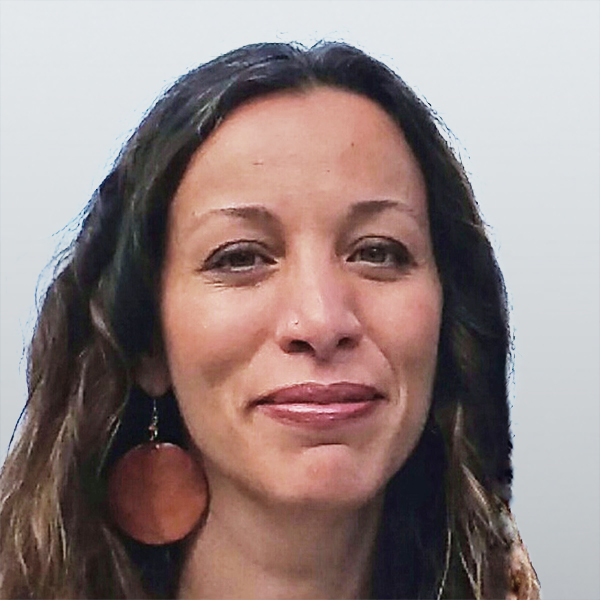
Some California residents are pursuing their passion for cooking through a program that lets them run a restaurant business out of their home.
The Microenterprise Home Kitchen Operation (MEHKO) program provides opportunities for residents to offer dine-in, takeout, and delivery services and to provide food as a commissary kitchen for a permitted food cart.
Participants shared with The Epoch Times how the program has helped them serve up their own recipes to the public and get their businesses off the ground without needing the capital to open a brick-and-mortar restaurant.
The program has paved a way to “financial sustainability due to not having to rent a commercial kitchen,” Kellie Joe, who runs a MEHKO called Queen Of Crusts, told The Epoch Times in an email.
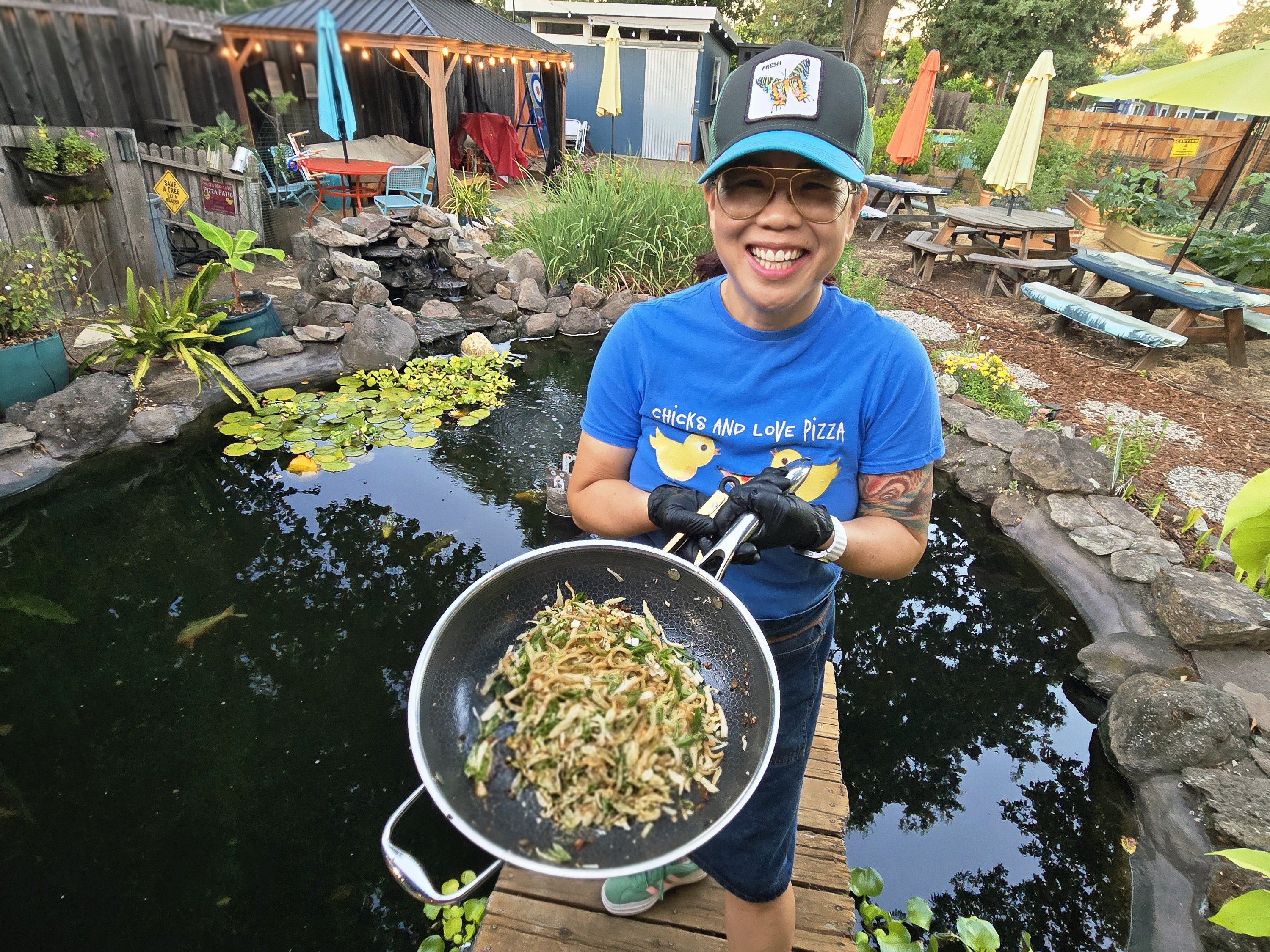
As owner and chef, Joe offers intimate dining at her home in Pleasant Hill by reservation only, transforming her backyard into a cozy space where guests feast on four-course meals next to her large koi pond with a waterfall. The meals include mocktails, organic salad, garlic noodles, and pizza made from scratch.
She also offers handcrafted gelato, pizza-oven-baked cookies, wine, and beer.
She uses eggs from her own chickens, and her hot honey topping contains honey from her own bees. She forages the wild mushrooms herself.
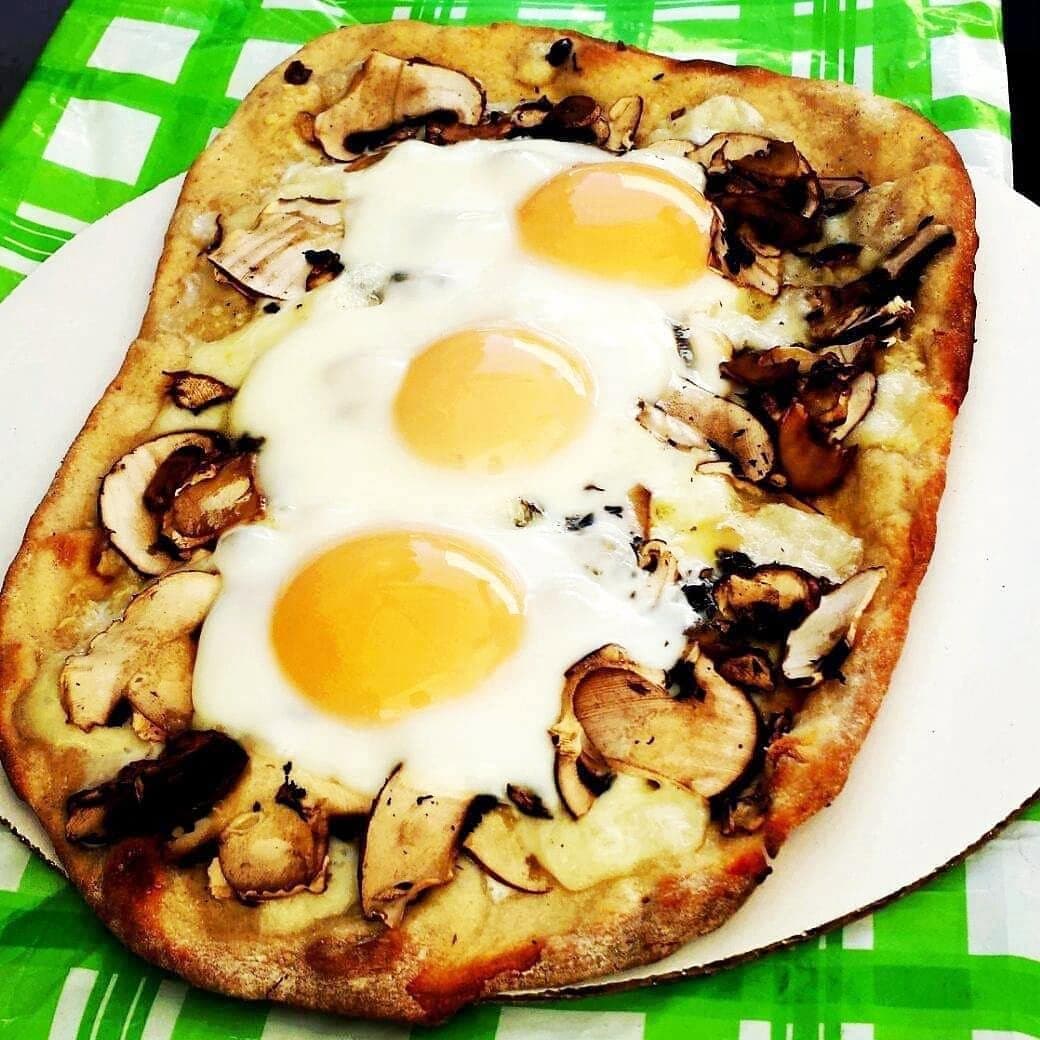
A pizza made at MEHKO home restaurant Queen of Crusts, topped with eggs from owner Kellie Joe’s chickens. (Courtesy of Kellie Joe)
This opportunity has been a dream for Joe since a trip to Thailand in 2009 when she saw locals there running restaurants out of their homes.
“I describe my MEHKO as a boutique garden venue with food and beverage amenities,” Joe said. “How many restaurants do you go to where the chef is chatting it up with you and cooking for you and serving you?”
For Maria Evangelina Martinez Garcia, who runs a MEHKO called Maria’s Cocina in Pittsburg, the program completely changed her life.
“It gave me a legal way to turn my passion for cooking into a real business while serving my community,” she told The Epoch Times in an email. “It has allowed me to provide for my family, create jobs, and preserve the traditional Mexican recipes that have been passed down through generations.”
She used the MEHKO program to transform her garage into a place where guests can enjoy an intimate dining experience, her cultural traditions, and a feeling of being welcomed into a family’s kitchen.
“It’s about creating connections through food,” she said.
During operation hours, she can be seen buzzing around her kitchen juggling multiple orders. She offers authentic homemade Mexican cooking, including handmade tortillas, birria, pozole, menudo, enchiladas, and fresh seafood such as ceviche, aguachiles, and mariscadas.
“My faith has been the foundation of this journey. There were times when I felt discouraged, overwhelmed, and unsure of what my future would look like,” she said. “Through prayer and trusting God, doors began to open that I never imagined possible.”
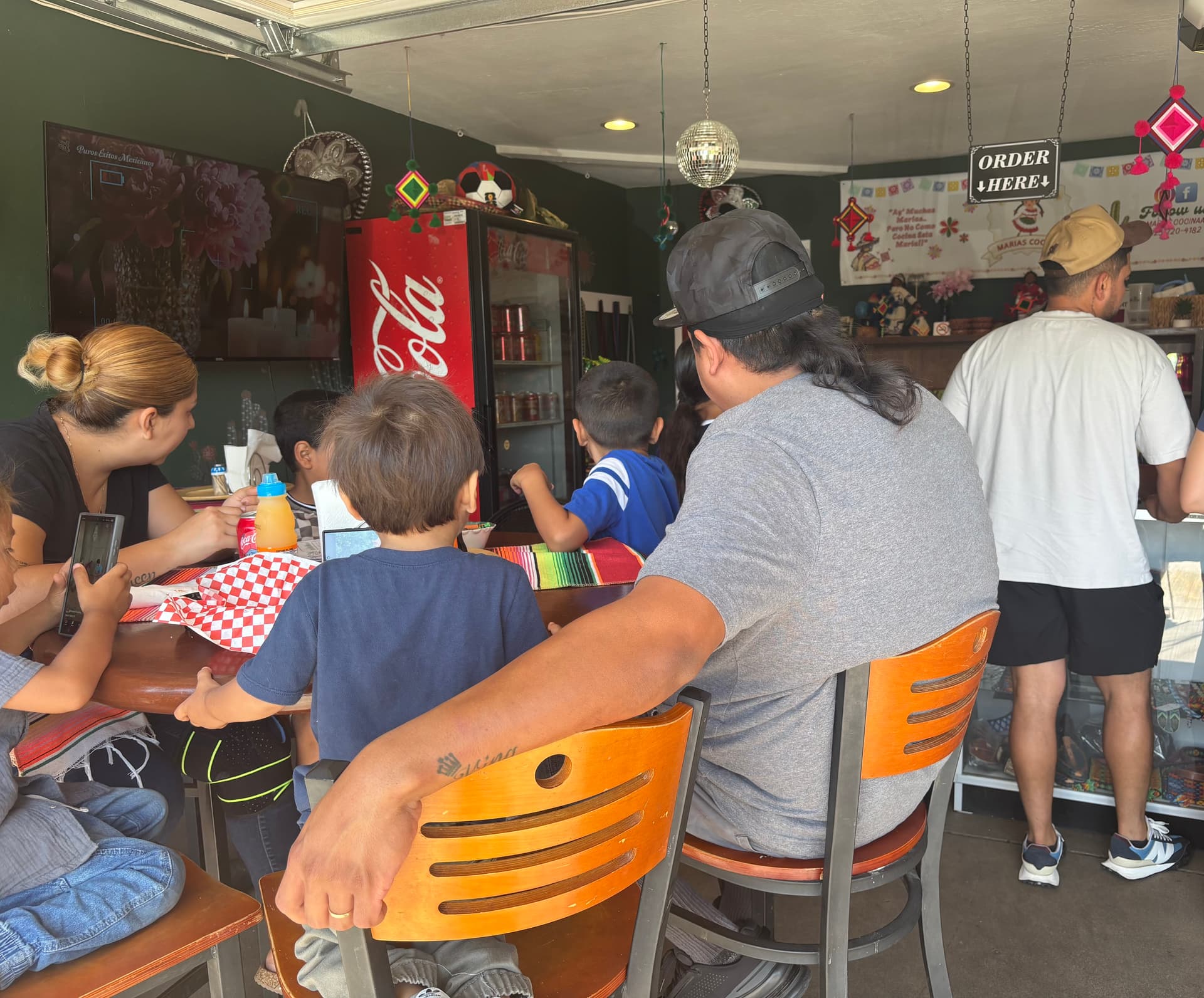
A family dining area at Maria’s Cocina, a MEHKO home restaurant in Pittsburg, Calif. (Helen Billings/The Epoch Times)
The MEHKO program was established through Assembly Bill 626 and went into effect on Jan. 1, 2019. The law gave cities or counties “full discretion” to authorize MEHKOs in their jurisdiction. As of May this year, 17 counties and the cities of Berkeley and Long Beach have officially authorized the program.
Participants must get permitted by the local environmental health agency, obtain a kitchen inspection, get food manager certification, and pay fees and fill out other forms that can vary by jurisdiction.
“The MEHKO program offers a more affordable and flexible path to entrepreneurship. By reducing the barrier to entry, the program also encourages safer and legal home-based food businesses,” Venerie Rosauro, supervisor of the Consumer Protection Program for Contra Costa County Health, told The Epoch Times in an email. “I have seen MEHKOs offer diverse, cultural foods that are otherwise unavailable or uncommon in the community.”
Rosauro said her county has issued over 100 MEHKO permits since 2024 and has successfully guided six previously unpermitted operations into becoming safe, regulated, and permitted.
The MEHKO owners interviewed by The Epoch Times welcomed the food safety regulations.
Douglas Richey, who has a MEHKO called Live Oak Kitchen in Concord, said in an email that food safety knowledge isn’t always universally known.
“The permit process provides confidence to our customers,” Kenyatta Robinson of Backyard Smokemaster BBQ, a MEHKO in Clayton, said in an email.
While the program lifts some barriers, it isn’t without its limitations. Sales must occur directly between the MEHKO and the customer; food must be prepared, cooked, and served on the same day; and gross annual sales cannot exceed $100,000.
In addition, only 30 meals per day and 90 meals per week can be sold.
“We’re legally limited to small-batch production, which sounds like a constraint, but it’s actually a feature, it forces craft,” Richey said. “Every tri-tip, every rib, every sauce gets the same attention as the first one we ever made.”
Richey has 25 years of culinary experience, but the capital needed to own a restaurant was a barrier. After completing training by the COOK Alliance, a nonprofit dedicated to helping home food entrepreneurs, he received a small grant, making it possible for him to launch his MEHKO business.
“MEHKO is a pathway for working professionals to build equity, not just a side hustle,” he said.
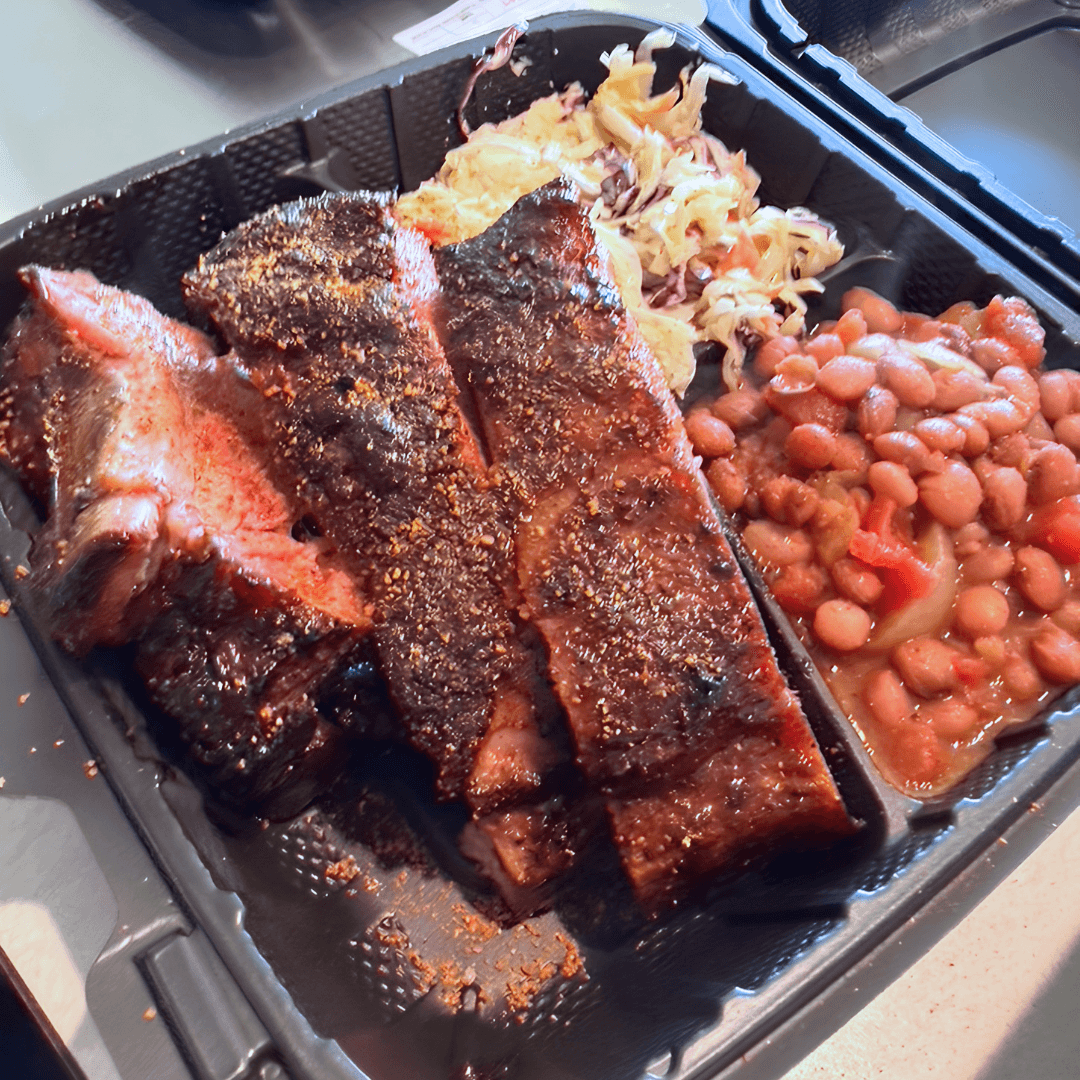
A barbecue plate from Live Oak Kitchen, a MEHKO home restaurant in Concord, Calif. (Courtesy of Live Oak Kitchen)
His menu is take-out only and centers on California heritage barbecue, specifically Santa Maria style. He serves tri-tip sandwiches, whole chickens, baby back ribs, smoked turkey, linguiça, and house-made sides.
For Robinson of Backyard Smokemaster BBQ, the program was an extension of his journey into the community of backyard barbecue enthusiasts.
Inspired by his father in-law’s smoked ribs, he purchased his first smoker, a Weber Smokey Mountain, in 2015. He established a YouTube channel and weekly podcast to encourage and support the growing barbecue community.
“The MEHKO program gave me an affordable way to start and run my business,” Robinson said. “And the flexibility in my operating schedule allows me to attend to the needs of my family.”
On a pre-order basis, he offers a wide variety of slow-smoked barbecue whole meats, seasoned with his own rubs. The dishes include brisket, chicken, tri-tip, spare ribs, beef ribs, and pork belly.
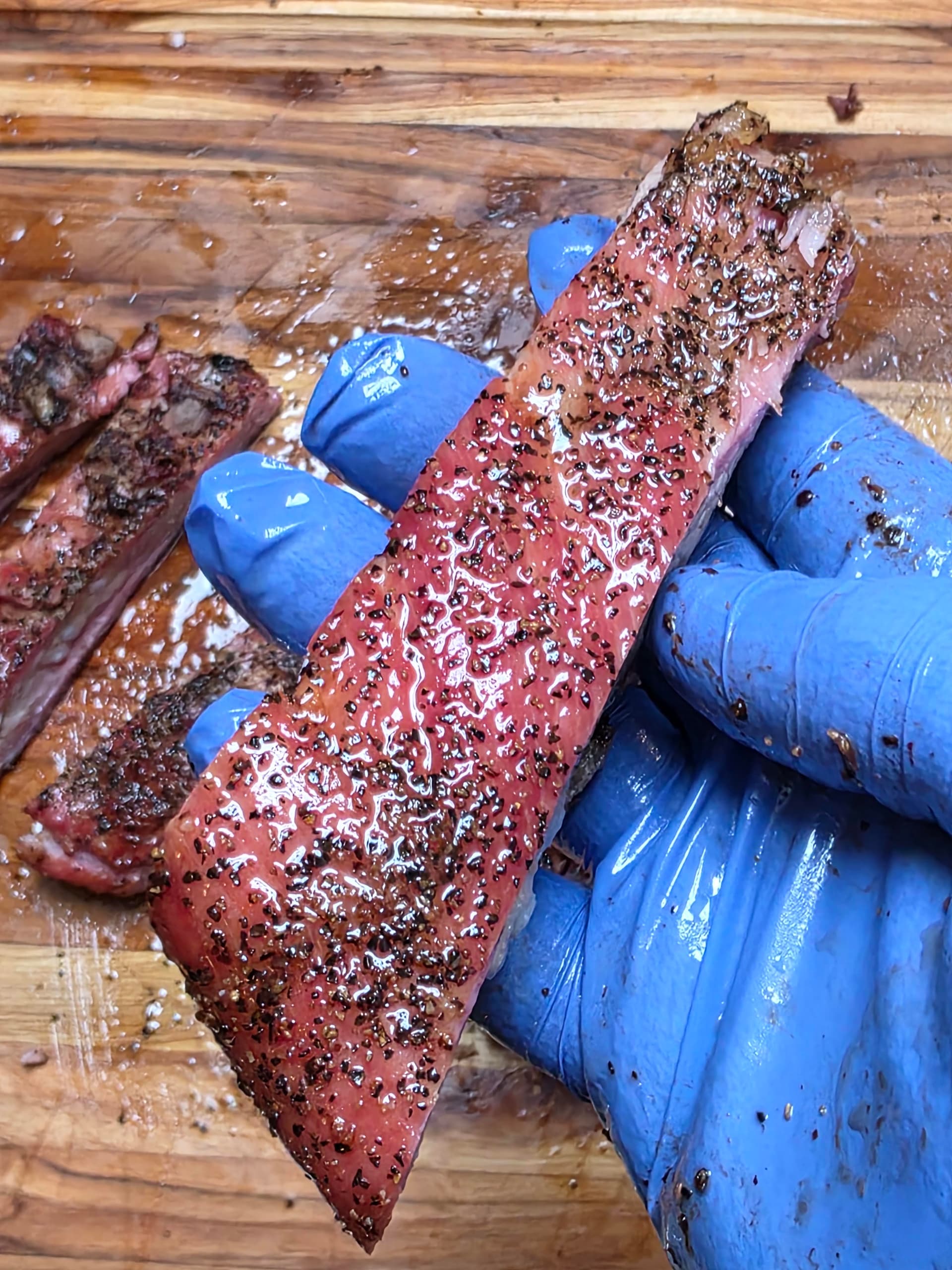
Kenyatta Robinson of the MEHKO home restaurant Backyard Smokemaster BBQ in Clayton, Calif. (Courtesy of Kenyatta Robinson)
“We are also hyper-local—many of my customers are within walking distance of my home,” Robinson said.
While many praise the business opportunity, some critics have voiced concerns.
Jot Condie, president and CEO of the California Restaurant Association, told CBS San Francisco his concern is that in counties that don’t have the budget and are stretched thin, health inspectors may not perform a rigorous enough inspection of MEHKO businesses.
Joshua Rodriguez, then Long Beach mayoral candidate, echoed Condie’s concerns in a lengthy Facebook post.
“The Long Beach Health Department is already overstretched and the city is [in] a massive deficit. They will not be able to adequately inspect and monitor hundreds of unregulated home kitchens,” he wrote.
In addition, he stated that the program “undermines legitimate restaurants and food businesses that pay taxes, obtain proper permits, and submit to regular health inspections.”
Rodriguez said a MEHKO business operation could make it harder for law enforcement to detect illegal activity happening at the residences, such as prostitution or the sale of narcotics.
The businesses interviewed by The Epoch Times noted that being mindful of their neighbors is part of the operation.
Joe said she has not received any complaints and already had a good relationship with her neighbors before her MEHKO business. For Joe to get a beer and wine license, 100 of her closest neighbors had to sign off on it.
“I operate responsibly by managing orders carefully and being mindful of parking, traffic, and noise,” Martinez Garcia said.
For the father and son team Chris and Maceo Lujan, who run Cafe Lujan in Pittsburg, many of their neighbors have shown up to support their MEHKO.
“We initially believed we would run as a tent in the parking lot of a gas station or other. We soon learned that those tents, and many of the home restaurants that are doing business in our area are illegitimate,” they told The Epoch Times in an email.
If it weren’t for the MEHKO program, their business might not have come to fruition, they said.
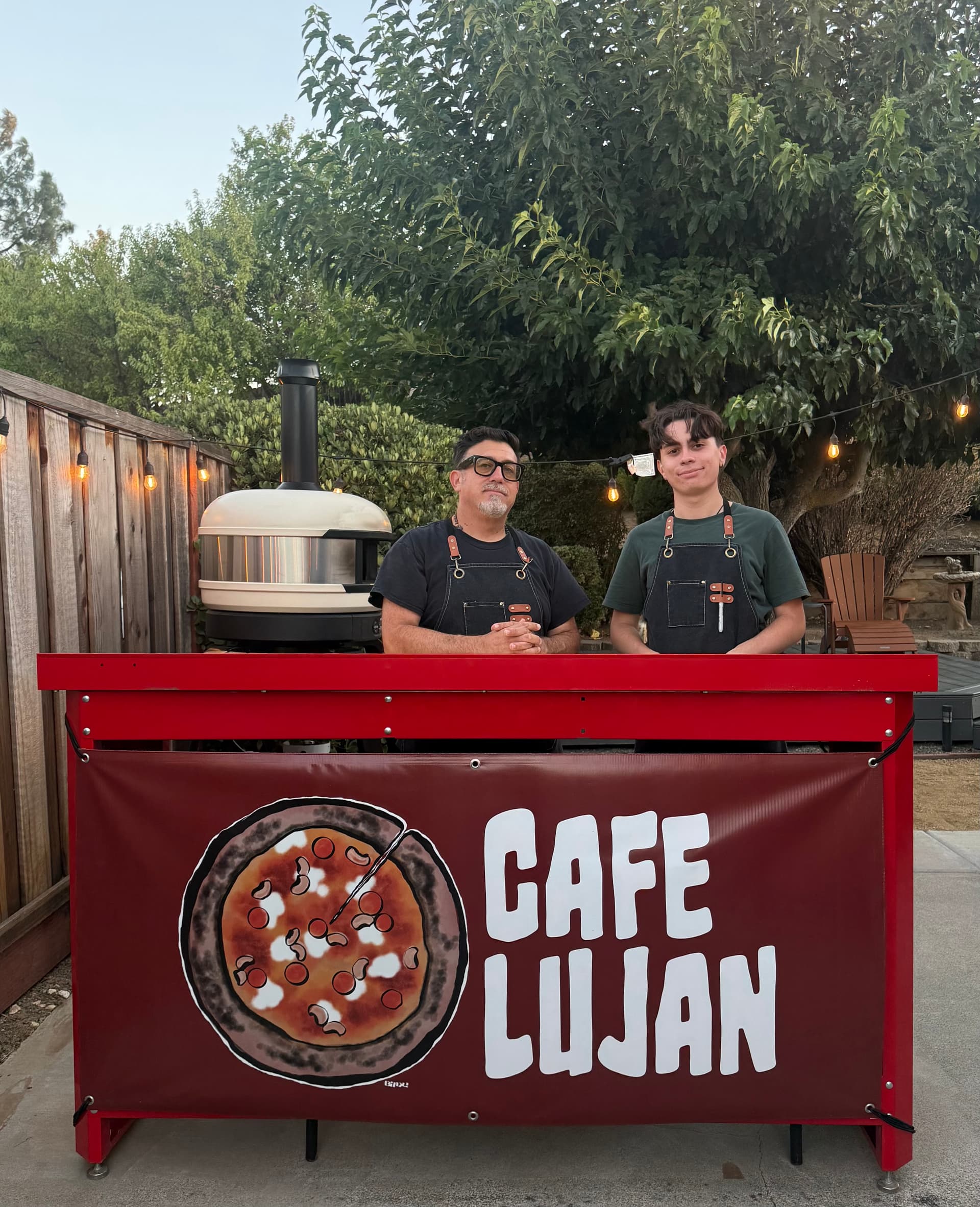
Chris and Maceo Lujan of the MEHKO home restaurant Cafe Lujan in Pittsburg, Calif. (Courtesy of Chris Lujan)
“We were just a father and son who fell in love with making pizza and wanted to share that with the community,” the Lujans said.
They tested the waters by making Neapolitan-style pizzas for friends and family before learning how to be fully compliant with food safety and starting a MEHKO.
With the limitations on meals per day, the Lujans make dough in small batches.
“We carefully curate each pizza’s toppings to make sure they have their own unique taste/experience. For example, The True Romance … has garlic-infused olive oil instead of red sauce, mozzarella, fresh peach slices, red onion, hot Italian sausage sourced locally from Paulo Sausage Co, gorgonzola cheese crumbles, and hot honey to finish,” they said.
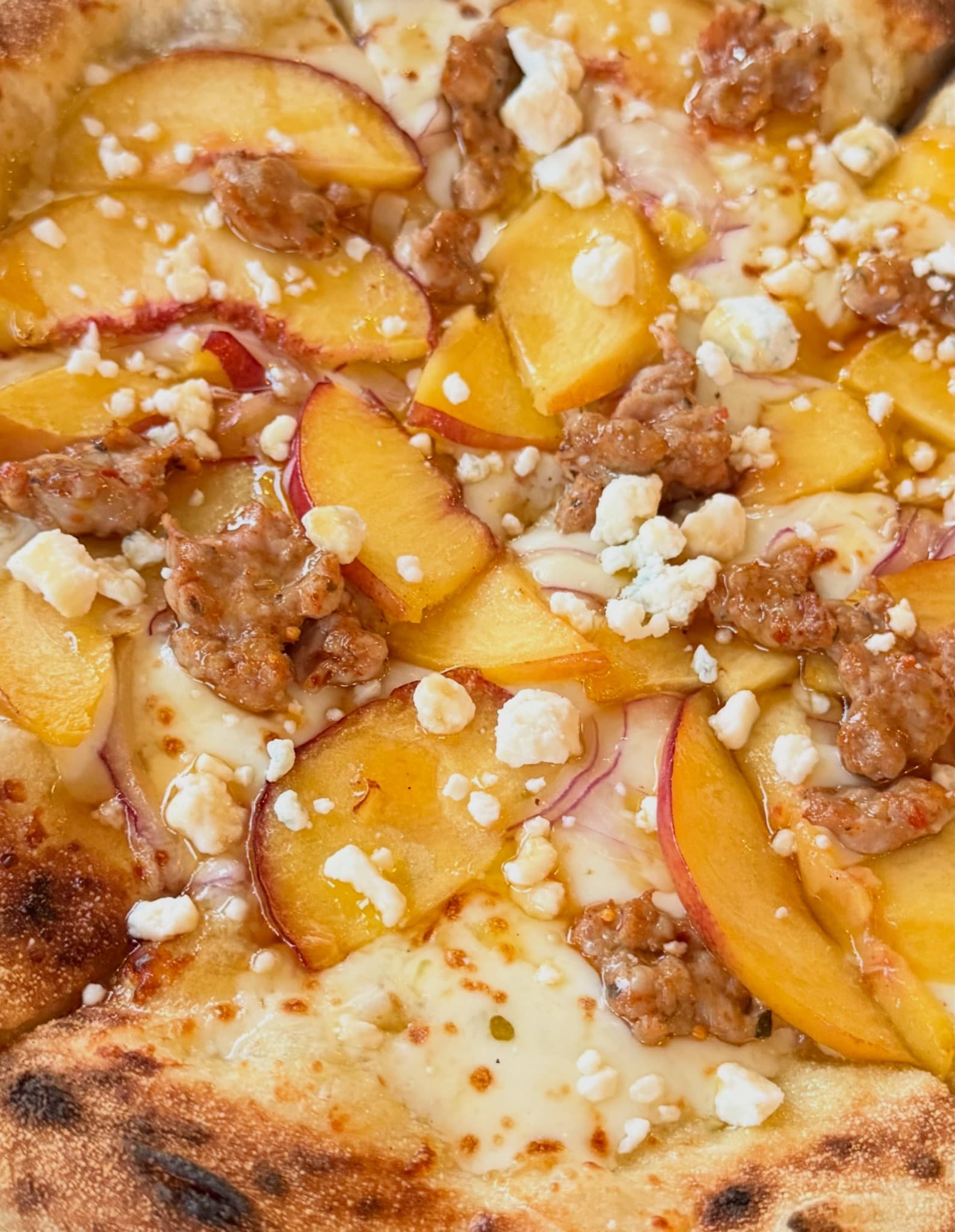
The True Romance pizza made at MEHKO home restaurant Cafe Lujan in Pittsburg, Calif. (Courtesy of Cafe Luhan)
As a long-time industry professional, Joe encourages professional food makers to explore the MEHKO program.
However, she advised: “What’s true is that it’s still a business. If you don’t have a background in the food service business, it’s going to be challenging.”