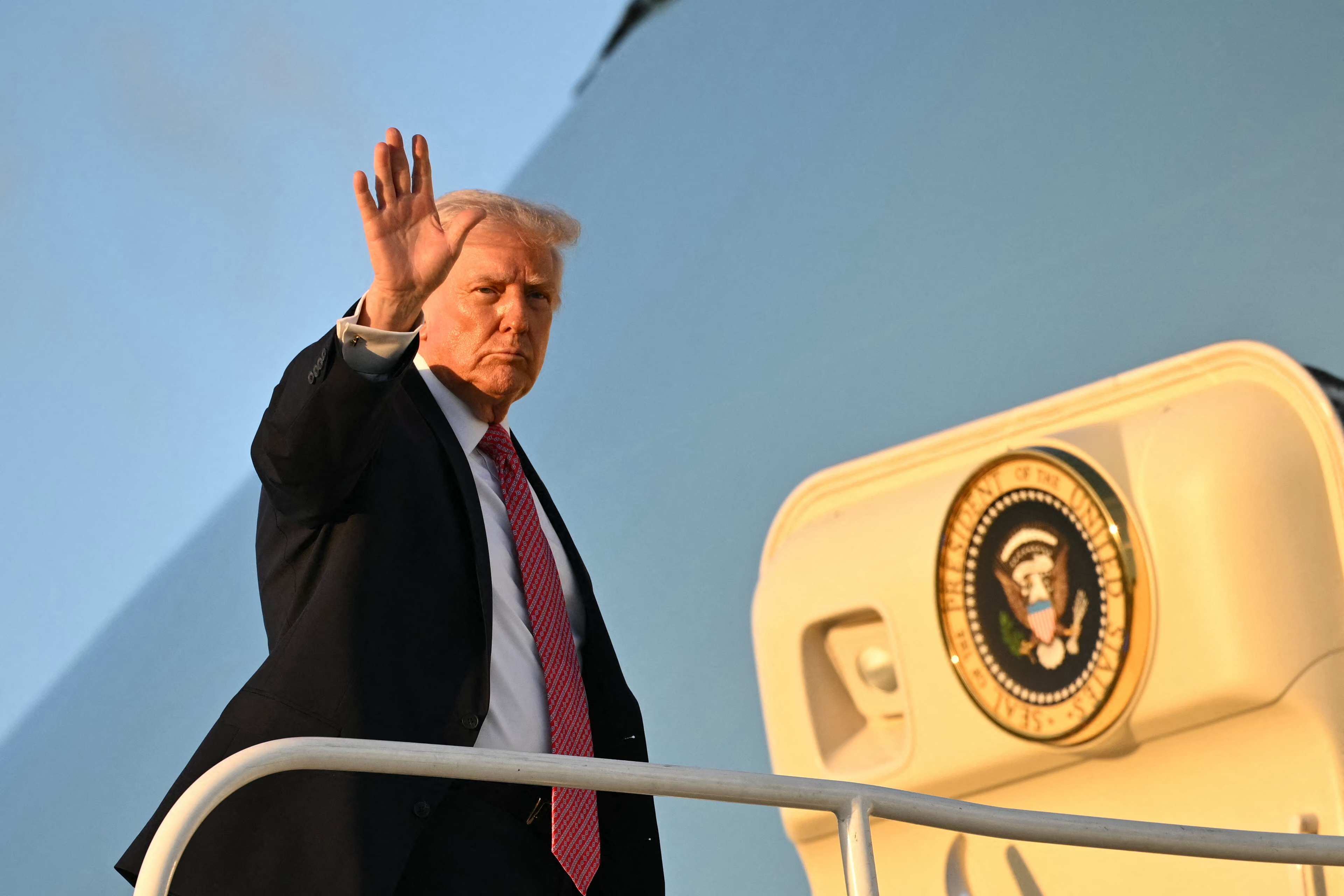
As President Donald Trump prepares for high-stakes talks with Chinese leader Xi Jinping in Beijing on May 14–15, a bipartisan group of senators is urging him to draw a hard line on maritime trade, arguing that U.S. shipbuilding capacity, and national security, hang in the balance.
In a May 11 letter, Sens. Tammy Baldwin (D-Wis.), Mark Kelly (D-Ariz.), Todd Young, (R-Ind.), and Tim Scott (R-S.C.) warned that the United States faces “an inflection point” after decades of decline in commercial shipbuilding. They called on Trump to resist any concessions that would weaken existing trade measures targeting Chinese-built vessels.
“The PRC’s decades-long effort to decimate American shipbuilding as part of their effort to position themselves as the dominant global shipbuilding power affords them no grace or opportunity for compromise,” the senators wrote. “We urge you to stand strong during these negotiations.”
The White House had not publicly responded to the letter as of May 12.
A Documented Shift in Maritime Power
The context for the congressional warning is a documented transformation in global maritime production over the last 25 years. According to a January 2025 report from the U.S. Trade Representative (USTR), China’s share of the global commercial shipbuilding market rose from less than 5 percent of global tonnage in 1999 to over 50 percent in 2023.In contrast, the United States accounts for only about 0.1 percent of the world’s commercial shipbuilding tonnage and ranks 16th globally, according to the same USTR report.
The USTR investigation, conducted under Section 301 of the Trade Act of 1974, concluded that China’s industrial rise was the result of state intervention. The report cited studies indicating that Beijing provided an estimated $91 billion in support to the industry between 2006 and 2013, followed by an additional $132 billion between 2010 and 2018. This support took the form of direct subsidies, below-market financing from state-owned banks, and preferential access to steel. The USTR determined these practices are unreasonable, and they burden or restrict U.S. commerce, making them actionable under federal law.
The Port Fee Pause—and the November Deadline
The senators’ warning to Trump comes with a specific clock running. In April 2025, the USTR imposed port fees on vessels owned or operated by Chinese entities, Chinese-built vessels operated by non-Chinese companies, and foreign-built vehicle carriers. However, under a deal Trump and Xi reached at their October 2025 summit in South Korea, the administration agreed to a one-year suspension of these fees.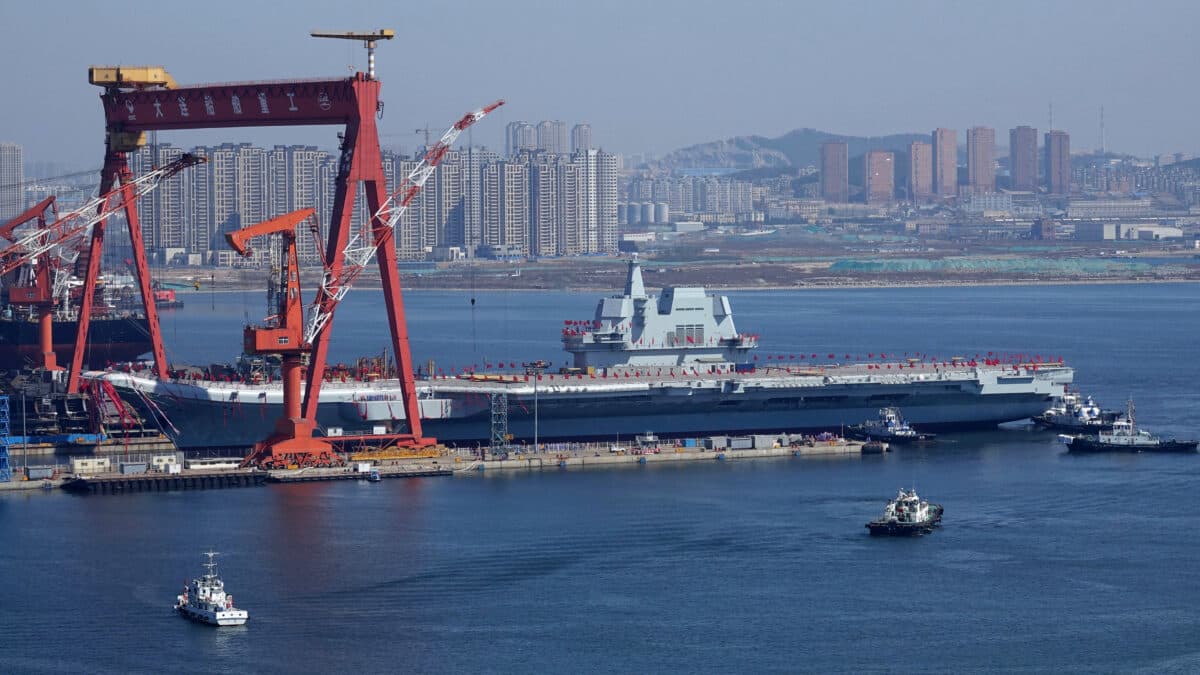
Type 001A, China's second aircraft carrier, is transferred from the dry dock into the water during a launch ceremony at Dalian shipyard in Dalian, northeast China's Liaoning Province, April 26, 2017. (STR/AFP via Getty Images)
That suspension is scheduled to expire on Nov. 9, 2026. The senators are pressuring the president not to extend the pause, citing data from the Center for Strategic and International Studies (CSIS). CSIS analysis showed that orders at Chinese shipyards declined by approximately 25 percent in the spring of 2025 following the initial announcement of the fees in February, suggesting that trade pressure influences global market behavior.
“The sudden decrease in Chinese shipping orders shows that when your Administration acts on this issue, the global maritime industry pays attention,” the senators’ letter noted.
Legislative Blueprints and Export Requirements
The senators also used the letter to highlight the need for a comprehensive legislative response to the maritime crisis. The Shipbuilding and Harbor Infrastructure for Prosperity and Security (SHIPS) for America Act, S.1541, and its companion, the Building SHIPS in America Act, S.1536, represent an attempt to overhaul national maritime policy, though neither has yet been enacted into law.The SHIPS for America Act proposes a reorganization of U.S. maritime policy, including the establishment of a White House Maritime Security Advisor. Notably, the legislation includes specific requirements for the transportation of U.S. energy exports. Under Section 2, the bill would require that a tiered percentage of crude oil exports be transported on U.S.-built and U.S.-flagged vessels to ensure that the United States maintains a guaranteed baseline of demand for domestic hulls and crews.
The Building SHIPS in America Act specifically focuses on amending the Internal Revenue Code to incentivize domestic production. The bill proposes a 33 percent investment tax credit for any investment made to construct, repower, or reconstruct eligible oceangoing vessels in the United States—coupled with a 25 percent credit for shipyard infrastructure investments.
Geopolitical Context and the Summit
The concern over shipbuilding comes as the administration manages several other friction points with Beijing. The summit is expected to be influenced by the ongoing Iran war. China remains the largest consumer of Iranian oil, a relationship that Washington contends provides Tehran with the financial resources necessary to sustain its military activities.Furthermore, the USTR report linked China’s commercial shipbuilding capacity to the expansion of the People’s Liberation Army Navy (PLAN). According to the U.S. Department of War’s report in 2024, PLAN is the largest naval fleet in the world by hull count, a status supported by an industrial strategy that integrates commercial and naval construction capabilities.
“The United States is at an inflection point and cannot cede additional ground,” the senators concluded in their letter.