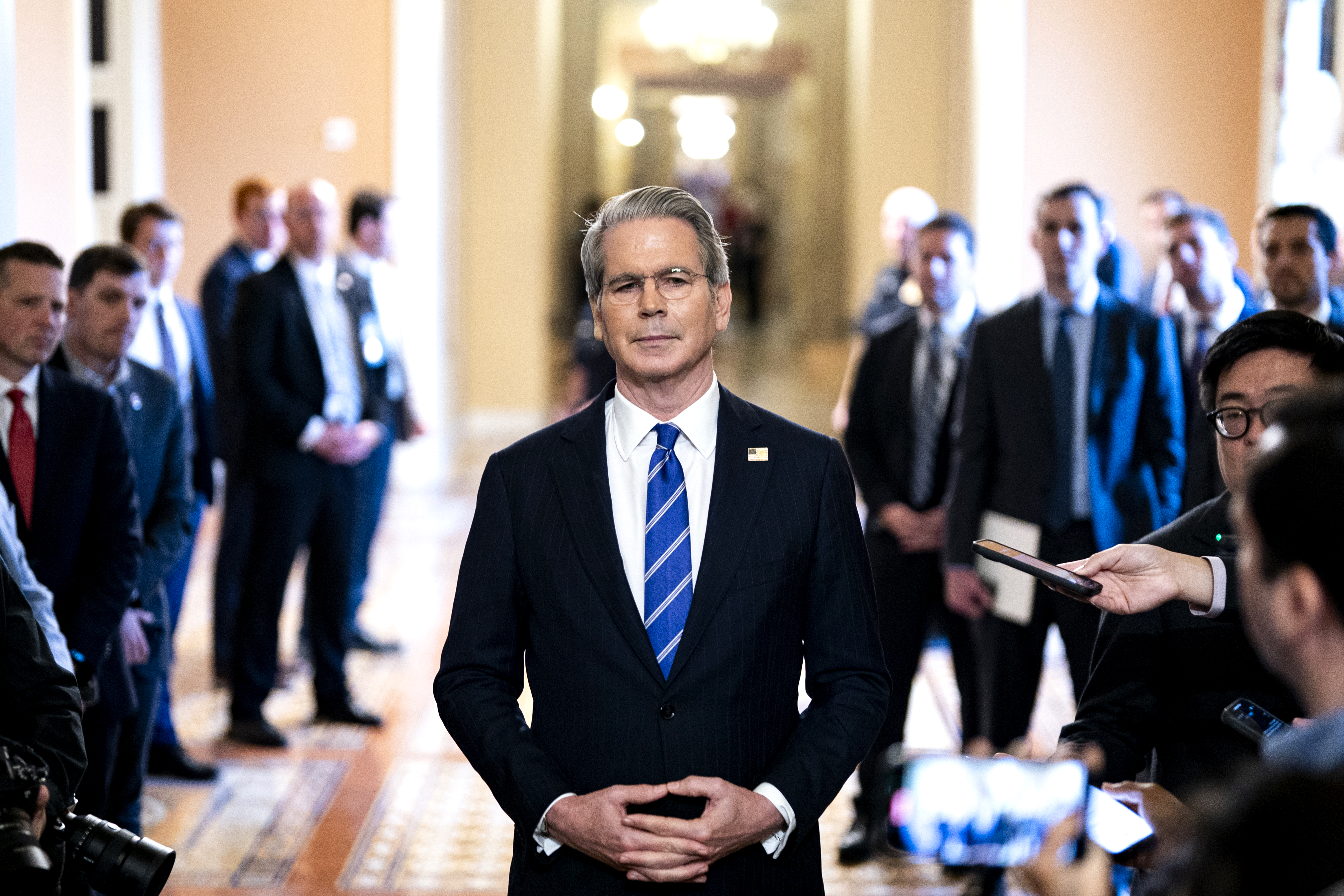

Treasury Secretary Scott Bessent said on July 6 that the Trump administration is close to securing several trade deals ahead of the July 9 deadline, when higher tariffs are set to kick in. For any nations without deals, their tariffs will return to the levels seen in early April.
Bessent told CNN’s “State of the Union” that President Donald Trump is going to send letters to several U.S. trading partners, saying, “If you don’t move things along, then on Aug. 1, you will boomerang back to your April 2 tariff level.”
If those countries fail to reach a deal with the United States by Aug. 1, they will receive another letter informing them that tariffs on their imports into the United States have reverted to the April 2 level, Bessent noted.
The treasury secretary denied the notion that Trump was making Aug. 1 the new tariff negotiation deadline, but said the new date could still give some U.S. trading partners more time to renegotiate import levies.
“We are saying this is when it’s happening,” Bessent said. “If you want to speed things up, have at it. If you want to go back to the old rate, that’s your choice.”
Trump had originally given U.S. trading partners until July 9 to negotiate deals with his administration or see a return of tariffs at the level imposed in early April, when the president levied significant baseline and varying reciprocal tariffs on all nations that trade with the United States.
The president has said his team has already reached tentative trade agreements with India, China, and the UK. Deals with Canada, Mexico, the European Union, and Japan are still pending.
On July 6, Bessent told CNN that the administration is “close to several deals” and is focusing on 18 critical trading partners that account for roughly 95 percent of the U.S. trade deficit.
“As always, there’s a lot of foot-dragging on the other side, and so I would expect to see several big announcements over the next couple of days,” he said.
Bessent said he would not name the countries because he does not “want to let them off the hook” until the deals are finalized.
Kevin Hassett, director of the White House National Economic Council, suggested in an interview with CBS’s “Face the Nation” that there may be some wiggle room for trading partners engaged in good-faith negotiations with the United States.
“There are deadlines, and there are things that are close, and so maybe things will push back past the deadline,” Hassett said, noting that the president will decide if that is possible.
Hassett said framework deals already negotiated with the UK and Vietnam could offer guidelines for other nations that want trade agreements with the United States. The Trump administration’s strategy appears to be achieving one of its goals, as several countries are set to move production into the United States, he said.
Stephen Miran, chairman of the White House Council of Economic Advisers, said countries need to offer concessions if they want to see lower tariff rates.
“I hear good things about the talks with Europe,” Miran told ABC News’s “This Week.” “I hear good things about the talks with India. And so I would expect that a number of countries that are in the process of making those concessions ... might see their date rolled.”
Miran called the trade agreement reached with Vietnam “fantastic” and “extremely one-sided.”
“We get to apply a significant tariff to Vietnamese exports,” he said. “They’re opening their markets to ours, applying zero tariff to our exports.”
On July 4, Trump said countries that do not provide concessions could see their tariff rates climb to as high as 70 percent, which is higher than those seen in early April.
CNN asked Bessent about the 70 percent rate comment, but he referred back to the April 2 list of baseline and reciprocal tariffs.
Reuters contributed to this report.