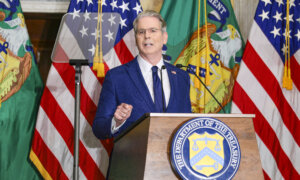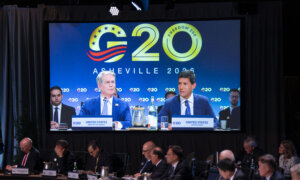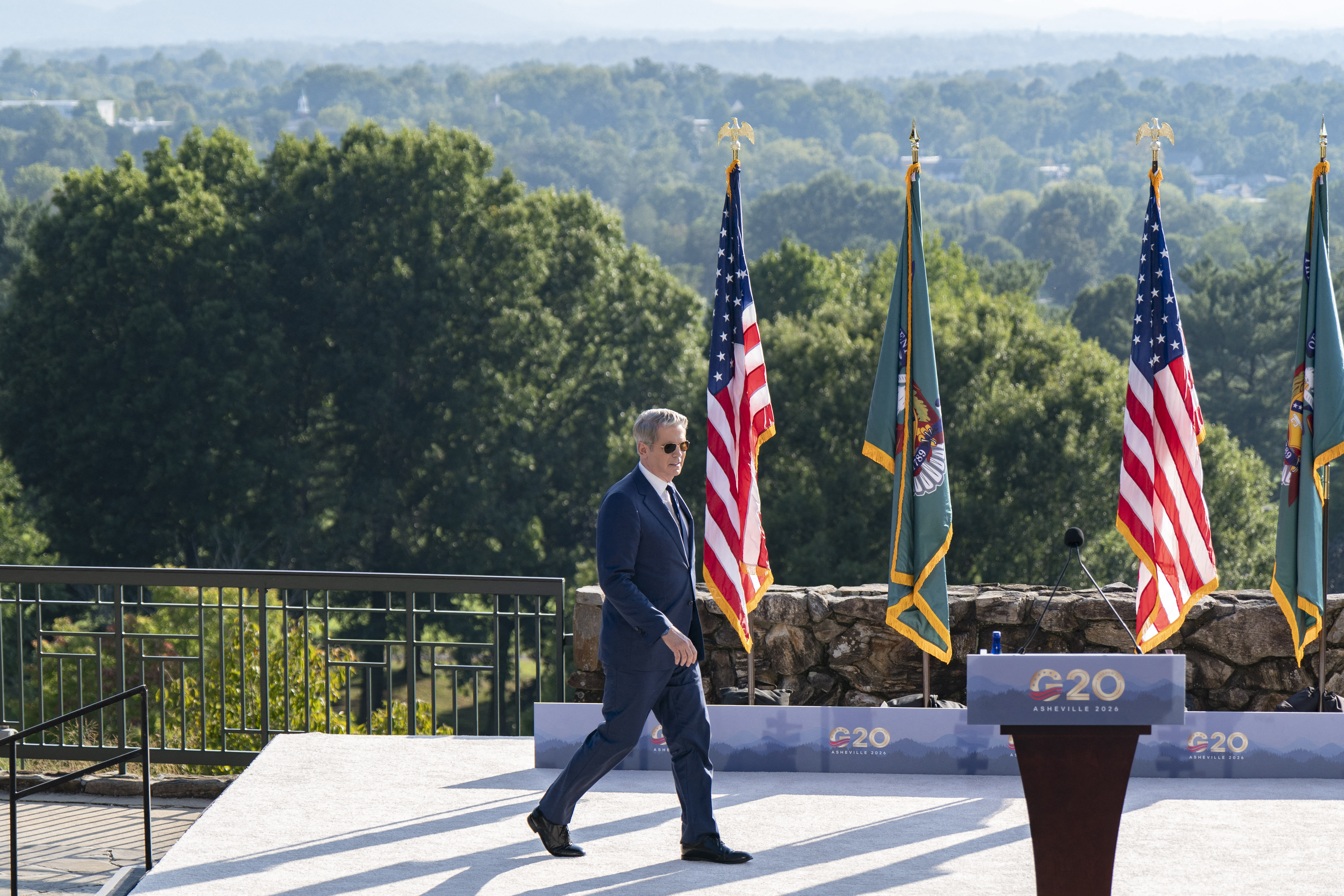

ASHEVILLE, N.C.—U.S. Treasury Secretary Scott Bessent said on Sept. 1 that all G20 members approved the joint summit statement, except China.
The disagreement centered mainly on language about sovereign debt restructuring and reducing global imbalances.
Speaking at a press conference after the G20 summit for finance ministers and central bank governors, Bessent said he had hoped to announce a unanimous summit communiqué reflecting “the outcome of the great work” they had done together.
“All but one member of the G20 was able to reach consensus,” he said.
When asked to identify the country, Bessent said, “Well, it is clear that the country with the world’s largest and unsustainable current account surplus, People’s Republic of China, was the dissenter.”
The United States is hosting this year’s G20 meetings, bringing together officials and leaders of the world’s top 20 economies to discuss global economic cooperation.
The G20 summit for finance ministers and central bank governors, hosted by Bessent and U.S. Federal Reserve Chairman Kevin Warsh, concluded on Sept. 1.
Bessent made economic growth and fair trade the central focus during the two-day summit at the Omni Grove Park Inn in Asheville, North Carolina.
Trade imbalances, particularly trade relations with China and the other G20 economies, have been a major focus of the Trump administration.
In his opening remarks on the first day of the summit, Bessent called on G20 countries to tackle large trade imbalances, arguing that many economies suffer because of what he described as the “distorted policies” of certain “privileged countries.”
“A durable global economy cannot rest on beggar-thy-neighbor acts that stifle fair market-based competition,” he said.
The day before the summit, Bessent told Reuters that he would encourage G20 members to push harder against China’s $1.2 trillion trade surplus.
Bessent said at the press conference that G20 countries “had a candid discussion about excessive and persistent imbalances that threaten global prosperity.”
He said that the members “called for stronger analysis” to better detect these unfair trade practices.
The United States has also been pushing for transparency in sovereign debt restructuring.
For nearly a decade, Washington has criticized China’s lack of transparency in lending practices in developing nations, particularly through its Belt and Road Initiative (BRI). Western countries and multilateral organizations, such as the IMF and the World Bank, have tried to require full debt transparency and complete disclosure of terms, but Beijing has often resisted these efforts.
The Chinese Communist Party has made the BRI central to its efforts to expand its global influence. Most large BRI construction projects are funded by Chinese state-run banks and financial institutions. In recent years, the initiative has been perceived as a “debt trap,” leaving some poor countries distressed by debt burdens and putting their sovereignty at risk.