
News Analysis
China still sits at the center of the global rare-earth system, but the ground under that monopoly is starting to shift.
When Chinese Premier Li Qiang used the recent G20 summit in South Africa to launch a new “green minerals” alliance with developing countries, Beijing sold it as a win-win for the global energy transition. Analysts instead saw an anxiety-driven move to shore up a weakening advantage.
Around the same time, Washington is pulling a group of key allies into a White House summit on critical minerals and AI, while U.S. scientists were debuting new ways to use engineered viruses to pull rare earths from water.
Taken together, analysts say, these moves point in the same direction: China’s push to dominate rare earths has forced the United States, Europe, and others to move faster, spend more, and get more creative about breaking free.
Its new “green” charm offensive is meant to ease political pressure and lock in supply, but it is also “a sign of worry,” U.S.-based economist Davy J. Wong told The Epoch Times.
China controls most refining and magnet production, yet it relies on unstable foreign mines for crucial ores and now faces a growing wave of alliances and new technologies aimed at cutting it out of the supply chain, he said.
Li’s G20 ‘Green Minerals’ Push
At the G20 summit in Johannesburg, South Africa, on Nov. 24, Li unveiled what he called the “international economic and trade co-operation initiative on green mining and minerals,” an alliance centered on rare earths and other critical minerals.
At least 19 mostly developing countries signed on, including Cambodia, Nigeria, Myanmar, and Zimbabwe—places where Chinese companies already play a large role in mining and infrastructure.
Li framed the initiative as a way to share benefits fairly, support local processing, and promote “green development.” It came weeks after China tightened export controls on rare earths amid trade tensions with the United States, which had triggered criticism that Beijing was weaponizing its near-monopoly.
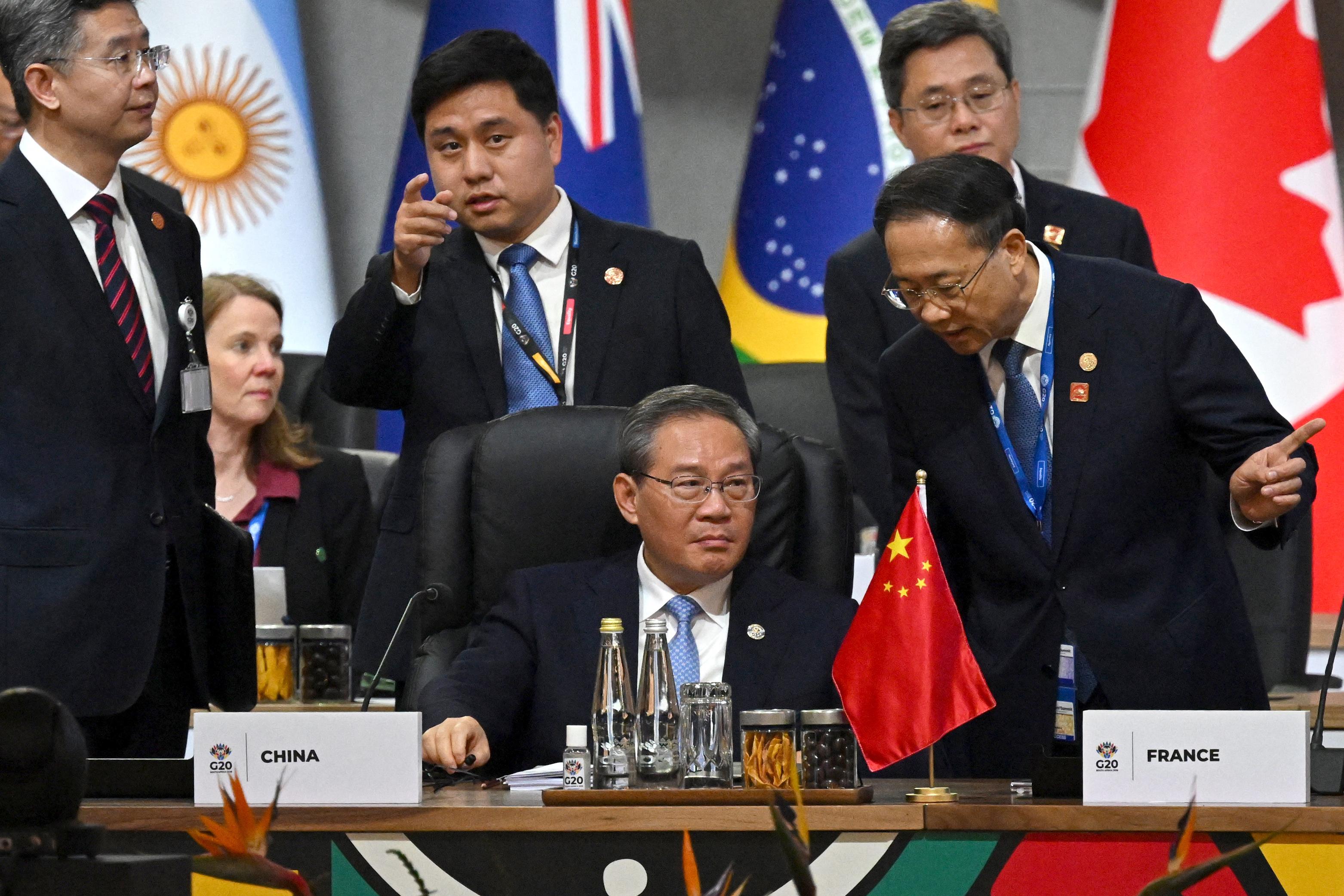
China's Prime Minister Li Qiang (C) attends a G20 Leaders' Summit plenary session at the Nasrec Expo Centre in Johannesburg on November 22, 2025. (Leon Neal / POOL / AFP via Getty Images)
Wong said he sees the move as “a geo-economic game wrapped in a ‘green’ cloak.” In his view, Beijing is trying to rewrite the story of its export controls, turning them from a blunt geopolitical tool into “responsible management of global public resources” by borrowing the language of climate and sustainability that plays well in Western capitals.
Instead of backing off, he said, China is “weaponizing the West’s own value narratives” to rebuild legitimacy for its resource strategy.
Sun Guoxiang, an international affairs professor at Taiwan’s Nanhua University, calls the initiative both political theater and potentially consequential. At home, it helps distract from weak domestic demand and property troubles by showcasing a diplomatic “achievement,” he told The Epoch Times.
Abroad, he said, Beijing is trying to bind its manufacturing strength to the global green agenda so that “the world becomes dependent on Chinese green materials,” blunting U.S. and European efforts to “de-Sinicize” supply chains.
On paper, it is a development initiative. In practice, Sun said, it is a defensive maneuver to protect China’s position and slow everyone else down.
A Strong Monopoly With a Weak Link
Rare earth production typically involves three main stages: mining the ore, chemically processing it, and manufacturing end products such as magnets and alloys.
China currently controls nearly 90 percent of the processing and manufacturing stages, but only about 60 percent of the mining.
Beijing dominates downstream processing and exports, Wong said, but “a significant portion of upstream raw ore is not fully in its hands.”
A decade ago, China mined almost all the ore it processed. Today, roughly half comes from Myanmar, where civil conflicts and a recent earthquake have choked that flow, Mark Smith, a 30-year industry veteran and chief executive of U.S. miner NioCorp Developments, previously told The Epoch Times.
Heavy rare earths such as dysprosium and terbium—vital for high-performance magnets in defense—now increasingly come from northern Myanmar. Studies estimate that about 90 percent of China’s imported heavy rare-earth compounds originate there, much of it from areas controlled by ethnic armed groups.
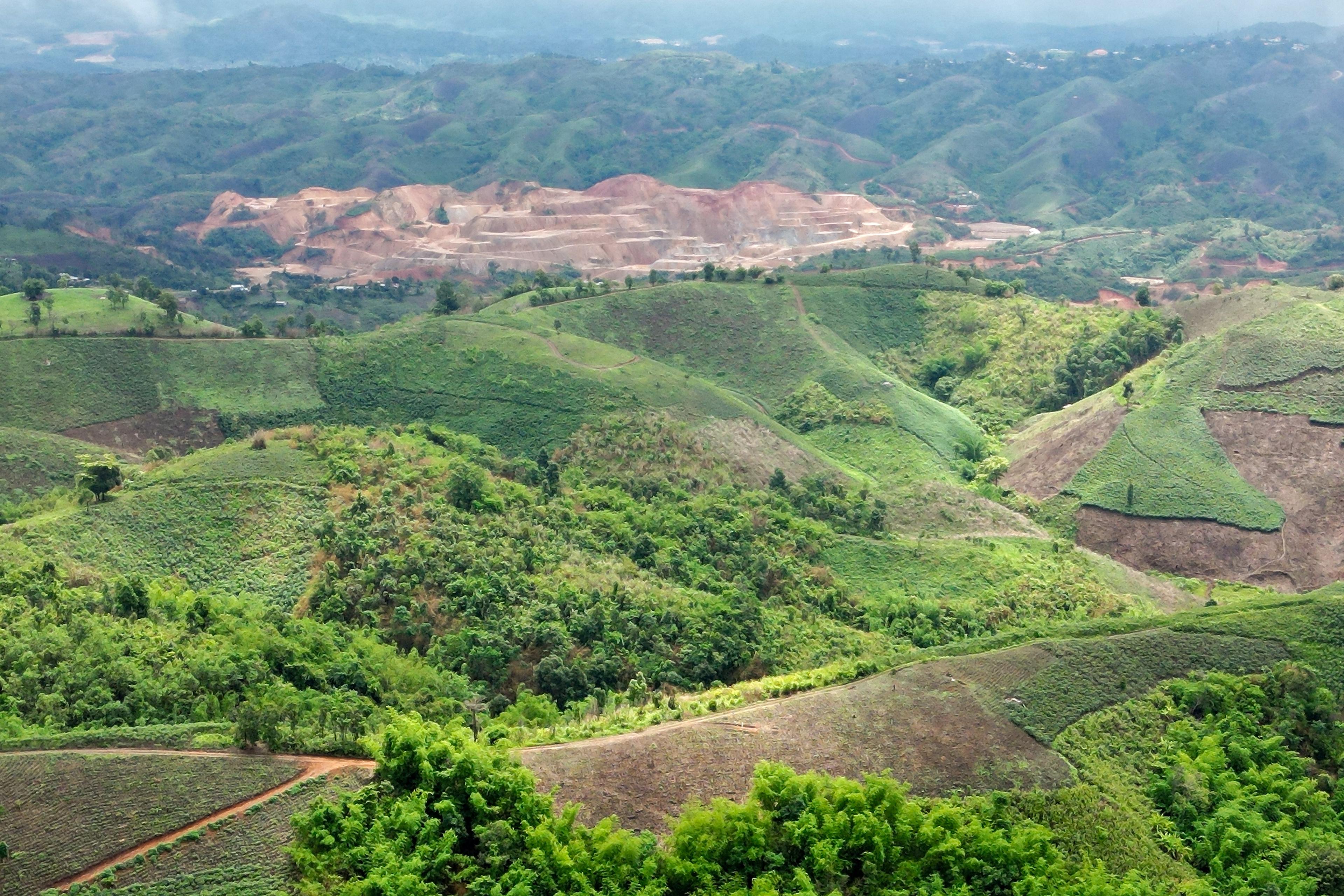
This aerial photo taken on May 25, 2025, shows a mine in Myanmar, as seen from northern Thailand's Chiang Rai province. (Manan Vatsyayana/AFP via Getty Images)
When conflict flares, supplies can dry up overnight. Reports have documented sharp drops in Chinese imports and wild price swings when fighting or border closures hit these operations.
After the Kachin Independence Army, an ethnic political armed group from Northern Myanmar, seized key mining towns in 2024, Beijing shut border crossings, and exports plunged.
Smith says China’s own landscape bears the scars of decades of intensive mining—water contamination, damaged ground, and general pollution that finally forced tighter regulations and cut domestic ore supply.
“China, even without the stronger environmental regulations, might not be able to produce enough [domestically] for its own needs,” he said. “And they’re looking for ways to continue to grow their capability to supply these minerals to the world.”
That search now stretches across Africa and other regions as Beijing hunts for new deposits.
For a party-state obsessed with industrial security, this dependence on unstable foreign sources is a serious weakness, Wong said. It helps explain why Beijing is rushing to lock in upstream supplies through political frameworks like Li’s G20 initiative.
At the same time, Beijing’s aggressive export policies have pushed rivals to build their own capacity. The United States, Europe, Australia, Japan, and others have poured money into new mines, separation plants, and magnet factories.
Sun describes this as the first real “systemic challenge” to China’s processing dominance.
AI Race Puts Minerals in the Crosshairs
The rare-earth struggle is now tied directly to the AI race.
Bloomberg reported that the United States plans to seek supply-chain agreements with eight key partners—Japan, South Korea, Singapore, the Netherlands, the UK, Israel, the United Arab Emirates, and Australia—covering AI hardware, critical minerals, and semiconductors.
The meeting is set for Dec. 12 at the White House, Jacob Helberg, the U.S. undersecretary of state for economic affairs, told Bloomberg.
He described today’s AI landscape as “a two-horse race—it’s the U.S. and China,” and said the goal is to build “transformative technologies without being subject to coercive dependencies.”
So far, President Donald Trump has struck rare earth and critical minerals deals or frameworks with the Democratic Republic of Congo, Rwanda, Australia, Malaysia, Thailand, Cambodia, Japan, Kazakhstan, South Korea, Ukraine, and Argentina.
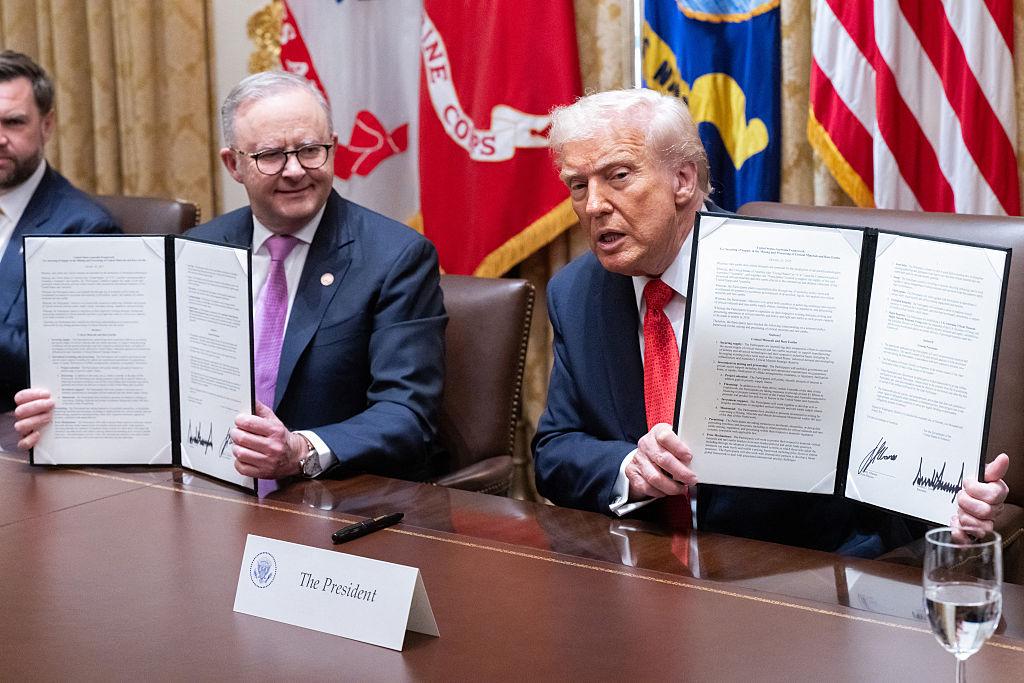
US President Donald Trump (R) and Australia's Prime Minister Anthony Albanese display an agreement on critical minerals they signed in the Cabinet Room at the White House in Washington, DC, on Oct. 20, 2025. (Saul Loeb/AFP via Getty Images)
This is layered on top of the Minerals Security Partnership and other Western efforts to de-risk critical-mineral supply chains. The EU has also rolled out its own economic security strategy and is funding mining and processing projects meant to reduce dependence on China.
Sun sees Li’s G20 move as a direct answer to these efforts. He says Beijing’s aims include blocking resource states from joining Western mineral clubs, undermining G7 leadership on standards, and preserving China’s 80 to 90 percent share of processing while replacing the “monopoly” label with a “green and fair” narrative.
Both sides are now building alliances around the same metals that power AI, batteries, and clean energy, he said. China wants to stay at the center; its rivals want to build a parallel system that Beijing cannot shut down.
Workarounds in the Lab
The rare-earth contest is also driving new ways of getting the metals without traditional mining.
In November, researchers at UC Berkeley unveiled a “biomining” method that uses genetically engineered viruses to recover rare earths from water, including acid mine drainage.
They turned a harmless bacteriophage—a virus that infects and replicates within bacteria—into what they call a “smart sponge” that binds rare-earth ions and then releases them when temperature or acidity changes.
The team says the process could one day reduce the need for toxic chemicals and cut waste associated with conventional mining and processing.
Lead scientist Seung‑Wuk Lee says the technique could offer a cleaner, lower-cost way to secure these metals and help “solve a huge supply chain problem” by making domestic recovery more viable on U.S. soil. If it scales, that would allow countries like the United States to pull rare earths from mine wastewater or industrial streams without expanding traditional extraction.
The work is still at the research stage, but it shows how far governments and scientists are now willing to go to break free of a system that runs through China, Sun said.
A separate recycling-based route may be even closer to industrial reality.
Chemist and nanotechnologist James Tour previously told The Epoch Times that a process called “flash Joule heating” could help cut America’s dependence on China by recovering metals from mountains of discarded electronics.
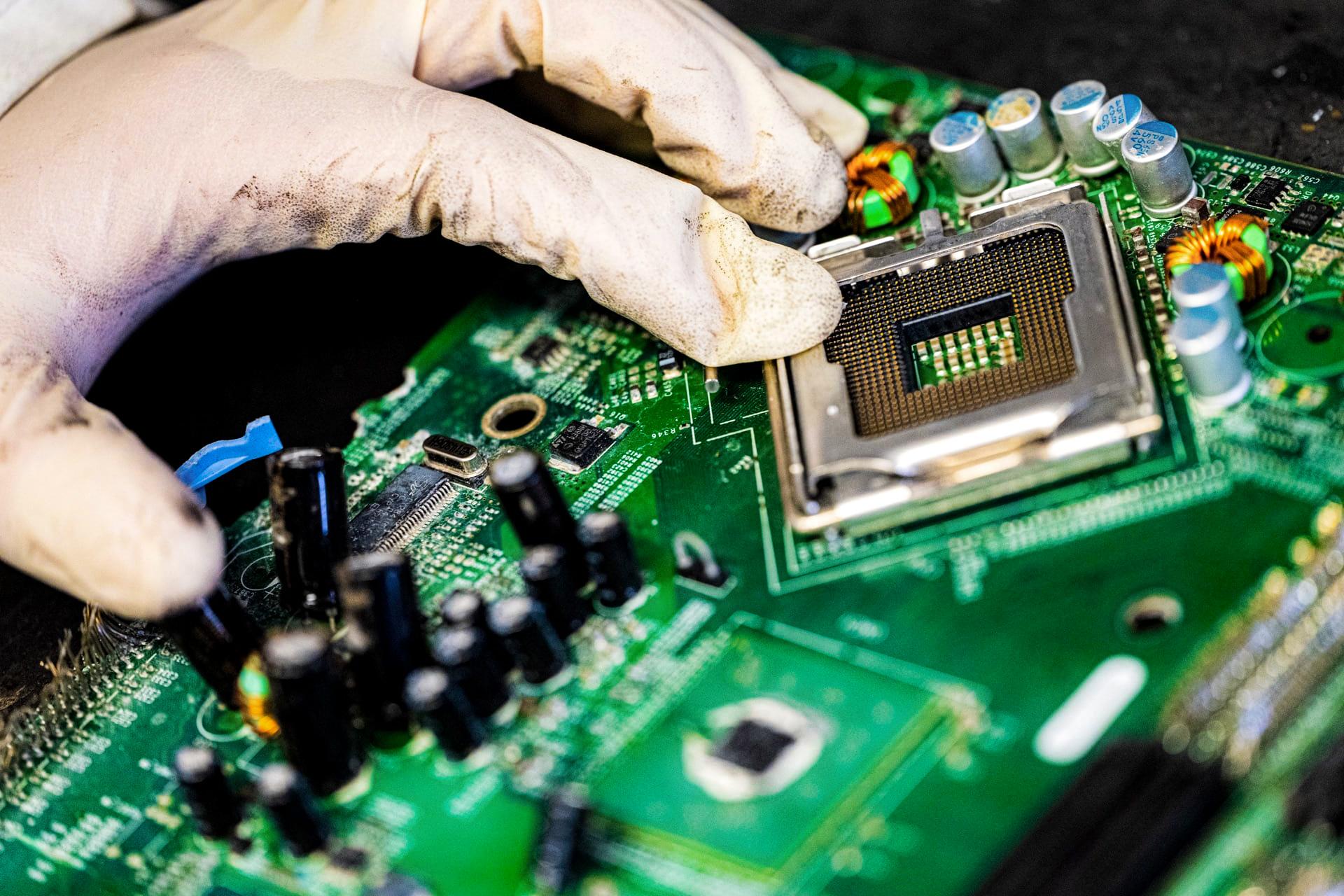
A flash Joule heating process developed at Rice University recovers valuable metals from electronic waste. The process allows for “urban mining” of resources. (Credit: Jeff Fitlow/Rice University)
Rather than waiting a decade or more to permit and build new mines, his method zaps shredded e-waste with ultra-short, extremely high-temperature electrical pulses, vaporizing the metals so they can be captured as chlorides and separated one by one. Tour said it could turn U.S. e-waste into a strategic resource instead of trash.
‘Green’ Narrative vs. Reality
Officially, Li’s green-minerals alliance promises fairness, local value-added, and environmentally friendly cooperation. On the ground, the picture looks different.
As Beijing closed some of its dirtiest mines at home, rare-earth extraction surged in Myanmar’s border regions, often run through networks tied to Chinese interests.
Investigations have described acid leaching on steep hillsides, landslides, polluted water, and local communities trapped in violent struggles between armed factions and contractors.
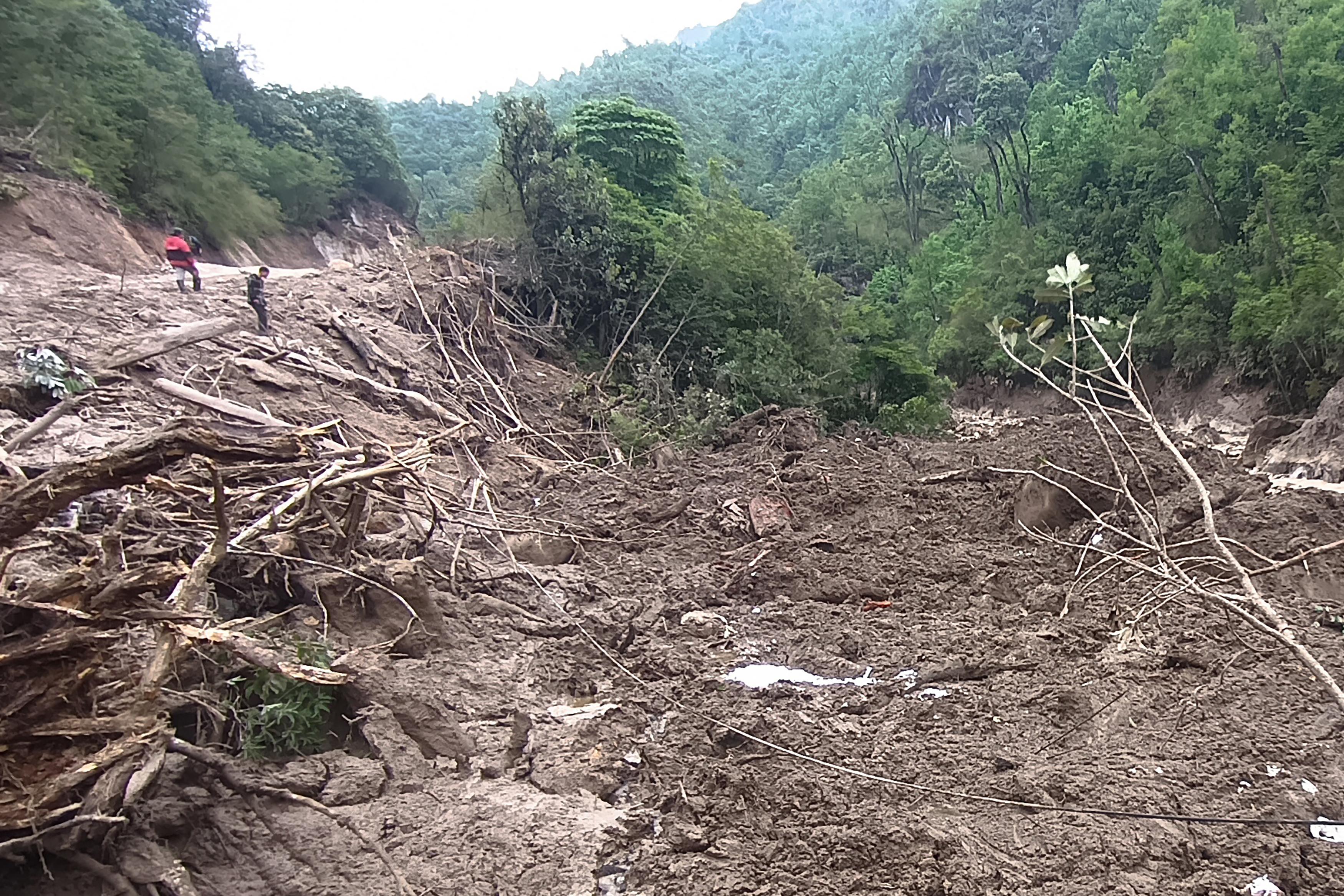
People (top L) stand next to debris in the aftermath of a landslide in a rare earth mining area in Pangwa in Myanmar's northern Kachin State on June 5, 2024. (STR/AFP via Getty Images)
Similar patterns show up in parts of Africa and Southeast Asia, where Chinese-linked projects have been accused of weak environmental standards, poor labor conditions, and opaque contracts, while the highest-value refining and magnet production stays in China.
Basically, the pollution is being “outsourced,” and the host countries are stuck exporting ore, Wong said.
The Chinese regime’s talk of “fairness” and a “global green transition” is mainly a narrative tool to protect its role in the supply chain, Sun said.
High Stakes for the Global South
For resource-rich countries in Africa and Asia, China’s offer is tempting, Sun said, especially for financially struggling governments with weak access to Western capital.
Chinese banks and state firms move quickly. They finance roads, ports, and power, along with mines. They offer a huge, steady market for ores and sometimes for basic processing, and they usually do not insist on the strict and costly ESG rules that come with Western loans, he said.
Joining Beijing’s framework may bring jobs and infrastructure in the short term, he added.
However, Wong warns of the long-term cost. Heavy reliance on one buyer makes countries vulnerable if China tightens controls or uses access as leverage.
If most projects remain “mine and ship” operations, with real value-added happening abroad, then the basic pattern of resource dependence does not change. Environmental and social damage can linger for decades, he said.
It’s “strong short-term gains, high long-term risks” for those countries, Sun said.
He argues that the United States and its allies cannot compete with China on speed, but they can offer something different: help build local refining, battery, and component industries; more transparent finance; and access to high-end markets that reward cleaner production.
That path is slower and harder, but it gives producer countries a chance to move up the chain instead of simply changing which outside power they rely on, he added.
A Strategy That Backfires
Beijing’s weaponizing of rare earths has a history of backfiring, Wong said. Each time it tightens controls or leans on its monopoly, it strengthens the argument in Washington, Brussels, Tokyo, and beyond that rare earths must be treated like energy security, not just another import.
In 2010, Beijing halted rare-earth exports to Japan for seven weeks during a territorial dispute.
Tokyo responded by striking major supply deals with Australia’s mining giant Lynas, pouring grants into non-Chinese deposits in India and Vietnam, and jump-starting rare-earth recycling.
The United States followed by reopening California’s Mountain Pass rare-earth mine, stockpiling critical materials, and investing in research on rare-earth substitutes.
As a result, China’s share of global mining production slid from 97.7 percent in 2010 to about 63 percent by 2019, according to a Center for Strategic and International Studies report citing U.S. Geological Survey data, even as overall demand kept rising.
China still sits at the center of the global rare-earth system, but what once looked like an unshakable monopoly now looks more like a strong position that is driving its rivals to find ways around it, Wong said.
Gu Xiaohua, Eva Fu, and Jan Jekielek contributed to this report.