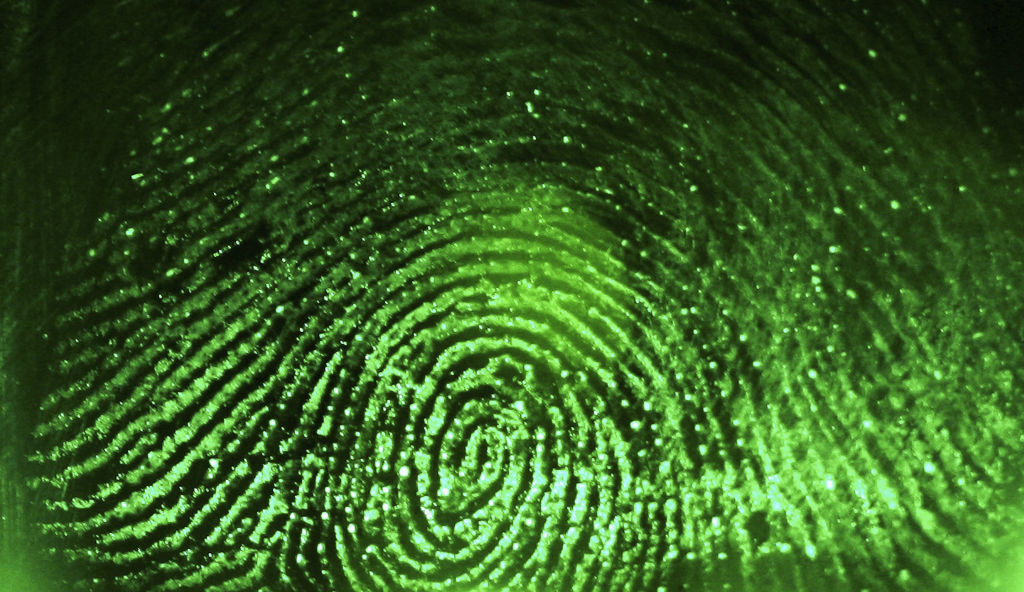

Handing the biometric data of Australians directly to U.S. authorities is one of the options being discussed to keep visa-free travel to the United States.
Officials from the Department of Home Affairs told a Senate Estimates hearing on Oct. 27 that the United States wants an agreement in place by Dec. 31 under what it calls the Enhanced Border Security Partnership.
The partnership is a condition of staying in the U.S. Visa Waiver Program, which lets Australians visit for up to 90 days without a full visa.
Since 2022, the United States has wanted its Department of Homeland Security to be able to check travellers’ fingerprints and facial images against each country’s own records.
Head of National Security Hamish Hansford said the United States wanted to check two things: that the name and passport number on a traveller’s application matched Australian records, and whether people who say they had no criminal history are telling the truth.
“The first requirement of the United States is to understand whether or not the individual travelling to the United States has a criminal history or not,” he told the Legal and Constitutional Affairs Legislation Committee.
Under repeated questioning from Greens Senator David Shoebridge, the Deputy Secretary of Law Enforcement Ciara Spencer confirmed one option was for Australia to hand over biometric information directly. The other is a simple yes or no on whether a traveller’s details are correct.
“They are open to how we provide that assurance,” Spencer said.
Hansford said he had told U.S. officials that any Australian data held by the United States would need to be stored securely, but Australia would prefer an alternative arrangement.
Could Australian Data Be Shared With Third Countries?
Asked whether Australia had insisted the United States must not pass Australians’ data on to other countries, Hansford said, “I don’t think we’re up to that stage yet.”
“Because it really depends on the model. One model may well be that no data is actually sent to the United States, and so it would therefore be a bit of a moot point,” he said.
Shoebridge also asked whether the data could reach Palantir, a U.S. data company he said holds contracts with the Department of Homeland Security. Hansford said he had not raised the issue of the company himself and would check whether anyone else had.
Minister Murray Watt took on notice a question about whether Australians would be consulted once a deal was reached, following the European Union’s approach, while Hansford did not rule out the need for new laws.
Hansford said that after Dec. 31, the United States would decide country-by-country whether to keep the current arrangements, and the alternative was for Australians to apply for a visa. He said U.S. officials were “very pleased” Australia had sent officials to Washington in October.
Home Affairs emails released under freedom of information laws (pdf) show the U.S. Embassy sought a meeting on Jan. 14 to discuss what officials called Australia’s “current partial non-compliance” with the program.