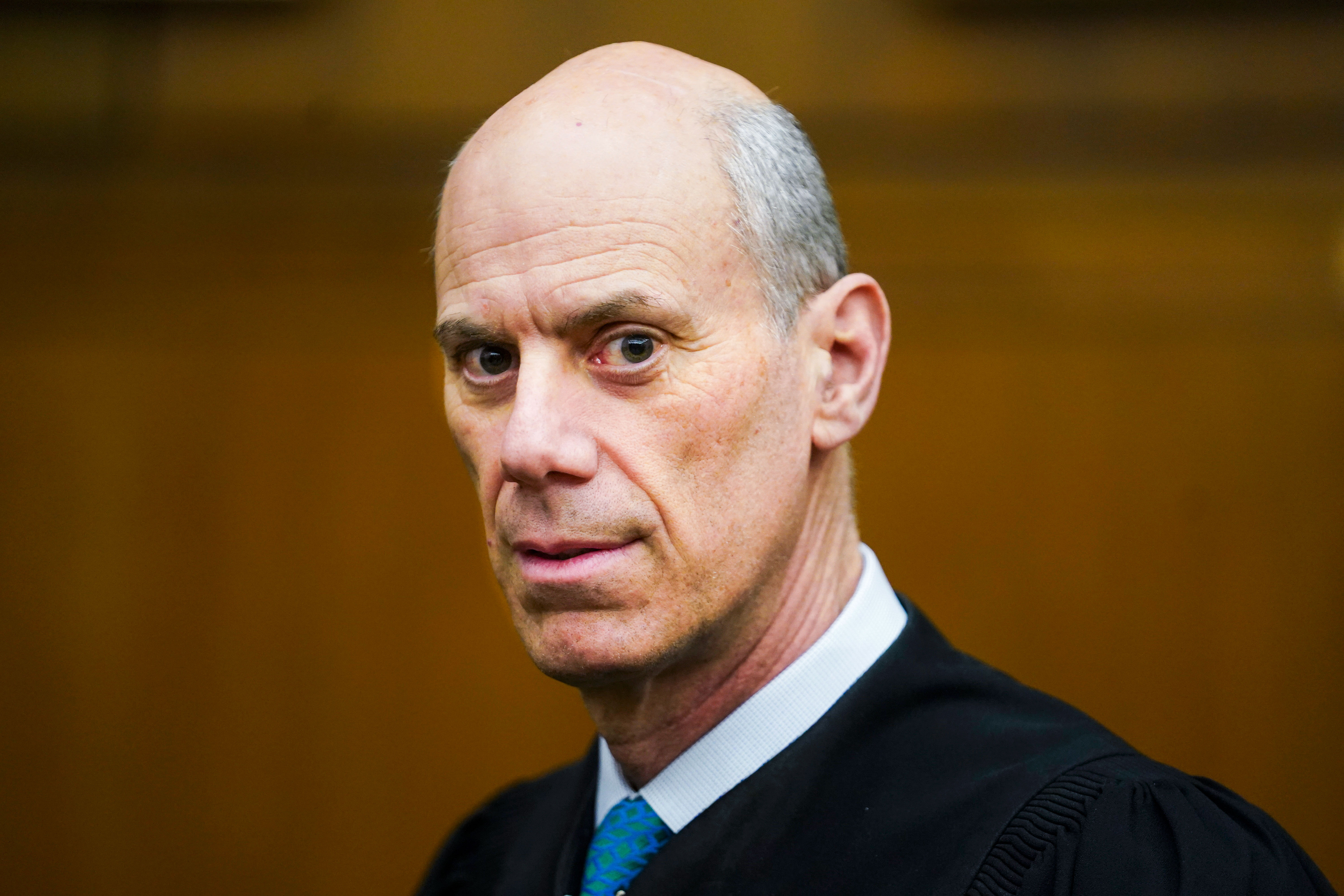

An appeals court has put a stop to criminal contempt proceedings initiated by a district judge against the Trump administration.
In a brief, unsigned order on April 14, the Court of Appeals for the D.C. Circuit vacated a previous order by Judge James Boasberg of the U.S. District Court for the District of Columbia and ordered him to terminate the contempt investigation he began in December 2025.
“Today’s decision by the DC Circuit should finally end Judge Boasberg’s year-long campaign against the hardworking Department attorneys doing their jobs fighting illegal immigration,” acting Attorney General Todd Blanche wrote on X.
The contempt proceedings stemmed from the deportation of illegal immigrants who were suspected gang members to El Salvador’s Terrorism Confinement Center last year. Boasberg had ordered planes carrying those detainees halted and turned around, but the men were sent to El Salvador anyway.
The Trump administration had appealed Boasberg’s order all the way to the Supreme Court, which overturned his ruling. Despite that, Boasberg tried to hold members of the administration in contempt of his order unless they returned the suspected gang members to the United States.
Boasberg reasoned that although the Supreme Court ruled that his previous order was in error, that didn’t excuse the federal government from violating it ahead of time.
The appeals court blocked that move by vacating Boasberg’s contempt order, but he decided to move ahead with a contempt investigation in November 2025. He ordered a hearing, at which he informed both parties that he would launch an inquiry to learn who was responsible for the violation of his order.
“I certainly intend to find out what happened on that day,” Boasberg told attorneys for the Department of Justice at the Nov. 19, 2025, proceedings.
He asked the government to identify who made the decision to go ahead with the deportations.
Then-Homeland Security Secretary Kristi Noem made the decision, the Trump administration later informed the court.
But Boasberg was unsatisfied and “the district court again moved the goalposts,” Circuit Judge Neomi Rao wrote. On Dec. 8, 2025, Boasberg ordered a further investigation to find out whether Noem’s decision was a “willful violation” of his order.
“Undeterred, the district court is proceeding with criminal contempt for the government’s decision to transfer the plaintiffs to the custody of El Salvador,” Rao wrote.
She said that the appeals court needed to intervene again “to prevent the district court from assuming an antagonistic jurisdiction that encroaches on the autonomy of the Executive Branch.”
In a 2–1 decision, the appeals court ruled that Boasberg, by ordering an inquiry into why his order was defied, was trying “to probe high-level Executive Branch deliberations about matters of national security and diplomacy.”
Apart from that, Rao wrote, the government did not violate Boasberg’s written order by turning the deportees over to the Salvadoran government.
“These proceedings are a clear abuse of discretion, as the district court’s order said nothing about transferring custody of the plaintiffs and therefore lacks the clarity to support criminal contempt based on the transfer of custody,” she wrote.
In a dissenting opinion, Circuit Judge J. Michelle Childs said that the question wasn’t so simple and that Boasberg was right to order further investigation. She cited a transcript of Boasberg’s oral order—given a little while before his written order was issued—in which he plainly told the government to bring the detainees back to the United States.
“However that’s accomplished, whether turning around a plane or not embarking anyone on the plane or those people covered by this on the plane, I leave to you,” Boasberg had told Department of Justice attorney Drew Ensign during an emergency hearing in March 2025.
Childs also wrote that the April 14 ruling sets a dangerous precedent.
“Now, any litigant can argue, based on their preferred interpretation of a court’s order, that they did not commit contempt before contempt findings are even made,” she wrote.