
In September 2025, the board of Saline Township, Michigan, gathered for a vote on a proposed $7 billion artificial intelligence (AI) mega-project in their area.
Four of the small township’s five board members rejected the bid by OpenAI, Oracle, and Related Digital to purchase a 575-acre plot of land for development.
Residents of the rural township, which lies southeast of Detroit, feared that the massive project—a data center used to power the company’s AI services—could result in a serious spike in their utility prices, despite OpenAI’s vow to provide its own power for the site.
But the next month, a settlement between the two was filed in state courts, in which OpenAI’s lawyers accused Saline Township of exclusionary zoning practices against them.
The settlement allowed construction on the project to move ahead.
Michigan Gov. Gretchen Whitmer praised the project, calling the multibillion-dollar deal “the largest economic project in Michigan history.”
“I’m grateful to these cutting-edge companies for betting on Michigan, building on our work to compete for and win big projects in next-generation industries from cars and clean energy to semiconductors and batteries,” Whitmer said.
The experience of Saline Township’s residents is far from unique in 2026: Across the United States, local communities are fighting similar battles with AI service providers as demands for AI—and, as a corollary, the data centers that power it—grow.
Already, the issue is percolating into politics, as local, state, and federal officials, as well as candidates, have begun to weigh in on proposed similar projects in their areas.
Here’s what to know.
What Is an AI Data Center?
Since AI exploded onto the global stage in about 2023, the technology has been integrated into domains across human life: workers in business, journalism, the stock market, government, and the military have increasingly integrated the technology into their workflow.
A data center is generally composed of an array of computers, called “servers,” that send and receive vast amounts of online digital information.
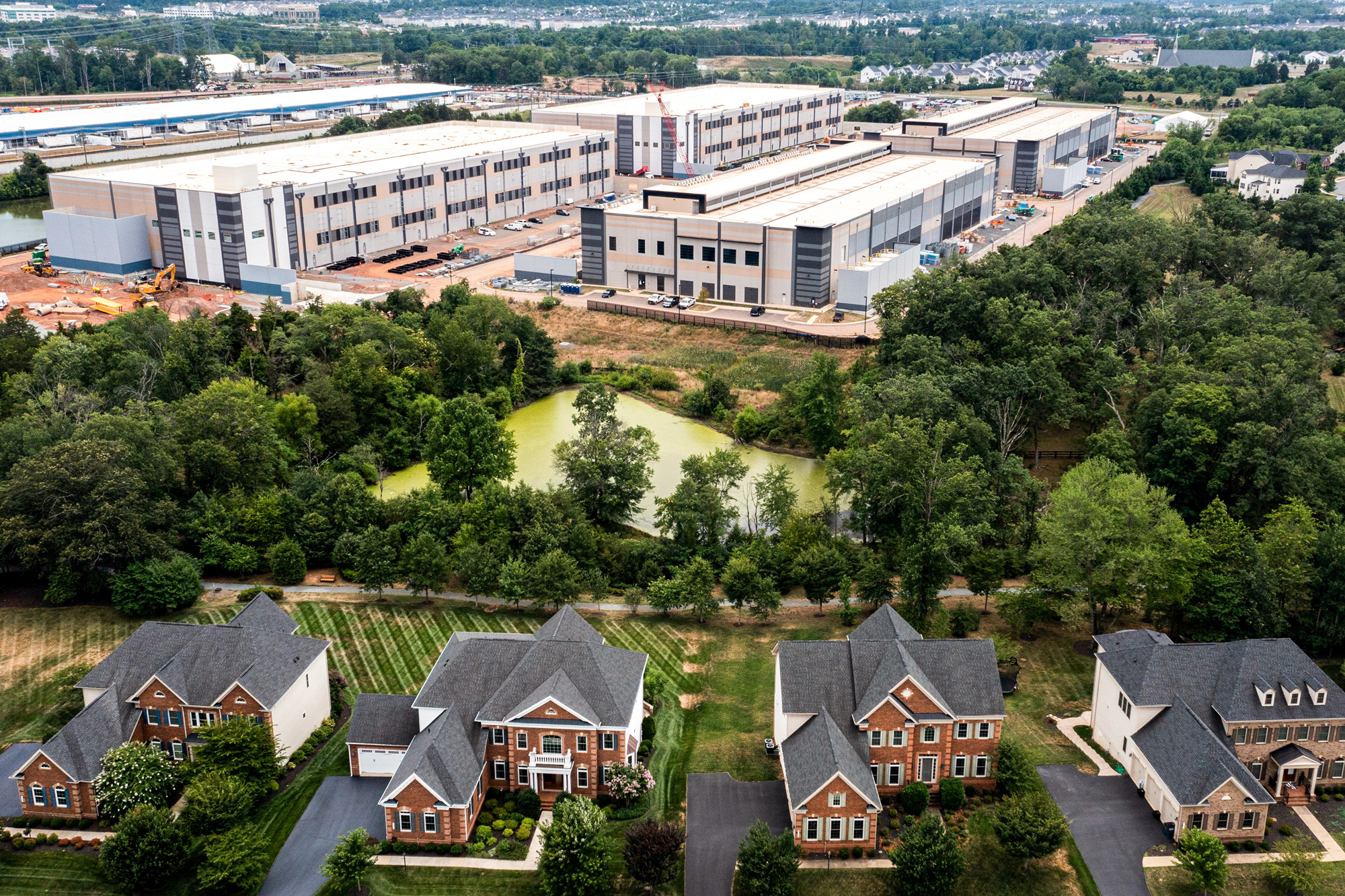
Often housed in straight-lined concrete structures, data centers generally take up significant amounts of physical space, as in the case of OpenAI’s roughly 300-acre structure in Saline Township.
Servers in data centers have powered the internet since its emergence in the 1990s; now, the same technology is being used to power the AI boom.
Energy Costs, Noise Pollution, and Aesthetics
However, the explosive growth of AI is not without significant costs: The data centers used to power services like ChatGPT, Claude.ai, Grok, and others—aside from their extensive land requirements—require massive amounts of energy from the local power grid.
Estimates indicate that currently, data centers use about 4 percent of the U.S. electric grid, according to online energy shopping and consultation platform Electric Choice.
Drawing roughly 176 TWh (Terawatts) of electricity per year, the energy used to power these facilities could otherwise be used to power 16 million homes, according to Electric Choice.
The Energy Department and other analysts have estimated that share could skyrocket to 12 percent of the national power grid in the coming years.
Despite promises by many data centers to provide their own power, residents in areas where such centers have been built have reported spikes in their energy bills.
Anxiety over the possibility of such utility price jumps has driven many voters to be skeptical or outright hostile to the construction of such facilities in their area.
Likewise, cooling the computers that execute AI queries requires significant amounts of water, raising fears that energy might not be the only utility cost affected by the data centers.
Other residents living near data centers have reported that the facilities are loud.
According to these residents, the massive fan and cooling system used to keep the servers from overheating is loud enough to travel through walls and disturb sleep.
Others have expressed concern about the impact of the sprawling, brutalistic compounds on local nature views and aesthetics.
Local Pushback
While the issue of data centers is now entering the national spotlight, the issue has already been top of mind for many local officials and residents in areas where these facilities have been proposed.
In April, residents of Festus, Missouri, voted to remove every incumbent on the local city council who was seeking reelection after decision-makers approved a $6 billion AI data center project.
That election’s high turnout indicates that voters are already viewing the issue as a top driver to head to the polls.
In a more violent incident, Indianapolis City Council member Ron Gibson said his home was shot at, and a note reading “no data centers” was left on his doorstep alongside the attack.
Gibson, a Democrat, has been a supporter of a data center in his area.
The same day as the Festus election, voters in Port Washington, Wisconsin, passed a referendum to ban future data center constructions after a $15 billion, 1.3-gigawatt facility from tech giants OpenAI and Oracle was approved in the area.
President Donald Trump had been a backer of the project in the Trump-voting region, having taken a strongly favorable stance toward AI since returning to office.
While debate over the One Big Beautiful Bill Act was ongoing in early 2025, the White House backed a crucial provision intended to limit state-level regulation of AI services.
The split between Trump and Port Washington’s voters—like the split between the residents of Saline Township, Michigan, and Whitmer—over data center construction reflects a broader split complicating the issue.
State leaders, often driven by macroeconomic goals and the incentives of bringing business and investment to their area, have tended to be more favorable toward the multibillion-dollar projects than local officials and residents.
The same division played out in Maine.
In the New England state, lawmakers in the state legislature had passed sweeping legislation to institute a moratorium on the construction of new data centers.
The bill was vetoed by Maine Gov. Janet Mills, who instead promised to sign an executive order to create a body to evaluate the impact of AI data centers.
“Given the serious conversations about data centers here and around the country, I believe this work should commence without delay,” she said in a statement.
The disagreement has drawn national attention, setting the stage for data centers to become a leading issue in the national midterms.
National Stage
With the issue taking such a central role in local politics, national leaders are already taking notice and weighing in.
That is somewhat unsurprising: Polling shows that, on this issue at least, Americans largely agreed.
In one survey, Gallup found that seven in 10 Americans oppose the construction of AI data centers in their area—indicating that the issue crosses party lines.
In a reflection of the growing anxiety that data centers are causing, Trump has taken steps to mitigate their impact on utility prices.
In March, the president signed a deal with major tech companies to provide their own power for new constructions, although the specifics of how they will manage this remain unclear.
The same month, prominent progressive lawmakers Sen. Bernie Sanders (I-Vt.) and Rep. Alexandria Ocasio-Cortez (D-N.Y.) called for a nationwide moratorium on data center construction.
In an attached statement, Sanders said: “We need serious public debate and democratic oversight over this enormously consequential issue. The time for action is now. We need a federal moratorium on AI data centers.”
Positions for Midterms
Although the midterms still lie six months out, lawmakers in key races are already hurrying to stake out a position on the issue. And despite signals from national party figures, their positions do not cleanly break down along party lines.
That has been particularly true in gubernatorial races, as governors exercise significant influence over approving and setting the terms for new data center projects in their state.
Michigan Secretary of State and gubernatorial candidate Jocelyn Benson, a Democrat, is married to a top executive at a firm seeking to build a new data center in the state. She has called for regulations relating to the water and electricity used by the facilities.
On the other side of the aisle, Republican Tom Leonard has called for a temporary moratorium on any new data center construction.
In Georgia, the leading contender for the Republican gubernatorial nomination is Lt. Gov. Burt Jones, whose father owns a company seeking authorization to construct new data centers in the state.
The issue has led to negative ads against Jones from both his Republican primary challengers and Democratic opponents.
Jones has expressed openness to a proposal to end tax subsidies for data centers.
One candidate for the Democratic gubernatorial nomination, Georgia state Rep. Derrick Jackson, has called for a complete moratorium on new data center construction in the state.