The percentage of American high schoolers who say they are homosexual or bisexual has plummeted after years of rising.
Based on data from the Centers for Disease Control and Prevention, psychologist and researcher Jean Twenge found that “the decline appears to be driven almost entirely by girls.”
The share of girls identifying as lesbian, gay, or bisexual dropped by 5 percentage points, hitting 22 percent last year. Among boys, that percentage fell by 2 percentage points to 7 percent.
“The trends are striking,” especially compared with data from a decade ago, Twenge, a professor at San Diego State University, wrote on her blog in late September.
Reasons for the decline in teen lesbian, gay, or bisexual identification are not readily apparent.
“I have to confess: I have no idea,” Twenge wrote.
Determining whether the numbers reflect the start of a trend requires further examination, she and other professionals have said.
Competing explanations for the shift are emerging amid a larger debate over alternative sexuality in the United States.
Patterns Emerge
By comparing the CDC’s newly released 2025 Youth Risk Behavior Survey with its 2023 figures for grades nine through 12, Twenge identified a pattern: The lower the grade level, the sharper the decline in lesbian, gay, or bisexual identification.
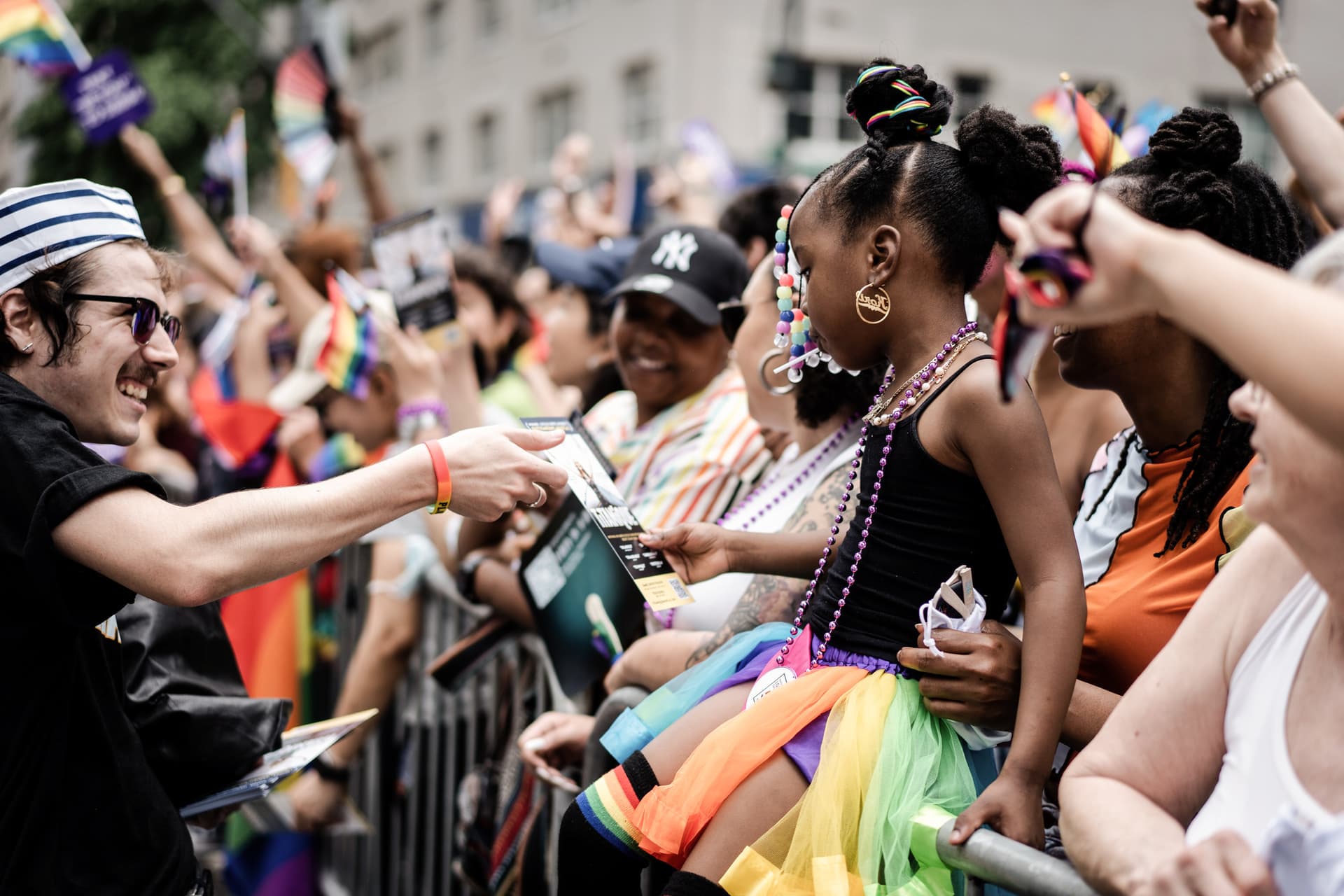
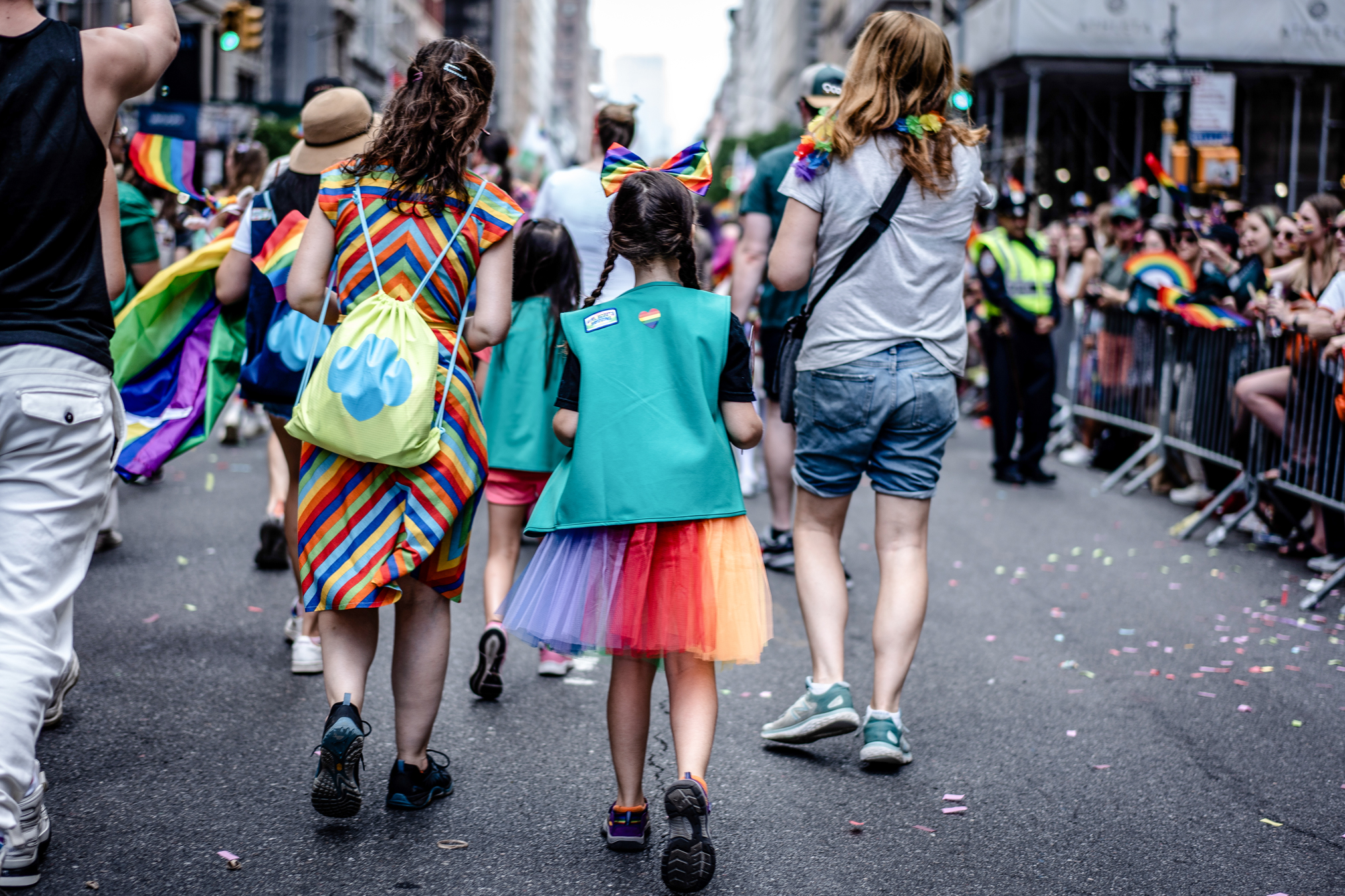
A young girl at the annual New York City Pride March in New York City on June 25, 2023. (Samira Bouaou/The Epoch Times)
Ninth graders calling themselves lesbian, gay, or bisexual dropped from 17 to 11 percent.
For 12th grade students, the number dipped by 2 points, from 18 to 16 percent.
Twenge’s analysis excluded responses from students who said they describe their sexual orientation “another way,” were unsure, or didn’t understand the survey question.
Identifying as transgender—which is a gender identity, rather than a sexual orientation—also was not specifically addressed.
The newly reported drops contrast with data from preceding years.
From 2015 to 2021, the number of girls identifying as lesbian, gay, or bisexual ballooned by 128 percent; for boys, the number went up by 99 percent in eight years, Twenge wrote.
The percentage of young adults aged 18 to 24 identifying as lesbian, gay, or bisexual “is no longer racing upward as it did between 2014 and 2022,” Twenge wrote in another blog post.
In ‘Free Fall’?
A few studies appear to reflect findings similar to those Twenge described in the CDC data.
Between 2022 and 2025, students identifying as “straight,” or heterosexual, climbed from 76 percent to 83 percent, the University of Minnesota reported. That study surveyed Minnesota schoolchildren in grades five, eight, nine, and 11.
A year ago, Canadian political science professor Eric Kaufmann pointed to a few studies reporting non-heterosexuality was dropping among high schoolers and college students.
The data showed that “trans identification is in free fall among the young,” he wrote on X.
Twenge referenced Kaufmann’s quote and wrote that while declining lesbian, gay, or bisexual identification is not dramatic in older teens, the trend for ninth graders “really does look like a free fall.”
That observation about Generation Alpha—young people born in 2010 or later—“could be a harbinger of a coming wave of change, or it could be a blip—it’s hard to say,” Twenge wrote.
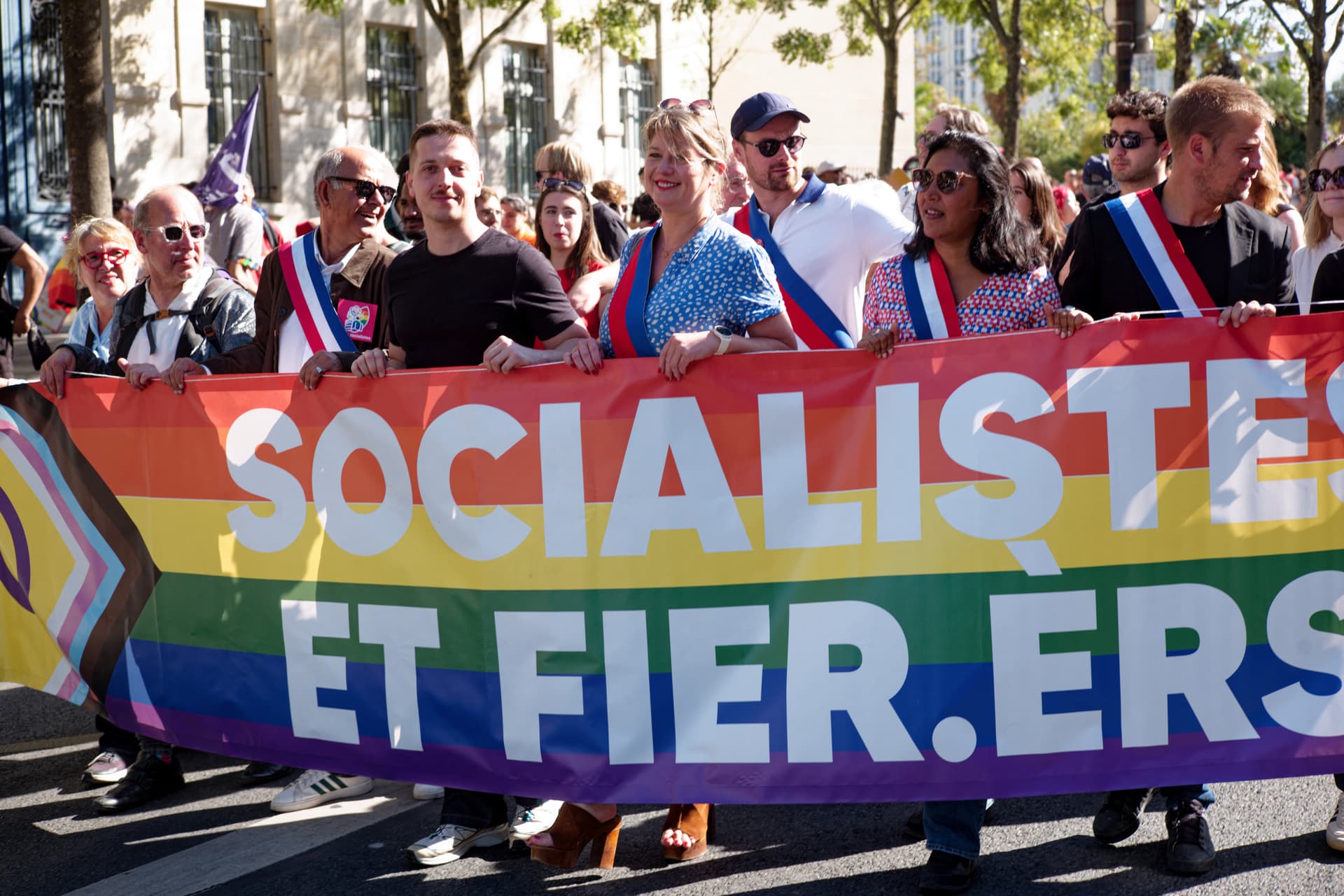
Protesters at the Pride Parade in the city of Paris on Oct. 3, 2026. (Brune Simon/Hans Lucas/AFP via Getty Images)
Presidential Politics
Liberals and conservatives alike opined that the pro-traditional-family policies of President Donald Trump appear to be playing a role.
Terry Schilling, president of the American Principles Project, which combats “anti-family extremism,” told The Epoch Times that his organization has supported the Trump administration’s efforts to “eliminate transgender ideology from school curriculum” and to ban boys from playing in girls sports.
The administration has done a good job overall with “getting this type of ideology out of ... schools, and instead embracing normalcy,” he said.
A married father of eight, Schilling said, “It’s very clear across all social data that families are incredibly important to someone’s fulfillment and happiness and well-being in life.”
He said he has witnessed lesbian, gay, bisexual, and transsexual ideology tearing families apart and distorting what “love” means.
“So many of these young people are getting lost in this seemingly attractive ideology that proposes tolerance and acceptance—when, ultimately, it doesn’t provide either of those things,” Schilling said. “It’s eliminating anyone in their lives that might have concerns or questions about these newfound identities. It’s just a totally tragic and sad political ideology that’s taking hold.”
‘Oppression’
Biology professor and blogger PZ Myers, who calls himself a “godless liberal,” said he is skeptical that the CDC data reveal a trend.
“Are teenagers actually becoming straight again? That makes no sense,” he wrote in an essay.
Those young people are “in the process of discovering their sexuality; it’s not as if ten year olds were biased towards gayness and then ‘straightened up’ when they were 15,” Myers wrote on his blog.
His essay—titled “Oppression Works!”—implies that the respondents may have been unwilling to admit they are lesbian, gay, or bisexual in the current political climate.
“This is not a good time to honestly express yourself, because the [expletive] crazy Republicans are running roughshod over schools, education, and science,” Myers wrote.
The data Twenge compiled show that a slight drop in lesbian, gay, or bisexual identification began in 2021 for students in ninth and 10th grades. That year, Trump ended his first term in office.
More noticeable declines began around 2024, during President Joe Biden’s tenure, even though his administration advanced pro-LGBT policies.
A young family at their home in the Eastern Suburbs in Sydney, Australia, on April 20, 2020. (Lisa Maree Williams/Getty Images)
‘Fad’ Versus Human Nature
Politics aside, Pennsylvania licensed professional counselor Andrew Rodriguez said he believes that cultural influences and human nature could be driving the decrease, if it holds.
“It’s clear there was a social contagion, because of the ‘fad’ aspect of this,” he told The Epoch Times. “And now people are starting to realize, ‘Oh, this isn’t truly who I am.’”
“Social engineering”—using society-wide influences to steer a culture in a desired direction—helped make identifying as lesbian, gay, or bisexual socially acceptable or even cool, especially for girls, Rodriguez said.
For some young people, “it just was an idea, and they jumped on it.”
“There was some social capital they got out of it, and now they’re realizing that’s not as popular anymore,” he said.
Rodriguez, who owns and operates Integrity Christian Counseling, said he believes God instilled people with a drive toward unions with the opposite sex.
He said he thinks more girls are probably realizing that they want to be wives and mothers.
Texas psychologist David Pickup said a recent historic U.S. Supreme Court ruling will help more people face “reality” about sexuality and gender.
In Chiles v. Salazar, the court held that a Colorado law violated therapist Kaley Chiles’s constitutional right to fully explore sex and gender issues with some clients.
Pickup leads a group that includes therapists, scholars, and researchers who believe adolescents and their parents “should not be pressured to affirm homosexual identity.”
With the ruling, coupled with other societal shifts, “some people are realizing that LGBT issues are not inborn and change is possible,” Pickup said.