
Major League Baseball has tapped into something positive.
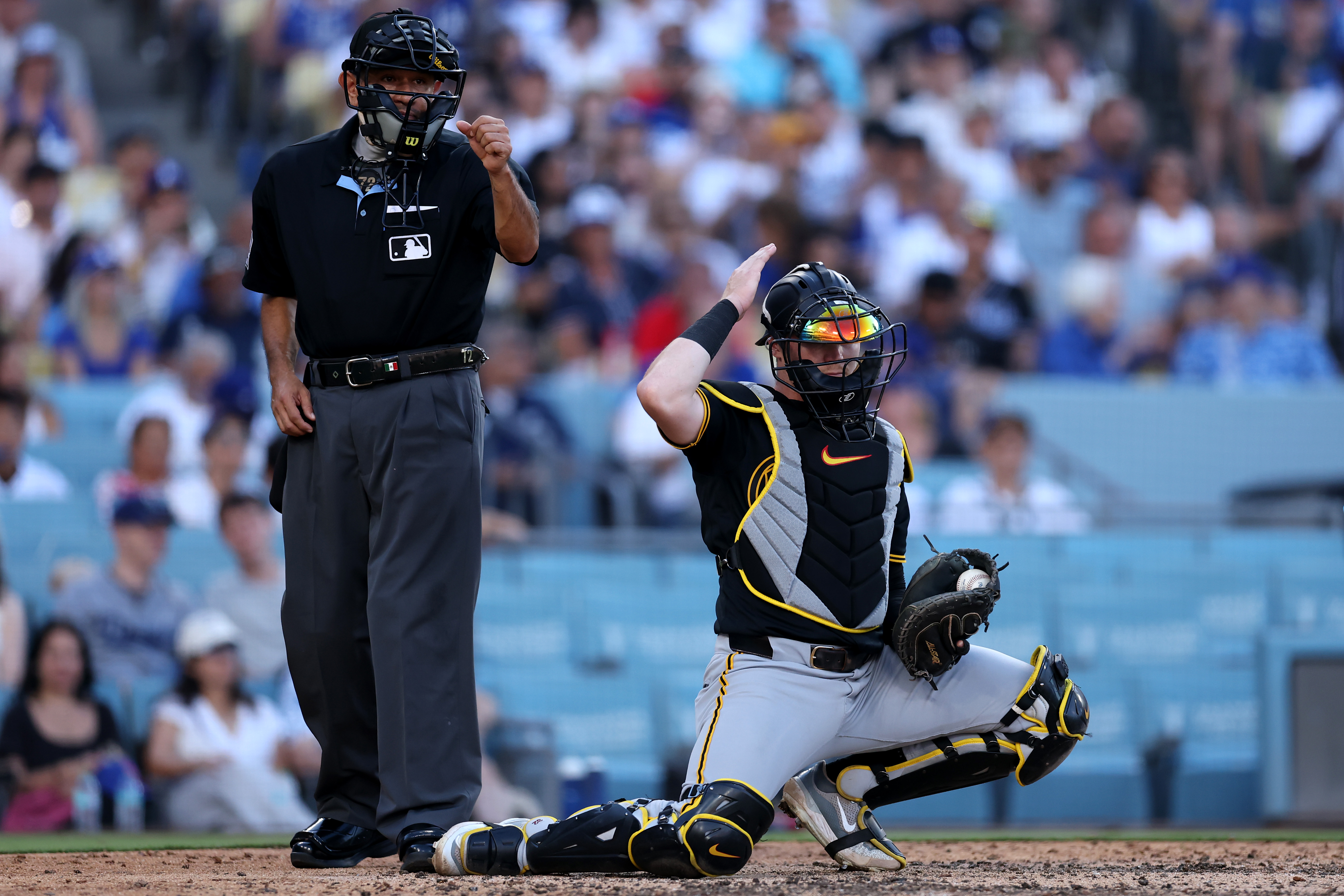
The scenes of irate managers kicking dirt on home plates and going nose-to-nose with major-league umpires are long gone, replaced by the GIF-worthy image of players tapping their helmets to question an umpire’s call.
That action was quickly followed by oohs and aahs filling stadiums amid what some considered a game-changing first season of success for the Automated Ball-Strike (ABS) Challenge System.
Fans, those on the field, and casual observers were able to witness computer graphics taking center stage on the diamond with the system’s introduction this year, and the results from the regular season translate into victory, depending on which side of the call you’re on.
According to baseballsavant.mlb.com, 10,557 challenges were initiated during the regular season. A little more than half (5,686) resulted in umpire calls being overturned, at 54 percent. That means umps were correct on 46 percent of their disputed calls—ones that were a fraction of an inch from the strike zone but made players vehemently disagree.
Batters were correct 49 percent of the time, or 2,328 out of 4,765 challenges. And catchers and pitchers were correct in their appeals 58 percent of the time, or 3,358 out of 5,792 requests for ABS.
But while catchers were outstanding, with 58.6 percent of their calls overturned in their favor (3,285 calls overturned out of 5,609 challenges), according to baseballreference.com, pitchers were limited in attempts, with just 182 and only 72 (40 percent) successful challenges.
That makes sense because pitchers—even with their sometimes long strides toward home—are still 50-plus feet away by the time the ball reaches the plate.
“It played how I thought it would,” MLB analyst C.J. Nitkowski, a broadcaster with the Atlanta Braves, said in an email to The Epoch Times. “Pitchers were terrible—about 40 percent success rate—batters were right in the middle—49 percent—and catchers were very good—about 60 percent.
“What maybe caught my attention the most is how bad some catchers were.”
Among catchers with at least 90 challenges, three had an overturn rate under 50 percent: Francisco Alvarez of the Mets and Drew Romo and Edgar Quero of the White Sox. But Carson Kelly of the Chicago Cubs had a 69 percent success rate on his 93 challenges. That was the best among catchers with at least 90 ABS reviews.
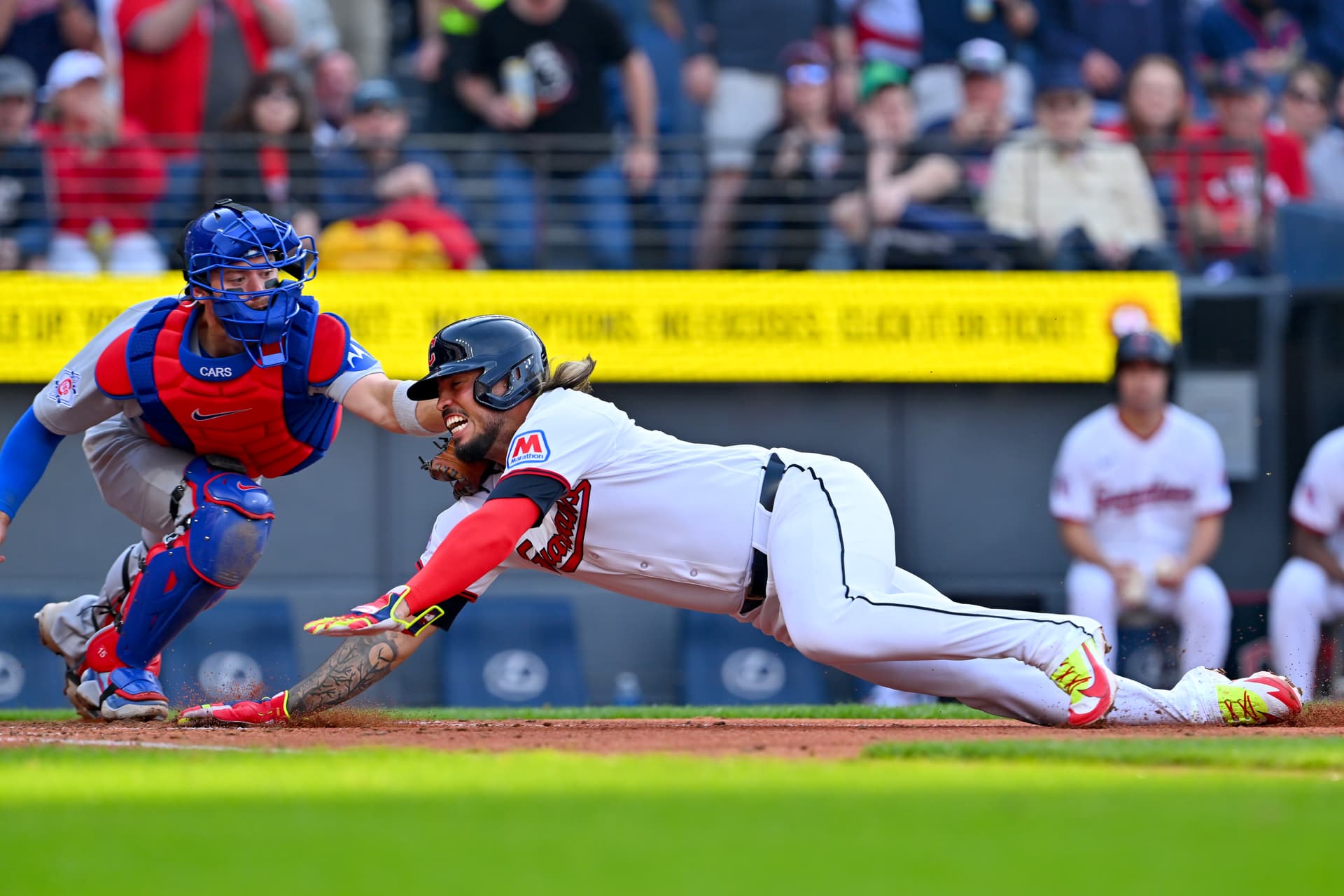
Catcher Carson Kelly of the Chicago Cubs tags out Gabriel Arias of the Cleveland Guardians to end the fifth inning of the home opener at Progressive Field in Cleveland on April 3, 2026. (Jason Miller/Getty Images)
Infielder Sal Stewart of the Cincinnati Reds led the way for batters in challenges, requesting 51 this season. His 55 percent success rate was the seventh-best among hitters with at least 30 challenges.
Esteury Ruiz, an outfielder with the Miami Marlins, ranked second among batters with at least 20 challenges, successfully overturning 13 of his 20 challenged calls (65 percent), behind Arizona’s Gabriel Moreno (68 percent).
Suffice to say, the umpires generally do a great job of determining balls and strikes on pitches that sometimes travel 100-plus miles per hour, come in at various angles, and are just slightly off the plate, according to technology.
When asked what surprised him most about the season-long data, Nitkowski said: “Pitches on the corners, when we saw a small fraction of the baseball catch the ABS zone. Those overturns were shocking to see at times.”
And as strong as the results were for hitters, Nitkowski pointed out that this first year was a learning experience for teams.
Nitkowski said it was surprising to see “how some hitters were extremely tentative in using ABS, and others overaggressive and not having a feel for the zone.”
Meanwhile, Taylor Schwink, producer of the “Baseball Tonight with Buster Olney” podcast, said the system gave some love to the crews on the field that work the game.
“I think ABS was a good way to show how good the umpires actually are across the sport,” he said in a direct message to The Epoch Times. “And it’s an effective way to hold them accountable and make sure things are called quickly and fairly.”
Schwink said he at times raised his eyebrows at the liberty some hitters were given to question ball-strike decisions, but praised MLB officials for implementing the system.
“I was surprised how much carte blanche hitters get in challenging calls,” he said.
“Overall, it definitely improved the product. I’m a big fan. It’s the best challenge system in all of pro sports.”
Nitkowski was on the same page as Schwink, saying that not only has the ABS challenge system boosted baseball, but he’d also like to see MLB increase its use of technology to enhance its on-field product.
“It was great and much-needed. I'd like to see more challenges added. The system has been so efficient, and the game needed it,” Nitkowski said.