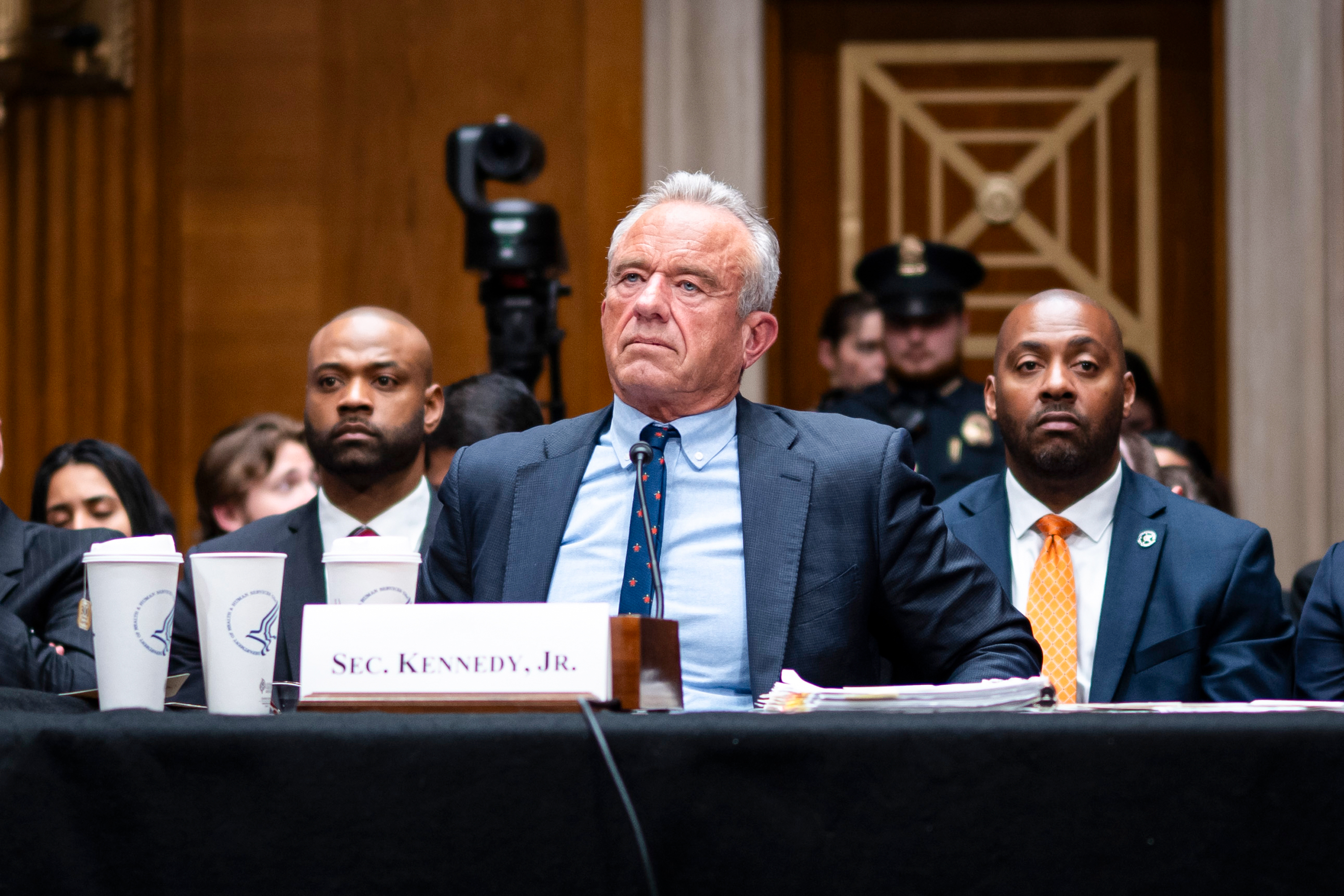

Health Secretary Robert F. Kennedy Jr. appeared before seven congressional committees in recent days, taking questions—and criticism—from dozens of lawmakers.
Here are key exchanges from the sessions.
Budget Cuts Are Necessary
The White House has proposed a 12.5 percent cut to the budget of the Department of Health and Human Services (HHS), along with cuts to other agencies.
“All of those cuts are painful,” Kennedy said. “Nobody wants to do them.”
However, he said the cuts are necessary because of growing national debt.
While Democrats criticized the proposal, some Republicans, including Sen. Cindy Hyde-Smith (R-Miss.), said they support it.
“Thank you for making necessary cuts where we agree that they are definitely needed,” Hyde-Smith said.
Mass terminations in 2025 brought HHS from about 82,000 employees down to around 62,000. Kennedy said there are now 72,000 employees and that the agency plans to hire about 12,000 more people.
Kennedy said the terminations did not result in any issues, and that they were warranted, citing the high rates of chronic disease in the population and the prevalence of unhealthy food in Americans’ diets.
“It was their job to protect us, and they did not do it. They failed at their job,” Kennedy said. “If this was private industry, they would have all been fired. We did what we had to do to change the culture at these agencies.”
Rep. Steny Hoyer (D-Md.) said he disagreed with the firings.
“Essentially, most of us believe they were fired to reach a number, a lesser number,” he said.
The U.S. Department of Health and Human Services at the Hubert H. Humphrey building in Washington on April 28, 2025. (Madalina Vasiliu/The Epoch Times)
Will Medicaid Be Cut?
The One Big Beautiful Bill Act, passed by Congress and signed by President Donald Trump in 2025, included tightening requirements for Medicaid, which provides health insurance to 83 million low-income people in the United States, according to health policy organization KFF.
As a result of the act, “the Republicans are going to cut Medicaid by $1 trillion over the next decade,” Rep. Rosa DeLauro (D-Conn.) said.
Other Democrats also decried the cuts.
Kennedy, though, said spending on Medicaid will actually continue growing in the coming years.
“We’re not cutting Medicaid,” he said.
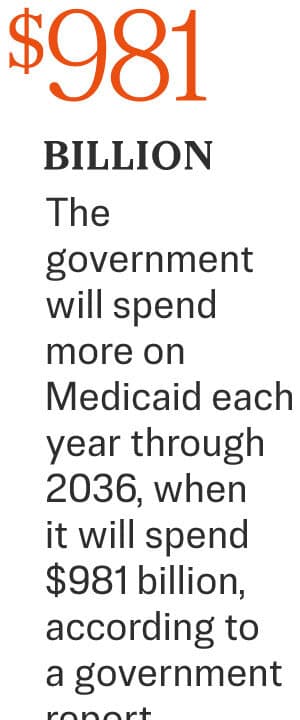
He pointed to a recent Congressional Budget Office report that concluded the government spent $668 billion on Medicaid in 2025, and will spend more each year through 2036, when it will spend $981 billion.
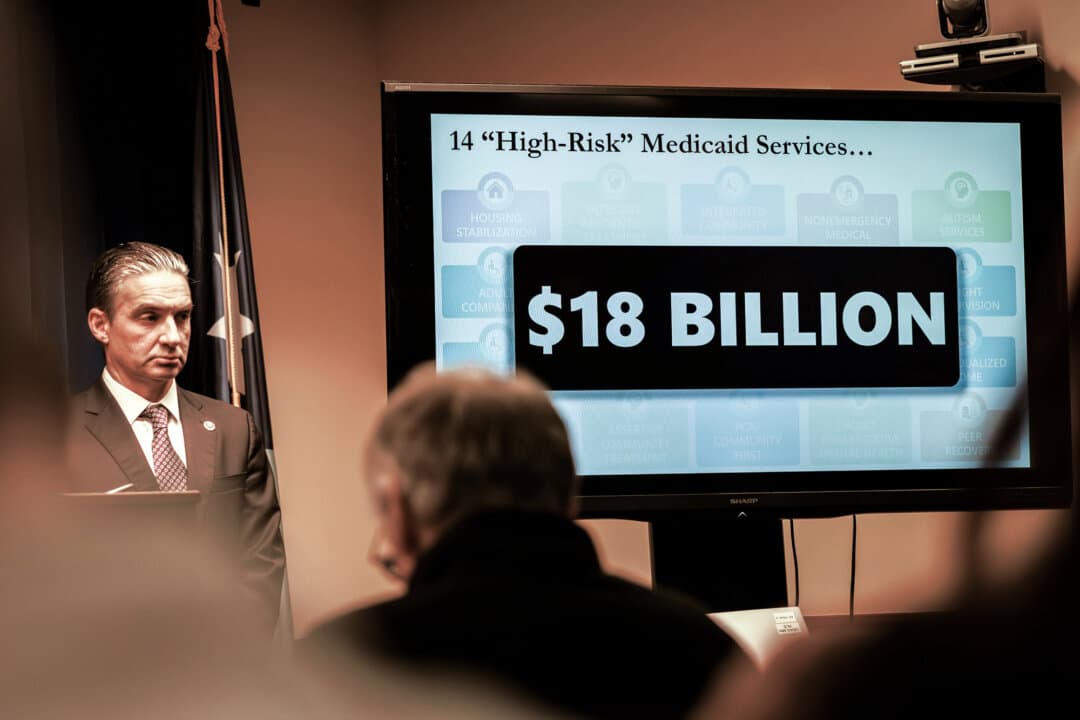
U.S. Attorney's Office officials speak at a news conference inside the U.S. Courthouse in Minneapolis on Dec. 18, 2025. (Kerem Yücel/Minnesota Public Radio via AP)
Approves of New CDC Director Nominee
On April 16, Trump nominated Dr. Erica Schwartz, a former deputy surgeon general and chief medical officer of the Coast Guard, to be director of the Centers for Disease Control and Prevention.
Schwartz has drawn praise from some frequent critics of Kennedy, but opposition from some of Kennedy’s allies, who do not like how she enforced vaccine mandates in the military.
“When I was a military physician, my job was all about readiness,” Schwartz said in a video she has since taken down. “It was all about public health: prevention, vaccines, early detection. If we get that right, we change lives before illness ever begins.”
Kennedy said he approves of Schwartz as a nominee.
“We were the ones who sent her nomination to the White House,” he told Rep. Raúl Ruiz (D-Calif.).
He also said he had spoken to Schwartz on multiple occasions and vetted her position on vaccines.
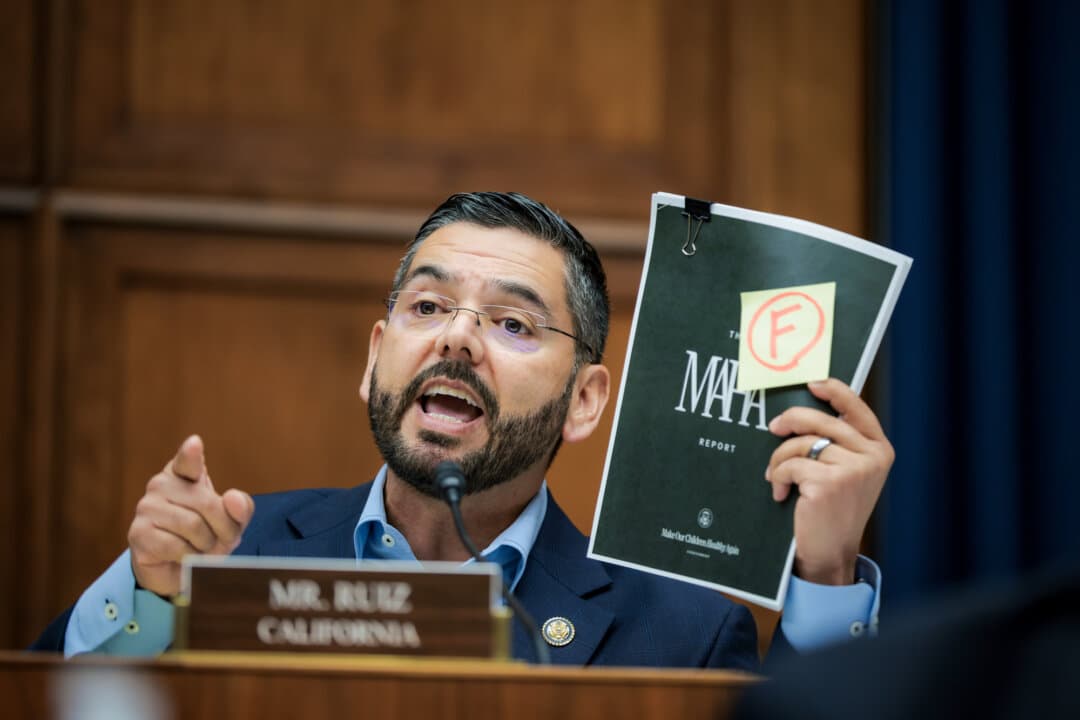
Rep. Raul Ruiz (D-Calif.) holds up the Make Our Children Healthy Again Assessment report while questioning Health and Human Services Secretary Robert F. Kennedy Jr. during a House Energy and Commerce Committee Health Subcommittee hearing in Washington on June 24, 2025. (Kayla Bartkowski/Getty Images)
Ruiz said that Schwartz’s position “runs contrary to [Kennedy’s] dangerous anti-vaccine crusade” and brought up how Susan Monarez, the only Senate-confirmed CDC director during Trump’s second term, was ousted after one month because she and Kennedy clashed over how to handle recommendations from a CDC vaccine advisory panel that Kennedy remade.
Kennedy later declined to pledge to implement whatever vaccine guidance Schwartz issues, but he did say in another hearing that the next CDC director has the power to make decisions independent of political appointees.
Doesn’t Bring Up Vaccines, but Pushes Back
Kennedy, in prepared remarks, did not touch on vaccines—a topic on which he regularly spoke before entering office and in 2025 after becoming health secretary.
“I’m curious as to why such a vocal vaccine skeptic has all of a sudden gone silent on these issues,” Rep. Marc Veasey (D-Texas) said.
Veasey asked whether any White House officials had instructed or suggested Kennedy stop talking about vaccines ahead of the midterm elections. Kennedy said no.
Across the hearings, Kennedy answered questions on vaccines from various members, some of whom said that changes to vaccine recommendations, and Kennedy’s comments on vaccines, have resulted in lower vaccination rates and measles outbreaks.
“Secretary Kennedy is creating chaos and confusion in our nation’s health policy,” Rep. Frank Pallone (D-N.J.) said.
Kennedy said government actions during the COVID-19 pandemic caused distrust in vaccines, and that the measles outbreaks have happened among communities that largely chose not to receive vaccines well before he entered office.
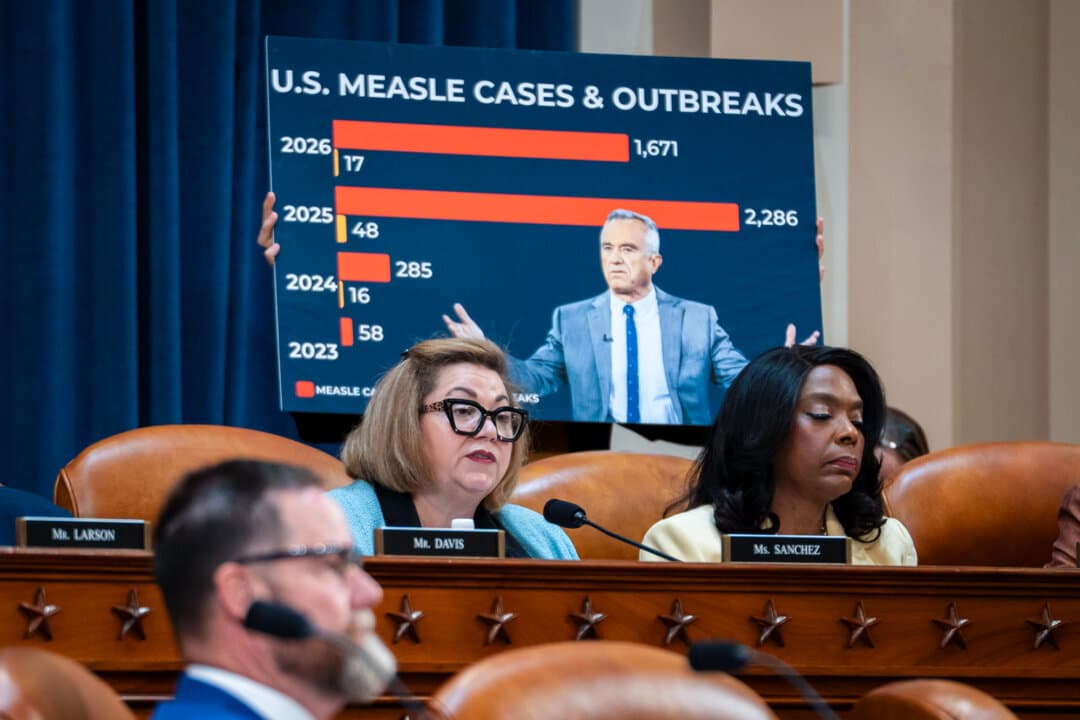
Rep. Linda Sánchez (D-Calif.) speaks during a hearing with Health Secretary Robert Kennedy Jr. on Capitol Hill in Washington on April 16, 2026. (Madalina Kilroy/The Epoch Times)
“The vaccination levels dropped during COVID because people stopped trusting the American government,” Kennedy said. “I am here to restore that trust.”
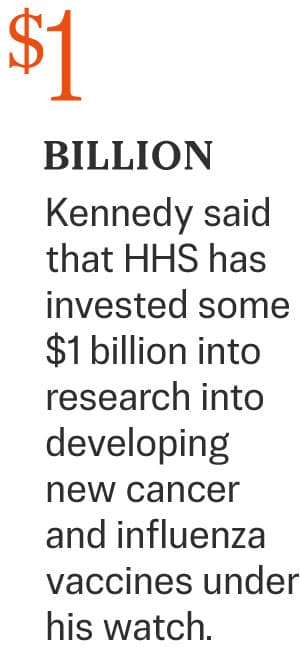
He pointed out that HHS has invested some $1 billion into research into developing new cancer and influenza vaccines under his watch.
“It’s counterintuitive to look at my record here and say I’m anti-vaccine,” Kennedy said. “I’m pro-science.”
Kennedy also endorsed the measles, mumps, and rubella (MMR) vaccine as safe and effective.
“We advise every child to get the MMR,” he said.
Rep. Andy Harris (R-Md.), a doctor, was among the members defending Kennedy. He noted that former CDC Director Rochelle Walensky told him that officials were recommending all children receive a COVID-19 vaccine because otherwise it would not be covered by a free federal vaccine program.
“For unscientific reasons, they said every healthy child should get it,” Harris said, later adding, “That’s not [Kennedy’s] responsibility.”
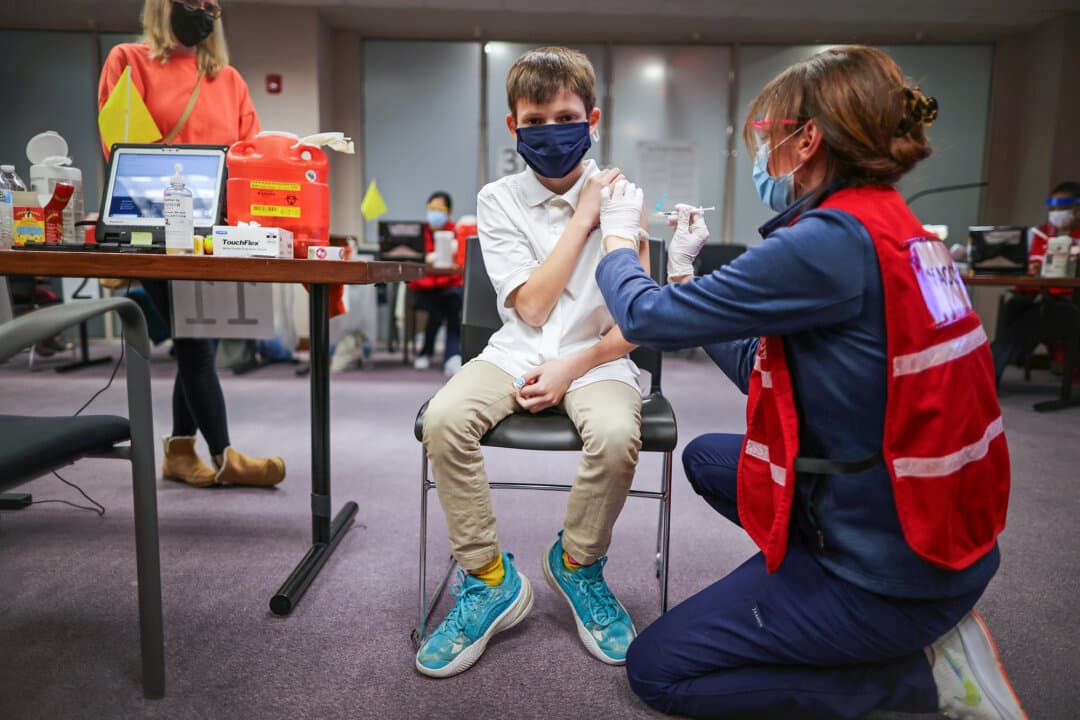
A child receives a dose of the Pfizer BioNTech COVID-19 vaccine at the Fairfax County Government Center in Annandale, Va., on Nov. 4, 2021. (Chip Somodevilla/Getty Images)
Highlights Efforts Against Fraud
Federal health officials have been targeting Medicare and Medicaid as part of the Trump administration’s efforts to reduce fraud, including suspending $5.7 billion in suspected fraudulent Medicare payments.
Kennedy said officials have found “a lot of Medicaid fraud,” including 1 million illegal immigrants on the program and 3.7 million people who were either getting Medicaid in two different states or receiving Medicaid and federal insurance under the Affordable Care Act at the same time.
There’s no money in next year’s budget for combating health insurance fraud, Kennedy said, because the Marketplace Integrity and Affordability Final Rule eliminated zero premium plans, which were particularly subject to fraud.
Sen. Bill Cassidy (R-La.) said that Affordable Care Act fraud persists, citing conversations he’s had, and noted the lack of funding for combating it.
“We’re relying on the rule to eliminate a lot of the opportunities for fraud,” Kennedy said.
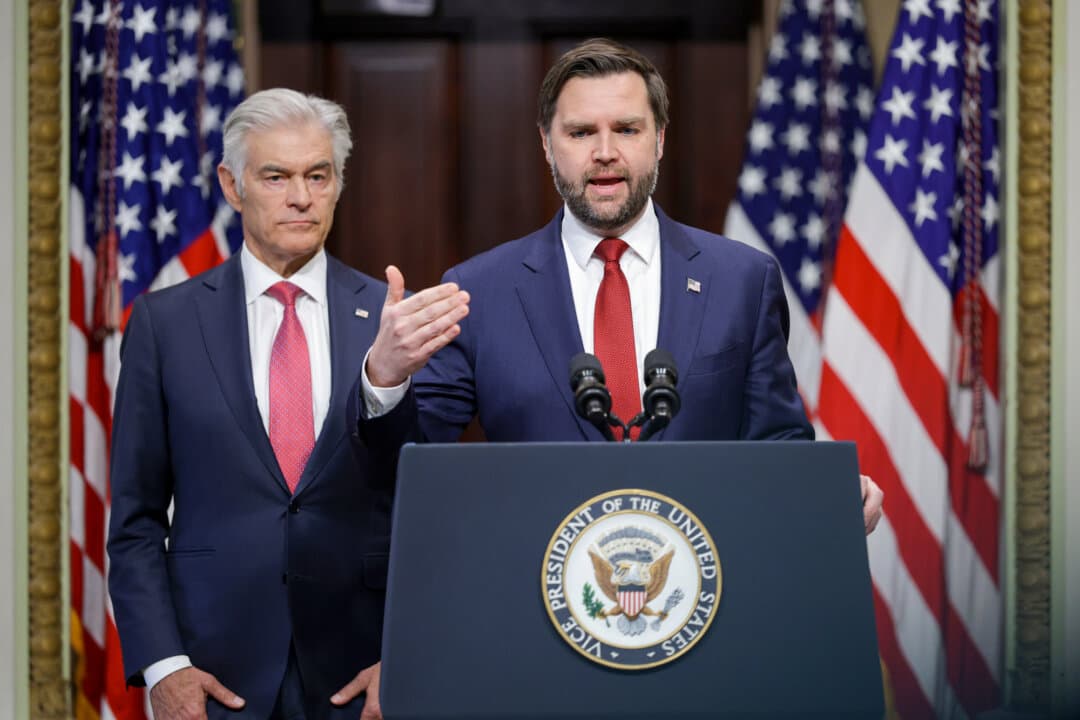
Vice President JD Vance speaks as Administrator for the Centers for Medicare and Medicaid Services Mehmet Oz listens during an announcement at the Eisenhower Executive Office Building of the White House on Feb. 25, 2026. Vance announced that some Medicaid funding to the state of Minnesota would be temporarily halted over fraud concerns. (Alex Wong/Getty Images)
Plans to Revamp Task Force
Revamping a task force that has not met in more than a year is on the to-do list, Kennedy said.
The U.S. Preventive Services Task Force, an independent panel, has been “lackadaisical and negligent for 20 years,” he said.
The task force decides which preventative medical services insurers must cover under the Affordable Care Act.
Sen. John Barrasso (R-Wyo.) said that as a doctor, he has followed the task force’s recommendations for years, and wondered how it has been negligent.
Kennedy declined to provide examples, but said the panel’s work is guided by methodologies with limitations that officials are trying to address.
Some of the terms for members of the body, which has not convened since March 2025, have expired. Kennedy said he plans to bring on new members “who have a clear mission,” and that some specialties that were not represented well in the past would be moving forward. He also said that meetings will be more frequent than they were previously.
Kennedy’s remaking of a separate committee, a CDC vaccine advisory panel, is on hold after a federal judge concluded in March that the health secretary had not followed proper procedure in appointing new members.
Kennedy said in the hearings that the White House approved his removal of members from that panel and his subsequent selection of new panelists.
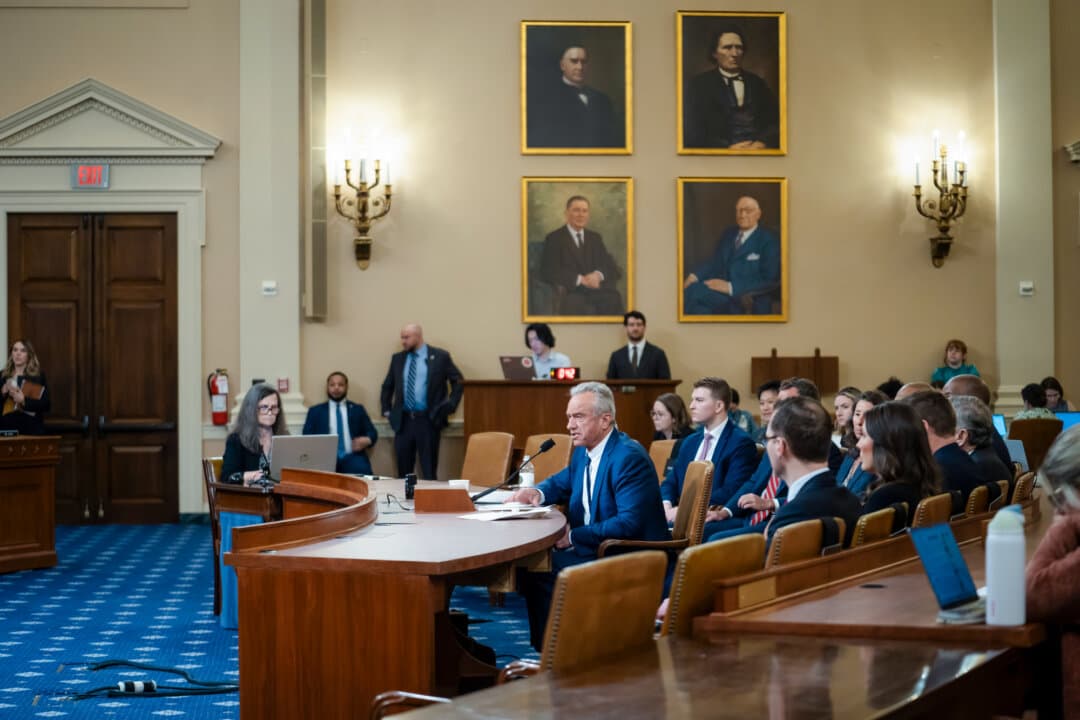
Health Secretary Robert F. Kennedy Jr. testifies before the House Committee on Ways and Means on Capitol Hill in Washington on April 16, 2026. (Madalina Kilroy/The Epoch Times)
Declines to Provide Full Pricing Agreements
The Trump administration has reached deals with more than a dozen pharmaceutical companies to lower drug prices.
“We negotiated the Most Favored Nation drug prices with 16 of the largest pharmaceutical companies so that Americans no longer pay more than other people in wealthy countries for the exact same medications,” Kennedy said.
These agreements have not yet been made public or provided to Congress.
Several senators, including Sen. Jeff Merkley (D-Ore.), said they wanted to review them.
“If these deals with Big Pharma are so great for Americans, then we should be able to see what promises have been made,” Sen. Elizabeth Warren (D-Mass.) said.
Kennedy countered that “those agreements contain proprietary information and trade secrets,” citing a provision in the Inflation Reduction Act, which was passed by Congress and signed by then-President Joe Biden.
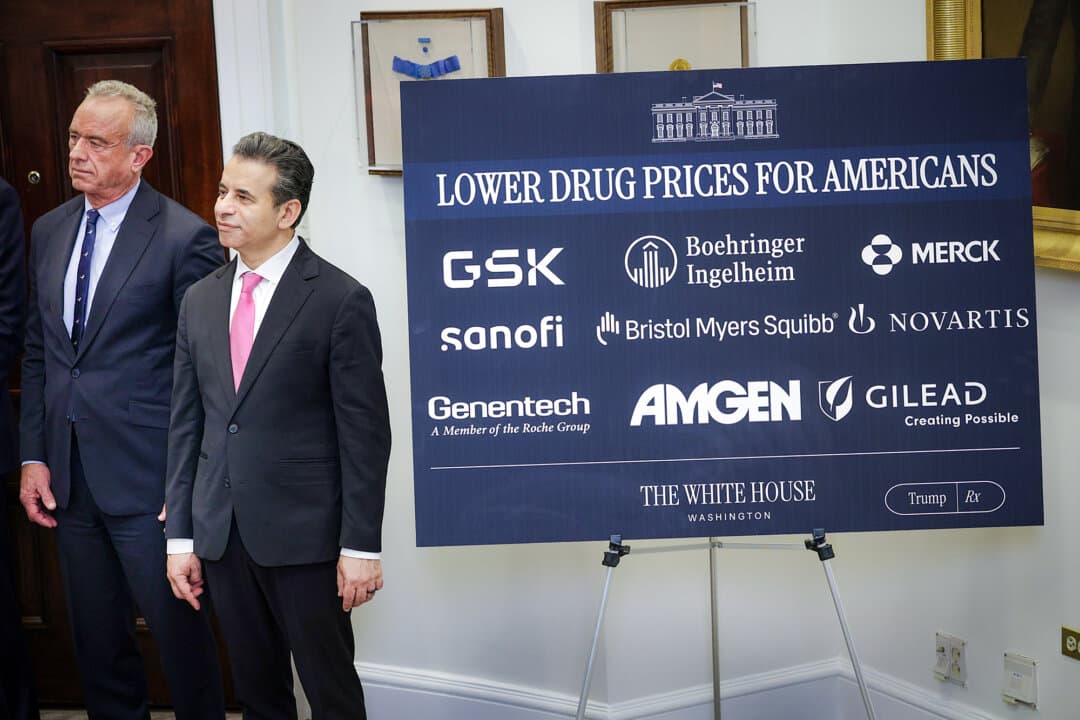
Health Secretary Robert F. Kennedy Jr. (L) and Food and Drug Administration Commissioner Marty Makary attend an event with President Donald Trump in the Roosevelt Room of the White House on Dec.19, 2025. (Alex Wong/Getty Images)