

Voters on May 19 headed to the polls in states across the country for some of the most-anticipated battles of the 2026 midterm election season.
May 19 was the largest day of primary elections yet, seeing ballots cast across six states: Alabama, Georgia, Idaho, Kentucky, Oregon, and Pennsylvania.
The night continued past trends showing that President Donald Trump retains a dominant influence over the Republican Party, as his chosen candidates sailed to victory in race after race—with one Republican incumbent in a major race being defeated.
Democrats, meanwhile, locked in their picks for several key congressional races, as the party works to reclaim the House and possibly the Senate.
Here are the biggest takeaways from the night.
Massie Unseated
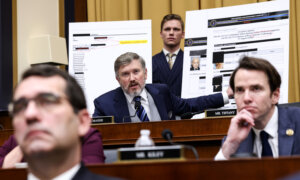
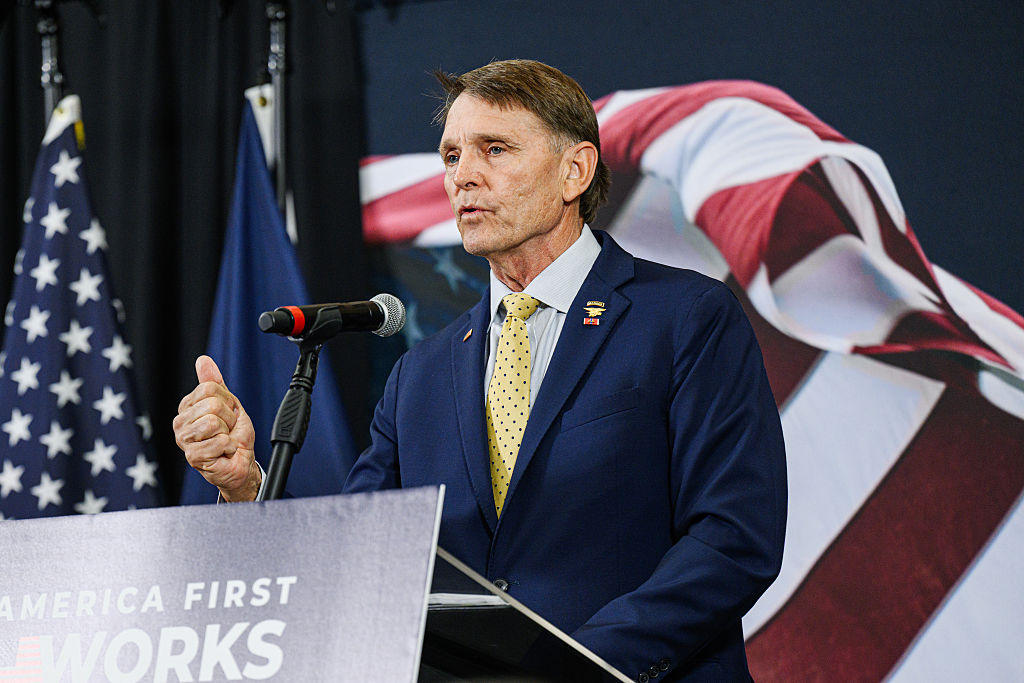
Rep. Thomas Massie (R-Ky.) lost his Republican primary to former Navy SEAL Ed Gallrein, concluding one of the most-watched primary battles of the 2026 election cycle.
Trump had endorsed Gallrein as part of his effort to get Massie removed from Congress.
Trump was openly critical of Massie and urged people in Kentucky’s Fourth Congressional District to elect Gallrein.
Gallrein had tallied 54 percent of the votes compared with 45 percent for Massie when The Associated Press called the race at 7:54 p.m. ET.
Massie’s ousting is seen as underscoring Republican voters’ support for Trump.
The Kentucky lawmaker, who has been at odds with Trump over several issues, joins Sen. Bill Cassidy (R-La.) and several Indiana state senators who were defeated by primary challengers backed by Trump in recent weeks.
Gallrein, in his victory speech, vowed to work closely with the president in Congress.
“We have a saying on the family farm that it’s a contact sport,” Gallrein said at an election night event in Covington, Kentucky. “I can tell you that campaigning is one as well, folks.”
Kentucky, Alabama Open Senate Primaries
In Kentucky and Alabama, voters went to the polls to cast ballots in open Senate primaries for seats being vacated by their incumbents.
Rep. Andy Barr (R-Ky.) will face former Democratic state Rep. Charles Booker in the race to replace outgoing Sen. Mitch McConnell (R-Ky.) in the U.S. Senate.
The Associated Press called the Republican primary race for Barr at 7 p.m. ET, an hour after polls closed. Barr won with 60.5 percent of the vote to 30.8 percent for the next closest rival, former Kentucky Attorney General Daniel Cameron.
On the Democratic side, Booker—who previously was the Democratic nominee for the post in 2022—won with 46.8 percent of the vote. His closest rival, 2020 Democratic nominee Amy McGrath, trailed with 35.8 percent of the vote. The race was called at 9:41 p.m. ET.
The primary was the first time in 16 years that the state saw a fully open race for one of Kentucky’s seats in the U.S. Senate. The last such primary took place in 2010, when Sen. Rand Paul (R-Ky.) won his first election to Congress.
McConnell, 84, was first elected to his seat in 1984. He had served as the leader of the Senate Republican Conference since January 2007 before agreeing to step down at the start of the current Congress.
Meanwhile, Rep. Barry Moore (R-Ala.), Trump’s pick to replace outgoing Sen. Tommy Tuberville (R-Ala.), will advance to a runoff, as he fell short of the 50 percent needed to forgo the second election.
The Republican he will face is still being determined as votes are counted.
In a social media post, Trump called Moore “a true America First Patriot“ who has been with him ”from the very beginning.”
Georgia Republican Races Go to Runoff
Voters in the Peach State sent Republican candidates in Georgia’s gubernatorial and Senate elections to a runoff.
Trump-endorsed Georgia Lt. Gov. Burt Jones and billionaire businessman Rick Jackson will go to a runoff in Georgia’s gubernatorial primary contest.
Jones and Jackson received 37 percent and 34 percent of the vote, respectively, when The Associated Press called the runoff at 8:50 p.m. ET, as neither managed to garner more than 50 percent of the vote in what became a costly contest for the GOP field.
Georgia Secretary of State Brad Raffensperger came in third with 14 percent of the vote.
Another competitive Georgia Republican contest is also on its way to a second round.
As of 9:50 p.m. ET on May 19, none of the major candidates in the state’s Senate GOP primary—Rep. Mike Collins (R-Ga.), Rep. Earl “Buddy” Carter (R-Ga.), and former football coach Derek Dooley—had claimed more than 50 percent of the vote in the Senate primary.
At 9:44 p.m. ET, The Associated Press declared that Collins will advance to the runoff. It later declared that Dooley will face him in that race.
As of 11:52 p.m., Collins had received 40.5 percent of the vote. Dooley followed with 30.1 percent, while Carter trailed in third with 25.2 percent.
The runoff was expected ahead of Election Day, as polling generally did not show any candidate with a majority.
Bernadette Breslin, the national press secretary for the National Republican Senatorial Committee, told The Epoch Times in an exclusive statement that “Republicans are united behind defeating [incumbent Sen. Jon Ossoff (D-Ga.)] and retiring his record of failure for Georgia.”
Trump has not given an endorsement in the Senate race.
The runoff elections are set for June 16.
Pennsylvania Democrats Make Picks in Key Swing Districts
Although observers’ focus was largely centered on Republican races during this round of voting, Democratic candidates were also locked in for several key swing districts during the May 19 elections.
It is unclear whether Democrats can overcome Republicans’ steep 53-seat majority in the U.S. Senate, and the party is instead focusing its major efforts this cycle on the House, where Democrats are widely expected to reclaim the majority by observers.
In Pennsylvania, three Democratic candidates endorsed by Gov. Josh Shapiro, a Democrat, won their elections, including Janelle Stelson, Bob Harvie, and Bob Brooks.
The three candidates will take on Republican opponents in the November general election, including some of the party’s top targets.
Stelson will go up against Rep. Scott Perry (R-Pa.), Harvie against Rep. Brian Fitzpatrick (R-Pa.), and Brooks against Rep. Ryan Mackenzie (R-Pa.).
Shapiro himself is seeking reelection this year, running for the gubernatorial nomination unopposed. Shapiro’s approach to politics has been viewed as moderate by voters in the state. It propelled him to a sweeping double-digit victory in his 2022 election, giving his endorsement some weight in state politics.