
Four Republican representatives joined an effort by Democratic lawmakers to force a vote on a clean three-year extension of the Affordable Care Act’s enhanced premium tax credits.
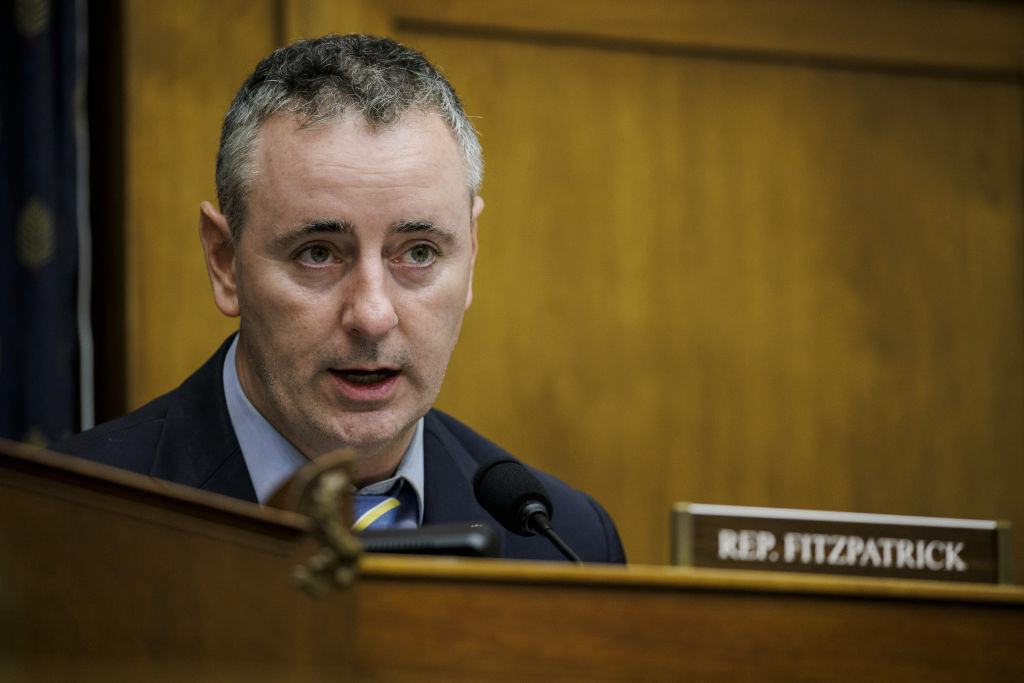
Reps. Brian Fitzpatrick (R-Pa.), Mike Lawler (R-N.Y.), Robert Bresnahan (R-Pa.), and Ryan Mackenzie (R-Pa.) signed a discharge petition circulated by Minority Leader Hakeem Jeffries (D-N.Y.) that will force House Speaker Mike Johnson (R-La.) to bring the measure to the House floor for a vote.
Democrats have called on House Speaker Mike Johnson (R-La.) to hold the vote Wednesday so as to end the uncertainty about the expiration of the enhanced subsidies.
“The fuse has been lit, so to speak, and the speaker must call a vote on this proposal today,” Rep. Joe Neguse (D-Colo.) told reporters on Dec. 17. “Let us work together to ultimately secure health care for millions of Americans.”
According to House rules, seven legislative days must pass before a signer can call for a vote on the matter. Johnson must then schedule a vote within two legislative days. The House is scheduled to recess for the holidays on Dec. 18 and reconvenes on Jan. 6, 2026.
Asked whether this development suggests that he has lost control of the House, Johnson said that wasn’t the case. “I have not lost control of the House,” Johnson said.
“These are not normal times,” Johnson added, noting that the party’s slim majority in the House allows members to exert leverage that they otherwise could not.
Fitzpatrick and Lawler, along with Rep. Jen Kiggans (R-Va.), have been at the forefront of a Republican effort to pass a short-term extension for the expiring subsidies, which have been in place since 2021.
Fitzpatrick and Kiggans each sponsored bills that would extend the enhanced subsidies in the Affordable Care Act—informally known as Obamacare—for two years and one year, respectively, while adding income caps for recipients and anti-fraud reforms. Both bills had bipartisan support.
When Republican leaders refused to allow a floor vote on their bills, both lawmakers attempted to add them as amendments to the Lower Health Care Premiums for All Americans Act, a GOP-sponsored reform bill that is scheduled for a vote in the House on Dec. 17.
“This is not about politics. This is about addressing an issue that we both agree is a problem,” Lawler said, testifying before the House Rules Committee on Dec. 16. “Obamacare has not actually produced the result that was intended. But the immediate issue before us is the expiration of the enhanced premium tax credits.”
The Rules Committee rejected both amendments on Dec. 16. By morning, the four Republicans had signed Jeffries’ petition.
Democrats, fearing the loss of health coverage by many Americans on Jan. 1, 2026, have been firm in insisting that the expiring enhanced subsidies must be extended for three years with no alterations.
More than 30 House Republicans have agreed that a short-term extension of the subsidies is needed, but have argued that the Affordable Care Act must be reformed in the process.
The Lower Health Care Premiums for All Americans Act is a Republican attempt to lower health care premiums across the board without renewing the COVID-19 era enhanced subsidies.
Original Obamacare subsidies, formally called premium tax credits, will remain in place.
Jackson Richman contributed to this report.