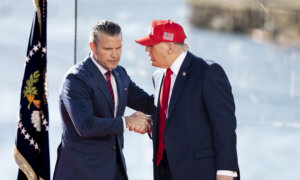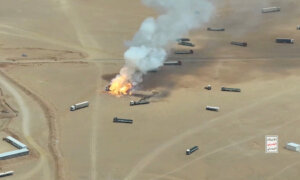

U.S. President Donald Trump has said that U.S. forces have struck an Iranian anti-aircraft facility, describing the operation as a limited attack as indirect U.S.–Iran talks continue.
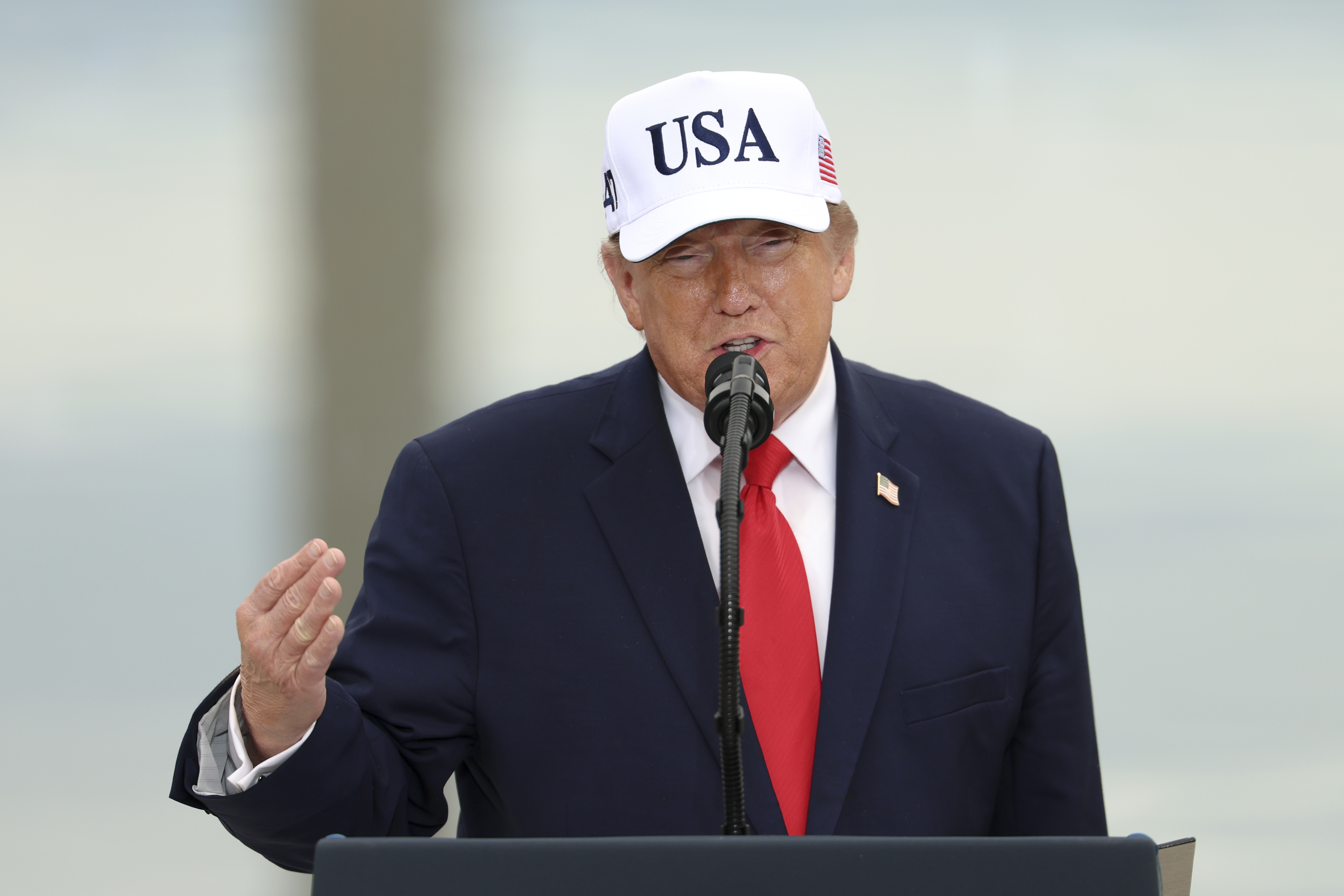
Trump told Fox News on Nov. 3 that the U.S. military targeted the site overnight shortly after it was completed.
“They have no airplanes. They have no anti-aircraft. We took some out last night. It’s just a minor attack. It wasn’t war,” Trump said. “They built an anti-aircraft facility. It took them about two months. We watched it get built; as soon as it was completed, we hit it last night very nicely.”
Asked what Washington’s next move would be, Trump said, “We'll see.”
“I’m not looking to kill lots of people, but if we have to, we'll have to,” he said. “But I’m not looking to do that. And we’re very strong right now.”
Earlier on Nov. 2, Iran’s state-run Islamic Republic News Agency reported several explosions on Qeshm Island, the largest island in the Persian Gulf.
The U.S. military has acknowledged striking targets on the island in recent months. In September, explosions were reported on the island, as the U.S. military said it completed a wave of strikes against Iranian military targets.
The U.S. military also struck an Iranian military ground control station on Qeshm Island in June, following Iranian missile and drone launches toward regional partners.
The U.S. Central Command said in May that it carried out self-defense strikes against Iranian radar and drone command-and-control sites on Qeshm Island and in Goruk after Iran shot down a U.S. MQ-1 drone over international waters.

An oil tanker is seen navigating the sea on Qeshm Island, Iran, in the Strait of Hormuz, on April 28, 2026. (Asghar Besharati/Getty Images)
Following reports of explosions on Qeshm Island on Nov. 2, oil prices rose by more than 1.5 percent early on Nov. 3, reflecting renewed concerns over the security of the Strait of Hormuz. The developments follow indirect talks between U.S. and Iranian officials in Doha, Qatar, over the weekend.
Qatar, which is mediating between the two countries, said on Nov. 3 that negotiations remain ongoing and warned that further military escalation would complicate efforts to reach a diplomatic settlement.
Control of Hormuz
Trump said on Nov. 3 that the U.S. military maintains complete control of the Strait of Hormuz through its naval operations.
“Nobody thought that was possible. Our navy, our blockade, our military is incredible,” he said.
The U.S. military has enforced a naval blockade on Iranian ports since earlier this summer. U.S. forces had redirected 144 commercial vessels as of Oct. 31 to enforce the blockade, Central Command said.
Trump also recalled what he said was an Iranian missile attack against a U.S. aircraft carrier earlier in the conflict.
“We had 111 missiles shot at our aircraft carrier. ... Every single one of those missiles was hit without one wasted shot, and they were all laying in the ocean,” he said.
Iran has outlined seven conditions for ending the conflict and reopening the Strait of Hormuz, including an end to U.S. military action and sanctions relief.
“If the conditions are met, the path of diplomacy will be open,” Mohsen Rezaei, secretary of Iran’s Supreme National Security Council, said last week.
He warned that any further military action against Iran would be met with “devastating blows” using “new weaponry.”
On Nov. 3, Rezaei said Washington’s response to Iran’s demands was unconvincing.
The Trump administration has repeatedly said that its aim is to prevent Iran from rebuilding its nuclear program.
U.S. Vice President JD Vance said on Nov. 2 that the United States believes that there is a pathway to a negotiated settlement if Tehran were to make a firm and verifiable commitment not to rebuild its nuclear program.
Vance added that Washington has not imposed a deadline for an agreement.