
The Treasury Department will be forced to issue tariff-related rebates if the Supreme Court upholds a lower court order that blocked a large portion of the tariffs issued by the Trump administration earlier this year, Treasury Secretary Scott Bessent said on Sept. 7.
“We would have to give a refund on about half the tariffs, which would be terrible for the Treasury,” Bessent told NBC News’s “Meet the Press,” meaning that it would represent a loss in federal revenue.
“If the court says it, we’d have to do it,” he said, noting that the Trump administration is confident that it will win the case before the Supreme Court.
Bessent said there could be “other avenues” to imposing tariffs if the Supreme Court rules against those duties, although he did not give details about what they are. However, he said, those maneuvers would diminish the authority of the Trump administration.
Another White House official, National Economic Council Director Kevin Hassett, told CBS News’s “Face the Nation” that there are other legal ways to implement the duties, including Section 232 tariffs that allow the president to impose restrictions on imports into the United States or force other countries into negotiations following an investigation.
In a 7–4 ruling in late August, the U.S. Court of Appeals for the Federal Circuit said most of President Donald Trump’s reciprocal tariffs, which he had imposed in April, are illegal. The majority found that the president overstepped his authority under a 1977 law called the International Emergency Economic Powers Act.
“The statute bestows significant authority on the President to undertake a number of actions in response to a declared national emergency, but none of these actions explicitly include the power to impose tariffs, duties, or the like, or the power to tax,” the court stated, upholding a lower court order that blocked the tariffs.
The judges later wrote that it appears to be “unlikely that Congress intended, in enacting [the International Emergency Economic Powers Act], to depart from its past practice and grant the President unlimited authority to impose tariffs.”
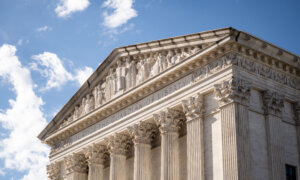
That ruling will not take effect until Oct. 14, allowing the Trump administration to appeal the decision to the Supreme Court. On Sept. 3, the administration did just that, asking the high court to weigh in on the matter and reverse the appeals court order.
Solicitor General D. John Sauer asked the justices to take up the case in November, arguing that the appeals court order affects negotiations on trade deals.
“That decision casts a pall of uncertainty upon ongoing foreign negotiations that the President has been pursuing through tariffs over the past five months, jeopardizing both already negotiated framework deals and ongoing negotiations,” Sauer wrote. “The stakes in this case could not be higher.”
In his Sept. 7 interview, Bessent was asked about the U.S. economy and whether the tariffs could contribute to a potential downturn.
“President Trump ... held the views on tariffs,” Bessent said. “He was proven right. We had the quickest stock market recovery in history.
“We’re at new highs in August, and ... We’re not going to do economic policy off of one number. We believe that good policies are in place that are going to create good, high-paying jobs for the American people.”