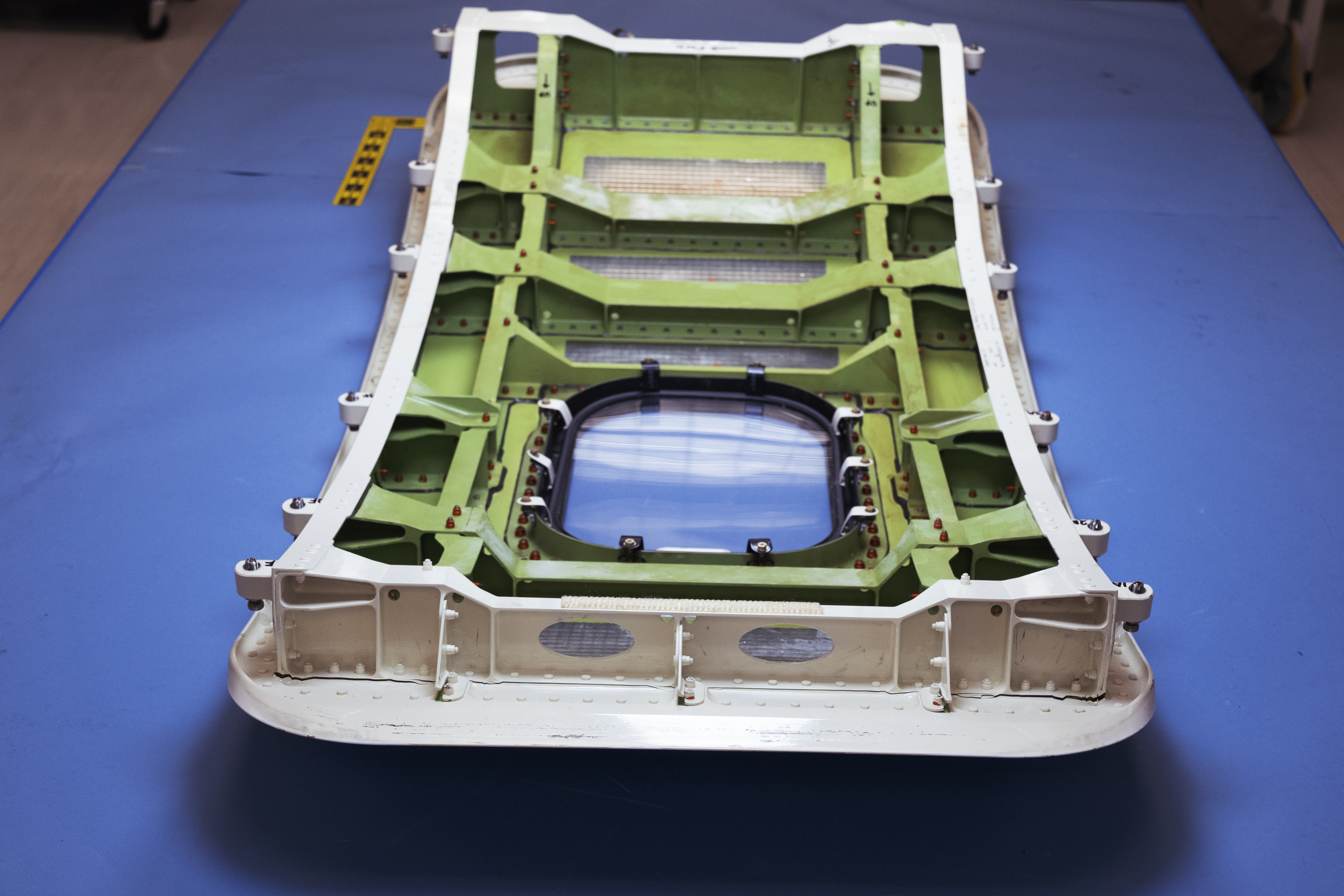

The sudden and unprecedented midair door panel blowout on an Alaska Airlines flight early last year stemmed from failures by Boeing, its supplier SpiritAerosystems, and the Federal Aviation Administration (FAA), the National Transportation Safety Board said on June 24.
“The truth is, there was a long chain of events that led to the door plug departure. Problems were identified in numerous Boeing internal audits across production lines, employee speak-up reports, quality alerts, and regulatory compliance issues,” NTSB Chairwoman Jennifer Homendy said at a June 24 hearing.
“In other words, the safety deficiencies that led to this accident should have been evident to Boeing and to the FAA.”
On Jan. 5, 2024, a door plug ripped off an Alaska Airlines flight right after takeoff from Portland, Oregon. The incident occurred at roughly 16,000 feet and tore passengers’ clothing and threw cellphones out of the plane.
Despite the chaotic and uncontrolled decompression of the 737 MAX 9, no one aboard sustained serious injuries.
The NTSB’s preliminary findings determined that the four bolts that hold the door panel in place were missing when Alaska Airlines received the plane in October 2023. The NTSB said on Tuesday that if just one of the bolts had been in place, the incident likely would not have occurred.
Homendy said the same safety deficiencies that led to the door panel incident could have resulted in other “manufacturing quality escapes and perhaps other accidents.”
The purpose of the NTSB’s investigation, she said, was to “inform safety recommendations that once implemented, will help Boeing close the systemic gaps that led to this accident.”
This is critical so that “every airplane leaving a Boeing factory is safe to transport the most precious thing imaginable, human life,” Homendy added.
However, the chairwoman said the FAA shares blame for the incident.
“This isn’t all on Boeing or Spirit [Aerosystems]. I have lots of questions about where the FAA was during all of this,” Homendy said. “The FAA is the absolute last barrier of defense when it comes to ensuring aviation safety, protecting the more than 1 billion passengers and crew members who fly on U.S. and foreign airlines annually.”
Babies on Parents’ Laps
She said the FAA failed to provide adequate oversight, and she also criticized the agency for not instituting a rule requiring that infants be restrained while on aircraft, something the NTSB has recommended for years.
Three infants were being held on their parents’ laps on the Alaska Airlines flight, and after the door panel tore off, one mother was sobbing because she had mistakenly believed that her child had been lost through the massive hole in the plane.
Boeing told the NTSB that it had no internal paperwork indicating that the door panel had been taken off and put back without the bolts, so the employees pushing the plane through the production line didn’t know it needed the bolts reattached.
Additionally, Boeing employees told investigators that there was internal pressure to work quickly, creating an environment where it was difficult to avoid mistakes.
The NTSB also said the FAA’s inspection system failed to catch failures in Boeing and Spirit’s manufacturing.
At Tuesday’s hearing, Homendy repeatedly praised the crew of the Alaska Airlines flight and called their collective actions “heroic,” particularly after pilots landed the plane without casualties.
“This crew shouldn’t have had to be heroes,” she said. ”This accident should never have happened. An accident like this only happens when there are multiple system failures.”
The Epoch Times has contacted Boeing for comment.
In an email statement to The Epoch Times, the FAA said it takes the NTSB’s recommendations seriously and “will carefully evaluate those issued today.”
“The FAA has fundamentally changed how it oversees Boeing since the Alaska Airlines door-plug accident, and we will continue this aggressive oversight to ensure Boeing fixes its systemic production-quality issues,” the statement reads. “We are actively monitoring Boeing’s performance and meet weekly with the company to review its progress and any challenges it’s facing in implementing necessary changes.”
The FAA added that its safety inspectors are conducting more targeted audits and inspections at Boeing’s facilities.
And even though Boeing has made progress on improving its safety compliance, the FAA said it does not plan to lift the monthly production cap on the 737 MAX until it is “confident the company can maintain safety and quality while making more aircraft.”