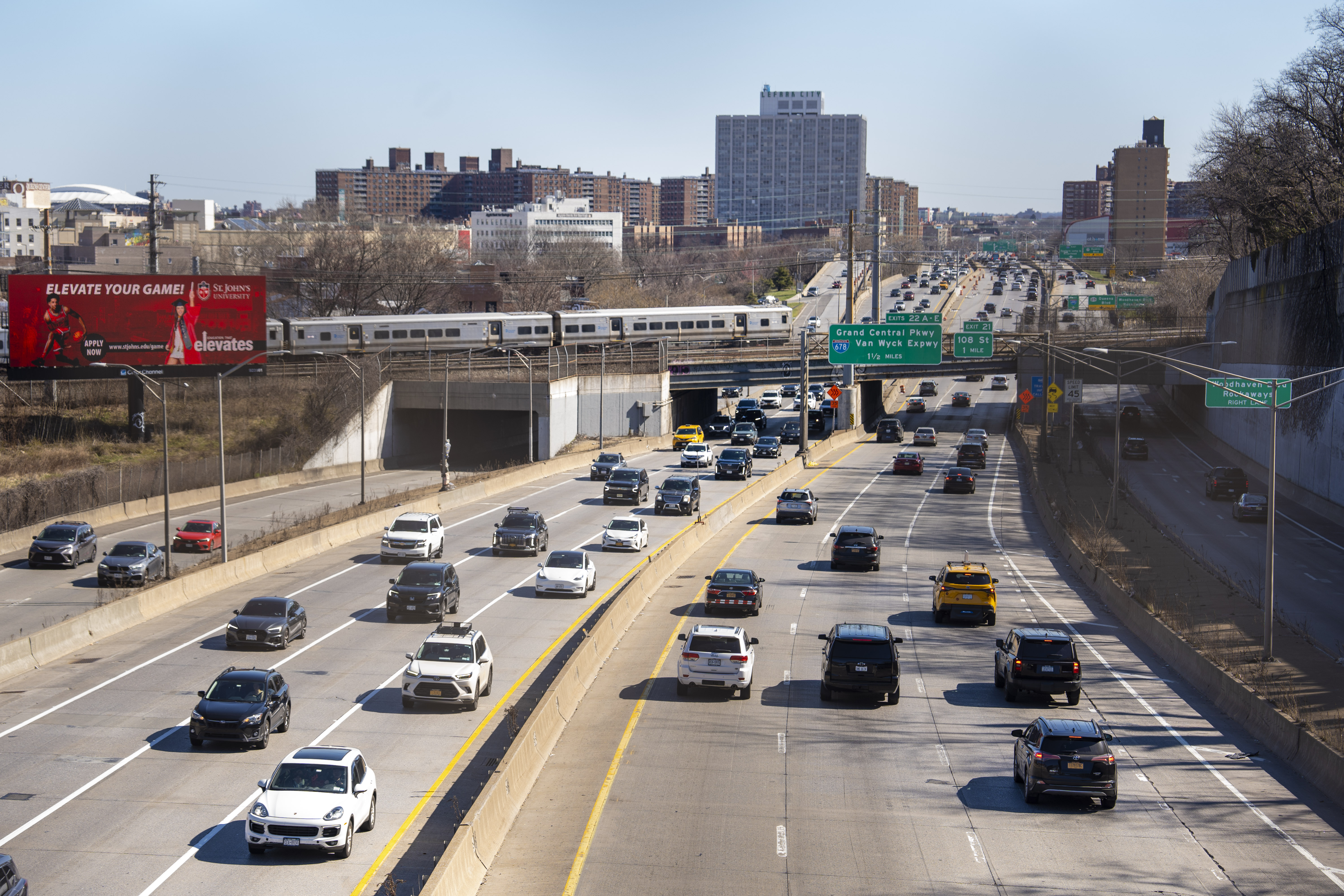

Americans are driving trillions of miles per year, and it is costing them more than ever before.
Over the past few years, price inflation has been prevalent in every aspect of the economy, from eggs to electricity. Vehicles have not been immune to the post-COVID-19 pandemic inflationary pressures.
Cox Automotive’s monthly Kelley Blue Book report indicates that the average new-vehicle transaction price is approximately $49,000, representing a 30 percent increase from pre-COVID-19 pandemic levels.
The higher costs of new cars—and economic uncertainty amid ever-changing trade developments—are beginning to weigh on demand.
New figures suggest that U.S. auto sales volume in June reached 1.27 million units, a milder pace compared with previous months, according to Chris Hopson, principal analyst at S&P Global Mobility.
“Automakers and consumers alike continue to digest an uneasy and uncertain environment,” Hopson said. “While we saw strong March and April sales levels, June brings a second consecutive month of milder pace for auto demand.”
Prices for used cars, meanwhile, have also swelled. The Manheim Used Vehicle Value Index rose by 1.6 percent in June, and is up by more than 6 percent from a year ago.
Many motorists are also choosing larger and longer financing options to pay for new vehicles.
Edmunds, an online guide for car shopping, reported that a record 20 percent of new-car buyers are making monthly payments of $1,000 or more, an all-time high. In addition, the data show that 84-month loans account for more than 22 percent of new-vehicle financing.
Consumers are pursuing every avenue to manage affordability, according to Ivan Drury, director of insights at Edmunds.
“It would be easy to assume that tariffs are already reshaping the market, but the reality is that the record-breaking trends we saw in the second quarter are reflective of more consumers opting for maxed-out term lengths despite vehicle prices remaining steady,” Drury said.
Another trend is intensifying: upside-down car loans.
A separate report from Edmunds suggested that nearly 25 percent of trade-ins for new vehicles are underwater, meaning that drivers owe more on their auto loans than their vehicles are currently worth. Additionally, according to the report, one in four people with negative equity on their loans owes more than $10,000.
“The ramifications for trading in a vehicle well below sea level for a brand-new vehicle can be drastic and lead to a cycle of poor auto financing decisions,” Drury said.
But cost pressures are extending beyond the initial purchase at the local car dealership.
Under the Hood
According to the Bureau of Transportation Statistics, the average total cost of owning and operating an automobile—fuel, maintenance, tires, insurance, license, registration, and taxes—is firmly above $12,000, “assuming 15,000 vehicle-miles per year.”
Indeed, diving deeper into the numbers confirms how virtually every aspect of car ownership has become more expensive, whether in the past 12 months or the past few years.
An analysis of annual premiums by Bankrate found that the average cost of car insurance in the United States is $2,677 per year, a 12 percent jump from last year.
A medley of factors has driven the spike in auto insurance premiums.
Insurance tech firm Insurify attributes the dramatic increase to rises in advanced driver-assistance systems, electric vehicles, vehicle thefts, and accident rates.
Costs associated with motor vehicle maintenance and repair have also skyrocketed, contributing to higher insurance premiums and out-of-pocket expenses.

People cross a street in New York City on April 4, 2025. (Samira Bouaou/The Epoch Times)
According to the Bureau of Labor Statistics, car repair services have soared by about 40 percent. Consumers spend an average of $838 fixing their cars, Kelley Blue Book data show. This can include everything from an alignment ($168.66 to $197.64) to a spark plug replacement ($368.60 to $431.25).
Reasons for the sticker shock at the local repair shop include labor shortages, more complex auto parts, new manufacturing methods, and heavier cars.
Industry experts say the most significant financial aspect of owning and operating a vehicle is depreciation—the gradual decline in the vehicle’s value over time.
“The sneaky part about depreciation is that it isn’t like making a monthly payment. You don’t see the money going out the door,” vehicle data company Carfax stated on its website. “Any calculation of the cost of owning a vehicle should include depreciation because that’s likely to be the biggest chunk.”
The group estimates that the value of a new car falls by approximately 20 percent in the first year of ownership and then by 15 percent in subsequent years.
Parking the Car
The United States is a car-centric country, with a majority of U.S. households enjoying access to a motor vehicle, and most report driving at least a few times a month.
In fact, according to data from transportation analytics firm StreetLight, Americans are driving more than ever before.
Between May 2019 and May 2024, total miles traveled across the 100 largest U.S. metro areas advanced by more than 12 percent—the highest on record.
But will the mounting costs nudge households to leave their cars in the garage? Perhaps not today, but maybe in the future.
It has been well documented that younger generations, particularly Generation Z, are less likely to drive or even obtain a driver’s license. As for current drivers, a June 2023 study by car-sharing network Zipcar found that 35 percent of U.S. adults would be at least somewhat likely to ditch car ownership by 2030.
For now, many Americans say they will take the open road, be it for vacationing or heading to work.
A May GasBuddy survey found, for example, that most Americans plan to travel this summer, with many opting for road trips.