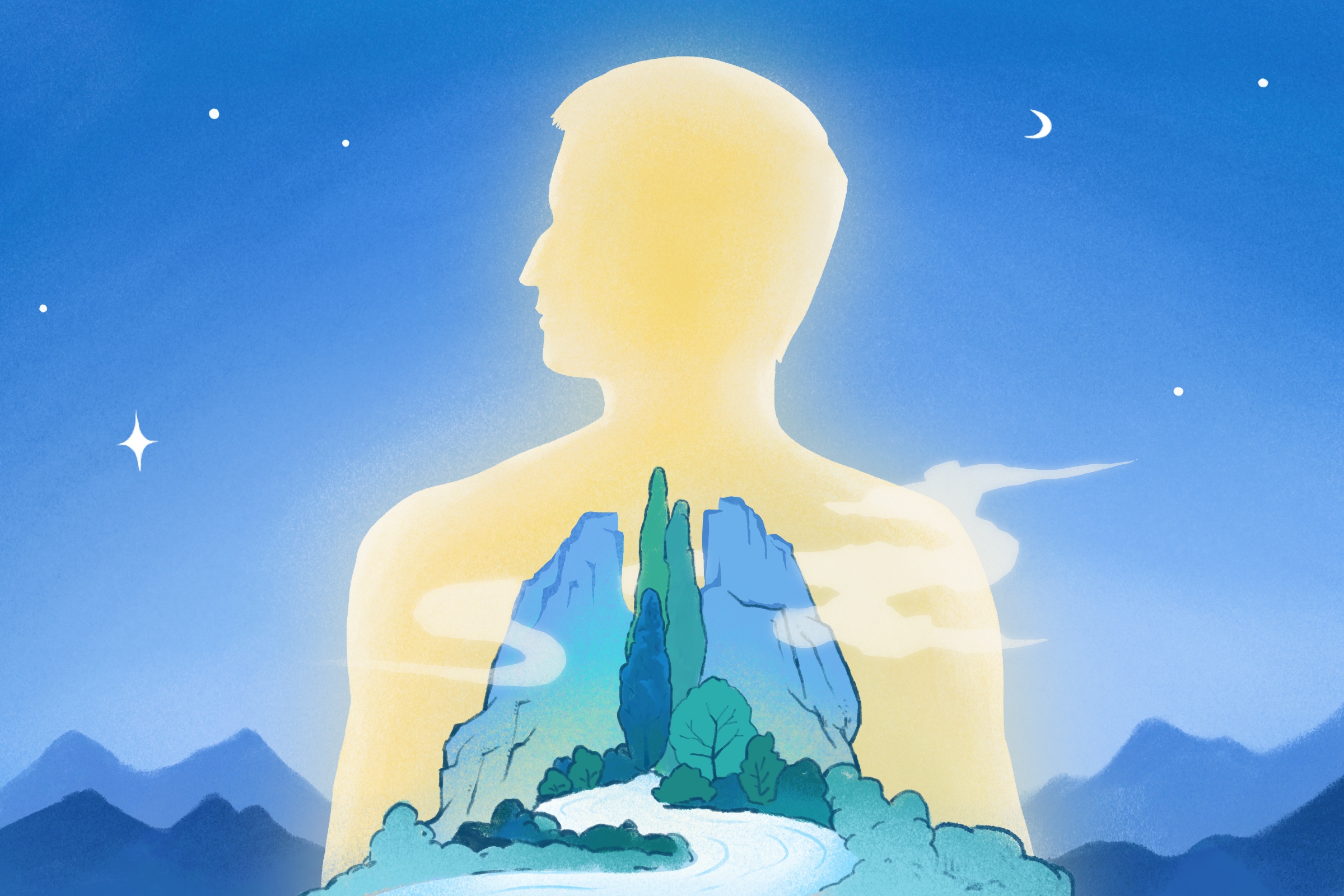
The human body is a microcosm—a miniature representation of the universe. There is a delicate balance between the great cosmos (nature) and the small cosmos (our bodies), which are intricately intertwined.
Such is the view of traditional Chinese medicine (TCM).
I have observed this balance quietly playing out with almost every patient I have treated over the past 30 years.
The Cosmic Law and the Life Energy
TCM is far more profound than just acupuncture and herbs. It has a central concept, namely the “dao” and “qi” (pronounced “chee”).
The dao is the fundamental principle or the cosmic law. It is the “rulebook” that nature follows—be it the change of seasons, the rising and setting of the sun, or the cycles of life. Qi is the life energy that dynamically moves through everything.
Think of the movement of qi as the flow of a river, and dao as the riverbed. Just as the flow of a river follows its natural path, qi flows harmoniously when it follows its cosmic path—the dao.
When the river flow is insufficient, is blocked, or even deviates from its natural path, you get sick.
Manifestations of Qi
Although qi itself is invisible, its signs are tangible. Within the human body, qi flows through
meridians (energy channels), and its movement can be felt in the rhythm of breathing and the warmth of blood flow.
A person with abundant qi energy has clear eyes, a steady voice, good posture, and a calm, focused, and resilient bearing. Strong qi enables quicker recovery from illnesses and promotes wound healing. When qi is weak or blocked, it manifests as fatigue, pale skin, poor appetite, and sluggish healing.
Although the Chinese concept of qi may sound more mystical than material, Western science has gradually come to recognize and appreciate the existence of this vital energy of life and its meridians.
Research from the past few decades suggests that the bioelectromagnetic energy of the human body and the qi energy may be the same. Studies have also detected qi emitted from the bodies of people who practice qigong energy exercises. More recently, studies have demonstrated that stimulating acupuncture points—specific points located along meridians—increases fluctuations in bioelectric potential at these points, supporting the idea that TCM’s acupuncture treatment activates the flow of qi.
A 2021 study provides evidence of the existence of the pericardium meridian, one of the 12 main meridians, through which qi flows. Researchers injected a fluorescent dye just below the outer skin layer, at an acupuncture point located on the inner forearm, roughly five centimeters above the wrist crease. They observed the formation of a bright linear pathway on the forearm that closely followed the traditional pericardium meridian as defined in TCM.
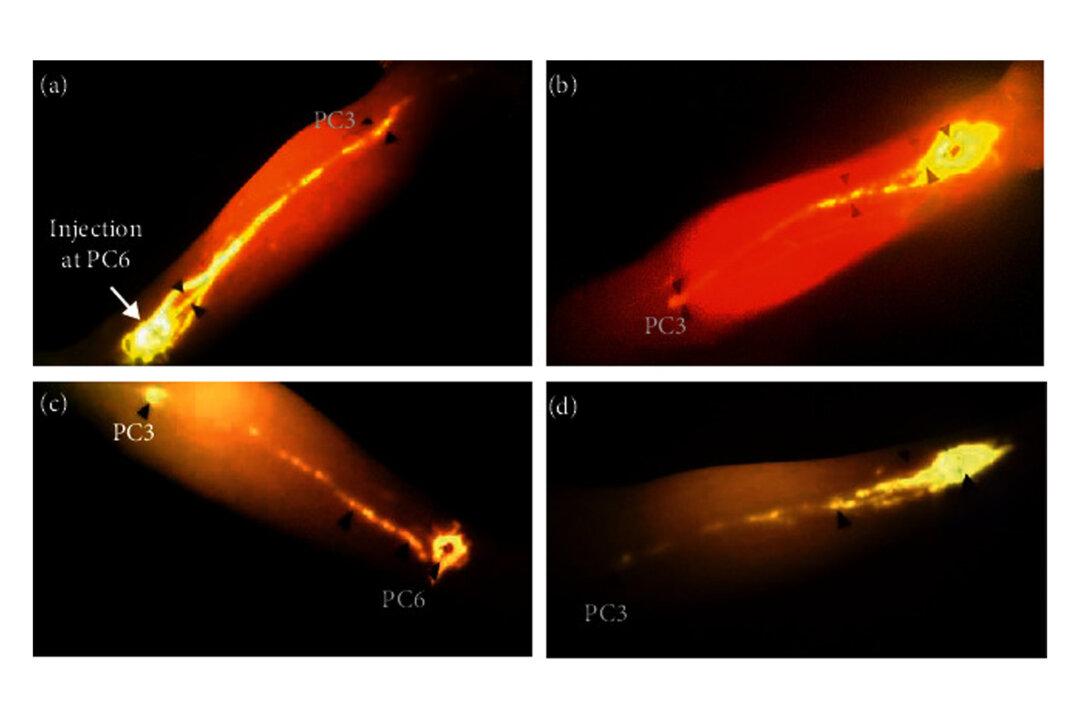
Fluorescent visualization of energy meridian. (Adapted from
I find such scientific findings very valuable because they help create a bridge between TCM and Western medicine, and help more people appreciate that qi is real and worth studying.
Depletion of Qi and Onset of Illness
In childhood, the human body’s qi is abundant, fresh, and active, as it is the period of growth. Similarly, children’s cells divide and regenerate at a rapid pace. However, the flow of their qi is unsettled and immature.
From the late teens through the 30s, the body’s qi reaches its peak and becomes stable, supporting fertility, physical strength, clear thinking, and a robust immune system. This is the golden era of the human body, but only if a person adopts a healthy and balanced lifestyle. Otherwise, life’s stress and indulgences begin to consume the body’s qi reserves, leading to imbalances. This is why many people start to notice signs of aging at about the age of 40.
The “Yellow Emperor’s Classic of Internal Medicine” is an ancient Chinese medical text written more than 2,000 years ago that details the various TCM practices and the philosophy behind them. It states that the human body has two types of primary qi: the prenatal qi and postnatal qi. Both are stored in the kidneys in the form of kidney qi—the root of life.
Prenatal qi is considered divine in nature, coming from heaven. It is inherited from parents at the time of conception. It is a precious, nonrenewable resource—we can only preserve the prenatal qi by living in harmony with natural rhythms and respecting our bodies—we cannot generate more. On the other hand, postnatal qi is generated after birth, through food and air, and can be cultivated.
Poor lifestyle and dietary choices, such as eating too much greasy food or going to bed late against natural rhythms, can weaken qi.
Emotional stress, anger, frustration, worry, or anxiety can block or disrupt the flow of qi. Environmental factors such as exposure to extreme cold, heat, dampness, dryness, or wind can disturb the balance of qi.
There’s a wisdom that comes with preserving qi: practicing moderation in all things. Although insufficient physical activity can lead to qi stagnation, excessive physical or mental work without adequate rest also depletes one’s qi reserves.
Tips to Conserve Qi and Follow the Dao
How can we conserve energy and follow the dao in daily practice? The key lies in prioritizing routines that help align the body’s inherent needs with natural rhythms. TCM’s ancient “meridian clock”—often called the “organ clock”—provides a roadmap. The concept is similar to the circadian rhythm, which has been intensively studied in Western fields in recent years.
The day is divided into 12 two-hour intervals, each corresponding to a vital organ system, with qi peaking and ebbing according to timing.
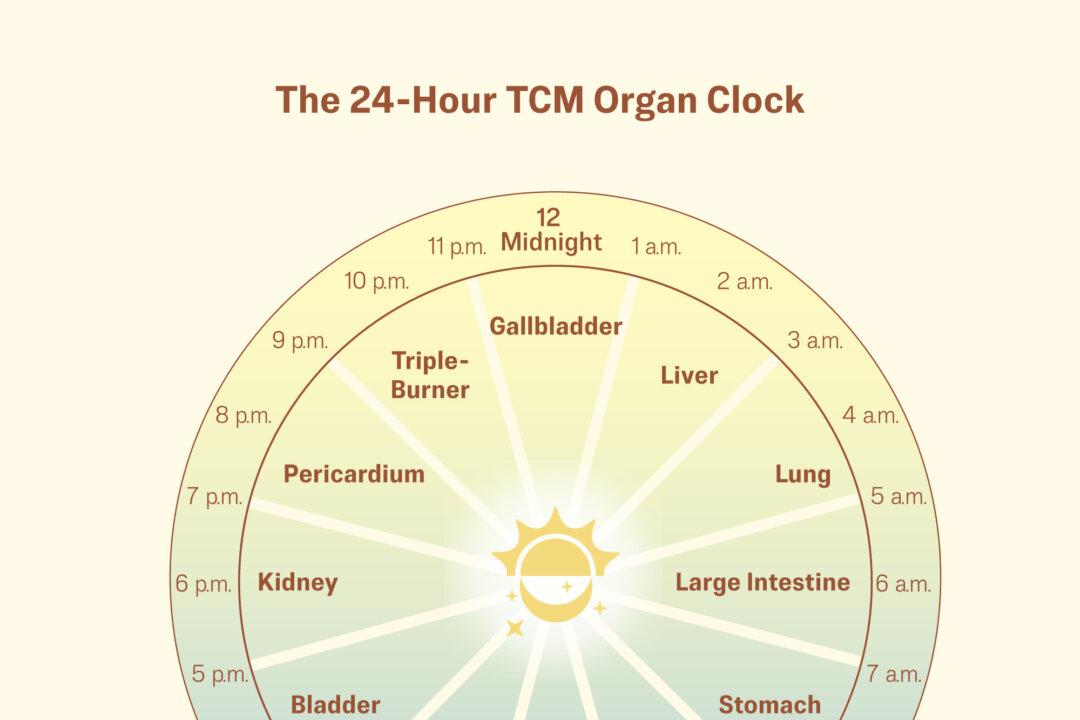
(Illustration by The Epoch Times, Shutterstock)
The following daily intervals specifically guide nutrition, physical exercise, and emotional cleansing for ideal qi flow.
Morning
- 5 a.m. to 7 a.m.: Large intestine qi is strongest, supporting the body’s natural process of elimination. In TCM, the large intestine is not only associated with excreting physical waste, but also with the ability to “let go” of negative emotions. Performing gentle movements, going for a walk, and sitting in meditation for self-reflection encourage detoxification of both mind and body.
- 7 a.m. to 9 a.m.: Stomach energy peaks, making this the ideal time for breakfast. A warm, nourishing meal provides fuel for the body and sets the tone for stable energy throughout the day.
Midday
- 11 a.m. to 1 p.m.: Heart qi is at its peak, governing circulation, consciousness, and emotional vitality. This is an important window for midday nourishment and a brief pause from work. Light cardiovascular exercise and uplifting social interaction can enhance balance and joy. Gentle practices such as meditation or even a short nap are also beneficial, helping restore clarity and harmony before the afternoon activities begin.
Afternoon
- 3 p.m. to 5 p.m.: The bladder is at its highest energy. Hydration, along with gentle stretching movements at this time, supports fluid metabolism and promotes relaxation.
Evening
- 5 p.m. to 7 p.m.: The kidney meridian dominates. In TCM, the kidneys are viewed as the body’s core reserve of vitality and lifelong energy, known as “life essence.” As evenings are for winding down and relaxing, dinners should be modest to avoid burdening the digestive system and draining energy resources. It’s a good time for walking after dinner, as well as for self-reflection or meditation to calm down the day’s anxiety.
Night
- 9 p.m. to 11 p.m.: Time for detoxification, rest, and full-body repair. To maximize the benefits of this restorative phase, TCM advises sleeping by 9 p.m. to 11 p.m., which is the peak time of the “triple burner”—the body’s largest “unseen” organ and a meridian system that divides the body into three zones: upper (chest), middle (abdomen), and lower (pelvis). Sleeping during this crucial time allows all the energy channels to relax and maximizes the body’s ability to function well, promoting healing from within. One should avoid intense emotions such as anger, excitement, or grief during this time and try to calm down.
- 11 p.m. to 1 a.m.: Gallbladder at peak. In TCM, the gallbladder plays a role in breaking down fats and supporting decision-making and courage. Staying awake during this time weakens resilience.
- 1 a.m. to 3 a.m.: The liver meridian is at its peak energy. Working late into the night affects your liver’s ability to detoxify toxins and process emotions, leading to fatigue, irritability, and a decline in liver function over time.
- 3 a.m. to 5 a.m.: Lungs are the most active, distributing fresh qi energy and preparing for you to wake up and begin your day.
To see the cycle in action, let me share the story of one of my patients, an information technology designer who is a little more than 40 years old. When he came to my clinic, he was struggling with diabetes. The root problem was clear: He wasn’t following the dao of living.
He was a late riser who routinely skipped breakfast and lunch. Dinner was the heaviest meal of his day, and too late in the night—no wonder he wouldn’t feel hungry the next morning. He then dozed off while watching TV.
I taught him that to manage his disease, amid all the treatments, the core is to follow the dao.
After that, he began waking up early and eating mindfully. His breakfast became a nutrient-rich start to the day, and lunchtime became a conscious short break amid the pending tasks. The dinner also became lighter and healthier, all without being too late at night. Before long, his blood sugar levels returned to normal. A couple of weeks later, his doctor stopped his insulin injections, and follow-up tests confirmed that his blood glucose had stabilized.
Over the next three months, the man—who used to be overweight, like many men of his age—lost visceral fat, and his waistline shrank. His wife, who had been unable to conceive for seven years, became pregnant and later gave birth to a healthy baby.
His transformation was made possible because he realigned his daily routines to follow the body’s natural peak functioning hours. This allowed qi energy to flow freely through the meridians, restoring the body’s innate healing capacity.
Just as faith in the divine is one of America’s core founding values, ancient Chinese wisdom is rooted in its traditional culture, which is divinely inspired and dates back more than 5,000 years.
TCM is not merely the product of thousands of years of clinical experience and accumulated knowledge—its roots reach back to ancient traditions and the cultivation of the inner self.
When we aspire to live in accordance with the dao, our bodies naturally gravitate toward health—because we humans are part of the greater cosmos.