
Theresa Ho was sure a torn contact lens was to blame for her itchy, gritty eyes. Weeks later, after no improvement, she learned that the real culprit had nothing to do with her contacts: It was perimenopause.
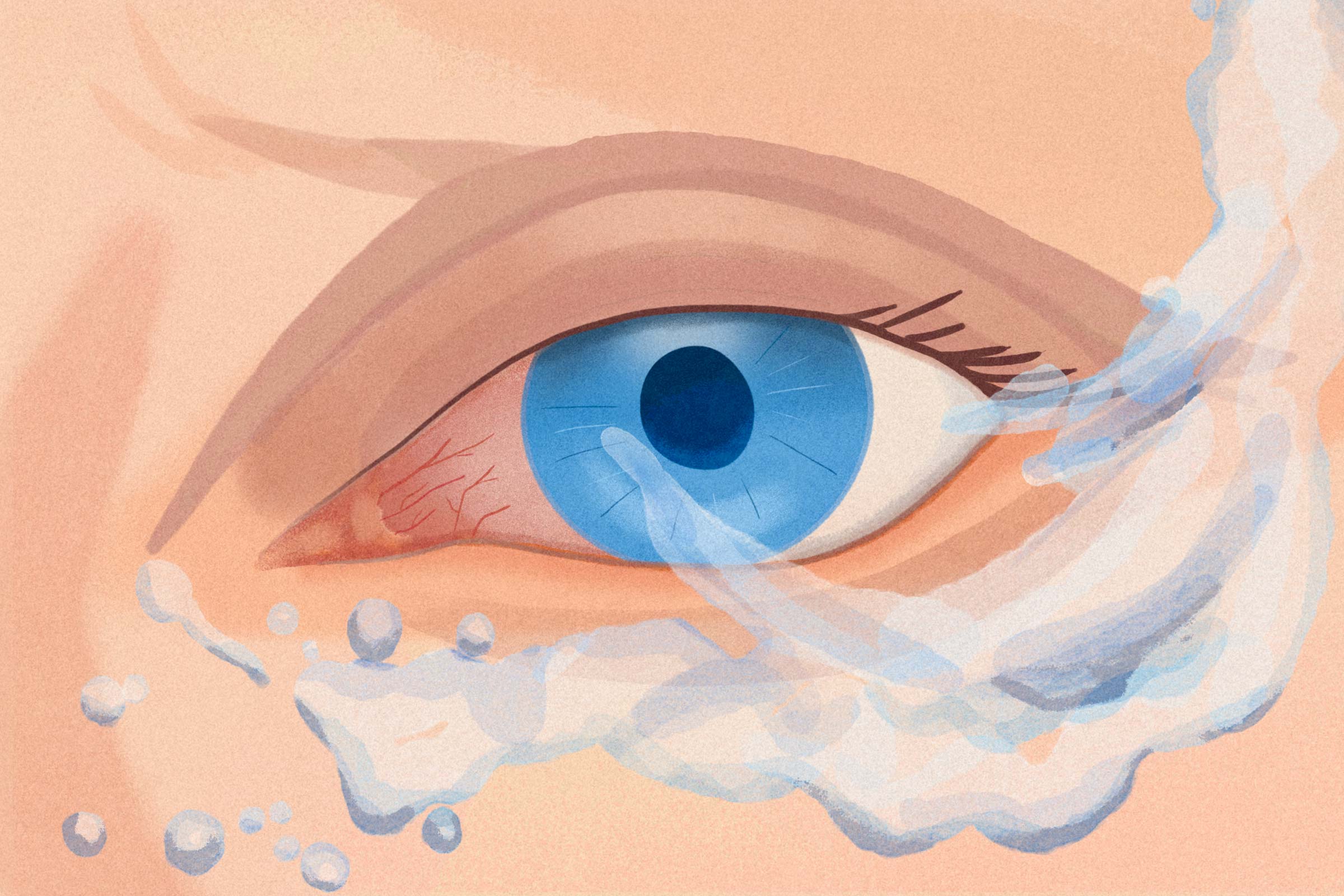
Her meibomian glands—dozens of tiny glands lining the eyelids that produce the oily layer of tears—were blocked. Without that oil, tears evaporate too quickly, and the eyes become dry. Her optometrist explained that her changing hormone levels were the reason.
“I’ve never heard of this before,” Ho told The Epoch Times. “I never would have thought eyes were related to perimenopause.”
“Everyone experiences hormonal changes throughout their lives, and these changes affect all parts of the body, including the eyes,” Dr. Gina Yu, an ophthalmologist and clinical spokeswoman for the American Academy of Ophthalmology, told The Epoch Times in an email.
Dry eye or blurry vision are also common during pregnancy and while using birth control, Yu said, but women entering menopause face the highest risk of developing dry eye disease and blurry vision.
The Surprising Role of Testosterone
Fluctuating estrogen and low androgen levels, a group of hormones that includes testosterone, are linked to dry, gritty, burning, itchy, watery eyes and blurry vision.
Testosterone helps the meibomian glands produce the oils that keep tears from evaporating too quickly. Estrogen, on the other hand, appears to slow that process down and may increase inflammation in the eyes. One theory is that estrogen and testosterone are competing for the same biological “space,” and when estrogen levels rise, they crowd out testosterone’s ability to do its job.
Estrogen levels can rise because of certain medications, obesity, stress, alcohol use, pregnancy, perimenopause, and exposure to xenoestrogens—chemicals found in some plastics and personal care products that mimic estrogen in the body. Having excess estrogen makes it hard for testosterone to do its job.
However, too little estrogen can also harm the eyes. Researchers Raffaele Nuzzi and Paolo Caselgrandi, authors of a review published in the International Journal of Molecular Sciences, said hormone replacement therapy (HRT), which raises estrogen, does not reliably help perimenopausal dry eye and may even make it worse. That points back to testosterone, which naturally declines with age in both men and women, as the more important factor.
Because androgen levels matter, men can be affected, too—although women are two to four times more likely than men to have dry eyes at any given age. Men on anti-androgen medication note burning eyes, being sensitive to light, and feeling like something is stuck in their eye, according to Nuzzi and Caselgrandi.
A separate study of 80 patients, published in Erciyes Medical Journal, found that low androgen levels were strongly linked to dry eye disease in patients with chronic obstructive pulmonary disease. The authors predicted that therapeutic use of androgens could soon be recommended more broadly for dry eye disease.
Estrogen Can Change the Cornea
Hormones do not just affect tear production; they can also change the eye’s shape and feel.
During certain points in the menstrual cycle when estrogen is highest, the cornea, which is the clear front surface of the eye, temporarily thickens. Similar changes can happen in the third trimester of pregnancy, sometimes altering eye pressure and causing blurry vision.
“Estrogen can also make the cornea less stiff with more elasticity, which can affect how light travels into the eye,” Yu said. “There may also be changes to the native lens, affecting cataract formation. These changes can all cause blurry vision.”
Estrogen’s role is not all bad news, however. Research shows that the hormone appears to stimulate the production of epidermal growth factor, a protein that helps corneal wounds heal.
Simple Habits Offer Effective Help
For Ho, relief used to come only in the shower, when the steam soothed her blocked glands—but things got worse the moment she closed her eyes.
“I felt like there was something constantly scratching my eyes with my eyes closed, so I found myself rubbing my eyes way more often, which only made the irritation even worse,” she said.
Ho changed a few daily habits—more time on her computer, less on her phone, and frequent screen breaks—but the biggest relief came from a warm eye mask her optometrist recommended.
“It’s been better since I bought the eye mask,” she said.
Warm compresses, used for five to 20 minutes, can noticeably improve tear quality after just one use, and repeated use significantly relieves dry eye symptoms over time, according to a report published in Ophthalmology and Therapy. Microwaveable, self-heating eye masks may work better than warm towels because they hold a steady 104 degrees Fahrenheit, the temperature needed to melt the oils clogging the glands, without needing to be reheated.
Additional tips include using a humidifier if you work or live in a dry environment, wearing special wrap-around glasses that protect the eyes from wind when spending time outdoors, and using a thicker eye drop, ointment, or hydrating gel before bed, Yu said.
If you use eye drops to treat dry eye, Yu recommends buying preservative-free products that are less irritating to the eyes and using them only as needed.
If you do not see improvement in a few weeks, discuss it with your eye doctor. It’s also important to let your eye doctor know about any hormonal changes, Yu said, including starting HRT or birth control or stopping it because of dry eye concerns.