We’ve all been there: that jolt of panic before a job interview, the knot in your stomach while public speaking, the dread during a difficult conversation. Your heart pounds, your breath turns shallow, and your palms sweat. Your body reacts as if physical danger is imminent, even when it’s not.
This surge of anxiety stems from your brain’s fight-or-flight response. It is designed to protect us from threats, but modern life sets it off every time we get stuck in traffic or think that our coworker is upset with us. When activated repeatedly, it can fuel high blood pressure, weakened immunity, anxiety disorders, and burnout.
Getting the fight-or-flight response properly tuned requires a counterintuitive solution. Neuroscience suggests that we need to expose ourselves to what unsettles us.
Why Modern Stress Makes Fear Harder to Regulate
If our collective mental health is any indicator, people are struggling. According to research from Moodle, conducted by Censuswide, approximately 284 million people, or about 3.5 percent of the world’s total population, have an anxiety disorder, while 66 percent of American employees report experiencing burnout.
These aren’t separate problems; they’re symptoms of brains stuck in perpetual threat mode, unable to distinguish between psychological discomfort and physical danger.
The Epoch Times asked Supatra Tovar, a licensed clinical psychologist and wellness expert, how these findings reflect acute stress turning into chronic stress. Tovar said chronic tension is directly linked to the brain’s fear circuitry.
The amygdala becomes harder to regulate when a person is exposed to repeated uncertainty or alarm.
“Over time, the nervous system starts treating these inputs like real danger, making it difficult for the body to return to a calm baseline,” she said.
Why Your Brain Overreacts
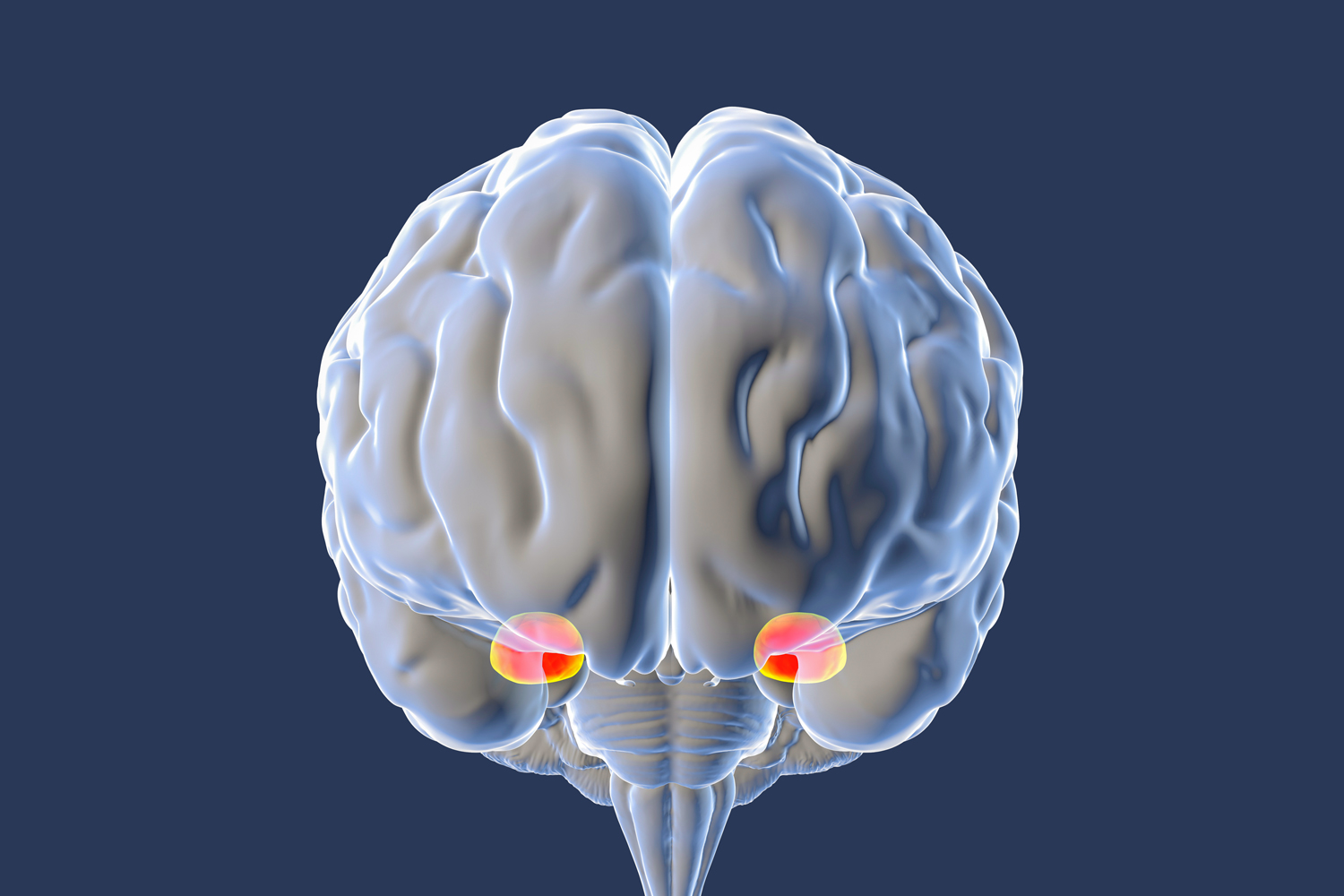
At the center of our fear response is the amygdala, an almond-sized structure deep in the brain responsible for detecting threats and triggering rapid emotional reactions. However, it can be trained to calm down.
How can something the size of an almond cause so much trouble? Because its job lies at the heart of human experience. The amygdala is the region of the brain associated with emotional processing, and it constantly scans for threats, much like a smoke detector ready to sound the alarm.
Under normal circumstances, the logical prefrontal cortex runs the show, handling executive function and rational decision-making. However, when the amygdala senses danger, it hijacks the system entirely.
“That irritation shows up in the autonomic nervous system,“ Dr. Allan Bernstein, a California-based neurologist who has spent decades bridging the gap between scientific investigation and clinical practice, told The Epoch Times. ”These changes happen automatically and instantly.”
When this protective system becomes hypersensitive, it can trick the brain into perceiving threats where none exist. The amygdala doesn’t distinguish between real-time danger and imagined scenarios. It can be activated by memories, hypothetical fears, or sensory cues such as standing near the edge of a high balcony, even if you’ve never fallen.
“Once you know how the amygdala works, you can stop being afraid of your own reactions,“ Bernstein said. ”And once you’re not afraid of the reaction itself, you can learn how to slow it down.”
Steps for Retraining Your Fear Response
The brain is capable of change throughout life, a quality known as neuroplasticity. One
study shows that an effective way to retrain fear circuits is through gradual, controlled exposure to anxiety-provoking situations. However, patience is key, as it’s a process that requires repetition and can take months to master.
Rewiring the brain is best approached in small, manageable steps, according to Pankhuri Aggarwal, who holds a doctorate in clinical psychology. An assistant professor of psychology at the University of Cincinnati, she has studied how culture and context shape mental health.
The amygdala learns from direct experience, while the prefrontal cortex learns from interpretation, Aggarwal told The Epoch Times.
“When someone gradually engages with something that makes them anxious while still feeling safe, the amygdala begins to realize that the situation is not dangerous, and the prefrontal cortex becomes more efficient at down-regulating that fear response,“ she said. ”We sometimes describe this as building the ‘fear-regulation muscle.’”
3 Elements That Make Exposure Effective
Essentially, repeated, tolerable exposures help the brain form new associations, shifting from threat to safety. Over time, the prefrontal cortex becomes quicker and more automatic in calming the amygdala.
Aggarwal emphasized that fear responses shift most effectively when several conditions are present:
- Predictability, so you know what to expect
- A sense of control, meaning that you choose to engage rather than being forced
- Repeated practice, which allows the brain to learn through experience
“People gain confidence surprisingly quickly once they learn that the initial spike of fear does not last forever,“ she said. ”That realization alone can dramatically shift how their brain responds in the future.”
For example, an actor suffering from stage fright is usually less nervous after opening night. With each subsequent performance, the brain learns: “I survived. Nothing bad happened. I can do this.”
Aggarwal cautioned against common mistakes people make when trying to face their fears, including going too big too fast, avoiding discomfort, and facing fear without support or structure. For people with severe anxiety or trauma histories, she said, these steps are best taken with the support of a mental health professional.
Resilience, she stressed, is not the absence of fear.
“Fear is an adaptive part of how we stay safe,“ she said. ”Resilience comes from recalibrating the fear system so it responds proportionately. Small, consistent steps toward feared situations help people feel capable again, and that sense is often what truly changes lives.”
Habits That Reset Your Stress Response
To counter chronic stress, Aggarwal advised building simple, consistent habits that signal safety to the nervous system, including:
- Slow, steady breathing
- Brief, grounding pauses
- Mindful movement
- Limits on news and social media consumption
- Reconnection with others in real life
“Human connection is not just comforting; it is biologically stabilizing, helping the brain recalibrate away from chronic threat and back toward balance,” she said.
She noted that even small steps—a short walk outside, a phone call with a friend, or a few minutes of controlled breathing—help deactivate unnecessary fight-or-flight responses.
Reframing How We View Fear
Although most people want to avoid things that make them anxious, fear is not our enemy. Doing the thing that scares us can be an opportunity for growth.
Thomas Plante, who holds a doctorate in clinical psychology and is a psychology professor at Santa Clara University in California, told The Epoch Times, “This might seem counterintuitive, but research over many years and with many different populations has clearly indicated that gradual exposure to fears helps us to overcome them.”
This approach, known clinically as exposure therapy with response prevention, is one of the most evidence-based treatments for anxiety disorders and fears. It is effective for situations that often cause anxiety, such as public speaking, as well as specific phobias, including the fears of snakes, spiders, and airplanes.
The Takeaway
Fear isn’t the villain. It’s a signal that evolved to protect us, even if it sometimes misfires in modern life. However, it does not have to hijack the body.
With awareness and consistent practice, experts say, unnecessary fear can be reshaped into a source of resilience rather than a threat to our well-being.