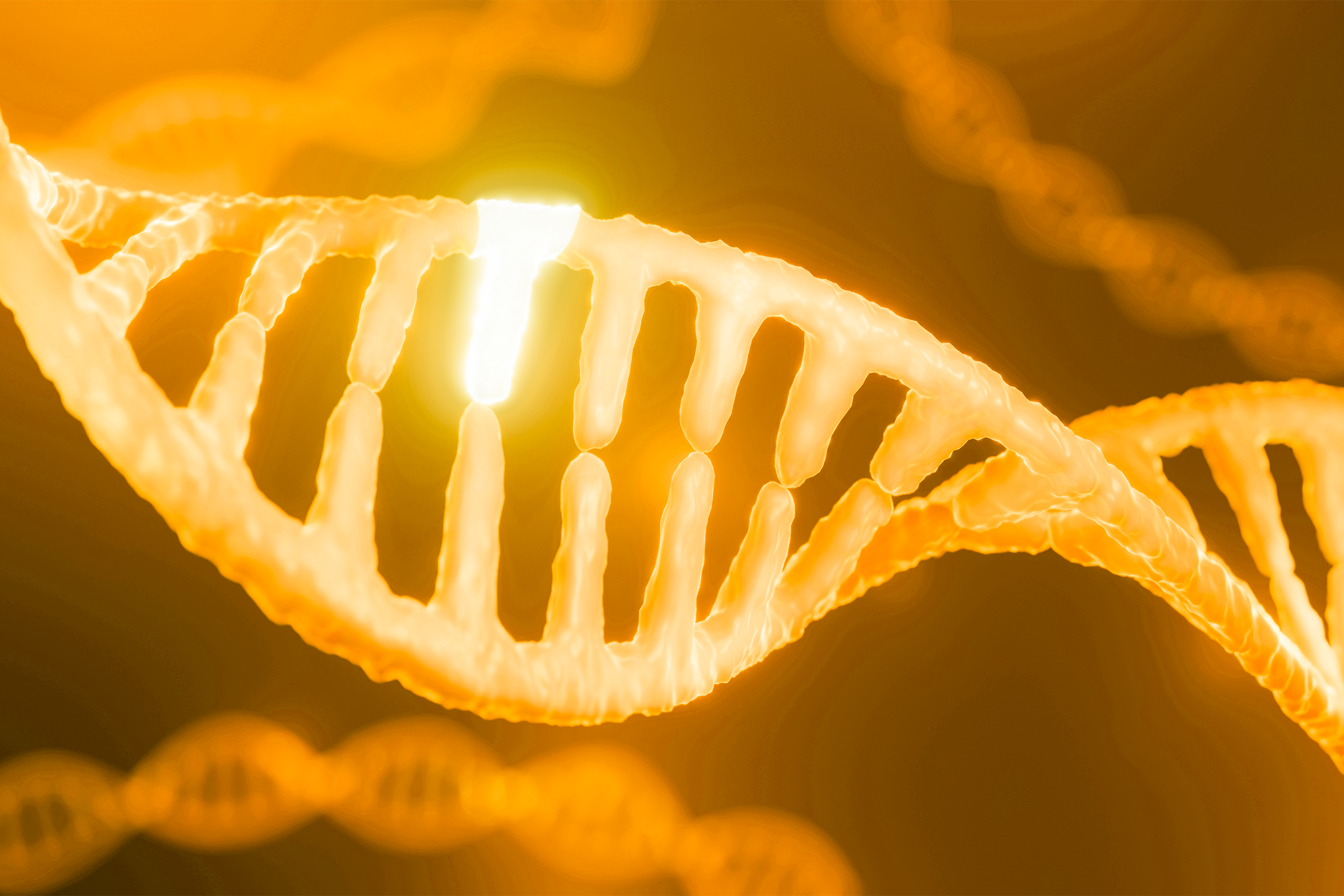
We’ve been told that our genetic destiny is written in our DNA. However, research is gradually dismantling this fatalistic view.
Genetics may influence approximately 25 percent to 30 percent of how we age. The remaining portion is influenced by factors entirely within our control: what we eat, how we move, and how we handle stress, others, and ourselves.
Lucia Aronica is an epigenetics and nutrigenomics scientist at Stanford University School of Medicine. Her research shows how the balance of nature and nurture play out over the course of our lives.
“You are not just a passive reader of your genetic code, but an active writer of your health story every day with every choice,” she told EpochTV’s “The Upgrade.”
Rewriting Your Software of Life
Aronica suggested that to understand epigenetics, we should view DNA as computer hardware—an unchangeable biological structure present in every cell—and epigenetics as the software that tells your cells which programs to run and when.
The prefix “epi” means “on top of,” referring to molecular switches that sit atop your genes, turning them on or off without altering the underlying code.
“Here’s the beautiful part: You can rewrite that software starting today,” Aronica said.
The first step? Food.
‘Food Is the Foundation of Everything’
Aronica grew up in Italy, where her mother taught her that “in the kitchen and at the dining table, you don’t get old.”
She calls her approach “epi-nutrition,” a way of eating that focuses on specific foods that directly influence your epigenetics.
These foods act as more than just fuel and contain nutrients that can turn on the genes that make you healthy and turn off the genes that make you sick, she said.
The key players are methyl donors, nutrients that provide the chemical groups your body uses to regulate genes. They include:
- Folate: From green leafy vegetables, liver, legumes
- Vitamin B12: Mainly in meat, fish, shellfish, liver
- Choline: Mostly egg yolks, liver, and some in cruciferous vegetables
- Betaine: From beets, quinoa, shrimp, wheat bran
“Your doctor probably told you to eat the rainbow,” Aronica said. “But here’s what your doctor may not realize: Those pigments aren’t just antioxidants. They are epi-nutrients that actually regulate the epigenetic writer and eraser enzymes, activating genes that boost your health.”
Therefore, make sure to eat:
- Red Foods: Tomatoes, bell peppers
- Orange Foods: Oranges, pumpkin, carrots
- Brown Foods: Coffee, dark chocolate—greater than 80 percent and non-Dutch processed
- Purple Foods: Berries
- Green Foods: Spinach, cruciferous vegetables
In particular, green foods contain sulforaphane, which Aronica calls “the boss of your body’s own antioxidants.” Unlike other vitamins, which work directly and are depleted within hours, sulforaphane activates your body’s internal antioxidant genes, keeping them active for up to three days. Thus, eating cruciferous vegetables (such as broccoli, Brussels sprouts, and arugula) two to three times a week, she said, is enough to “keep your genes happy.”
Rather than memorizing which foods to eat, following the Mediterranean diet offers a reliable template. A wide body of research has shown that adherence to the Mediterranean diet promotes positive gene regulation.
A 2020 study published in GeroScience even found that older adults who followed a Mediterranean diet for one year showed signs of what researchers called “epigenetic rejuvenation.” Their gene-regulation shifted toward a younger, healthier profile.
The Body Remembers
Beyond nutrition, Aronica’s approach extends to movement, stress, connection, sleep, joy, and toxin avoidance, which she refers to as “epi-wellness.”
Research shows that even a single bout of high-intensity exercise can cause immediate changes in gene regulation in your muscles. These kick-starting processes help them adapt and become fitter.
However, the real benefits come from regular exercise. A 2024 study published in BMC Biology comparing trained and untrained men found that years of regular exercise create a lasting “epigenetic fingerprint.” The genes controlling energy use and muscle fiber type become primed to respond more efficiently to each workout. At the epigenetic level, your muscles remember their training. The adaptation helps muscles perform better and develop greater endurance.
Perhaps most remarkably, exercise shifts the epigenome toward a younger biological age. A large meta-analysis of 3,176 human skeletal muscle samples found that people with higher aerobic fitness have younger epigenetic profiles.
Mindset on Epigenetics
“Our beliefs and our feelings shape our epigenetics,” Aronica said.
A systematic review of 18 studies on meditation and related practices, published in Frontiers in Immunology, found a consistent pattern: Mind-body interventions are associated with reduced NF-kB activity, a protein that acts as a master switch for inflammation. When NF-kB is chronically activated, it drives the production of inflammatory molecules linked to accelerated aging. The evidence suggests that meditation can help keep that switch in the “off” position.
Long-term meditators show DNA methylation changes associated with telomere length—the protective caps on chromosomes that shorten with age. Notably, age was not associated with telomere length in long-term meditators, suggesting that their practice may buffer against cellular aging.
A more recent 2025 systematic review published in Frontiers in Nutrition found that meditation-based practices seem to reshape how our genes are “managed” in key stress and aging pathways, adding to the NF-kB and telomere findings.
In plain terms, regular mindfulness appears to tweak chemical tags on genes involved in inflammation, immunity, metabolism, and brain health, nudging them toward a pattern linked with lower stress and slower aging.
A Forgotten Variable
In the world of biohacking and longevity optimization, Aronica said that many people jump from one health protocol to another, often sacrificing something essential in the process: joy.
“There is no sustainable change without joy,” she said. “You’re not going to stick to any lifestyle change, whether it’s food or exercise, if you don’t enjoy it.”
Our brain makes us repeat habits that are good for our health, such as nourishing food, connection, and movement, triggering authentic pleasure as it is “our ancestral compass for health.”
However, the problem with modern society, she said, is that joy is often hijacked by artificial pleasures rather than natural ones.
“I’m not telling you to eat a lot of chocolate or candies or just crawl on social media. That is, unfortunately, a type of addictive pleasure that you want to avoid.”
Aronica said that once you detox yourself from addictive and artificial pleasures, you can find true pleasure that serves as the foundation for sustainable change. “Once you love and enjoy the food and exercise you do, you’re going to want to do it every day,” she said.
The Harvard Study of Adult Development, which has tracked participants for more than 80 years, arrives at a similar conclusion: The strongest predictor of healthy aging isn’t diet or exercise alone, but rather the quality of relationships and the presence of joy in daily life.
Wielding Your Genetic Pencil
Genes matter, but they are not the final verdict.
“Some [DNA] edits, like those made before we were born, are in pen, so tend to be permanent,“ Aronica said. ”But the edits we write as adults are in pencil—they can be erased and rewritten.”
Every meal, every workout, every meditation session, and every choice for joy represents an opportunity to pick up that epigenetic pencil and rewrite your health story.