
Once upon a time in America, singing cowboy Roy Rogers reigned supreme. A star of the 1940s and 1950s, gracing both movie and television screens across the country, the actor and musician starred in more than 100 films and the long-running TV series, “The Roy Rogers Show.” He’s the only country artist to be inducted into the Country Music Hall of Fame twice, once as a member of his early band, Sons of the Pioneers, and again as a solo artist.
He was a clean-cut cowboy who was courteous but also able to stand up for what is right. His refined Western style ignited a product craze with kids asking their parents for all types of available Roy Rogers merchandise, from lunch boxes and toys to cowboy outfits and books.
His films often showed him fighting off all kinds of crooks and criminals, but his family-friendly image attracted fans of all ages. Mothers were comfortable sending their children to the local theater to see a Rogers flick unchaperoned, like his 1945 movie, “Don’t Fence Me In,” titled after his signature song by the same name.
Rogers once affectionately referred to himself as a “babysitter for mothers in those days,” during an interview with The Cincinnati Enquirer newspaper. “They could drop their kids off and then come back and pick them up about 5 in the evening, and they’d be happy and full of candy and popcorn.”
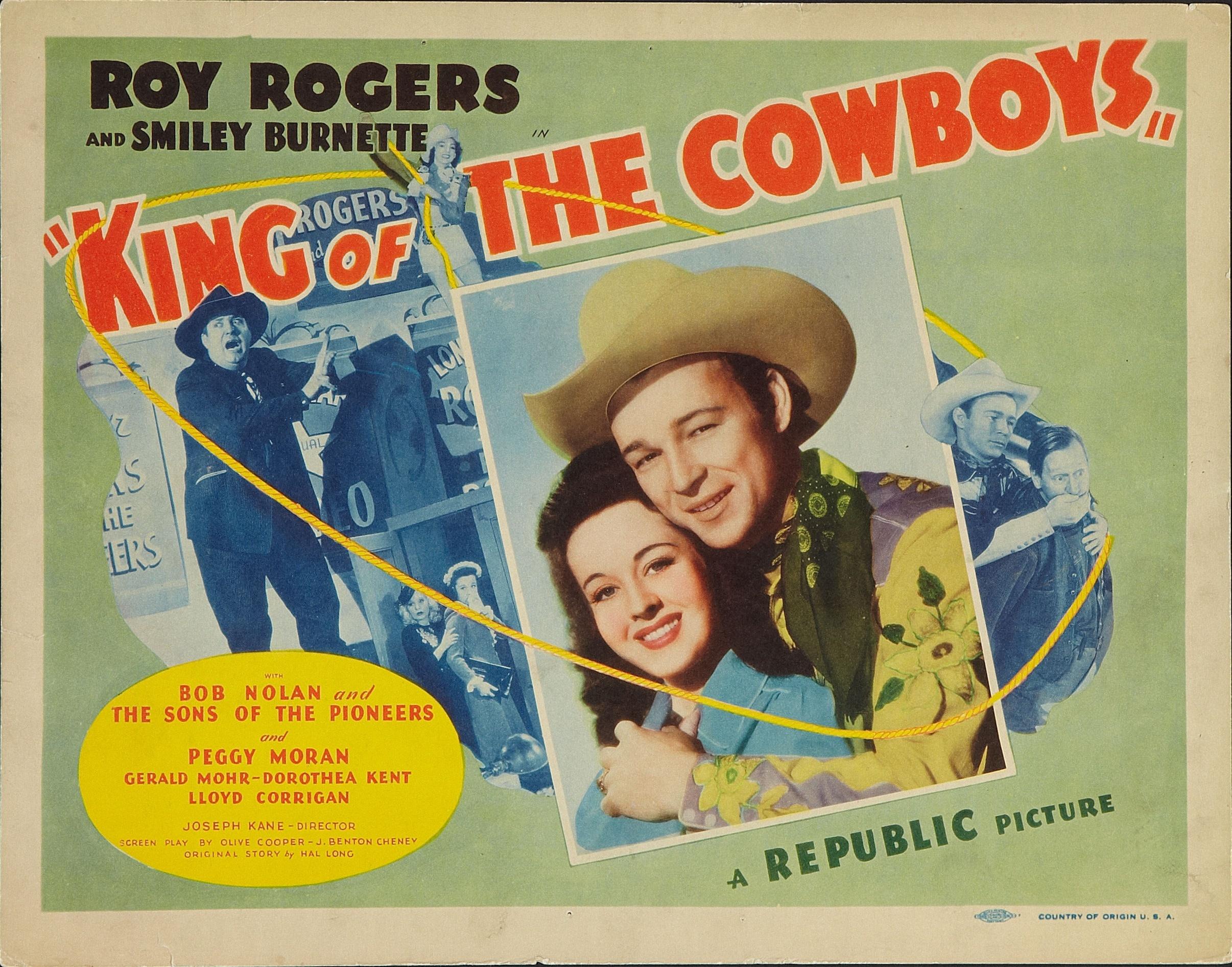
Lobby card for the 1943 film "King of the Cowboys" starring Roy Rogers. (MovieStillsDB)
His 1943 film, “King of the Cowboys,” titled after his catchy nickname, only further solidified Rogers’s presence across the everyday American landscape by making him a household name.
Rogers’s success wasn’t without hardship, but he always remained committed to instilling in his fans a sense of hope and adventure, creating a legacy affecting the lives of millions positively.
“The indelible image of Roy Rogers is as the ‘King of the Cowboys,’ the singing do-gooder in the white Stetson, the idol of millions of kids,” the Cincinnati Enquirer declared.
From Farmland to Film Studio
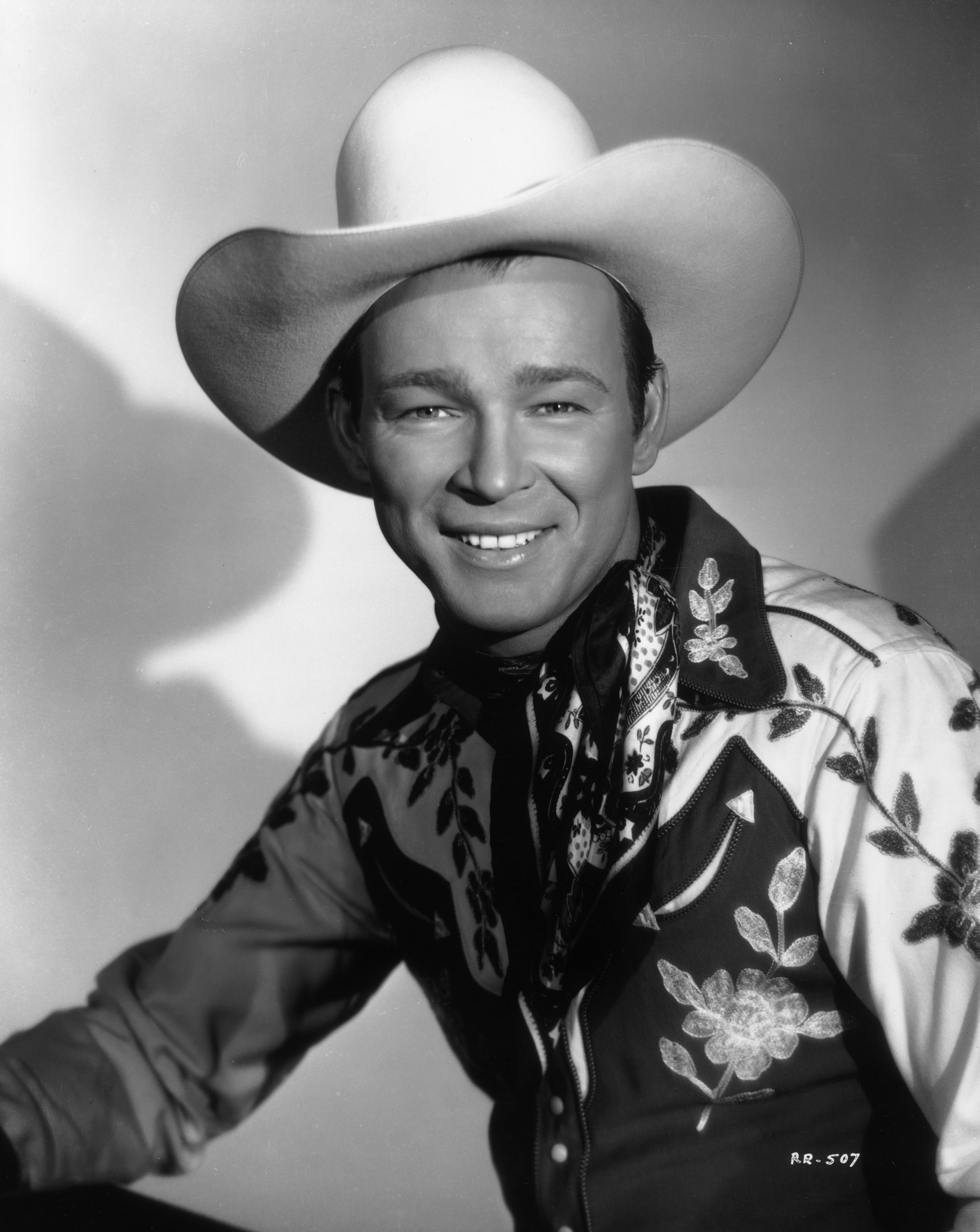
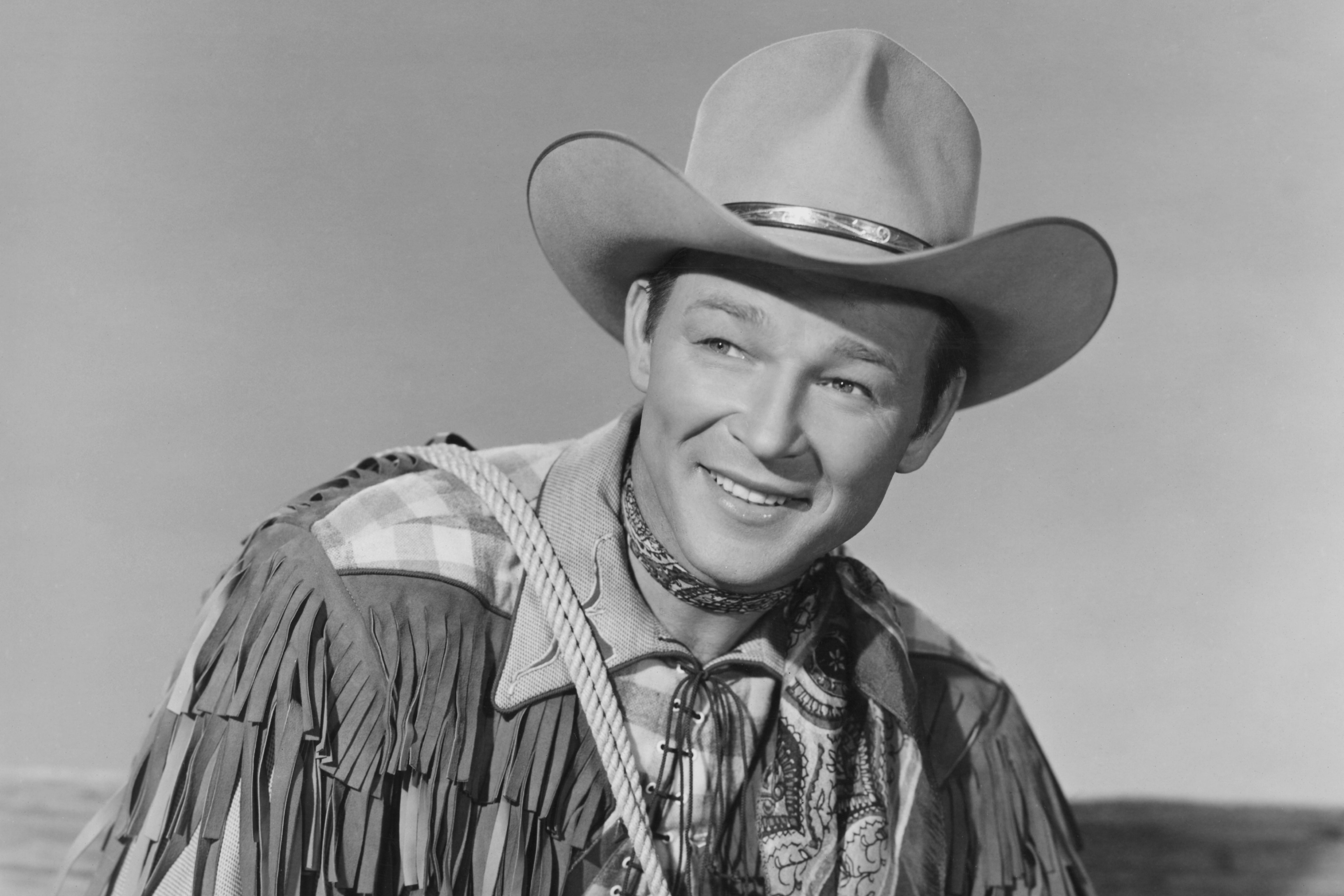
Studio portrait of American actor and country singer Roy Rogers wearing his signature white Stetson cowboy hat, circa 1945. (Hulton Archive/Getty Images)
Born Leonard Franklin Slye (1911–1998), Roy Rogers lived on a farm in Ohio before his family took a trip west to visit a relative in California. They loved the warm weather and sunshine so much, the family decided to move to the Golden State. Rogers eventually took various odd jobs, even picking produce on farm camps similar to the ones author John Steinbeck wrote about in his best-selling novel, “The Grapes of Wrath.”
But Rogers had dreams outside of the farms where he labored.
The aspiring musician began performing with Sons of the Pioneers in the early 1930s, a singing group he cofounded. The group released a popular tune, “Tumbling Tumbleweeds.”
Then, Hollywood came calling.
Fellow singing cowboy Gene Autry paved the way for performers like Rogers. In the late 1930s, while Autry was at odds with the Republic Pictures film studio due to a contract issue, Rogers got his chance at stardom. Republic needed a new lead for their movie, and though he had to sneak onto the set with a group of extras, a producer recognized Rogers from his singing group and offered him an audition.
The film studio found their new leading cowboy.
‘The Smartest Horse in the Movies’

Lobby card with Roy Rogers (L) on his golden palomino stallion, Trigger, and Smiley Burnette in the 1938 film "Under Western Stars." (Republic Pictures)
Rogers’s 1938 breakout film, “Under Western Stars,” was foundational to his success. It marks the moment he went from man to myth—from Leonard Slye to a celebrated singing cowboy of the enigmatic West.
“The producers chose Roy Rogers: the last name a tribute to humorist Will Rogers, one of Roy’s heroes, and the first name an American variation of the French word for ‘king.’”
It also marks the moment he was paired up with his faithful sidekick, a golden palomino stallion named Trigger. Known as the “Smartest Horse in the Movies,” Trigger starred alongside him in “Under Western Stars” and often accompanied him in his other films and shows—becoming as well-known as Rogers himself.
“I got on him and rode him a hundred yards and never looked at another horse,” the singing cowboy shared with The Washington Post.
For over a decade, from 1943 to 1955, Rogers “was America’s leading cowboy box-office attraction.”
From Film to Television
Rogers loved bringing joy to his audiences, but it was hard at times to keep a sunny disposition while working. Though his professional world ran smoothly, his personal world experienced a series of misfortunes.
In 1946, days after giving birth to their son, Roy Rogers Jr., Rogers’s wife, Arline, passed away suddenly from a blood clot.
Two years prior, Rogers was introduced to a lifelong co-star in actress Dale Evans (1912–2001). They starred alongside each other in films such as “Hollywood Canteen” and “Cowboy and the Señorita,” developing an easygoing professional chemistry that resulted in more film opportunities. While Rogers was nicknamed “King of the Cowboys,” Evans was nicknamed “Queen of the West.”
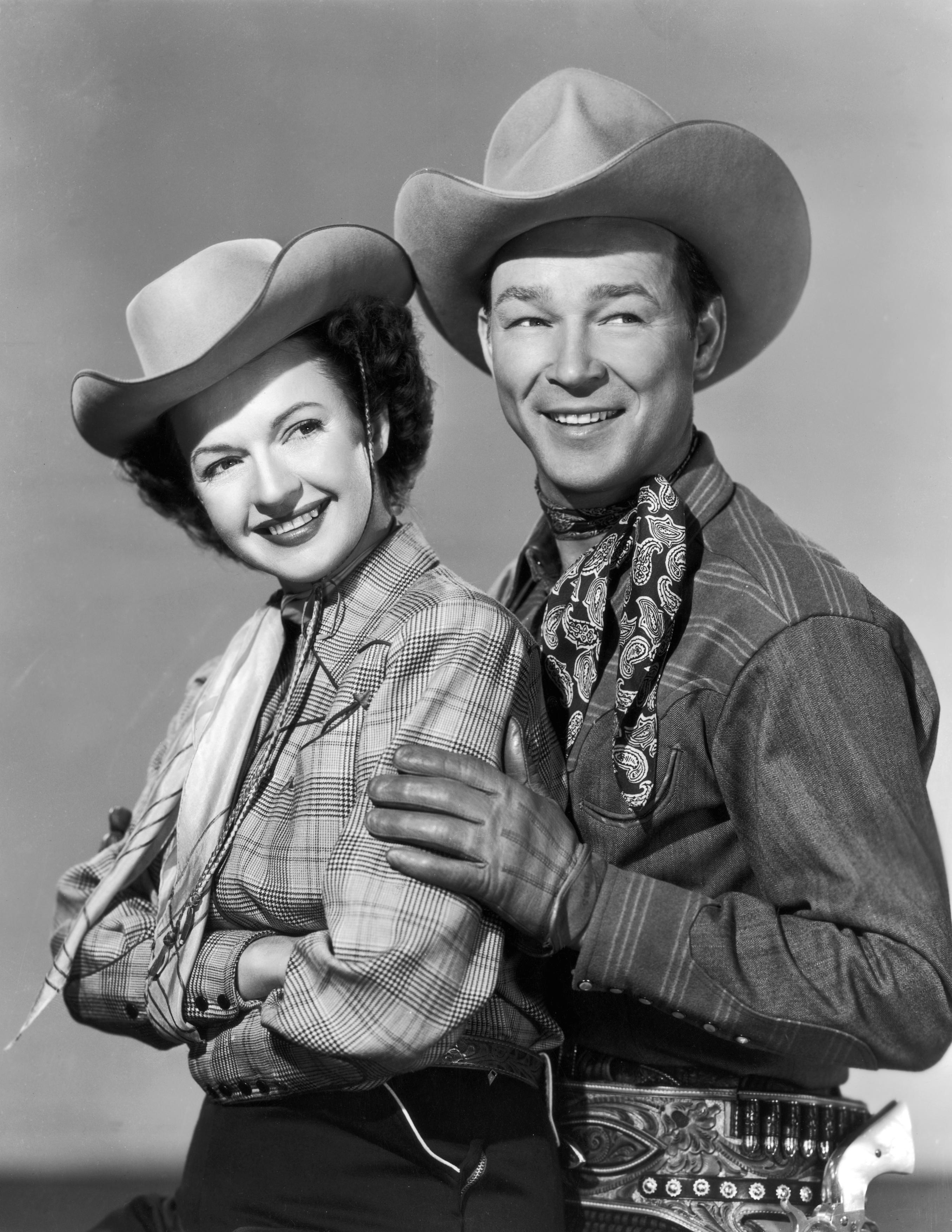
Studio portrait of the actor couple Dale Evans and Roy Rogers, circa 1949. (Hulton Archive/Getty Images)
The two developed a friendship over the years as well. And, after the loss of his wife, Evans became a source of comfort. In 1947, the two entertainers tied the knot, eventually culminating in a marriage that lasted more than 50 years.
Evans became instrumental to Rogers’s success. She starred in 35 films with him and Trigger. And, when the movie stars made the switch from film to television as TV sets became the new trend, she became a fixture on his television series, “The Roy Rogers Show,” as well.
Her signature tune was “Happy Trails,” a theme song she wrote for their show. It became a staple on their radio program before they transferred their act to television. The two sang the number, wishing goodwill to all, at the end of each episode. The story goes, in a fit of inspiration, Evans scribbled the song onto an envelope, then quickly taught the melody she came up with to the band just before airtime.
The cheerful tune is now considered to be an “iconic American standard” by many, including educational site Encyclopedia of Arkansas.
Family and Faith
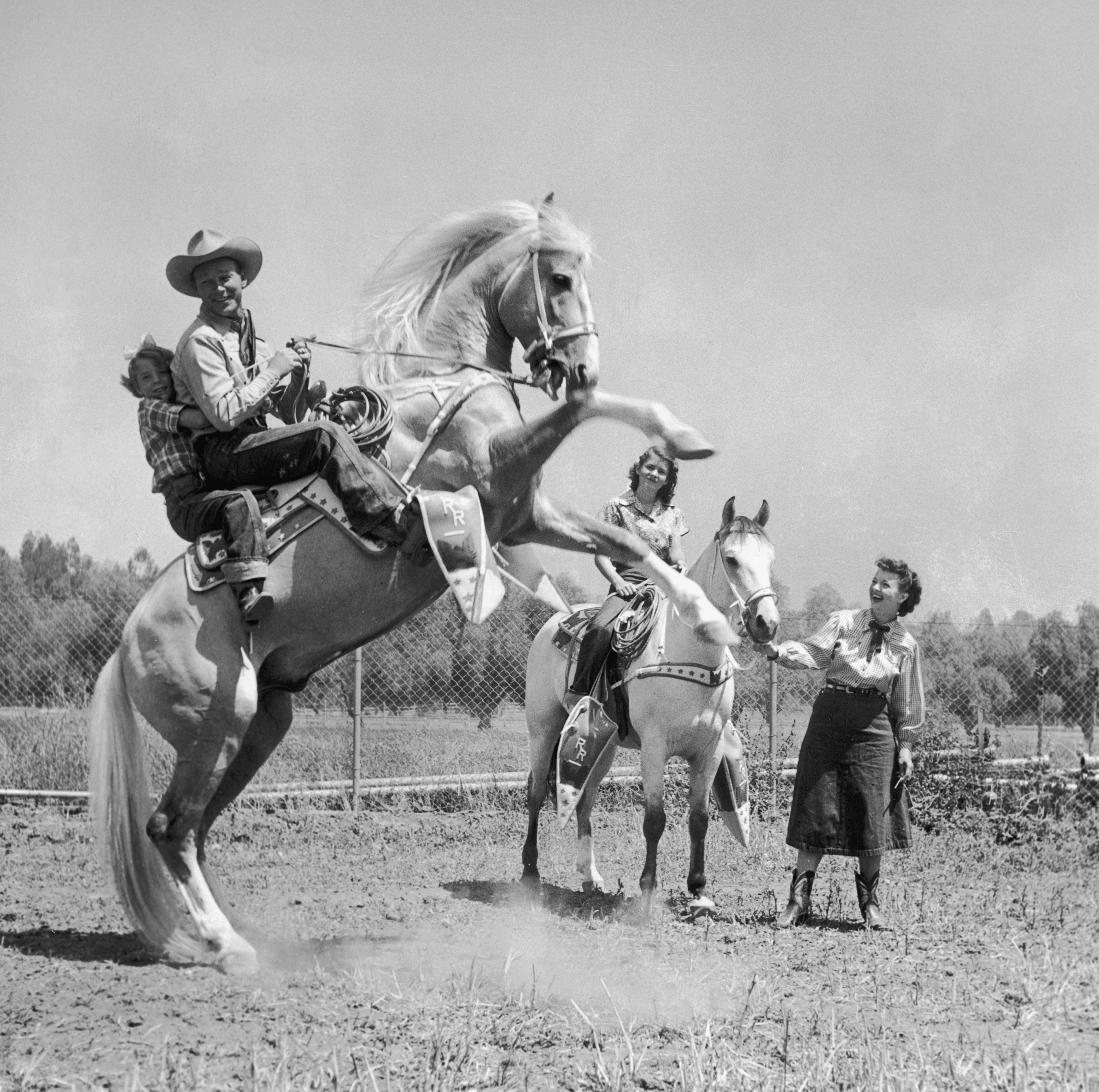
American actor and singer Roy Rogers sits in the saddle of a rearing horse with one of his daughters, as his older daughter rides a horse being led by his wife, American actor and singer Dale Evans, circa 1952. (Hulton Archive/Getty Images)
Misfortune struck Rogers again when the couple’s daughter, Robin, born with Down syndrome, passed away from complications due to a case of the mumps before her second birthday. Both Rogers and Evans longed for children and a big family, so they adopted a young Korean girl, Debbie, but she unexpectedly died in an accident involving a church bus. Another adopted child, a son, John David “Sandy,” passed away at age 18 while serving in the Army.
Despite these unfathomable tragedies, Rogers stayed committed to his family and always left his door open to children who needed help.
“The King of the Cowboys had four biological children, adopted four more and fostered dozens of other kids throughout his life,” People Magazine shared.
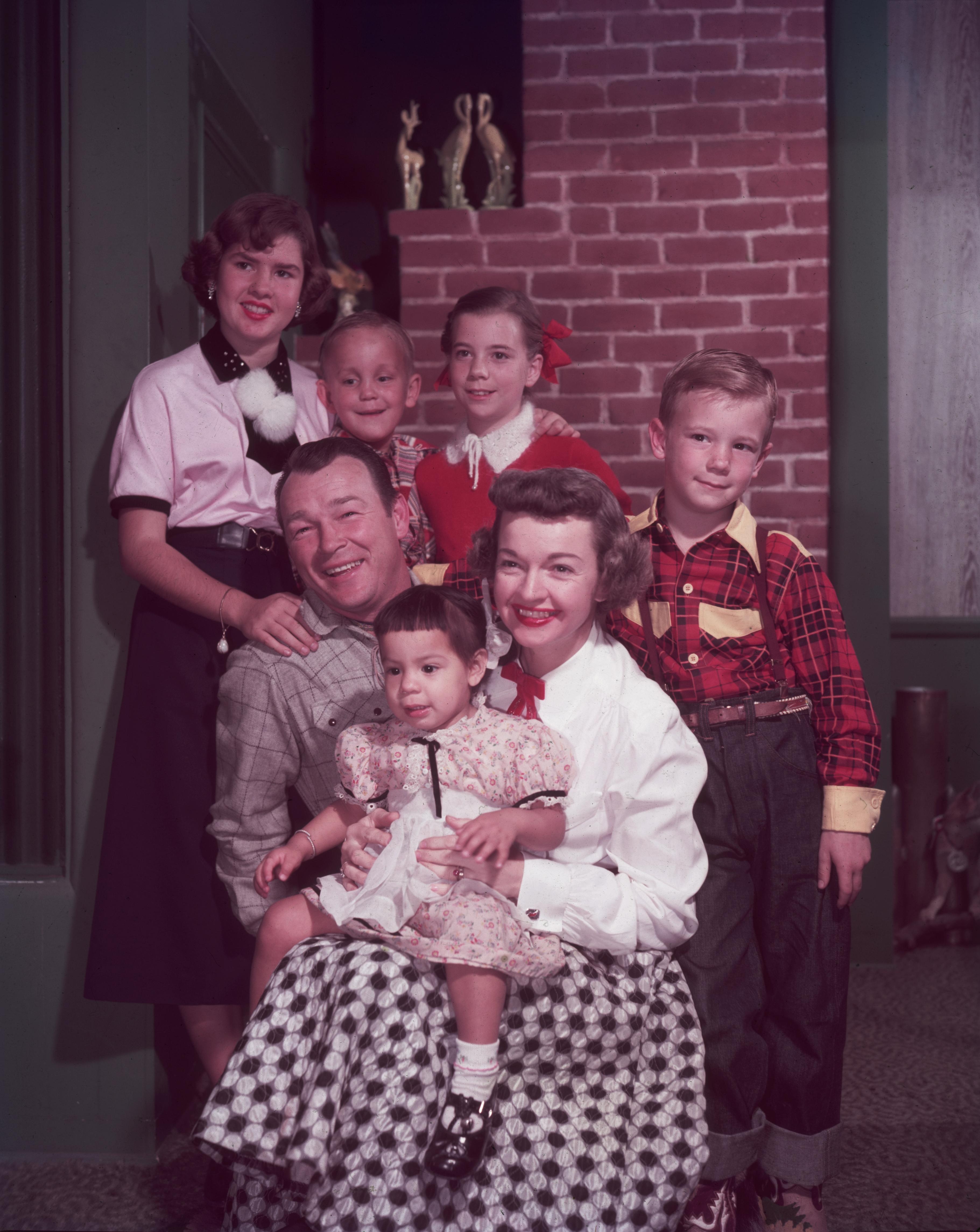
A circa 1955 family portrait of Roy Rogers and Dale Evans’s children (rear; L-R) Cheryl, Sandy, Linda Lou, 'Dusty' Roy Jr. and (front) Dodie. (Hulton Archive/Getty Images)
Through all their hard times, the couple drew on their faith for strength and peace.
“Each of these losses took a tremendous toll on Rogers, but he and Evans’s religious faith sustained them. Their positive outlook as they confronted life’s challenges only added to the public’s regard for them,” The Country Music Hall of Fame noted in a tribute to Rogers.
“If you don’t have tough times in your life, it’s hard to appreciate the good times,” Rogers told The Cincinnati Enquirer. “Life is what you get out of it. You can help make misery, or you can help make happiness.”
‘A Sense of Nostalgia and Romance’
Rogers’s commitment to adventure, optimism, and heroism made him a role model for an entire generation.
“To a generation of young Americans, Rogers was the quintessential plain-speaking cowboy, slow to anger, quick to right a wrong, ready to help someone in trouble. … He triumphed over scores of outlaws and villains on the silver screen and in the process left millions of young moviegoers with a sense of nostalgia and romance for the American frontier that would accompany them into middle and old age,” news outlet Washington Post stated.
At one point, he outperformed some of America’s defining figures in a 1940s poll of children by Life magazine. Kids were asked who they'd most like to model themselves after. Roy Rogers found himself “in a three-way tie with President Franklin D. Roosevelt and Abraham Lincoln as the person they would most like to resemble.”
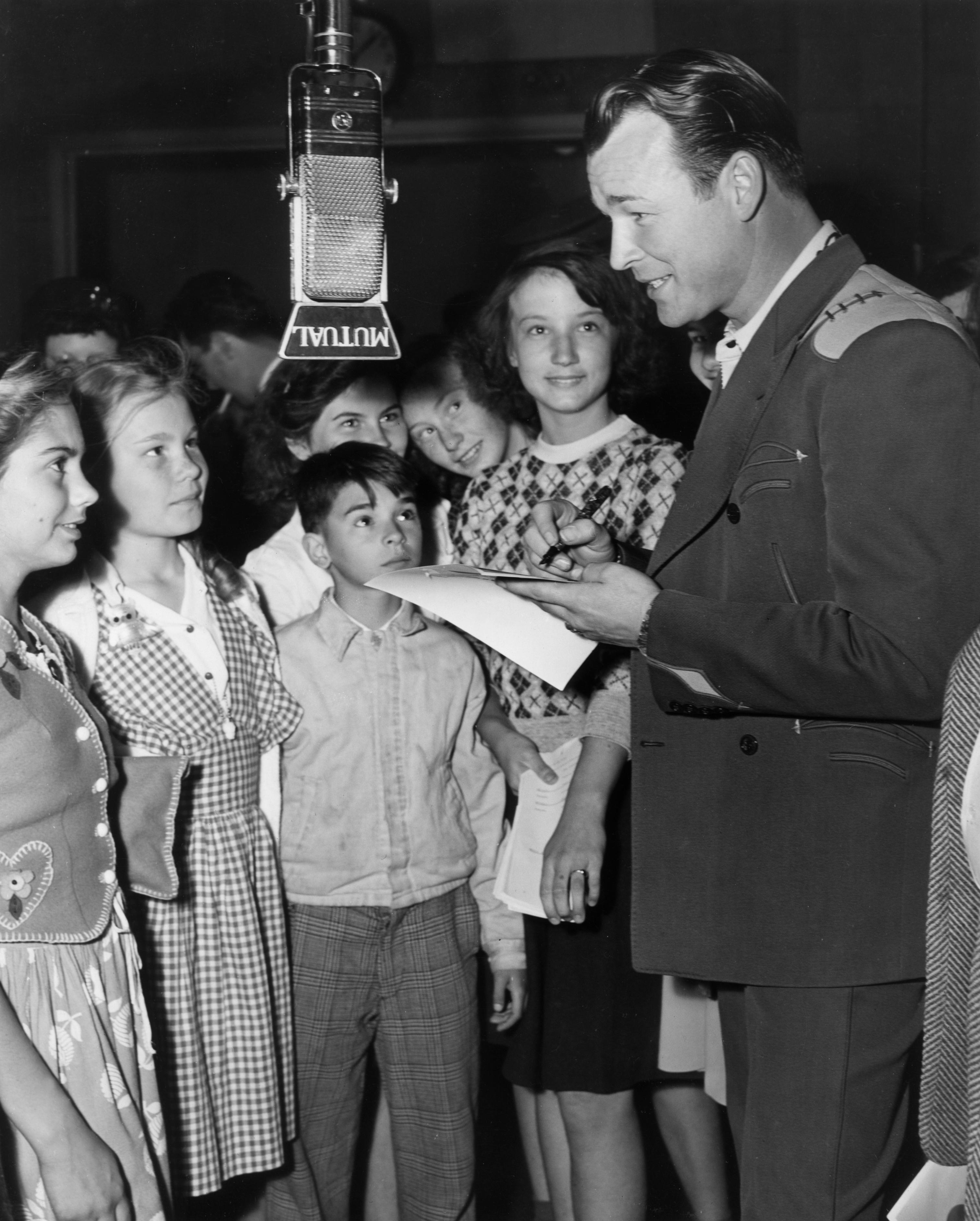
Roy Rogers signs autographs for a group of doting fans inside the radio studio after taping his weekly show, circa 1945. (Hulton Archive/Getty Images)
Rogers’s influence became so widespread, a restaurant was opened in his name, and it went on to become a chain with over 600 locations. Some are still open today.
‘Happy Trails to You’
After a new generation of singing cowboys took over the Western landscape, Rogers opened his own museum in 1967, the Roy Rogers-Dale Evans Museum in Apple Valley, California, to commemorate their illustrious career. The museum changed locations a few times, but it remained open for several decades before closing its doors in 2009.
The hook in the “Happy Trails” theme song exemplifies Rogers’s lasting optimism—optimism he extended to his fellow man.
“Happy trails to you, until we meet again.”
Along with his kindness, his authenticity made him not only a cowboy fit for a movie screen, but a cowboy fit for the ages. In his 1990s autobiography, “Happy Trails: Our Life Story,” co-authored with Evans, he let fans in on the secret to his lasting legacy.
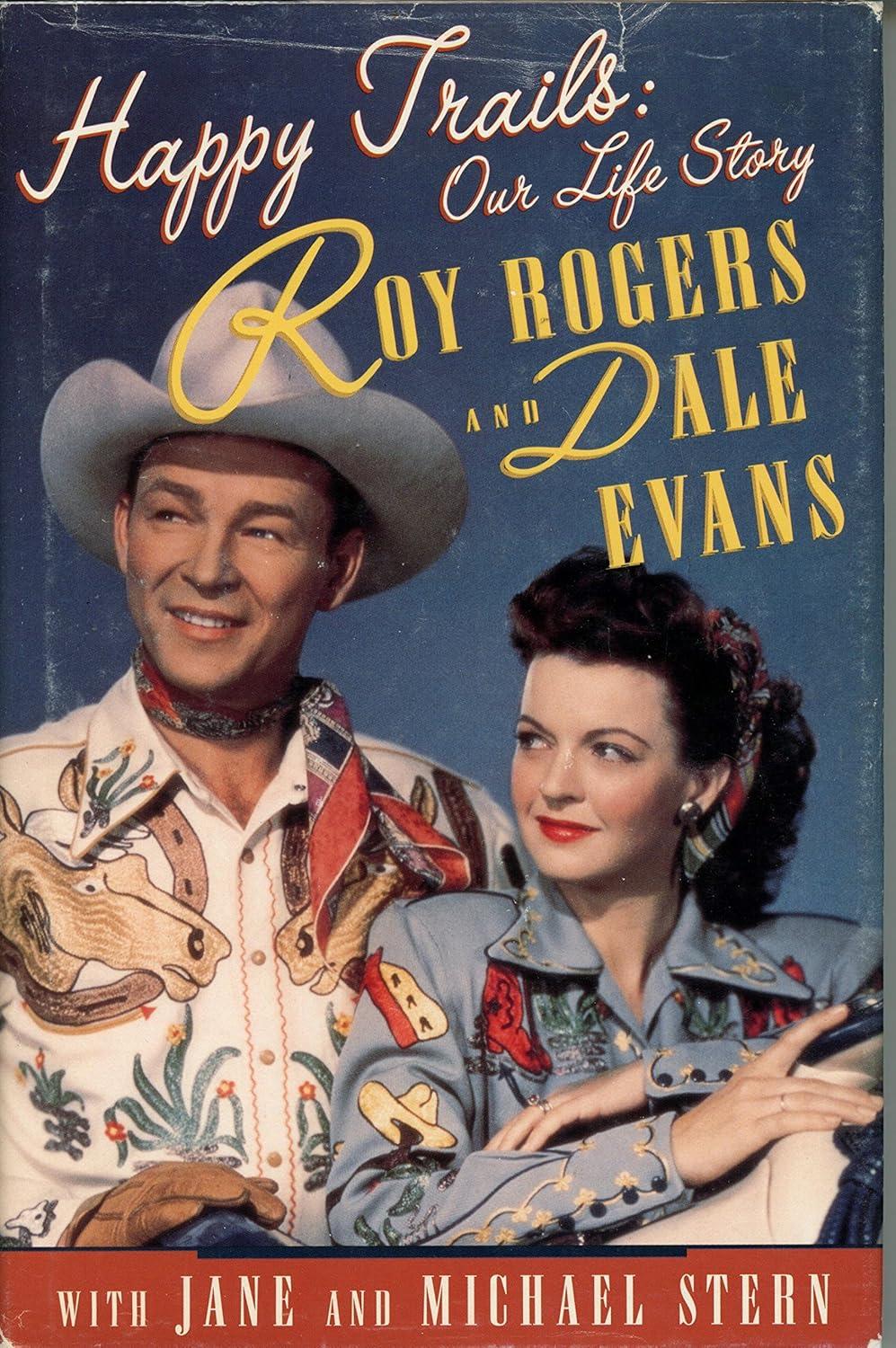
Cover of the 1994 hardcover "Happy Trails: Our Life Story" by Roy Rogers and Dale Evans. (Public Domain)
“I never tried any fancy trick acting on screen. I was just me. The Roy Rogers way back then was the same as the one sittin’ here today.”
What arts and culture topics would you like us to cover? Please email ideas or feedback to features@epochtimes.nyc