
“Wonder,” a children’s novel by R.J. Palacio, features a schoolboy who’s suspended for bullying the deformed protagonist and ultimately expelled from a prep school in New York. The sequel, “White Bird,” which is the basis of this 2024 film, tells a bit of that boy’s backstory. However, the story isn’t just his.
Now in another school, 15-year-old Julian Albans (Bryce Gheisar) is trying to shake off his past, when his artist grandmother, Sara Blum (Helen Mirren, who’s also the narrator), visits from Paris. He tells her what he’s learned from that infamous expulsion. His idea of fitting in now is simple: to mind his own business and be neither mean nor nice, just “normal.”
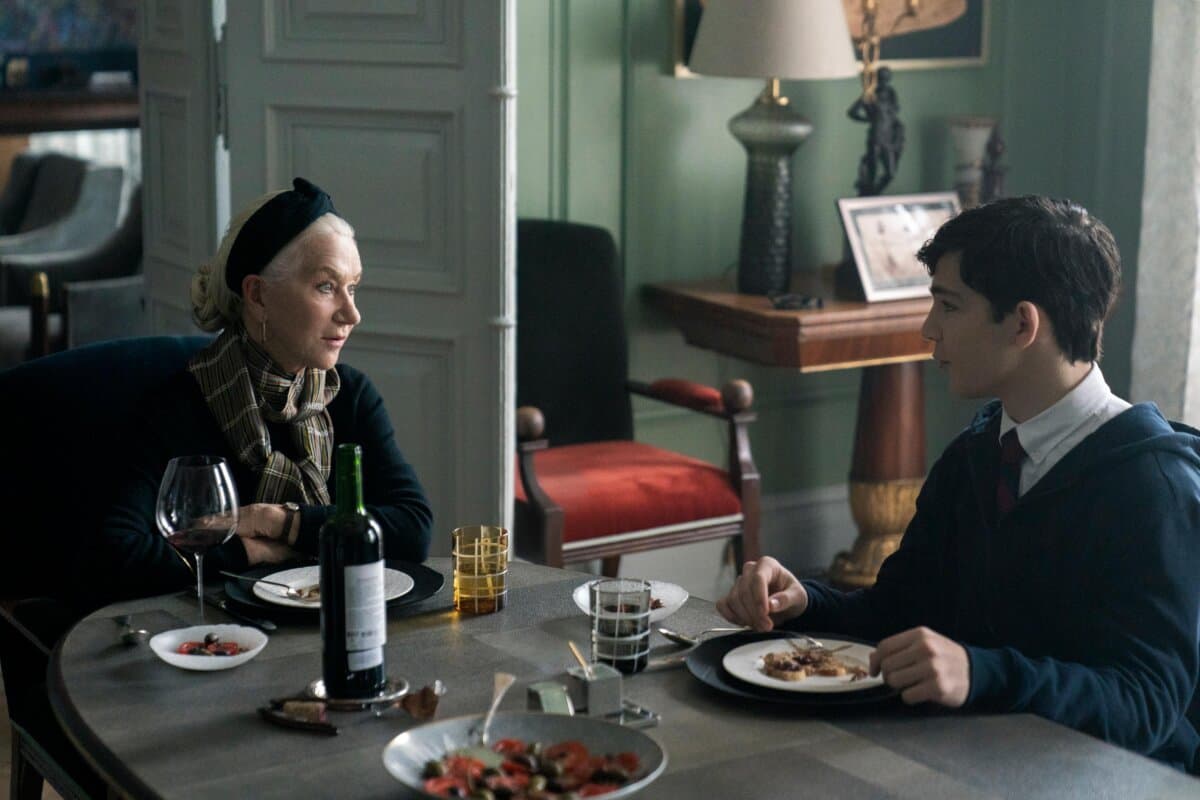
Julian Albans (Bryce Gheisar) and his grandmother, Sara Blum (Helen Mirren), in "White Bird." (Lionsgate)
Sara is nonplussed. Julian asks, “What’s wrong with being normal?” Hinting that he hasn’t learned much, she replies, “Nothing. And everything.” Sara explains that hatred and cowardice come easily; it’s kindness and bravery that he must seek.
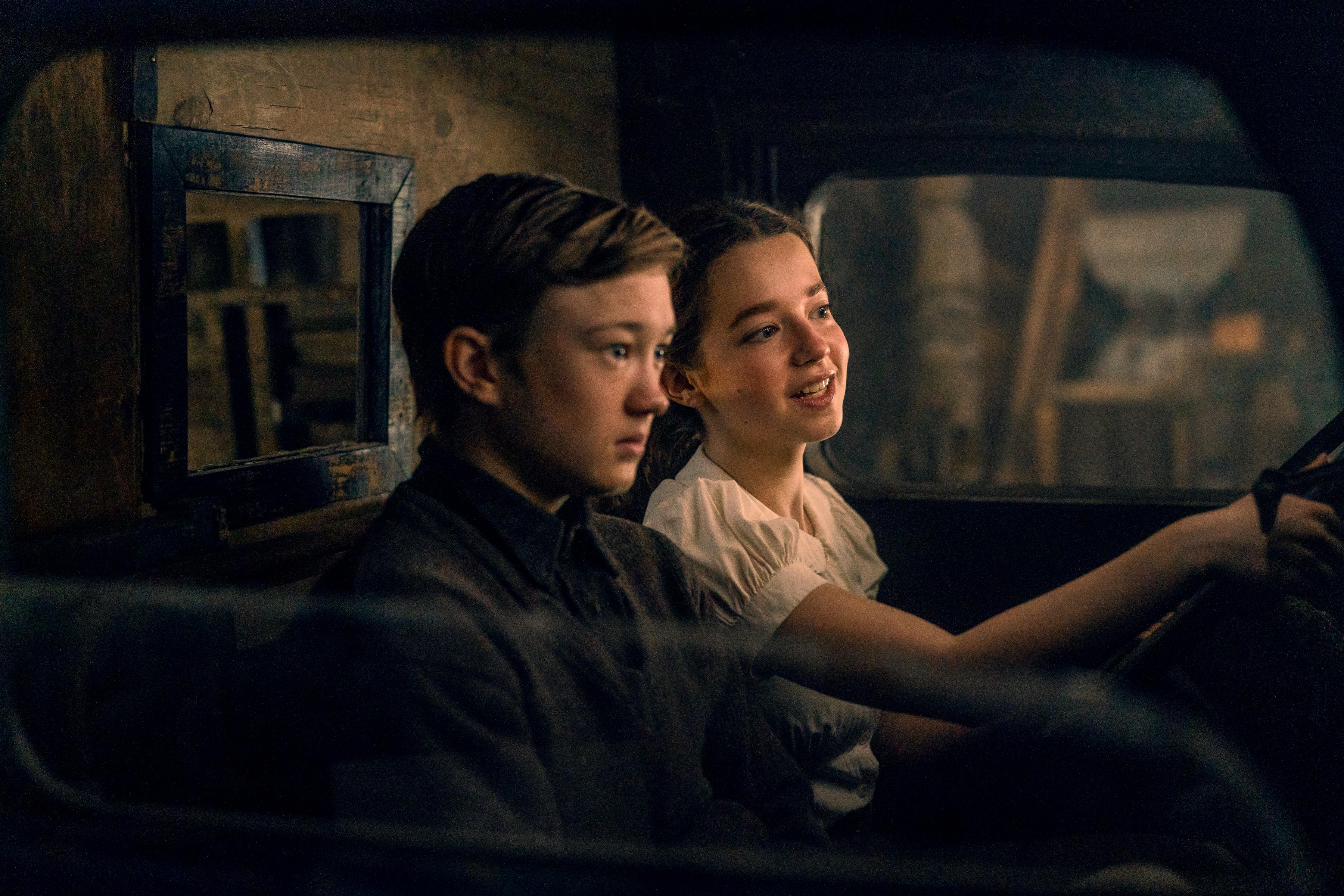
She learned that as a Jewish schoolgirl (Ariella Glaser) in Nazi-occupied France. Her classmate, polio-affected Julien Beaumier (Orlando Schwerdt), and his parents, Vivienne (Gillian Anderson) and Jean Paul (Jo Stone-Fewings), sheltered her in their barn for over a year.
Sara’s Scrapbook
The film owes its title to Sara’s scrapbook, which contains sequential sketches of a white bird; flip those pages fast enough, and it appears to fly. Throughout Sara’s childhood ordeal, that bird comes to represent hope and light amid enveloping despair and darkness.
Sara’s point? It’s easy to pretend virtue through indifference or neutrality or to pretend to feel, as some of her classmates did for her. Empathy, however, is more than feeling; it’s an active choice, even when there’s ostensibly not enough reason to make that choice.
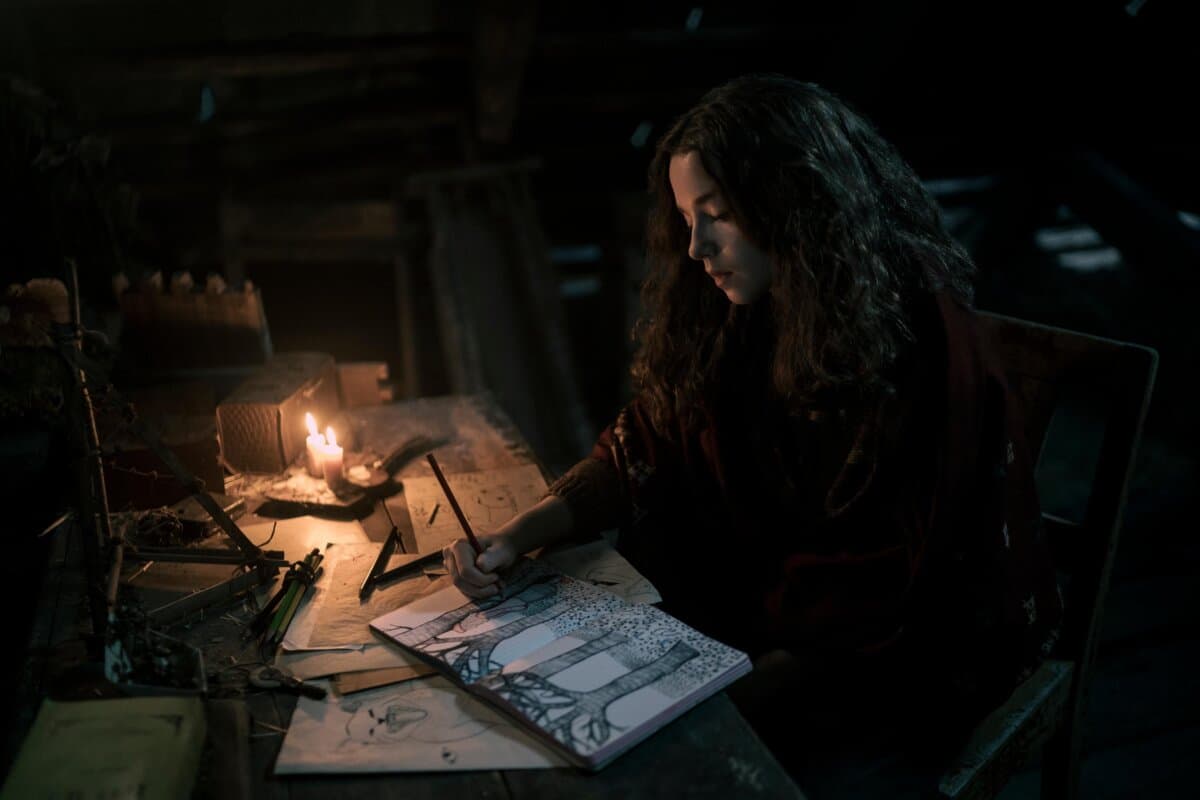
Sara Blum (Ariella Glaser) writes in her scrapbook, in "White Bird." (Lionsgate)
The clinical motto “do no harm” might suit the likes of doctors and nurses who are anxious to stay clear of post-procedural litigation. However, in daily life, empathy requires risk. It demands sacrifice and loss, if not always danger.
Every night, Julien comes to the barn to teach Sara, so she doesn’t fall behind at school; he brings her precious drawing book back from school. His parents ensure she’s fed and clothed. Mutedly, because of impending danger, they even manage to celebrate her birthday.
Light Within
Martin Luther King Jr. once said, “Darkness cannot drive out darkness: Only light can do that.” Sara here invokes King’s line alongside a lesson from her father: Everyone has a light within; some extinguish it in themselves, so they see only darkness in others. It’s up to us to keep shining our light, regardless of the surrounding darkness.
Urging her to never give up her creative art, Sara’s schoolteacher, Mlle Petitjean (Patsy Ferran), says, “The world of reality has its limits; the world of imagination is boundless.” To Sara, that becomes a life code.
Reality might come in the form of a crutch today, keeping us from treating someone with respect who’s hobbling. Tomorrow, that obstacle might be a person’s race, sex, or religion. The larger those differences appear to us, the less likely we are to embrace our shared humanity. It takes imagination to see beyond all that.
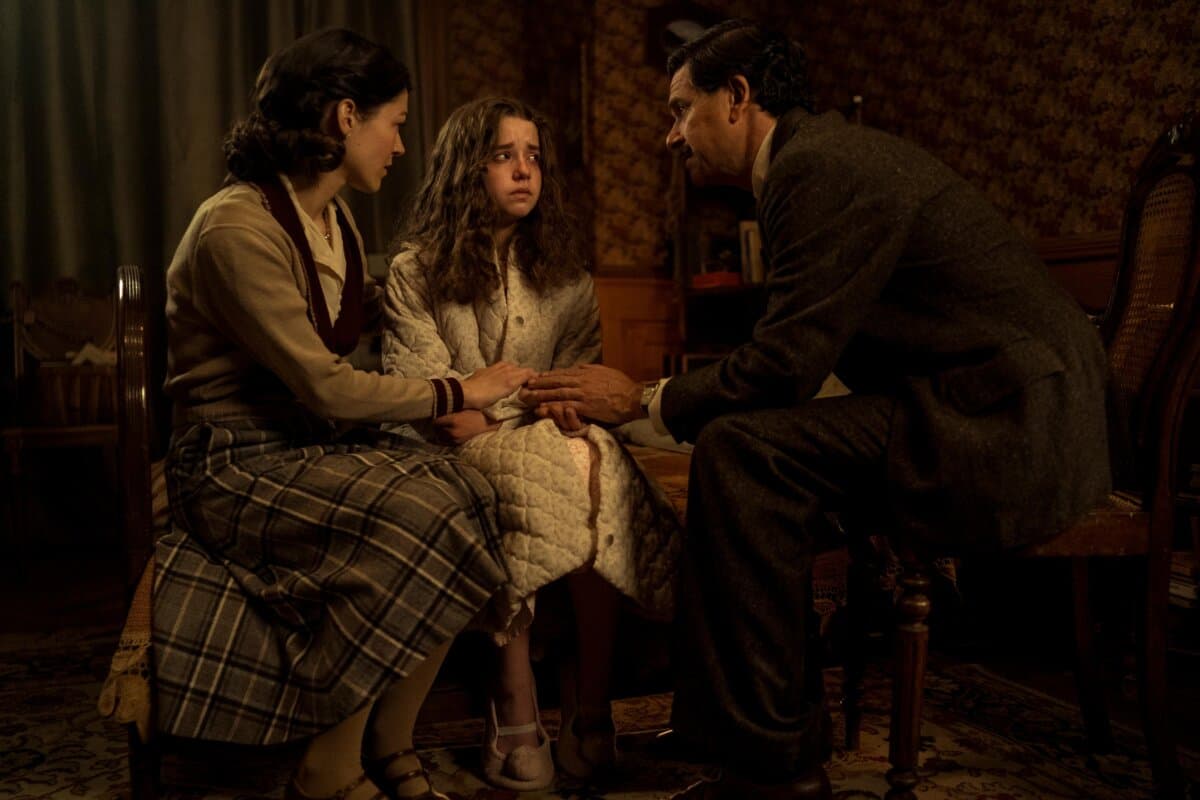
(L–R) Ishai Golan, Ariella Glaser, and Olivia Ross in "White Bird." (Lionsgate)
The doorman of Julian’s swanky apartment building warmly greets the boy, but Julian, stone-faced, strides past. Likewise, Julien sat next to Sara in class, but she ignored him. Now aged, she tells her self-preoccupied grandson that she too once cared only about her clothes, social life, and artwork, but she learned to see beyond that.
The cry of French men and women here, “Vive l'Humanité,” embodies one of the film’s messages. Julien’s mother tells Sara why he cares so much: “In dark times, those small things remind us of our humanity.”
But how to find these small things?
Sara’s line, “When life is as good as mine was, there is much you do not see,” is an invitation to Julian to open his eyes. At the very least, it’s an invitation to open them wider, to see things he might otherwise miss. Because he’s crippled, Julien was a more likely Nazi target, so he ought to have been doubly cautious; all the other children were. Yet he steps forward to help, seeing her as she is: not just a Jewish child but a child like him who’s in danger.
If love is seeing, guess what hatred is? The phrase “blind hatred” is almost redundant, since hatred is, after all, blindness to the truth. Importantly, even the otherwise virtuous aren’t as free from this blindness as they think. Julien and his parents see the Lafleurs, their neighbors, as covert Nazi informants. Are they?
This story offers a viewer to make a discerning choice in difficult situations.
Check the Internet Movie Database website for plot summary, cast, reviews, and ratings. You can watch “White Bird, A Wonder Story” on Apple TV, Prime Video, or Plex.
These reflective articles may interest parents, caretakers, or educators of young adults, seeking great movies to watch together or recommend. They’re about films that, when viewed thoughtfully, nudge young people to be better versions of themselves.
What arts and culture topics would you like us to cover? Please email ideas or feedback to features@epochtimes.nyc