
On Tuesday, President Donald Trump signed an executive order that would create a list of U.S. citizens eligible to vote, the latest in a long line of elections-related moves by the White House.
In the executive order, Trump calls on the Department of Homeland Security (DHS) and the Social Security Administration to compile a list of eligible voters in every state and to prohibit the U.S. Postal Service (USPS) from sending absentee ballots to those not included on the list.
“The cheating on mail-in voting is legendary. It’s horrible what has been going on,” Trump said, repeating longstanding claims that he was the true winner of the 2020 presidential election. “If you don’t have honest voting, you can’t have, really, a nation.”
Trump’s claims of election fraud during the 2020 election are under investigation by the FBI, after the bureau launched probes into Maricopa County, Arizona, and Fulton County, Georgia, both of which were critical to President Joe Biden’s electoral victory that year.
Claims of outcome-altering election fraud in the 2020 election have long been hotly debated. Numerous state-level investigations, audits, and recounts in contested swing states confirmed the outcomes of those contests, ultimately resulting in Congress certifying Biden’s electoral victory on Jan. 6, 2021.
Trump’s latest executive action on elections has drawn criticism from those who say the measure overextends federal power over elections, which have historically been left to the states.
Here’s what to know.
Executive Order
In the executive order, Trump noted that voting by noncitizens is illegal under federal law and argues that the federal government has a legitimate role in ensuring adherence to that law.
“The Federal Government has an unavoidable duty under Article II of the Constitution of the United States to enforce Federal law, which includes preventing violations of Federal criminal law and maintaining public confidence in election outcomes,” Trump wrote in the executive order.
In the following section, Trump outlines the details of the citizenship list to be compiled.
“To the extent feasible and consistent with applicable law ... [DHS and the Social Security Administration] shall take appropriate action to compile and transmit to the chief election official of each State a list of individuals confirmed to be United States citizens who will be above the age of 18 at the time of an upcoming Federal election and who maintain a residence in the subject State,” the executive order reads.
The third section of the executive order lays out new rules regarding USPS’s handling of federal ballots.
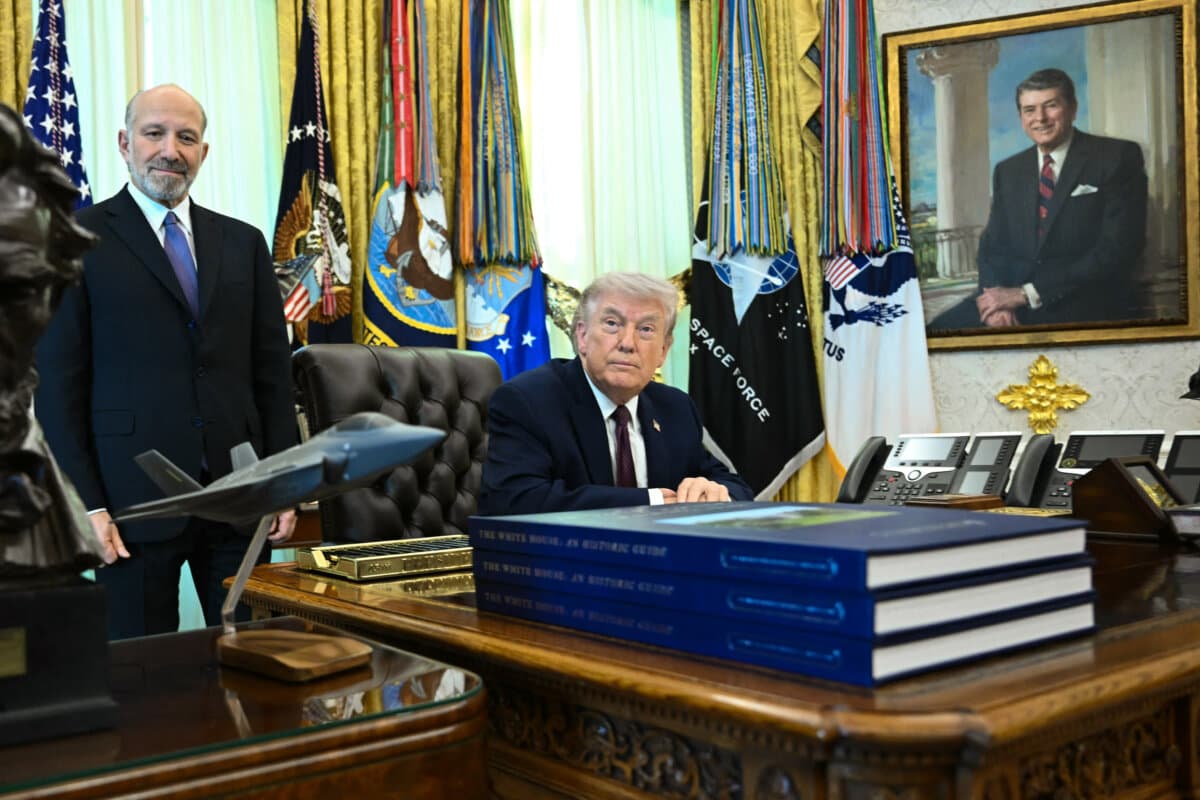
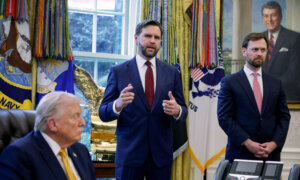
Secretary of Commerce Howard Lutnick and President Donald Trump look on before signing an executive order on election integrity in the Oval Office of the White House on March 31, 2026. (Brendan Smialowski/AFP via Getty Images)
It outlines extensive new procedures for exchanging information among the USPS, the DHS, and state election officials to prevent noncitizens from using mail-in ballots, including unique ballot markers and other measures.
“Unique ballot envelope identifiers, such as bar codes, enable confirmation that only citizens receive and cast ballots, reducing the risk of fraud and protecting the integrity of Federal elections,” the executive order reads.
Elections Clause
The measure is likely to face challenges in court, as longstanding U.S. precedent and custom have yielded considerable leeway to the states over the management of U.S. elections.
The elections clause of the U.S. Constitution has historically been interpreted to grant states control over the elections in their states, including federal elections.
“The Times, Places and Manner of holding Elections for Senators and Representatives, shall be prescribed in each State by the Legislature thereof; but the Congress may at any time by Law make or alter such Regulations, except as to the Places of chusing Senators,” the clause reads.
One exception where the federal government has exercised authority involves the timing of elections, as federal Election Day is uniform across the United States by act of Congress.
However, specifics have otherwise been left to states in the past.
Critics and Legal Challenges
Critics of the move described it as unconstitutional and said it could undermine local customs.
Sen. Ron Wyden (D-Ore.) wrote in a post on X: “Oregonians have successfully voted by mail for over thirty years, and we’ll be damned if we let Donald Trump change the way our state runs its elections.
“My message to the White House is this: if you come for Oregon’s vote-by-mail, you’ll have hell to pay.”
In the state, there is no in-person voting whatsoever, with 100 percent of elections held by mail.
Illinois Gov. JB Pritzker condemned the executive order as well.
“This is unconstitutional,” Pritzker wrote in a post on X. “Voting is a fundamental right for every American. Illinois will keep administering free and fair elections – and what Donald Trump puts on a piece of paper will not change that.”
Sen. Alex Padilla (D-Calif.) echoed the sentiment.
“This executive order is a blatant, unconstitutional abuse of power,” Padilla said in a statement.
“Make no mistake: Trump’s attacks on our elections are a clear and present threat to our democracy.”
California Gov. Gavin Newsom rejected the order as illegal and warned of incoming litigation.
“The President wants to limit which Americans can participate in our democracy,” Newsom’s press office wrote on March 31 on X. “California will see him in court.”
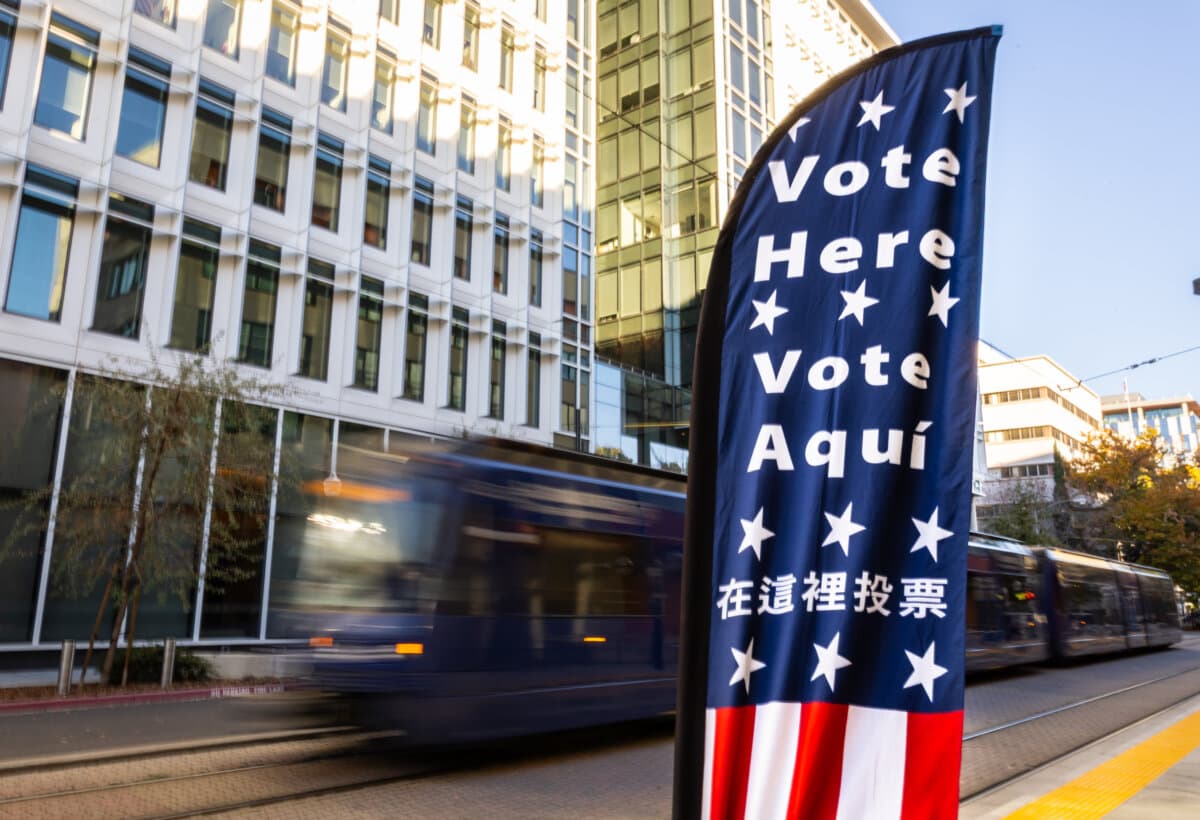
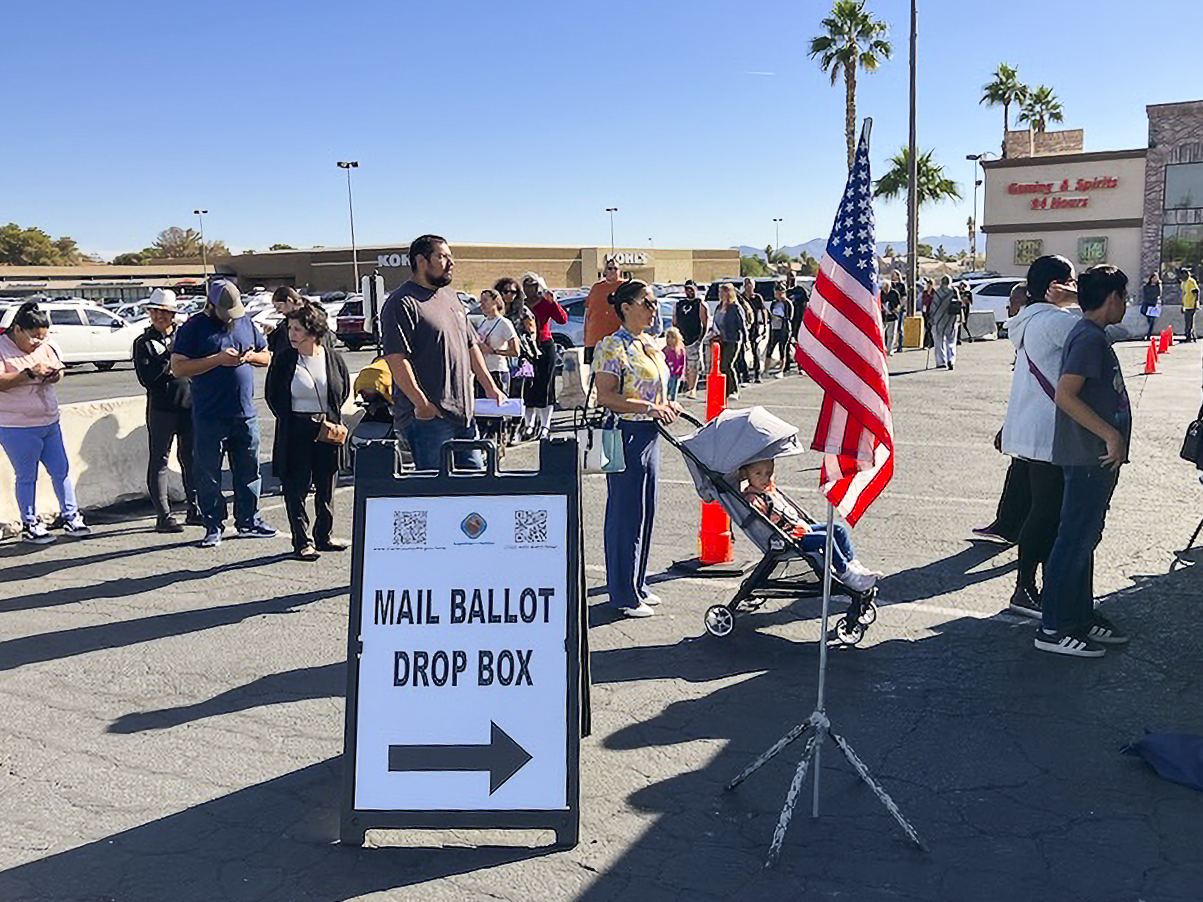
A train moves past a voting site in Sacramento, Calif., on Nov. 1, 2025. (John Fredricks/The Epoch Times)
Legal challenges to the measure are expected, with the matter potentially reaching the Supreme Court, as the issue is deeply entangled with the boundaries between state and federal power over elections.
Trump anticipated legal action but expressed optimism, vowing to fight back against any attempts to derail the new law.
“I don’t know how it could be challenged. It could probably be challenged if you find a rogue judge,” he said while signing the order.
“We will appeal if it is, but I don’t see how anyone else could challenge it.”
Proof of Citizenship and Photo ID
Trump said ensuring proof-of-citizenship and voter-ID laws are of paramount importance.
“That will be another subject for another time. We are working on that,” he said, citing polls that show Americans support such efforts. “You would think it would be easy.”
Currently, Trump is also pushing Congress to pass the Safeguarding American Voter Eligibility (SAVE) America Act, which would require proof of citizenship to register to vote.
Senate Democrats have indicated that they will never give their backing to the measure and have unanimously opposed the law, leaving it unable to achieve the 60 votes needed to overcome the filibuster.
The president has stated he will not sign new legislation until this bill is signed into law, though the White House has indicated that government funding and other critical measures would still be signed.
Travis Gillmore contributed to this report.